
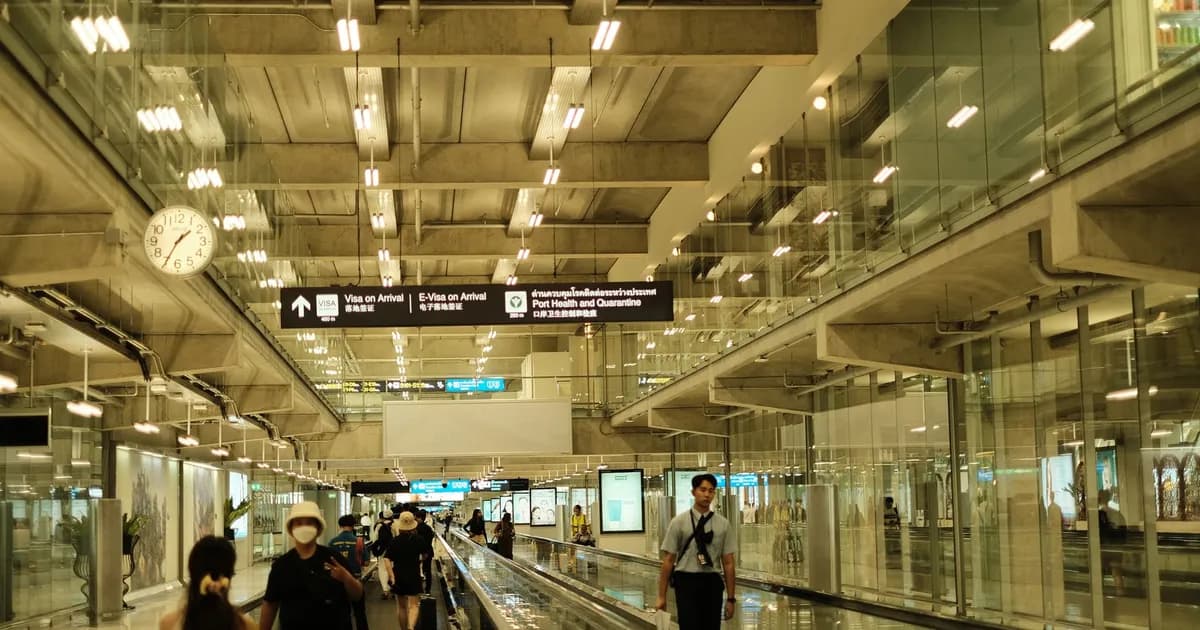

The airport you land at in southern Vietnam is changing in 2026, and that one fact can quietly reshape your arrival. For decades, flying into the south meant Tan Son Nhat (SGN), the busy, central airport just a few kilometres from downtown Ho Chi Minh City. Now a vast new gateway, Long Thanh International Airport, is coming online roughly 40 kilometres east of the city, in Long Thanh, Dong Nai province. It is built to take over much of Vietnam's international and long-haul traffic, and if your ticket routes you there, your first hours in the country will look different from what older guidebooks describe.
This is not a reason for alarm, but it is a reason to plan. Long Thanh is one of the largest airport projects in the world, and like all megaprojects it is arriving in phases, on timelines that can move. For a slow traveler, the right response is calm and practical: confirm your arrival airport, understand the distances, and build in buffers. This guide explains what Long Thanh is, where things stand in 2026, and exactly how to arrive without stress.
What Long Thanh is, and why it is being built
Long Thanh International Airport is Vietnam's new mega-airport, conceived to relieve a simple, long-standing problem: Tan Son Nhat is full. SGN sits inside Ho Chi Minh City, hemmed in by urban development, and has been operating well beyond comfortable capacity for years. There is little room to expand a downtown airport, so the country built a new one on open land to the east.
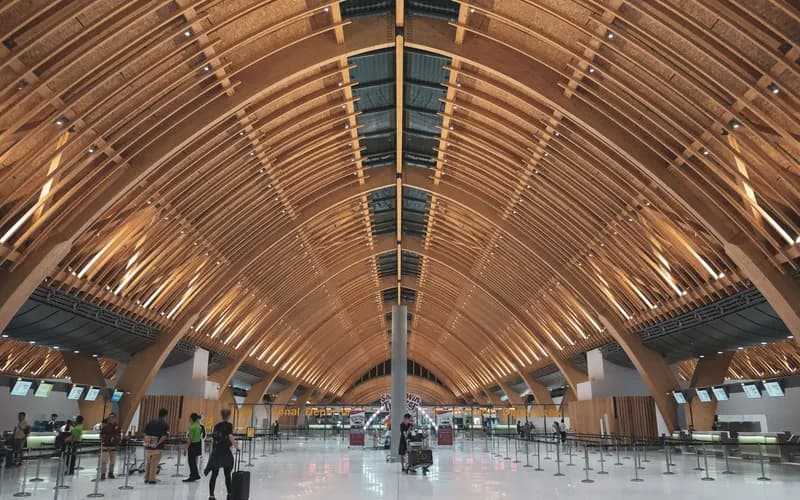
The scale is striking. Phase 1 alone is designed for 25 million passengers a year and 1.2 million tonnes of cargo, with one passenger terminal and a single 4,000-metre runway. That is just the beginning: the ultimate design capacity is more than 100 million passengers a year, which would place Long Thanh among the very largest airports anywhere in the world.
The plan is a division of labour between the two airports. Long Thanh is intended to take long-haul and international flights, while Tan Son Nhat keeps domestic services and some regional routes. In practice that means many international arrivals to the south of Vietnam will, over time, shift from the familiar city-edge airport to the new one further out. The shift will not happen all at once, and for a period the two airports will operate side by side, each handling part of the traffic, which is precisely why a traveler in 2026 cannot take the old assumptions for granted.
One request. Up to five tailored proposals.
Skip contacting agencies one by one — share your trip once and let up to five trusted Vietnam agencies come to you. Free, with no obligation.
Get my free quotesWhere things stand in 2026
This is where honesty matters, because the timeline is the part most likely to affect your trip. Long Thanh held a ceremonial "technical opening" on 19 December 2025, an important milestone but not the same as full commercial service. Full Phase 1 commercial operations are targeted for the middle of 2026, with June 2026 the expected start, though authorities have also referenced late-2026 readiness, and megaproject timelines can slip.
As of early 2026, construction stood at roughly 74 percent of contract value completed, and the army was deployed to help finish the work on schedule, a sign both of national priority and of how tight the deadlines are. The sensible reading for a traveler is that 2026 is a year of transition. Some flights may move sooner, some later, and the exact date your airline shifts a given route to Long Thanh is the detail that matters most to you.
The practical implication is simple but important: do not assume. Whether you land at Tan Son Nhat or Long Thanh in 2026 depends on your airline, your route and the month you travel. Verify it on your ticket and, if in doubt, confirm directly with the airline rather than relying on general advice or older sources. The same verify-don't-assume principle applies to entry formalities, which also shift from year to year; our overview of Vietnam's visa and immigration rules for 2026 is worth a read alongside this one, since immigration is the first thing you will face whichever airport you land at.
Getting from Long Thanh into the city
The single biggest change for arriving travelers is distance. Tan Son Nhat is minutes from central Ho Chi Minh City; Long Thanh is around 40 kilometres east, in a different province. That extra distance means more ground-transfer time and, usually, more cost, so it is worth understanding the links being built to serve the airport.
A network of road and rail connections is targeted to be "basically complete" or synchronised around the airport by the end of 2026. The headline projects include:
- The Ho Chi Minh City–Long Thanh–Dau Giay Expressway, the main road artery, with a 22-kilometre section being widened to around ten lanes, aimed for December 2026.
- Ring Road 3 around Ho Chi Minh City, with an opening targeted around the end of June 2026 and full completion later in the year.
- The Bien Hoa–Vung Tau and Ben Luc–Long Thanh expressways, plus provincial roads 25B and 25C feeding the airport.
- Ho Chi Minh City Metro Line 2, which began construction in early 2026 but will not be ready when the airport opens.
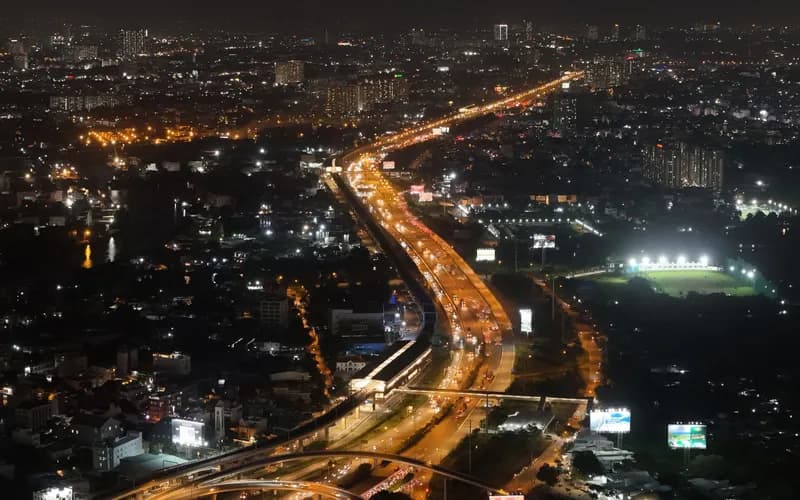
Once these links are complete, the projected travel time between Long Thanh and the Thu Thiem area of Ho Chi Minh City is around 30 to 40 minutes. That is genuinely fast for the distance, but note the conditional: it depends on the road network being finished. During 2026, while works continue, real transfer times may be longer and less predictable, and rideshare or taxi fares over 40 kilometres will be noticeably higher than the short hop from the old airport. If you want to weigh airport transfers against your wider movements around the country, our guide to choosing between the train, the flight and the sleeper bus puts ground and air options side by side.
Get matched with up to 5 trusted Vietnam agencies
- Free
- No obligation
- Up to 5 agencies
Choosing how to make the transfer
Because the distance is greater, the question of how you get from Long Thanh into the city, or onward, deserves a little thought rather than a snap decision at the arrivals door. Several options will exist, each with trade-offs.
- A booked car or hotel transfer is the calmest choice after a long flight. You pay a fixed, known price, someone meets you, and you do not have to negotiate while jet-lagged. For a first arrival, the certainty is often worth the premium.
- Rideshare apps such as Grab will operate, and are usually cheaper than an airport taxi, but expect surge pricing at busy times and a fare that reflects the full 40-plus kilometres.
- Airport taxis are available, but agree the fare or insist on the meter before setting off, and be aware that the longer distance makes the total meaningfully larger than the old SGN run.
Whichever you choose, the same advice holds during the transition year: leave room in your plan. Road works, unfamiliar routes and the sheer newness of the airport mean transfers can run long, and a relaxed buffer turns a potential headache into a non-event.
What this means for slow travelers
None of this should make anyone anxious. A new airport is, eventually, a good thing: more space, less congestion, a calmer arrival than the long immigration queues SGN has become known for. But the transition year calls for a slow traveler's instincts, which is to say, build in margin and verify the details.
Three things change in practice. First, where you land may not be where you expect, so confirm it. Second, your transfer from Long Thanh will take longer and likely cost more than the short hop from Tan Son Nhat, so budget extra time and money for that first leg. Third, early operations at any brand-new airport tend to have teething problems, signage, transport, staffing and processes all bedding in, so patience on arrival is wise.
For connecting flights, the implications deserve special care. If your itinerary involves a domestic connection, you may land internationally at Long Thanh but need a domestic flight from Tan Son Nhat, or vice versa, which could mean a cross-city transfer of 40-plus kilometres between two airports. Do not book tight connections across the two airports in 2026. Allow generous buffers, and where possible keep connections within a single airport. This is exactly the kind of detail worth settling early when planning your journey.
The slow-travel philosophy actually helps here. If you are not racing to tick off a dozen places, an extra hour of transfer time or a cautious overnight near your arrival point costs you little and removes a great deal of stress. Arriving unhurried is the whole point. There is even an argument for treating the new airport's greater distance as a feature rather than a flaw: it nudges you to slow down on day one, to resist the urge to rush straight into a packed itinerary, and to let the journey begin gently. A first afternoon spent recovering from the flight, rather than sprinting into sightseeing, sets the tone for the kind of trip worth taking.
What to Do Next
- Check your arrival airport on your ticket. Confirm whether you land at Tan Son Nhat (SGN) or Long Thanh, and recheck closer to departure, as routes may shift during 2026.
- Confirm with the airline if unsure. For 2026 travel especially, verify the airport directly rather than relying on older guides or assumptions.
- Budget extra transfer time and cost from Long Thanh. Plan for roughly 40 kilometres into the city, more time and money than the short SGN transfer, and allow for road works in progress.
- Avoid tight cross-airport connections. If your trip mixes international and domestic flights, do not assume they use the same airport; leave generous buffers, ideally an overnight, for any transfer between Long Thanh and Tan Son Nhat.
- Expect early-operations teething. Be patient with new signage, transport and processes if you arrive in the first months of commercial service.
- Keep your first day gentle. Plan an unhurried arrival with a buffer built in, rather than scheduling anything time-critical on landing day.
Frequently Asked Questions
Where is Long Thanh International Airport?
Long Thanh is in Long Thanh, Dong Nai province, roughly 40 kilometres east of central Ho Chi Minh City. That is considerably farther out than Tan Son Nhat (SGN), which sits just a few kilometres from the city centre, so arrival transfers from Long Thanh take longer.
When does Long Thanh open?
It held a ceremonial technical opening on 19 December 2025. Full Phase 1 commercial operations are targeted for the middle of 2026, with June 2026 the expected start, though authorities have also referenced late-2026 readiness and megaproject timelines can slip. Verify your specific flight with the airline.
Will I land at Long Thanh or Tan Son Nhat?
It depends on your airline, route and travel month during the 2026 transition. Long Thanh is intended for long-haul and international flights, while Tan Son Nhat keeps domestic and some regional services. Always check your ticket, and confirm with the airline if you are unsure.
How long does it take to get from Long Thanh to Ho Chi Minh City?
Once the road links are complete, the projected travel time between Long Thanh and the Thu Thiem area is around 30 to 40 minutes. During 2026, while expressways and ring roads are still being finished, real transfer times may be longer and less predictable, so allow extra.
How big will Long Thanh be?
Phase 1 is designed for 25 million passengers a year, 1.2 million tonnes of cargo, one terminal and a single 4,000-metre runway. The ultimate design capacity is more than 100 million passengers a year, which would make it one of the largest airports in the world.
What about connecting flights between the two airports?
Take great care in 2026. You may arrive internationally at Long Thanh but need a domestic flight from Tan Son Nhat, or the reverse, meaning a 40-plus-kilometre cross-city transfer. Do not book tight connections across the two airports; allow generous buffers or an overnight.
Is the new airport good news for travelers?
Ultimately, yes. It adds badly needed capacity and should ease the congestion and long queues at Tan Son Nhat, making for calmer arrivals. The caveat is the transition: in 2026, expect some uncertainty on dates, longer transfers and early-operations teething, so plan with buffers.