Vietnam's Storm-Season Closures in 2026: How Suspensions Work and How to Plan
In late August 2026, as Storm Narra crawled across the Gulf of Tonkin, every tourist boat on Ha Long and Lan Ha bays was ordered into shelter, Trang An's rowing boats stopped, and caves and forest stays around Ninh Binh closed. A month later, heavy rain shut the trails of Nui Chua National Park on the south-central coast. None of this was unusual: Vietnam's storm and flood season reliably reshapes itineraries every year. What has changed is how quickly and firmly the authorities now act, and that makes it worth understanding how suspensions work before you travel between August and December.
What Happened in August and September 2026
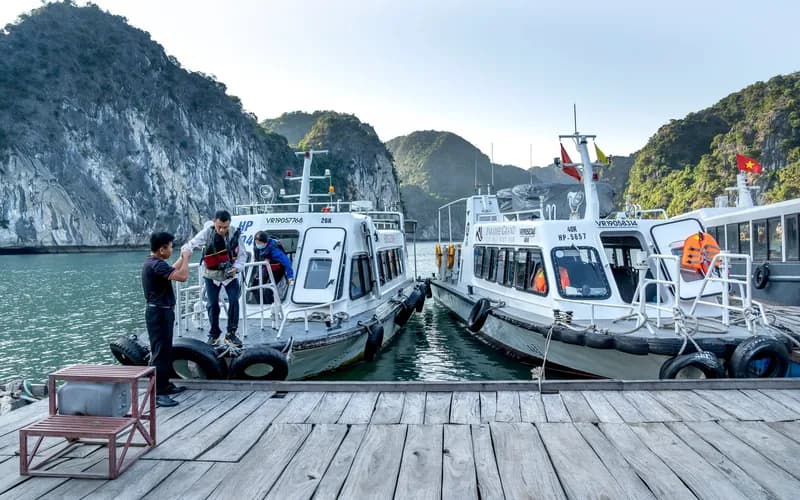
Storm Narra, the fourth named storm to affect Vietnam this year, moved unusually slowly over the northern Gulf of Tonkin in late August, prolonging heavy rain across the north-east. Tours and overnight stays on Ha Long Bay in Quang Ninh and Lan Ha Bay in Hai Phong were suspended from 7 am on 22 August, with boats moved to designated storm shelters and crew assigned to monitor them. In Ninh Binh, the Trang An complex halted all tourism activities from 23 August until further notice; Thung Nham closed its caves, Cuc Phuong National Park suspended overnight forest stays, and Xuan Thuy National Park stopped sightseeing boats in its estuary.
At the same time, the Ministry of Culture, Sports and Tourism instructed 16 provinces and cities to suspend tours to areas at risk of flash floods, landslides and flooding, and to evacuate tourists from danger zones where necessary. Operators were told to adjust itineraries, reschedule, shorten, postpone or cancel trips when needed, and to communicate their change, cancellation and refund policies clearly to customers.
September brought further disruption. Mid-month rains caused flooding in north-central provinces, with boat trips in Ninh Binh again reported suspended and some rail services replaced by road transfers. Around Tam Dao, the hill station north-west of Hanoi, landslides on 15 and 17 September led local authorities to advise visitors to postpone or limit trips. Then, from noon on 23 September, Nui Chua and Phuoc Binh national parks in Khanh Hoa suspended visits, tours and related services after heavy rain raised landslide, rockfall and flash-flood risks, affecting travellers heading to the dry coast we describe in our slow guide to Phan Rang and the Cham heartland.
One request. Up to five tailored proposals.
Skip contacting agencies one by one — share your trip once and let up to five trusted Vietnam agencies come to you. Free, with no obligation.
Get my free quotesWho Decides, and How Suspensions Work
Suspensions are not made by your tour company. They flow from official weather warnings issued by the National Center for Hydro-Meteorological Forecasting, through provincial authorities, port authorities and the managers of individual sites. For sea tourism, port authorities stop issuing departure permits for tourist vessels when warnings cross set thresholds, and boats are moved to shelters. For inland sites, park and heritage managers close trails, caves, boat routes or overnight activities when rain, rising rivers or landslide risk make them unsafe.
Three features matter for travellers. First, decisions are binding: an operator cannot legally sail or run a closed route because you have a confirmed booking. Second, suspensions are usually open-ended, lifted only when conditions are judged safe, which may be a day or a week later. Third, reopening often lags behind the weather. Even after the storm centre has passed, rivers keep rising, slopes stay saturated and roads may be blocked by debris, so a clear sky does not mean your excursion is back on.
The Storm Calendar by Region
Vietnam's length means that storm season is not one season but several, moving southward through the second half of the year. Around five to six tropical storms make landfall in or directly affect the country in an average year, and their timing follows a broadly predictable pattern.
- The north, including Hanoi, Ha Long, Cat Ba, Ninh Binh and the northern mountains, sees its main storm risk from roughly July to September, with heavy rain and landslides possible in the mountains through the summer.
- The north-central and central coast, from Thanh Hoa through Hue, Da Nang and Hoi An, faces its highest risk from September to December, with October and November the peak months for floods.
- The south-central coast, including Quy Nhon, Nha Trang and Phan Rang, has a short, late rainy season, usually from September or October into December.
- The south, including Ho Chi Minh City and the Mekong Delta, is rarely hit directly by typhoons, but the rainy season runs roughly May to November, and autumn high tides combined with heavy rain regularly flood city streets.
For a month-by-month view of what to expect in each region, see our regional weather planning guide. Climate variability means any given year can break the pattern, as 2026's September rains in the north showed.
Get matched with up to 5 trusted Vietnam agencies
- Free
- No obligation
- Up to 5 agencies
What Typically Closes First
When warnings are issued, some activities stop almost immediately while others carry on. Knowing the order helps you judge what is likely to survive a bad week.
Sea-based tourism is the first to go: bay cruises, day boats, island ferries and snorkelling trips in Ha Long, Lan Ha, Cat Ba, Nha Trang, Quy Nhon and the islands. River and lagoon boats follow when water levels rise, including the rowing routes of Trang An and Tam Coc, which are exactly the experiences described in our portrait of Ninh Binh's karst landscape. Caves close when flooding is possible. National parks shut trails, camping and overnight forest stays when landslide or flash-flood risk rises. Mountain passes, especially in the far north and the central highlands, can close suddenly after rockfalls.
Cities and museums usually stay open, though streets may flood for hours and traffic slows dramatically. Flights often continue with delays, but airports in the storm's path can pause operations at the peak. Trains may be halted or replaced by buses where tracks are flooded, particularly on the central section of the North-South line.
Your Rights: Refunds, Rebooking and Operator Duties
When an authority suspends an activity, the operator is not at fault, but that does not leave you without recourse. The ministry's instruction to operators during the August storms was explicit that change, cancellation and refund policies must be communicated clearly to customers. In practice, reputable bay-cruise operators, tour companies and boat services generally offer a date change or a refund, sometimes minus non-recoverable costs, when departures are officially cancelled. Budget operators and informal sellers are less predictable.
Protect yourself before you pay. Ask how the operator handles cancellations ordered by the authorities, whether you get a full refund or only a credit, and how late they will confirm departure. Get the answer in writing, even as a message. Booking multi-day itineraries through a licensed local company, such as those listed in our directory of Vietnam travel agencies, means someone on the ground is responsible for rerouting you when plans collapse, which is worth a great deal in a flood week. Airlines generally rebook or refund flights cancelled for weather, but compensation beyond that is rarely due, since weather is treated as an extraordinary circumstance.
Insurance: Buy Early, Read the Exclusions
Travel insurance is the quiet hero of storm season, but only if you buy it in time. Most policies exclude events that were known or foreseeable when you bought cover, which usually means that once a storm has been named or forecast, disruption linked to it is no longer insured for new policies. Buy insurance when you book your trip, not a week before departure.
Read the section on travel disruption carefully. Look for cover for missed connections, additional accommodation when you are stranded, and cancelled pre-paid excursions, and check whether natural disasters or government-ordered closures are explicitly covered or excluded. Medical and evacuation cover also matters more in wet months, when road accidents and injuries on slippery trails rise; our guide to staying healthy in Vietnam, with notes on clinics and insurance explains what to look for.
Building a Storm-Resilient Itinerary
The best protection is an itinerary designed to bend. Travelling slowly already helps: the fewer one-night stops you make, the less a single closure can topple the whole plan.
- Place weather-dependent highlights, such as a Ha Long cruise or a Trang An boat trip, early in your stay in a region, so a suspension leaves days to try again.
- Add one buffer day per region in the risk season, ideally somewhere with good indoor options such as Hanoi, Hue or Da Nang.
- Avoid tight same-day connections between a boat or ferry and a flight or overnight train.
- Choose flexible or refundable accommodation for the most exposed legs, especially islands and bays.
- Be ready to flip your route. If the centre is flooding in November, the south may be drying out; if the north is under a storm in August, the south-central coast is often calm.
Staying Informed on the Ground
Official forecasts from the National Center for Hydro-Meteorological Forecasting are the primary source, and international apps pick up named storms quickly. But the most useful information in a storm week often comes from people: your hotel reception, your boat operator, your driver and your guide. They receive local notices, know which roads are passable and hear about reopenings first.
Keep your phone charged and a power bank ready, save your operators' contact numbers, and make sure you can receive messages; many Vietnamese businesses communicate through Zalo, the country's dominant messaging app, so installing it can be useful. Before any day trip into mountains, caves or parks in the wet months, check the status the same morning rather than relying on yesterday's information.
If You Are Caught in a Storm
If a storm arrives while you are travelling, the rules are simple and non-negotiable. Follow instructions from local authorities and your accommodation. Stay off the water and never accept an unofficial boat trip offered by someone ignoring a suspension. Avoid mountain roads, riverbanks and waterfall trails during and immediately after heavy rain, when landslides and flash floods are most likely. Do not wade through flood water, which can hide open drains and electrical hazards.
Stay put somewhere safe with food, water and power, and let your plans go for a day or two. Contact your embassy's travel-advice service if you need assistance, and inform family of your whereabouts. Most storms pass within a few days; what matters is being in a sensible place when they do.
The Upside of the Wet Season
It would be misleading to present August to December as a time to avoid Vietnam. Rain in most regions comes in bursts rather than all day, landscapes are at their greenest, prices soften outside holiday weeks and major sights are quieter. Many travellers have wonderful autumn trips with nothing more than a few rearranged afternoons. The goal is not to fear the season but to travel it knowingly, with flexibility built in and realistic expectations about what the sea and the mountains will allow.
What to Do Next
- Check which regions on your route fall within their storm or flood season, and consider reordering the route to follow drier weather.
- Buy travel insurance at the time of booking, and confirm how it treats named storms, natural disasters and government-ordered closures.
- Ask every boat, cruise and tour operator in writing how they handle suspensions ordered by the authorities.
- Schedule weather-dependent highlights early in each regional stay and add one buffer day per region.
- Avoid tight connections between boats or ferries and flights or night trains.
- On the ground, check site and road status each morning with your hotel or operator, and always follow official instructions.
Frequently Asked Questions
When is storm season in Vietnam?
It moves south through the year. The north's main storm risk runs roughly July to September, the central coast's from September to December with peak floods in October and November, and the south-central coast's from about October to December. The south sees heavy rain from May to November but few direct typhoon hits.
Will my Ha Long Bay cruise be cancelled if a storm is coming?
If authorities issue a storm warning, the port authority stops departures and boats move to shelters, so the cruise cannot run. Reputable operators usually offer a new date or a refund; check their written policy before booking.
Who decides when tourist sites close in bad weather?
Official warnings come from the national hydro-meteorological service and are acted on by provincial authorities, port authorities and site managers. Operators must comply; a confirmed booking does not override a suspension.
Does travel insurance cover storm disruption in Vietnam?
Often, but only if you bought the policy before the storm was named or forecast, and only for the disruptions listed in your policy. Check the wording on natural disasters, government-ordered closures and extra accommodation costs.
Is it still worth visiting central Vietnam in October or November?
Yes, if you stay flexible. Build in buffer days, keep indoor options in Hue, Hoi An and Da Nang, avoid tight connections and be prepared to swap the order of your route if floods hit.
How do I find out if a national park or boat route is open?
Ask your accommodation or operator on the morning of your visit, since suspensions are usually announced locally and lifted only when conditions are judged safe. Official forecasts help you anticipate, but site status changes day by day.