
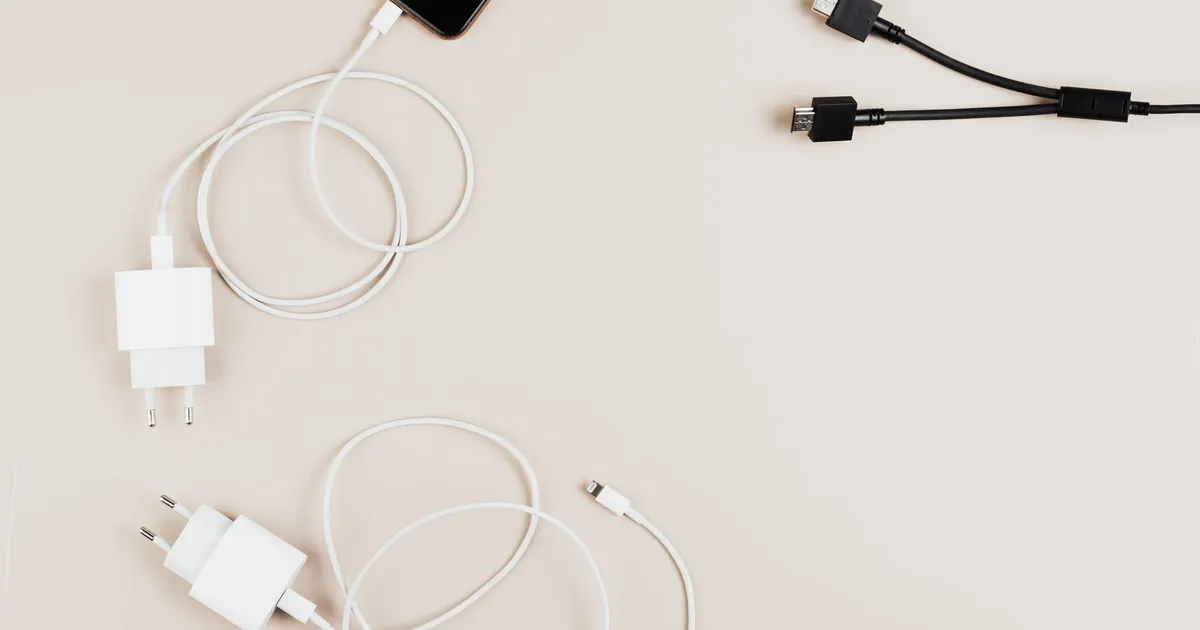
Power Banks on Vietnamese Flights: What Changed from 1 July 2026
If you are flying within Vietnam, or to and from it, the small battery in your day bag now matters more than it used to. Since 1 July 2026, the Civil Aviation Authority of Vietnam has applied tighter rules to power banks on flights: a cap on how many you can carry, limits on their capacity, a requirement that they travel in the cabin, and a ban on using them to charge anything while airborne. The rules are not onerous if you know them, but they are specific, and travellers who arrive at the gate with three mismatched chargers and no idea of their capacity can lose time and equipment.
This article sets out what the rules say, where reports differ, how to work out whether your power bank qualifies, and how to pack so that you pass through security without fuss. It is a practical update rather than a reason for alarm. As ever, the safest approach is to check your airline's own conditions before you fly, because carriers may apply the national rules in slightly different ways.
What changed on 1 July 2026
The new requirements come from the Civil Aviation Authority of Vietnam, which said it was implementing guidance from the International Civil Aviation Organization. Airlines were instructed to inform passengers of the rules before travel. According to reports in Vietnamese media, the key points are as follows.
- Each passenger may carry no more than two power banks on a flight.
- Power banks must be carried in cabin baggage, not in checked luggage.
- Lithium-ion power banks are limited to 100 watt-hours of rated energy. Devices between 100 and 160 watt-hours need prior approval from the airline.
- Lithium metal batteries are limited to 2 grams of lithium content.
- Passengers may not recharge a power bank during the flight, and may not use one to charge other devices on board.
- Power banks must be kept in a visible location throughout the flight.
- Each one must be protected against short circuits, using its original retail packaging, insulated or taped terminals, or a separate protective pouch or plastic bag.
Reports do not mention specific penalties for breaking the rules, and we have not seen a published fine schedule. In practice the likely consequence is the one that matters most to a traveller: a power bank that does not comply may be refused, removed at security or confiscated, and a passenger who ignores crew instructions on board can face the usual consequences for non-compliance.
One request. Up to five tailored proposals.
Skip contacting agencies one by one — share your trip once and let up to five trusted Vietnam agencies come to you. Free, with no obligation.
Get my free quotesOne point where reports differ
Reports are not identical on one detail. Some describe the rule as requiring power banks to stay in carry-on bags, which is consistent with standard international practice. Others, including one report in Tuoi Tre, say power banks must be taken out of carry-on baggage and kept visible during the flight. These two descriptions are compatible if the practical expectation is that you carry your power banks in the cabin, not stowed away out of reach, and that you may be asked to take them out of your bag at screening and keep them in view in a seat pocket or small bag you can see.
Because the exact procedure can vary by airport and airline, the sensible approach is to keep your power banks together in an easily reached pocket of your cabin bag, ready to be removed at security, and to follow crew instructions on board. If you are unsure, ask the airline before your flight or at check-in.
Working out whether your power bank qualifies
Most power banks sold to travellers state their capacity in milliamp-hours, abbreviated mAh, not in watt-hours. The 100 watt-hour limit is expressed in watt-hours, so a simple conversion is useful. Multiply the capacity in mAh by the battery's nominal voltage, which is typically 3.6 or 3.7 volts for lithium-ion cells, and divide by 1,000.
On that basis, a 10,000 mAh power bank is roughly 37 watt-hours, and a 20,000 mAh unit is around 74 watt-hours. A 27,000 mAh unit lands near the 100 watt-hour line, and anything larger needs checking. Many manufacturers print the watt-hour figure on the casing, and some print the rated capacity differently from the nominal figure, so look for a Wh marking first. If you cannot find one, a power bank with no legible rating is a poor candidate for a flight, because security staff may not accept it.
The practical lesson is to travel with moderate-capacity units. A pair of 10,000 or 20,000 mAh power banks from a reputable brand will charge a phone several times over and sail through any check. A single large unit, a heavily used older bank with a swollen case or an unbranded one without markings is more trouble than it is worth. If a power bank is damaged, swollen, hot or leaking, leave it at home and replace it.
Get matched with up to 5 trusted Vietnam agencies
- Free
- No obligation
- Up to 5 agencies
At the airport: what to expect
Before you reach the airport, charge your phone and other devices, so that you rely less on spare batteries during the flight. At check-in, make sure power banks are not in the bag you check. That is the mistake that most often causes delays: a power bank discovered in a hold bag can lead to the bag being opened, and a hold-bag power bank is prohibited under standard international rules.
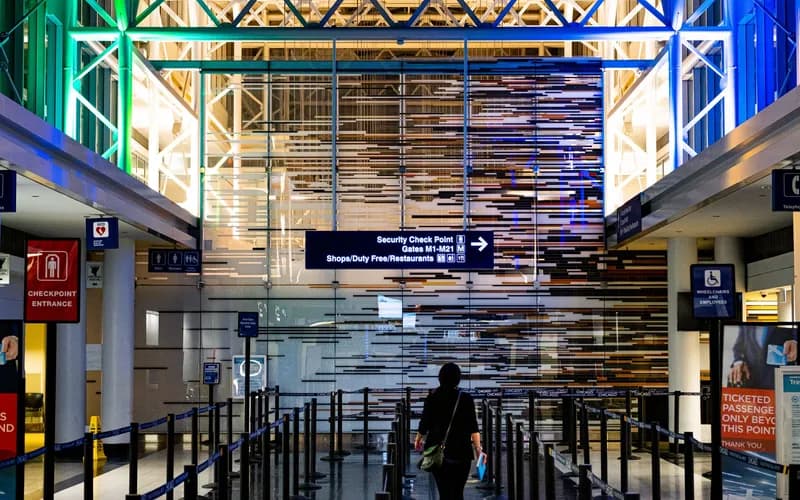
At security, expect to take power banks out of your bag and place them in a tray, as you would a laptop. Having them in one pocket makes this quick. Carry a small pouch or use the original packaging so that the terminals are protected, which is a stated requirement. Keep any documentation or labels showing capacity easy to find, since screening staff may ask. Our guide to Tan Son Nhat's Terminal 3 describes the airport layout and security flow in Ho Chi Minh City, and the same principle applies at other airports: arrive with time in hand.
In the cabin: what you can and cannot do
Once on board, the rule is simple: your power bank is for storage, not for use. You may not recharge it from a seat outlet or a USB port, and you may not use it to charge your phone or another device. Many travellers are used to plugging a phone into a bank during a long flight, and that habit now has to change.
Plan accordingly. Charge your phone before boarding and carry the power bank as a reserve for when you land. If you need power during a long flight, check whether your aircraft has in-seat USB or power outlets, which is a different matter and is generally permitted according to the airline's own rules. Keep your power bank in the seat pocket, in a small bag at your feet, or somewhere you can see it, rather than in the overhead locker, in line with the requirement that it stay visible throughout the flight.
Other batteries, and what these rules do not cover
The reports we have seen concern power banks. They do not set out new rules for the batteries inside phones, laptops, tablets or cameras, which remain subject to the standard rules of the airline and the international guidelines that govern spare lithium batteries. As a general principle, spare lithium batteries, including camera batteries and drone batteries, belong in your cabin baggage, not in the hold, and should be protected against short circuit. Drone and e-bike batteries are larger and are often subject to much stricter limits, and some airlines refuse them altogether.
This matters for cyclists in particular. If you plan to ride an e-bike on a trip, it is far simpler to rent one locally than to fly with a large battery. Our recent look at Vietnam's growing cycling scene explains the routes and operators that supply bikes.
Why the rules exist, and what they mean for your itinerary
Lithium-ion batteries can overheat if they are damaged, defective or short-circuited, and a fire in a cabin is a serious event, because it must be caught early. Aviation authorities across the world have tightened their rules on power banks in recent years, and the Vietnamese measures follow the same logic. Keeping the devices in the cabin means that crew can see and respond quickly, and forbidding use and charging in flight reduces the chance of a problem developing out of sight.
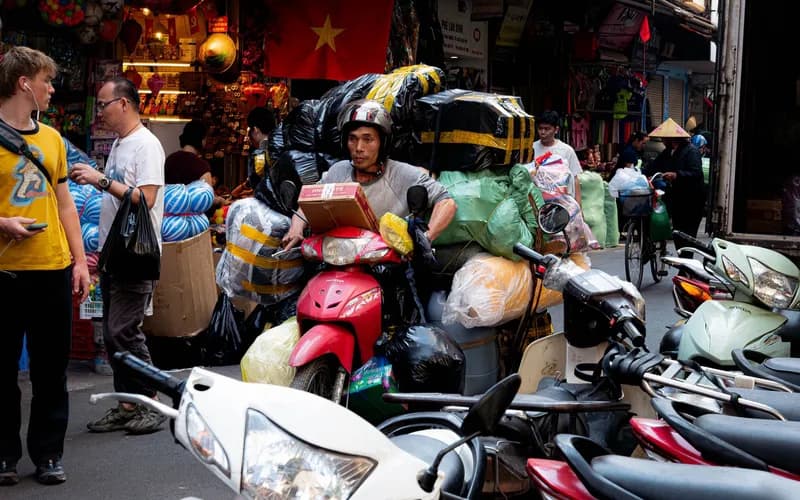
For travellers, the practical effect is modest if you plan for it. Vietnam's domestic air network has expanded, and short flights are an increasingly common way of linking regions, as we describe in our look at Vietnam's new flight map. If your trip involves several flights, the same packing routine applies each time, so it is worth building it into your habits at the start. Trains, buses and ferries are governed by their own operators' rules, which are not the same as aviation regulations.
A simple packing routine
Keep it simple. Carry no more than two power banks, ideally of moderate and similar capacity. Check that each shows a watt-hour rating of 100 Wh or less, or work it out from the mAh figure. Put them in a small, labelled pouch, with the terminals covered, in the pocket of your cabin bag you can reach without unpacking. Charge your phone before you leave the hotel, and use the power bank only on the ground. Check your airline's current conditions of carriage before each flight, and do not rely on what a friend told you last year. If you mix flying with other transport, our guide to choosing between trains, flights and sleeper buses helps you decide which mode suits each leg.
It is also worth avoiding the temptation to buy a cheap, unbranded power bank at the airport at the last minute. Cheap units are more likely to carry exaggerated capacity labels and are less likely to pass inspection. If you do need to replace one, buy a recognised brand from a reputable shop, and keep the packaging if you can.
What to Do Next
- Check the capacity marking on every power bank you own, and convert from mAh to Wh if needed.
- Limit yourself to two units, and leave damaged or unmarked ones at home.
- Protect the terminals with the original packaging, tape or a separate pouch.
- Keep power banks in cabin baggage only, in an easily reached pocket.
- Charge your phone and other devices before boarding, and plan not to use a power bank in flight.
- Check your airline's own baggage conditions before each flight, particularly if you carry a unit above 100 Wh.
- If you would like help planning flights, trains and transfers around a slower route, see our list of trusted travel agencies in Vietnam.
Frequently Asked Questions
How many power banks can I take on a flight in Vietnam?
Since 1 July 2026, each passenger may carry no more than two power banks on a flight in Vietnam, according to the Civil Aviation Authority of Vietnam's rules as reported in Vietnamese media. They must travel in your cabin baggage, not in checked luggage.
What is the maximum capacity allowed?
Lithium-ion power banks are limited to 100 watt-hours. Units between 100 and 160 watt-hours can be carried only with prior approval from the airline. Lithium metal batteries are limited to 2 grams of lithium content. Larger units are generally not accepted.
Can I use my power bank during the flight?
No. Passengers may not recharge a power bank on board, and may not use it to charge a phone or any other device during the flight. The power bank should remain in a visible location. Using the aircraft's own seat power, where available, is a separate matter governed by the airline.
How do I convert mAh to watt-hours?
Multiply the capacity in milliamp-hours by the nominal voltage, usually around 3.7 volts for lithium-ion cells, then divide by 1,000. A 20,000 mAh power bank works out at roughly 74 watt-hours, which is within the limit. Many power banks also print the watt-hour figure on the casing.
Do the rules apply to international flights to and from Vietnam?
The reports we have seen describe rules for flights operated under Vietnamese aviation authority guidance, and airlines were instructed to inform passengers. If you are flying with a foreign carrier or on an international route, check that airline's conditions as well, since they may be stricter.
What happens if my power bank does not comply?
Reports do not specify penalties. In practice, a non-compliant power bank may be refused, removed at security or confiscated, and ignoring crew instructions on board can lead to further consequences. The simplest protection is to carry compliant, clearly marked units.
Are phones and laptops affected?
The reports concern power banks, not the batteries built into phones, laptops, tablets and cameras, which remain covered by standard airline and international rules. Spare lithium batteries should travel in the cabin, with terminals protected. When in doubt, ask your airline.