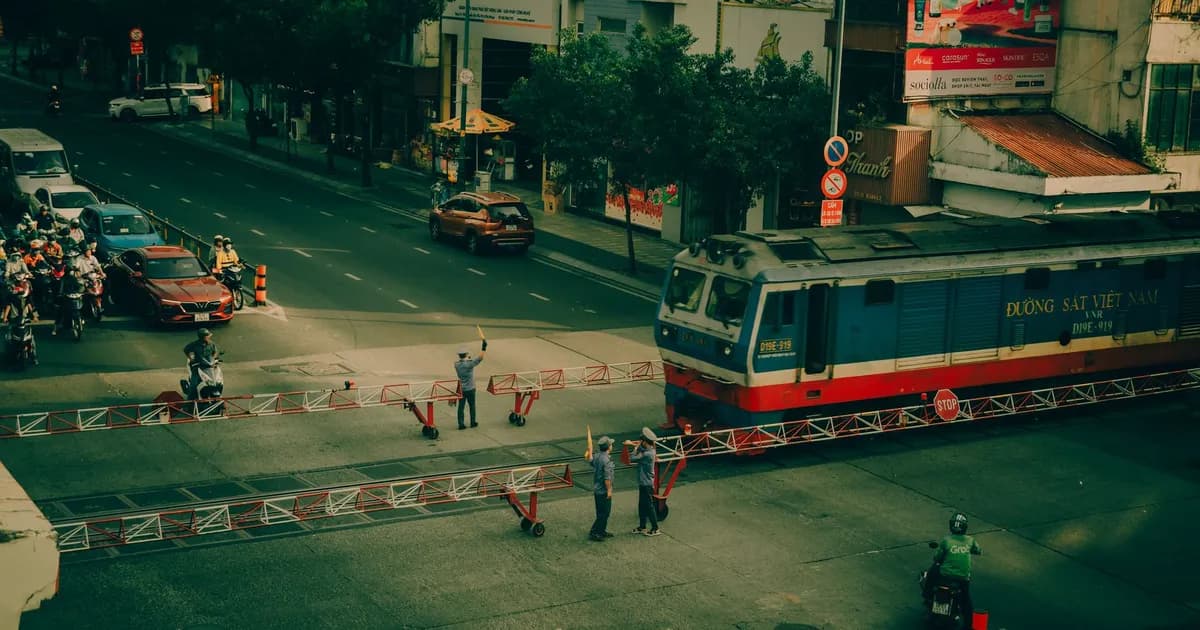


Vietnam's north–south corridor is roughly 1,726 kilometres long. How you move through it will shape your trip more than almost any other decision you make — and yet most travelers choose their transport mode the same way they choose a hostel: by price alone, at the last minute, without a framework. This guide gives you that framework. It covers the Reunification Express train, domestic flights, and overnight sleeper buses — what each mode actually costs in 2026, when each one earns its place in a well-designed itinerary, and how to book without getting burned. The goal is not to tell you which mode is best. It is to help you match the right mode to the right leg, so you arrive with energy rather than regret.
The Three Modes, Plainly Compared
Train
The Reunification Express covers Hanoi–Ho Chi Minh City in 34–38 hours; a four-berth soft sleeper (air-conditioned, lockable) runs about US$90–92 and is comfortable enough to enjoy rather than merely endure.
Flight
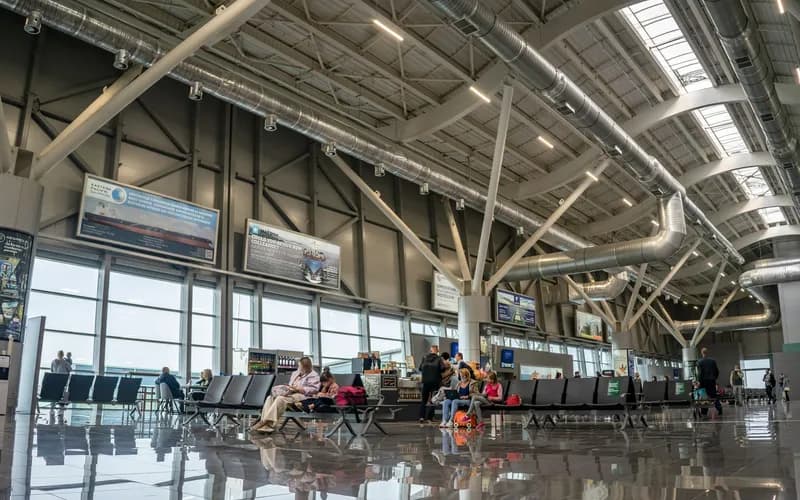
Vietjet, Bamboo Airways and Vietnam Airlines fly the route in about 2h15; fares run from US$25–40 promotional to US$80–150, though door-to-door it becomes a 5–6 hour travel day.
Sleeper bus
The cheapest way at roughly US$35–70 for the full run, but 31–40 hours on the road, variable in comfort and the most debated on safety — better split with a stop than ridden straight through.
Before the decision framework, here are the facts.
The Reunification Express runs the full Hanoi–Ho Chi Minh City route in 34 to 38 hours, depending on the service. The SE3 is the fastest at around 34 hours; the SE5 takes closer to 39. Hanoi to Da Nang runs 15 to 17 hours; Da Nang to Ho Chi Minh City, 16 to 18. The line is single-track, which means trains pass at designated stations and delays are common. Soft sleeper cabins (four berths, air-conditioned, lockable) cost roughly US$90–92 for the full Hanoi–Ho Chi Minh City run. Hanoi to Da Nang in a soft sleeper typically runs US$35–55.
Domestic flights cover Hanoi to Ho Chi Minh City in about 2 hours 15 minutes. Hanoi to Da Nang takes around 1 hour 20 minutes. Low-cost carriers — Vietjet and Bamboo Airways — run promotional fares as low as US$25–40 on major routes, though US$50–120 is more typical once you factor in baggage. Vietnam Airlines prices higher, usually US$80–150 or more, but includes checked luggage and onboard service. Door-to-door, a two-hour flight commonly becomes five to six hours once you add airport transfers and check-in.
Overnight sleeper buses cover popular segments — Hanoi to Phong Nha, Hue to Hoi An, Nha Trang to Ho Chi Minh City — in 8 to 14 hours, usually overnight. Fares run US$12–20 on most backpacker-trail routes. They are the cheapest option by a clear margin. They are also the most variable in quality and the most debated on safety grounds.
One request. Up to five tailored proposals.
Skip contacting agencies one by one — share your trip once and let up to five trusted Vietnam agencies come to you. Free, with no obligation.
Get my free quotesWhen to Take the Train
The Reunification Express is worth choosing when the journey itself has value to you — not as a consolation prize for not flying, but as a deliberate part of the trip.
Choose the train when:
- Your itinerary is two weeks or longer. A 15-hour overnight train from Hanoi to Hue costs you one night's sleep, not a full day. On a longer trip, that trade is easy to absorb.
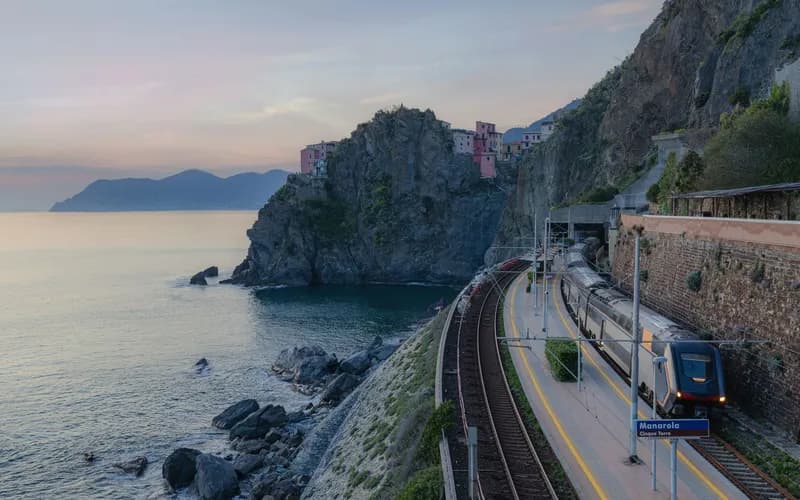
- You are traveling the Hue–Da Nang segment. The train crosses the Hai Van Pass — a coastal mountain stretch with views over the South China Sea — in daylight on several services. This is one of the genuinely distinctive rail experiences in Southeast Asia. Book a service that crosses it between roughly 8am and noon.
- You want a soft sleeper or private carriage. A four-berth soft sleeper gives you more personal space and a more bed-like sleep than most sleeper buses. Private operators — Laman Express, Violette, Lotus, Chapa — attach upgraded carriages to Vietnam Railways locomotives and charge a 20–50% premium over standard soft sleepers. For many travelers, that premium is worth it.
- You are uneasy about overnight road travel. Trains are widely perceived as safer than long-distance buses on Vietnam's highways, and that perception is reasonable.
The train is less ideal when you have ten days or fewer in Vietnam, or when you require consistent quiet and Western-standard cleanliness. Bathrooms are utilitarian. Corridors are social. Light sleepers may struggle with the motion and noise.
When to Fly
Flying is not a compromise. On certain legs, it is simply the correct answer.
Choose a domestic flight when:
- The route is long and your time is short. Hanoi to Ho Chi Minh City by train is 35-plus hours. If you have ten days in Vietnam, spending two of them on a single transit is a poor allocation. Fly.
- The price gap is small. If a soft sleeper costs US$90 and a flight costs US$70, the flight wins on almost every measure for a time-limited traveler. Check both before assuming the train is cheaper.
- You need schedule certainty. Flights allow you to arrive, check in, and sightsee the same day. Overnight trains can be delayed; arrival times shift. If you have a tour, a ferry, or a connecting bus to catch, a morning flight is more predictable.
- You are connecting to islands or remote airports. Phu Quoc, Con Dao, and Dalat are not on the rail network. Flying is not optional on these legs.
The honest caveat: factor in the full door-to-door time. A 2-hour flight from Hanoi to Ho Chi Minh City, with a 45-minute airport transfer each end and 90 minutes for check-in and boarding, is a 5-to-6-hour travel day. That is still far shorter than the train, but it is not the two-hour journey the ticket implies.
Get matched with up to 5 trusted Vietnam agencies
- Free
- No obligation
- Up to 5 agencies
When to Consider a Sleeper Bus
Sleeper buses have a legitimate place in a well-planned Vietnam itinerary. They are not inherently a bad choice — they are a choice that requires more care.
Consider a sleeper bus when:
- The route is medium-length and poorly served by rail. Hoi An to Nha Trang, for example, requires backtracking to Da Nang by train. A direct bus is often faster and more convenient.
- Budget is a genuine constraint. At US$12–20 per leg, buses cost a fraction of trains or flights. On a long trip with many segments, that adds up.
- You can verify the operator. This is the critical condition. A good 2026 sleeper bus has pod-style or two-row bunks (not cramped three-row layouts), seat belts at every bunk, individual curtains, and strong third-party reviews that specifically mention calm driving. Use 12Go Asia or Bookaway to compare operators, read recent reviews, and check photos of the actual bus interior.
Avoid sleeper buses when you are tall (many bunks are too short for travelers over 1.75m), when you have back problems, or when you are anxious about overnight road travel. Periodic serious accidents on Vietnam's long-distance bus routes are reported in local media, and the risk perception is not unfounded. On the longest hauls — Hanoi to Ho Chi Minh City, for instance — the train or a flight is a more defensible choice.
How to Book Without Getting Burned
For trains
The official Vietnam Railways site (dsvn.vn) shows real-time availability but can be difficult to navigate in English. For most international travelers, Baolau and 12Go Asia are the practical default: English-language interfaces, e-tickets accepted on board, and the ability to compare standard Vietnam Railways carriages with private operators like Laman and Violette side by side. Book soft sleepers as early as possible — popular services on the Hanoi–Hue and Hue–Da Nang segments sell out weeks ahead in high season.
If you are traveling as a small group, consider booking the entire four-berth cabin. The premium is modest and the privacy is significant.
For flights
Use Skyscanner or Traveloka to compare fares across carriers, then book directly with the airline once you have identified the flight you want. Direct booking simplifies changes and reduces friction if a disruption occurs. Low-cost carrier promotions — including occasional near-zero base fares from Vietjet — are worth monitoring if your dates are flexible.
For buses
Do not book through street-corner agencies that cannot provide an e-ticket or receipt. Use 12Go Asia or Bookaway, filter by user rating, and read recent reviews specifically for comments on driving style and bus condition. Ignore reviews older than 12 months — operators change fleets and management.
What to Do Next
Here is a prioritized sequence for planning your Vietnam transit.
- Map your route and count your days. List every city-to-city leg. Note how many nights you have in Vietnam total.
- Identify your anchor legs. Any leg over 600km on a trip shorter than two weeks should default to a flight unless you have a specific reason to train it.
- Pick one or two train segments for the experience. Hanoi to Hue overnight, or the Hue–Da Nang coastal crossing in daylight, are the most rewarding. Book these first — soft sleeper availability goes fast.
- Check flight prices before assuming the train is cheaper. On Hanoi–Da Nang and Hanoi–Ho Chi Minh City, promotional fares frequently undercut soft sleeper prices.
- For any bus leg, verify the operator before you book. Spend ten minutes on 12Go Asia or Bookaway reading reviews. It is the single most effective way to avoid a bad night.
- Do not optimize purely for cost. A US$15 saving that costs you a full day of energy on a ten-day trip is not a saving. Spend down on accommodation or meals if you need to — not on the transit legs that determine how you arrive.
Frequently Asked Questions
Is the Reunification Express train worth taking, or is it just slow?
It depends entirely on what you want from a travel day. The full Hanoi–Ho Chi Minh City run takes 34 to 38 hours — that is a significant commitment. But the Hanoi–Hue or Hue–Da Nang segments are a different proposition: overnight or half-day journeys with genuine scenery and a cross-section of Vietnamese society you will not encounter on a domestic flight. In a soft sleeper or private carriage, the experience is comfortable enough to be enjoyable rather than merely endured. For travelers with two or more weeks, at least one train segment is worth building in deliberately.
Are sleeper buses safe in Vietnam?
The honest answer is: it varies by operator, and the risk is real enough to take seriously. Local Vietnamese media periodically report serious accidents involving long-distance buses, often linked to driver fatigue or nighttime speeding. That does not mean all buses are dangerous — it means operator selection matters. Stick to well-reviewed companies on aggregator platforms, prioritize buses with seat belts and recent safety reviews, and consider whether the train or a flight is a viable alternative on longer hauls before defaulting to the cheapest bus ticket.
Why is flying sometimes cheaper than the train?
Low-cost carriers run deep promotional fares on trunk routes — sometimes as low as US$25–40 before baggage — that undercut soft sleeper train tickets. This happens most often outside Vietnamese public holidays, when demand drops and airlines discount aggressively. It is worth checking flight prices alongside train prices every time, rather than assuming one mode is always cheaper.
How do I choose between a standard Vietnam Railways sleeper and a private carriage?
Standard soft sleepers (four-berth, air-conditioned) are comfortable for most travelers and significantly cheaper than private carriages. Private operators like Laman Express or Violette offer upgraded bedding, better décor, and sometimes small amenities — at a 20–50% premium. If you are traveling solo and sharing a cabin with strangers is fine, the standard soft sleeper is good value. If you are traveling as a couple or small group and want to control your environment, booking a private carriage or the entire four-berth cabin is worth the extra cost.
What booking platforms are most reliable for Vietnam transport in 2026?
For trains and buses, 12Go Asia and Baolau are the most consistently recommended platforms among international travelers — English-language interfaces, e-tickets, and the ability to compare operators and carriage types. For flights, compare on Skyscanner or Traveloka, then book directly with the airline. Avoid purchasing train or bus tickets from unlicensed street agencies, which cannot always provide verifiable e-tickets.
Can I work or sleep properly on the train?
Wi-Fi on standard Vietnam Railways carriages is inconsistent or absent. Some private sleeper operators advertise it, but reviews suggest reliability is variable. Power outlets exist in most soft sleeper cabins but may be limited — carry a power bank. Sleep quality depends on your sensitivity to motion and noise; the train sways noticeably and corridors can be active. Light sleepers often find private carriages or booking a full four-berth cabin significantly better than sharing with strangers.
What is the single most common transit mistake travelers make in Vietnam?
Over-optimizing for cost on the wrong legs. Choosing the cheapest sleeper bus for a 14-hour overnight haul to save US$20, then arriving exhausted and losing half the following day, is a poor trade on a short trip. The travelers who report the most regret are those who treated every transit as a cost problem rather than an experience or time problem. Spend where the leg is long or the stakes are high. Economize on shorter hops where the difference in comfort is minimal.