
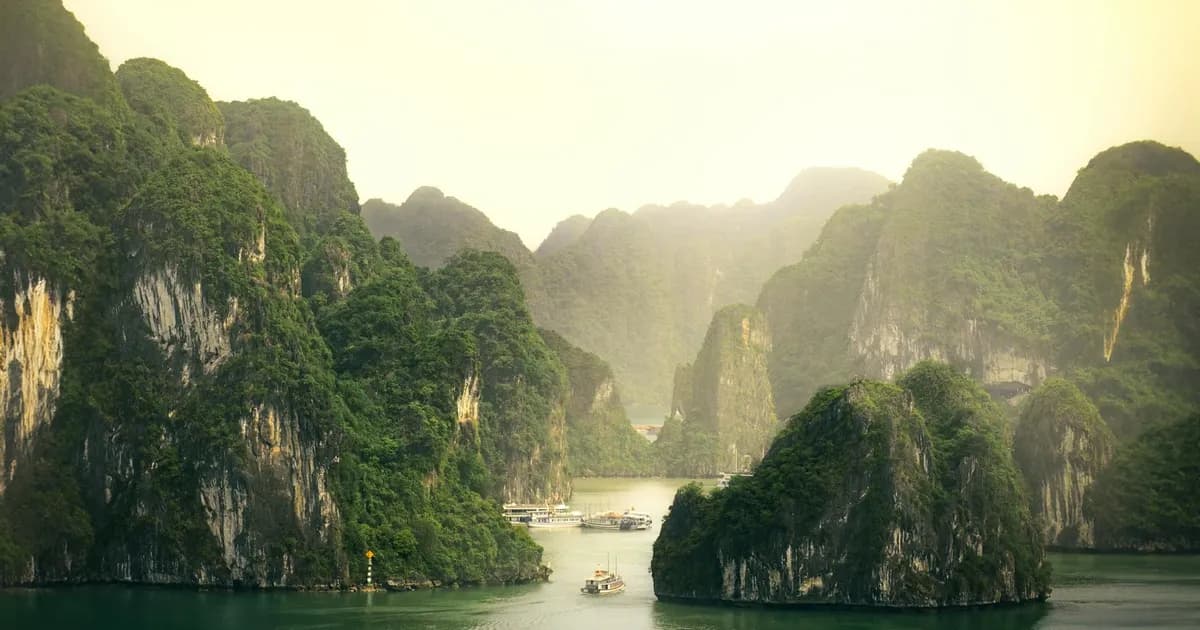
The Ring-Shift: How Overtourism Is Redrawing Vietnam's Travel Map
Something is shifting in how discerning travelers move through Vietnam — and the numbers make it legible. Vietnam welcomed 21 million international visitors in 2025, a 20% increase over the previous year and a figure that surpasses even the pre-pandemic record of 18 million set in 2019. Monthly arrivals now regularly exceed two million. The country is, by any measure, in a tourism boom. Yet a quieter counter-movement is underway: a growing segment of experienced travelers is deliberately stepping sideways, choosing Bai Tu Long over Ha Long Bay, Pu Luong over Sapa, Quy Nhon over Nha Trang. This is not accidental drift. It is a considered spatial rebalancing — and it is redrawing Vietnam's travel map faster than policy or infrastructure can follow.
The Pressure Behind the Shift
Vietnam's headline destinations have absorbed extraordinary volumes. Ha Long Bay, Hoi An's Ancient Town, Sapa town, the beaches of Phu Quoc and Nha Trang — these places were already under strain before the pandemic. The rebound has intensified everything. The Vietnam National Authority of Tourism recorded 17.5 million international arrivals in 2024, a 39.5% jump over 2023. The first half of 2026 brought 10.7 million visitors, running 21% ahead of the same period in 2024. Vietnam's growth rate in 2025 was roughly 21%, against a global tourism average of around 5%.
Those numbers concentrate in a short list of places. Korean and Chinese group tours — South Korea alone sent 4.5 million visitors in 2024 — flow heavily through coastal hubs and major cities. The result is predictable: queues, noise, a sense that the experience has been processed rather than lived. Travelers on Reddit's Vietnam forums describe Ha Long's main harbor as feeling like an amusement park on weekends. Sapa town draws comparisons to a theme park with mountain views. These are opinions, not statistics. But they are consistent, and they are shaping decisions.
The structural driver is not simply crowd fatigue. It is the combination of crowd fatigue with longer, more flexible stays. Vietnam's 2023 visa liberalization — 90-day multiple-entry e-visas for all nationalities, 45-day exemptions for 13 key markets — changed the calculus for repeat visitors. A traveler with 90 days does not need to compress Vietnam into a north-south sprint. They can spend a week in Ninh Binh, then move to Bai Tu Long rather than Ha Long proper, then drift south through Quy Nhon rather than stopping in Nha Trang. The itinerary deepens. The map expands.
One request. Up to five tailored proposals.
Skip contacting agencies one by one — share your trip once and let up to five trusted Vietnam agencies come to you. Free, with no obligation.
Get my free quotesA Spatial Rebalancing, Not a Rejection
The pattern that emerges is not a rejection of Vietnam's iconic regions. Travelers are not abandoning the northeast bays, the northwest mountains, or the central coast. They are choosing adjacent destinations within those same geographies — places that share the essential landscape but sit outside the tour-bus radius.
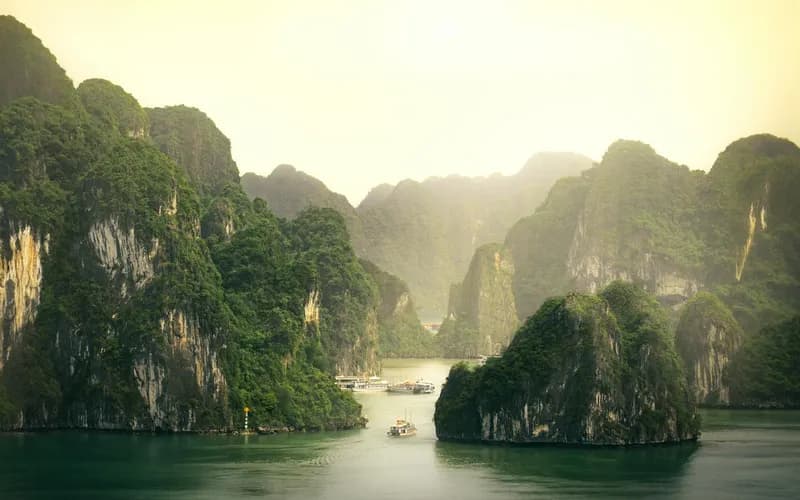
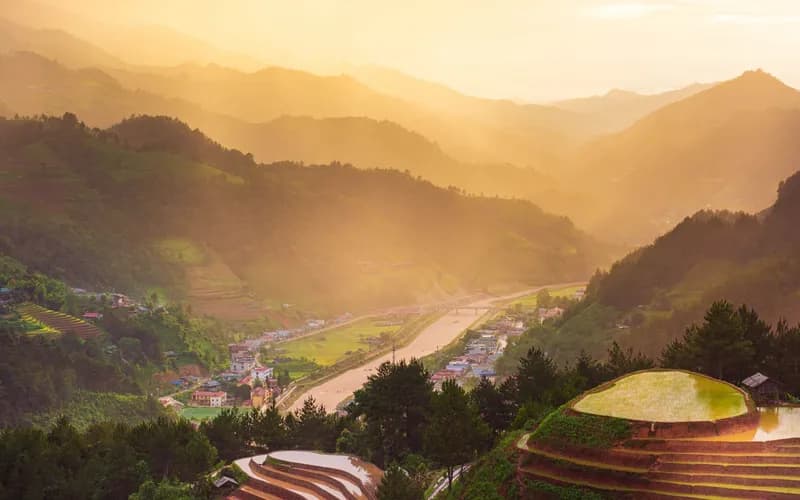
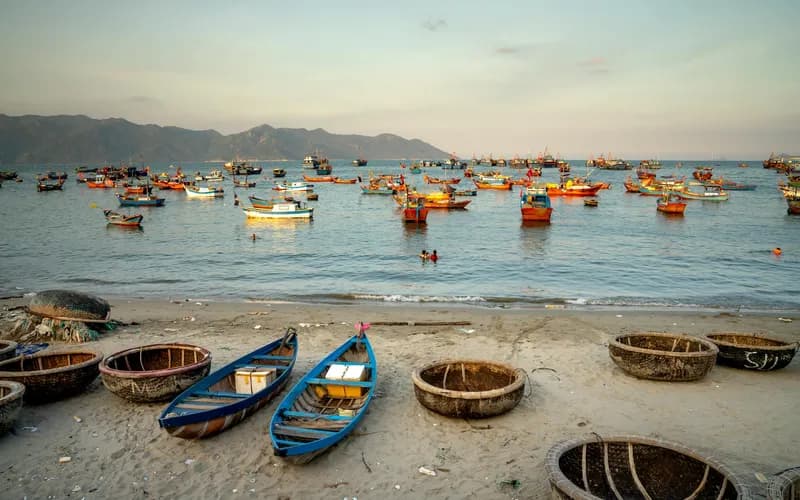
Bai Tu Long Bay occupies the same broader UNESCO-listed bay complex as Ha Long, with the same karst limestone formations and emerald water. The difference is operational: fewer cruise boats, less built-up shoreline, mornings where you might anchor without another vessel in sight. Pu Luong, in Thanh Hoa province, offers terraced rice paddies and ethnic minority villages comparable to Sapa's — but without the urbanized town center that now dominates Sapa's valley. Quy Nhon, in Binh Dinh province, has long sandy bays, Cham towers, and a fishing culture that Nha Trang once had before the mega-resorts arrived.
The pricing logic is less straightforward than it appears. A Bai Tu Long cruise on a smaller boat often costs as much as, or slightly more than, a mid-range Ha Long itinerary — the smaller scale removes the budget-boat economy. Pu Luong trekking with a homestay runs comparable daily rates to Sapa, with added transport costs from Hanoi. Quy Nhon accommodation remains generally cheaper, but the gap is narrowing as the destination gains attention. What travelers report gaining is not a discount. It is proportion: more space, more local interaction, more of the experience they came for, at the same price.
What Is Driving Discovery
Three forces are accelerating this redistribution, and they operate at different speeds.
The first is repeat visitation. Tourism officials note a rising share of return visitors, particularly from nearby Asian markets and Western long-haul travelers now enabled by 90-day visas. A traveler on their second or third visit to Vietnam has already done the classic circuit. They are not looking for Ha Long Bay — they are looking for what Ha Long Bay felt like before it became Ha Long Bay. That search leads, reliably, to the adjacent alternative.
The second force is digital media. YouTube creators and Instagram accounts have spent the past two years building a body of content around Quy Nhon's beaches, Pu Luong's rice terraces, and Bai Tu Long's quiet anchorages. The framing is consistent: go now, before it changes. This is a journalistic trope — "what Nha Trang was ten years ago" — but it functions as a genuine signal. It tells a certain kind of traveler that a window is open, and that it will not stay open indefinitely.
The third force is the most structural: Vietnam's own tourism authorities are beginning to promote secondary destinations formally. Binh Dinh province and Phu Yen have appeared at international tourism roadshows. The Vietnam National Authority of Tourism's strategic language emphasizes diversifying products and regions. Policy is following the market, not leading it — but the direction is the same.
Get matched with up to 5 trusted Vietnam agencies
- Free
- No obligation
- Up to 5 agencies
The Risk Embedded in the Opportunity
The destinations absorbing this spillover are not immune to the pressures they are currently offering relief from. This is the uncomfortable logic of the cycle: discovery, growth, saturation, displacement. Sapa was once what Pu Luong is now. Nha Trang was once what Quy Nhon is now. The travelers arriving in these places today are, in aggregate, the leading edge of the next wave.
Local voices in Vietnam's mountainous provinces often express a version of this anxiety. Homestay owners in valleys like Pu Luong describe preferring small groups and longer stays over the high-turnover model that came to define Sapa town. Provincial officials walk a careful line between welcoming economic opportunity and avoiding the infrastructure failures — waste management, overdevelopment, cultural erosion — that have complicated the story of earlier boom destinations.
Infrastructure lag currently provides a partial brake. Most secondary destinations require private transfers or organized logistics; public transport connectivity is limited. Reaching Pu Luong from Hanoi, or Bai Tu Long without a cruise operator, demands more planning than the classic routes. This friction filters the audience toward travelers who are genuinely motivated — which, for now, tends to mean travelers who are also more considerate. But friction is not a sustainable conservation strategy. It erodes as roads improve, as domestic flights expand, as OTAs begin listing more inventory.
Vietnam is on track for 22 to 23 million international visitors in 2026. The pressure on the system is not easing. The question for secondary destinations is not whether they will be discovered — they already are — but whether the pace of that discovery allows for the kind of development that preserves what made them worth discovering.
The Map Is Being Redrawn
What is happening in Vietnam is not a niche trend among slow travelers. It is a structural redistribution of tourism attention, driven by volume pressure at the top of the system and enabled by visa liberalization, digital discovery, and the accumulated experience of repeat visitors. The map is being redrawn — not by planners, but by travelers making individual decisions that, in aggregate, constitute a new geography.
For anyone planning time in Vietnam now, the secondary destinations represent a genuine window. Bai Tu Long, Pu Luong, Quy Nhon, Phu Yen, Con Dao — these places still offer what the classic hubs once offered: proportion, quiet, the sense that you are somewhere rather than processing somewhere. That window will not close all at once. But it is narrowing, and the pace of Vietnam's arrival growth suggests it is narrowing faster than most travelers realize.
The more interesting question is what Vietnam's tourism geography looks like in a decade, when today's secondary destinations have absorbed their own wave of attention, and the ring shifts again.
Frequently Asked Questions
Is the shift toward secondary destinations a deliberate policy or a spontaneous traveler behavior?
Primarily the latter, though policy is beginning to align. The redistribution of travel attention toward places like Bai Tu Long, Pu Luong, and Quy Nhon has been driven by repeat visitors, digital media, and crowd fatigue at classic hubs — not by government planning. Vietnam's tourism authorities have since begun formally promoting some of these regions, but they are following a market movement that was already underway.
Do secondary destinations in Vietnam actually offer better value than the classic hubs?
Not always in price terms. A Bai Tu Long cruise or a Pu Luong trekking package often costs as much as the Ha Long or Sapa equivalent. What travelers consistently report is better experiential value: more space, more local interaction, and a quieter atmosphere for comparable or slightly higher spend. Quy Nhon remains genuinely cheaper for accommodation, though that gap is closing as the destination gains profile.
How long before secondary destinations face the same pressures as the classic hubs?
There is no fixed timeline, and it varies by destination. Con Dao, with strict development controls, is better protected than Pu Luong, which has seen rapid homestay growth. The pattern in Vietnam — and across Southeast Asia — suggests that once a destination enters the international content cycle, the window between discovery and saturation is measured in years, not decades. Shoulder seasons and longer stays tend to offer the most resilient experience regardless of where a destination sits in that cycle.
Does Vietnam's visa liberalization meaningfully change how travelers explore the country?
Yes, in a structural way. The shift from 30-day single-entry visas to 90-day multiple-entry e-visas for all nationalities changes the itinerary logic entirely. Travelers no longer need to compress Vietnam into a rapid north-south circuit. Longer stays encourage region-based itineraries — spending a week in one valley, one bay, one coastal stretch — which naturally draws attention toward secondary destinations that reward slower engagement.