Vietnam's Cashless Shift in 2026: How QR Payments Work for Foreign Travellers
If you have not been to Vietnam for a couple of years, the way people pay has changed more than almost anything else. The country has moved to QR-code payments at remarkable speed, and by 2026 the little black-and-white squares are everywhere, from glossy shopping malls in Ho Chi Minh City to roadside coffee carts in Hanoi and market stalls in small provincial towns. For the visitor, this is mostly excellent news, but there is a catch: the systems were built for residents, and getting a foreigner set up to use them takes a little knowledge. This guide explains how the cashless shift actually works for travellers, and what still requires cash.
The headline is that Vietnam is now largely a tap-and-scan society. Locals rarely carry much cash, paying instead by scanning a QR code with a banking app, and vendors of every size expect it. For a traveller who arrives assuming cash is king, this can be quietly disorienting, and it is worth understanding the landscape before you land rather than working it out at a market stall with a queue behind you.
Why Vietnam went cashless so fast
Vietnam's leap to digital payments has been driven by a young, phone-native population, near-universal smartphone use and a deliberate national push towards a cashless economy. The backbone is the country's interbank QR standard, which lets a single scannable code move money directly between bank accounts, cheaply and instantly. Because it is built into ordinary banking apps rather than requiring a separate wallet, adoption has been extraordinarily broad, reaching vendors far too small to ever accept a card.
The result is a payment culture that is, in everyday use, more advanced than in many wealthy Western countries. Splitting a bill, paying a street vendor or settling a taxi fare is often just a scan away. The friction, for visitors, is not the technology but access: most of these systems were designed around a Vietnamese bank account and national ID, which is exactly the thing a tourist does not have.
One request. Up to five tailored proposals.
Skip contacting agencies one by one — share your trip once and let up to five trusted Vietnam agencies come to you. Free, with no obligation.
Get my free quotesThe barrier for foreigners, and how it is easing
Here is the honest difficulty. Many Vietnamese e-wallets and banking apps require in-person identity verification and biometric enrolment, often tied to a local ID, before they will activate an account. For a short-term visitor, that has traditionally made the domestic QR systems hard to join, leaving foreigners reliant on cash and cards while everyone around them scanned and paid.
That is changing. Payment providers have begun creating routes for foreigners, and by 2026 some services allow tourists to register using just an international phone number and passport details, with activation in minutes rather than requiring a local bank account. This is the single most useful development for visitors, because it finally lets you pay the way locals do. The situation is evolving quickly, so it is worth checking the current options shortly before you travel, but the direction is clear: the door that was closed to tourists is opening.
What you can realistically do as a visitor
For most travellers in 2026, a practical toolkit looks like this. First, bring a card, ideally one with low foreign-transaction fees, which works in ATMs and in larger hotels, restaurants and shops. Second, carry a sensible amount of cash for the many small, everyday transactions where it remains simplest. Third, if you are staying more than a few days, look into one of the tourist-friendly payment services that now let foreigners set up QR payments with a passport and phone number, because it genuinely smooths daily life.
Contactless card payments and international mobile wallets are also increasingly accepted in tourist-facing businesses, so a phone loaded with a travel card often covers you in cities. The key is redundancy: do not rely on a single method. A card can be declined, an app can glitch, and an ATM can be empty, so a traveller who carries a card, some cash and, ideally, access to QR payments is never stuck. For the wider picture on getting money and getting online, our guide to money, cards and connectivity in Vietnam sets out the essentials.
Get matched with up to 5 trusted Vietnam agencies
- Free
- No obligation
- Up to 5 agencies
Where cash still rules
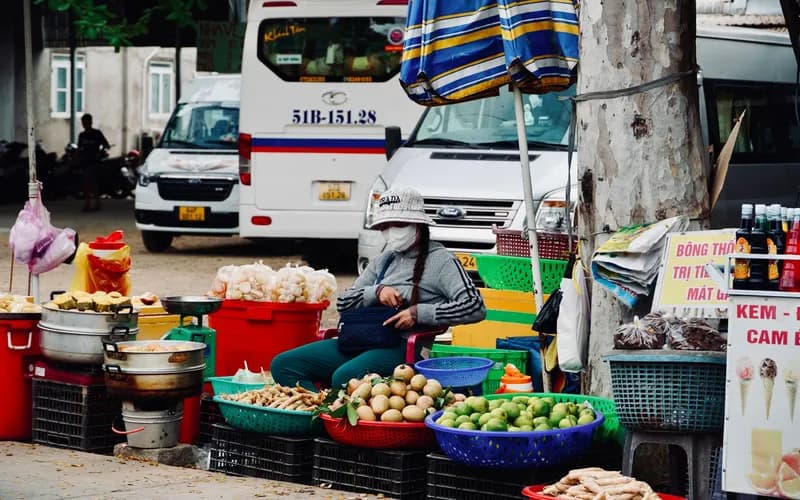
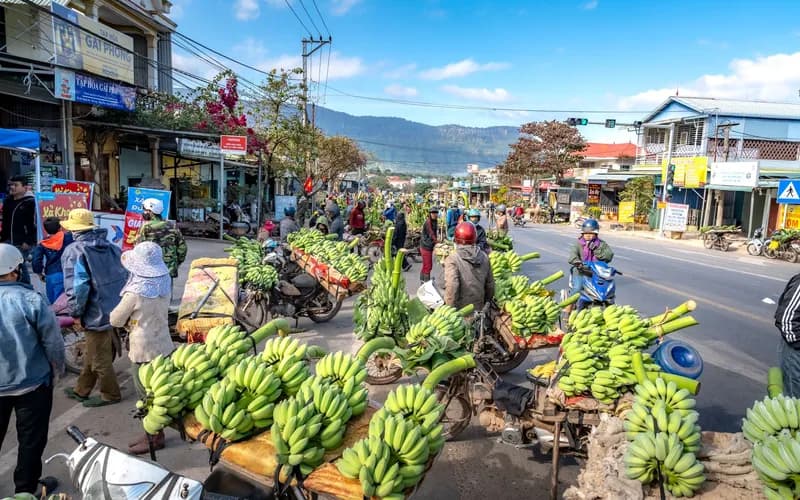
Despite the digital surge, cash has not disappeared, and in some situations it remains essential. In remote areas, small villages and much of the countryside, digital readiness is lower and cash is still the norm, so anyone heading off the beaten track, into the northern mountains or the deep Mekong Delta, should carry enough physical money to be self-sufficient. The same applies to the smallest vendors, some transport, and moments when the mobile signal fails and a QR scan simply will not load.
The sensible rule is to match your method to your route. In the big cities and tourist centres, digital payment is easy and often preferred; the further you travel from them, the more you should lean on cash. Withdraw a reasonable buffer before heading into rural areas, where ATMs are sparse and may not accept foreign cards, so that a cashless assumption never leaves you stranded.
Fees, safety and small practicalities
A few practical points make the cashless shift smoother. Watch for fees: some ATMs charge significant withdrawal fees and offer poor exchange rates through dynamic currency conversion, so always choose to be charged in Vietnamese dong rather than your home currency, and use your bank's own conversion. When paying by QR, check the amount on your screen before confirming, as you are authorising a direct bank transfer that is not always easy to reverse.
Keep your banking apps secure with strong authentication, be wary of anyone offering to "help" you at an ATM, and keep a note of your card provider's emergency number in case a card is lost or blocked. None of this is unique to Vietnam, but the speed of the country's digital shift means a little care goes a long way. If you are combining this with a visa application, our guide to Vietnam's e-visa and visa exemption rules covers the current fees and processes, and our overview of what has changed for travellers in 2026 puts the payment shift alongside the other recent updates.
A day of paying in Vietnam
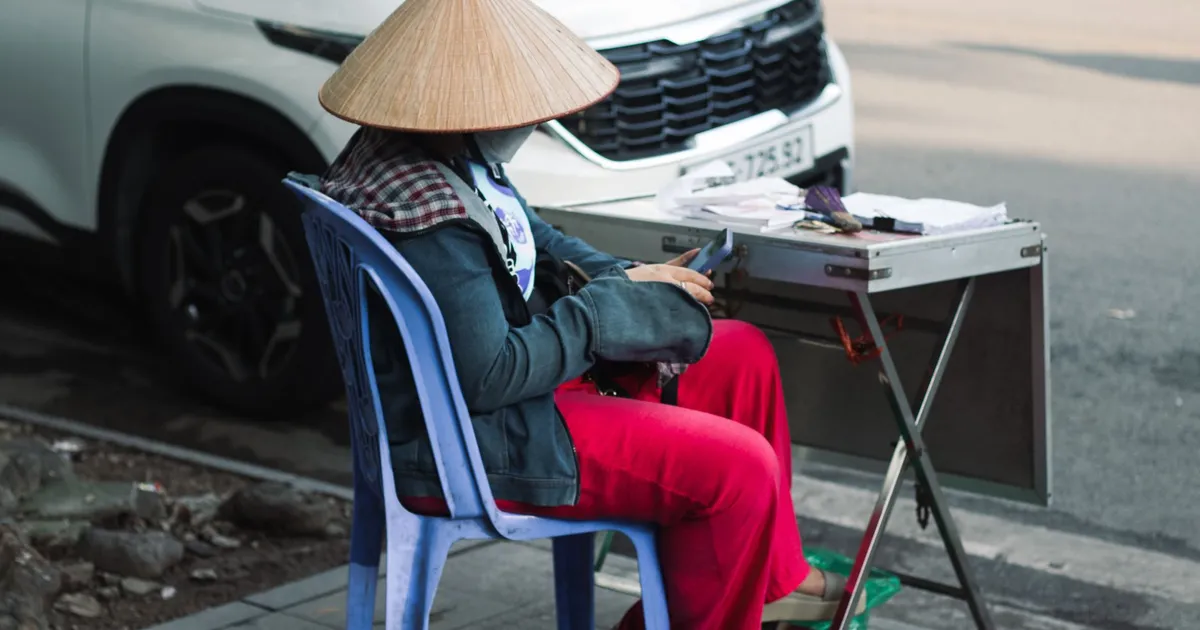
It helps to picture how the cashless shift plays out over an ordinary day, because the reality is a blend rather than an either-or. You might start with a coffee from a street cart, where a QR code taped to the counter is the fastest way to pay if you are set up, or a small note if you are not. A taxi or ride-hailing trip across town is typically settled in-app, card or wallet already linked, with no cash changing hands at all. Lunch at a mid-range restaurant will happily take a card or a scan; a bowl of noodles at a market stall may prefer cash, though even here QR is spreading fast.
By the afternoon the pattern is clear: in the city, digital payment covers most of what you do, and cash fills the gaps. Step outside the city, though, and the balance tips the other way. A homestay in the hills, a boat operator in the delta, a roadside stall on a country road, these still run largely on cash, and the traveller who assumed the whole country worked like its capital can be caught out. The lesson is not to pick one method but to hold several and read the situation.
For most visitors, the smoothest approach is a simple hierarchy. Use QR payment where you have it set up and the vendor accepts it, as it is instant and avoids handling notes. Fall back to a card in larger establishments and at ATMs. And keep cash for the small, the rural and the unexpected. Carried together, these three cover essentially every situation you will meet, from a rooftop bar in Ho Chi Minh City to a mountain village where the nearest bank is hours away.
Understanding this everyday rhythm is really the whole point. Vietnam's payment landscape has changed faster than its guidebooks, and arriving with an accurate mental model, digital-first in the cities, cash-ready everywhere else, spares you both the awkward market-stall fumble and the anxiety of running short far from an ATM. It is the kind of unglamorous groundwork that never makes it into a highlights reel, yet it is exactly what lets you spend your attention on the country rather than on the logistics of paying for it.
What to Do Next
- Before you travel, check the current tourist-friendly QR payment options, as services that accept a passport and phone number are expanding quickly.
- Bring at least one card with low foreign-transaction fees for ATMs, hotels and larger businesses.
- Carry a sensible cash buffer, and top it up before heading into rural areas where ATMs are scarce.
- When using ATMs or paying by card, always choose to be charged in Vietnamese dong, not your home currency.
- Keep several payment methods so a declined card or a glitchy app never leaves you stuck.
- Match your approach to your route, leaning digital in the cities and on cash the further off the beaten track you go, using our plan your journey page to think it through.
Frequently Asked Questions
Can tourists use QR payments in Vietnam?
Increasingly, yes. Historically the domestic systems required a local bank account and ID, but by 2026 some tourist-friendly services let foreigners register with just a passport and an international phone number, activating in minutes. Check the current options before you travel.
Is Vietnam a cashless country now?
Largely, in its cities and tourist areas, where QR payments are ubiquitous and often preferred. But cash remains essential in rural areas, small villages and with the smallest vendors, so travellers should always carry some.
Do I still need cash in Vietnam?
Yes. Despite the digital surge, cash is still important for remote areas, small transactions and moments when the mobile signal fails. Carry a sensible buffer, especially before heading into the countryside where ATMs are sparse.
How do QR payments work in Vietnam?
Vietnam uses an interbank QR standard that moves money directly between bank accounts when you scan a vendor's code with a banking or payment app. It is instant and cheap, which is why even tiny vendors accept it.
Will my foreign card work in Vietnam?
In cities, larger hotels, restaurants and shops generally accept international cards, and ATMs dispense cash, though some charge fees. Coverage thins in rural areas, so do not rely on a card alone; carry cash and, if possible, set up QR payments too.
How do I avoid bad exchange rates?
When an ATM or card machine offers to charge you in your home currency, decline and choose Vietnamese dong instead, so your own bank handles the conversion. This avoids the poor rates of dynamic currency conversion.