Climbing Borobudur in 2026: The New Rules, Tickets and Upanat Sandals
Borobudur, the vast ninth-century Buddhist monument in Central Java, is one of the great wonders of Southeast Asia, and for decades visitors could simply wander up its terraces to the crown of stupas at the summit. That is no longer the case. In a significant change driven by conservation, climbing to the upper levels of Borobudur is now strictly controlled, requiring a special ticket, a mandatory guide and a pair of protective sandals, and it is quite possible to visit and not climb at all if you turn up unprepared. If seeing Borobudur from the top matters to you, and for many travellers it is the whole point, you need to understand the 2026 rules before you go. This guide explains exactly how it works.
Before the detail, the usual caution. Access rules at major heritage sites are refined over time, ticket prices change, and reported quotas can be inconsistent between sources. Everything here reflects the situation as understood in 2026, but you should confirm the current rules and book through the official channel before you travel. Treat this as a clear guide, not a substitute for the latest official information.
Why climbing is now restricted
The restrictions exist for a genuine reason: to protect the monument. Borobudur is an ancient structure of carved volcanic stone, and decades of mass foot traffic wore down its steps and reliefs. The move to control access to the upper levels is a conservation measure, intended to limit the number of people climbing on the fragile stone at any one time and to reduce the physical damage caused by millions of feet over the years. Understanding this helps put the rules in context: they are not bureaucratic obstacles but an attempt to preserve a priceless monument for the future.
This kind of carrying-capacity management is increasingly common at Indonesia's most treasured sites, part of a broader shift towards protecting heritage and nature from the pressures of their own popularity. It is the same instinct, applied to a temple, that drives the marine and wildlife limits emerging elsewhere in the country. For the traveller, it means a more managed but also more sustainable experience, and one that rewards a little advance planning.
One request. Up to five tailored proposals.
Skip contacting agencies one by one — share your trip once and let up to five trusted Indonesia agencies come to you. Free, with no obligation.
Get my free quotesThe two tickets: grounds versus the climb
The most important thing to grasp is that there are effectively two different levels of access, and they are not the same ticket. A standard entry ticket lets you into the temple grounds and gardens, from where you can admire and photograph the monument from below, but it does not, on its own, allow you to climb up onto the structure to the upper terraces. For that you need the separate, more expensive structure-climb ticket.
This distinction catches many visitors out. People arrive expecting that entry means climbing, buy the standard ticket, and then discover they cannot go up. If reaching the summit and seeing the famous stupas up close is your goal, you must specifically obtain the structure-climb ticket, which is limited and comes with conditions. Foreign visitors pay more than domestic ones, as is standard at major Indonesian sites, and the climb ticket carries a premium over grounds entry.

The Upanat sandals and the mandatory guide
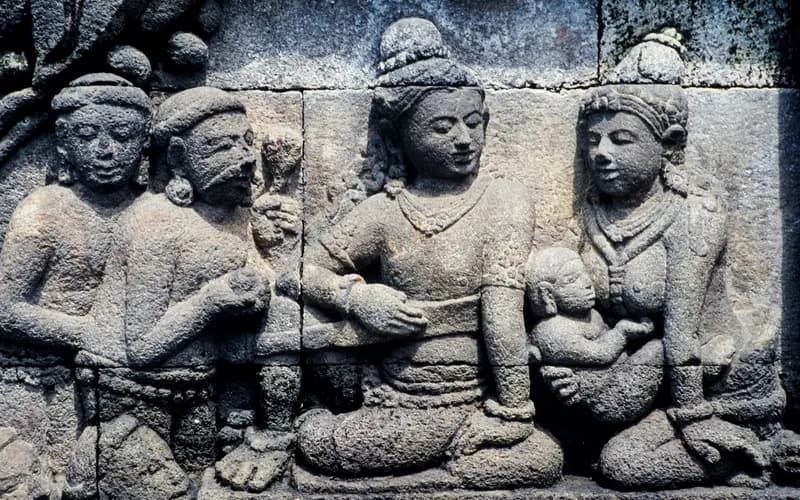
Two conditions come attached to the climb ticket, and both are non-negotiable. The first is footwear: to protect the ancient stone, everyone climbing the structure must wear special Upanat sandals, a locally made sandal designed to reduce wear on the reliefs and steps. These are provided as part of the climb experience, and you cannot climb in your own shoes. It is a small, characterful detail that also does real conservation work.
The second condition is that you must climb with an official guide, included in the structure ticket, typically in a managed group. Rather than wandering freely, climbers ascend in organised groups accompanied by a guide, which both controls numbers and adds context, as the guide explains the monument's history and symbolism. This guided, sandalled ascent is a more structured experience than the free-for-all of the past, but many find the guiding enriches the visit, turning a climb into a genuine understanding of what Borobudur is.
Get matched with up to 5 trusted Indonesia agencies
- Free
- No obligation
- Up to 5 agencies
Quotas, timing and the sunrise question
Access to the climb is limited, which is why planning ahead matters. Reports on the exact numbers vary, but the climb operates in managed sessions through the day with a capped number of climbers, and the dawn experience in particular is tightly limited. The famous sunrise slot, prized for seeing the temple emerge from the morning mist, is capped at a small number of places and books out well ahead, so if a Borobudur sunrise is on your list, reserve as early as you can.
For the regular daytime climb, booking a few days in advance, typically around three to seven days ahead, is strongly advised, especially in peak season when tickets can sell out. Turning up on the day and hoping to climb is a gamble you may lose. Building Borobudur into your itinerary with the climb ticket secured in advance is the only reliable approach, and it fits naturally into a wider exploration of the region covered in our guide to Yogyakarta and Central Java.
How to book and what to bring
The reliable way to secure a climb ticket is through the official Borobudur ticketing channel rather than unofficial resellers, and booking in advance both guarantees your place and lets you choose your session. Have your passport details ready, as foreign-visitor tickets require them, and be clear when booking that you want the structure-climb ticket, not just grounds entry, so there is no confusion on arrival.
Come prepared for the experience itself. Borobudur sits in an open, exposed setting that gets hot and bright, so bring sun protection, water and a hat, and dress modestly out of respect for what remains a sacred Buddhist site, covering shoulders and knees. The same respectful conduct expected across Indonesia's religious sites applies here, and our guide to cultural etiquette in Indonesia is worth reading before you go. Arriving informed and properly ticketed turns a potentially frustrating visit into a smooth and profound one.
Is climbing worth it, or is the view from below enough?
It is worth asking honestly whether you need to climb at all, because for some travellers the answer is no. Borobudur is magnificent from the grounds, and you can appreciate its scale, setting and lower reliefs with a standard ticket, at lower cost and without the advance planning the climb requires. If your interest is mainly in seeing and photographing the monument, the grounds may be enough.
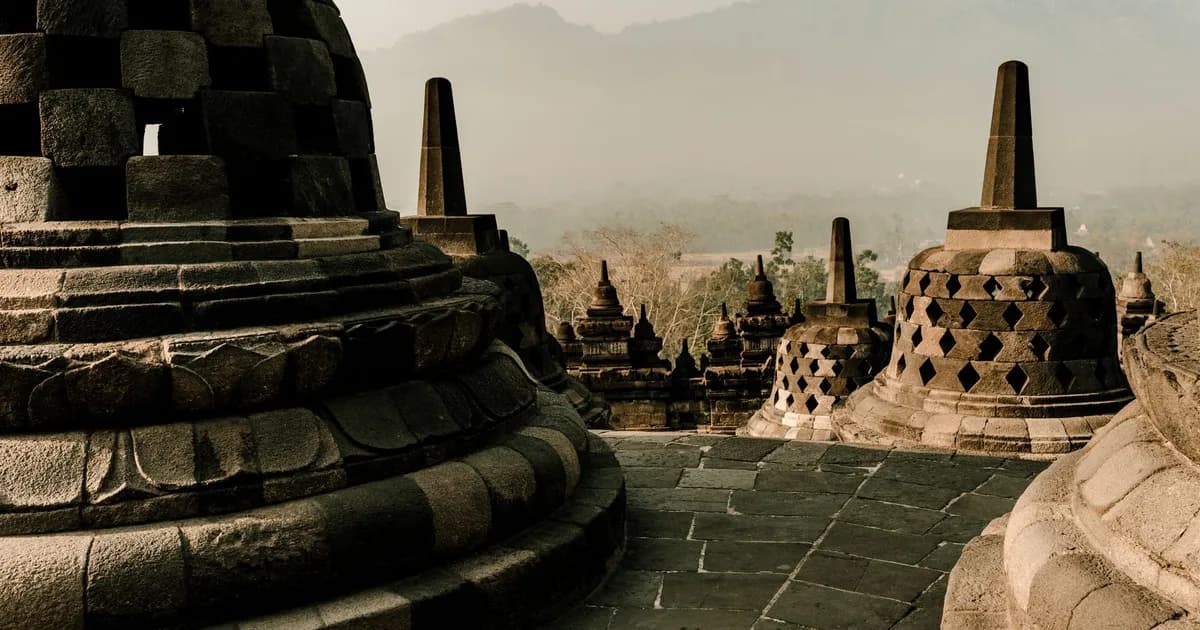
But climbing offers something distinct: the chance to walk the upper terraces among the latticed stupas, to see the great central stupa up close, and to experience the monument as a pilgrim's ascent, which is how it was designed to be understood. For many, that is the essence of a Borobudur visit and well worth the ticket, the sandals and the planning. Decide what matters to you, and plan accordingly, using our plan your journey page to fit Borobudur sensibly into your trip.
Making the most of the wider region
Borobudur rarely stands alone in a traveller's itinerary, and understanding how it fits into Central Java helps you plan a richer visit. It sits within easy reach of Yogyakarta, the cultural capital of Java, and pairs naturally with the great Hindu temple complex of Prambanan, its Buddhist counterpart's spectacular sibling. Seeing the two together, ideally over a couple of unhurried days rather than in a single rushed dash, gives a fuller picture of Java's extraordinary religious heritage than either can alone.
The region rewards slowing down. Beyond the two headline temples lie smaller, quieter monuments, traditional villages, batik workshops and the lively streets of Yogyakarta itself, all of which reward a longer stay. Rather than treating Borobudur as a fly-in, fly-out sight, consider basing yourself in the area for several days and exploring at a gentle pace, which both eases the pressure of the timed climb ticket and lets the depth of the region reveal itself. Building a slower itinerary around the temples turns a single monument into a genuinely memorable few days in the cultural heart of Indonesia.
What to Do Next
- Decide whether you want to climb the structure or are content to admire Borobudur from the grounds.
- If you want to climb, book the specific structure-climb ticket in advance, ideally three to seven days ahead.
- For the capped sunrise slot, reserve as early as possible, as places are very limited.
- Book through the official Borobudur ticketing channel, with your passport details ready, not unofficial resellers.
- Expect to wear the mandatory Upanat sandals and climb with an official guide in a managed group.
- Dress modestly and bring sun protection and water, and read our cultural etiquette guide before you go.
Frequently Asked Questions
Can you still climb Borobudur in 2026?
Yes, but not automatically. Climbing to the upper levels now requires a separate structure-climb ticket, mandatory Upanat sandals and an official guide, and access is limited. A standard entry ticket only lets you into the grounds, not up the monument.
What is the difference between the tickets?
A standard entry ticket admits you to the temple grounds to view and photograph the monument from below. The separate, more expensive structure-climb ticket is required to climb up onto the terraces to the upper levels and the summit stupas.
What are the Upanat sandals?
They are special locally made sandals that everyone climbing Borobudur must wear to protect the ancient stone steps and reliefs from wear. They are provided as part of the climb, and you cannot ascend the structure in your own shoes.
Do I need to book in advance to climb Borobudur?
Yes, it is strongly advised. Climb access is limited and can sell out, especially the capped sunrise slot, so book the structure-climb ticket a few days ahead through the official channel, typically around three to seven days in advance.
Is the Borobudur sunrise worth it?
The dawn experience of the temple emerging from the mist is memorable, but the sunrise slot is capped at a small number of places and books out well ahead. If it matters to you, reserve as early as possible; otherwise a daytime climb is more readily available.
Do I have to climb, or is the view from below enough?
You do not have to climb. Borobudur is impressive from the grounds with a standard ticket, at lower cost. Climbing lets you walk the upper terraces among the stupas and see the summit up close, which many feel is the essence of the visit, but it is optional.
Keep reading
More from the ground · Indonesia