Cultural Etiquette in Indonesia: Temples, Mosques and Everyday Respect
Indonesia is not one culture but hundreds, spread across thousands of islands, from Hindu Bali to the Muslim heartlands of Java and Sumatra to the Christian highlands of Sulawesi and beyond. What ties a respectful visit together is not a single rulebook but a handful of shared courtesies and a willingness to read the room. Get these right and doors open, smiles widen, and the warmth Indonesia is famous for flows freely. Get them wrong and you may cause quiet offence without ever knowing it. This is a practical guide to travelling Indonesia courteously, at temples, in mosques and in everyday life.
One country, many cultures
The first principle is that Indonesia is extraordinarily diverse, and etiquette shifts with place. Bali is Hindu, with its own rich temple customs; most of Java and Sumatra is Muslim and more conservative in dress and behaviour; parts of Sulawesi, Flores and the east are Christian; and countless local traditions layer on top. A gesture that is fine in a Bali beach town may jar in a rural Sumatran village. The safe approach everywhere is to observe how locals behave and follow their lead, dressing and acting a little more conservatively than you might at home. This attentiveness is the essence of the respectful travel our slow traveller's guide to Indonesia encourages.
One request. Up to five tailored proposals.
Skip contacting agencies one by one — share your trip once and let up to five trusted Indonesia agencies come to you. Free, with no obligation.
Get my free quotesThe right hand and the left
One rule holds across nearly all of Indonesia: use your right hand. The left hand is traditionally considered unclean, so you give and receive things, eat, and gesture with the right hand, or with both together for extra politeness. Handing money, a gift or a plate with the left hand alone can read as rude, even if unintentionally. When eating with your hands, as is common with many dishes, use the right. It takes a little conscious effort at first and quickly becomes habit, and it is one of the single most appreciated courtesies a visitor can show.
Heads, feet and personal space
Two parts of the body carry particular meaning. The head is considered the most sacred part of the body, so never touch anyone's head, including, tempting as it may be, a child's. The feet are the opposite, the lowest and least clean, so avoid pointing your feet at people or at sacred objects and images, do not put your feet up on furniture in company, and never step over someone sitting on the floor. Pointing at people or things with a single finger is also considered rude; use your whole open hand or your thumb instead. These small physical courtesies signal respect more powerfully than words.
Get matched with up to 5 trusted Indonesia agencies
- Free
- No obligation
- Up to 5 agencies
Dressing for temples and mosques
Modest dress is expected at all religious sites, and it is the area where visitors most often slip up. As a baseline, cover your shoulders and knees at temples and mosques, and carry a scarf or sarong you can throw on when needed. Beachwear belongs on the beach, not at a sacred site or in a village. Many temples and mosques provide or require a sarong and sash, and shoes are removed before entering prayer areas. Dressing respectfully is not just about rules; it is a visible sign that you take the place and its meaning seriously, and it is almost always warmly received.
Balinese temple etiquette
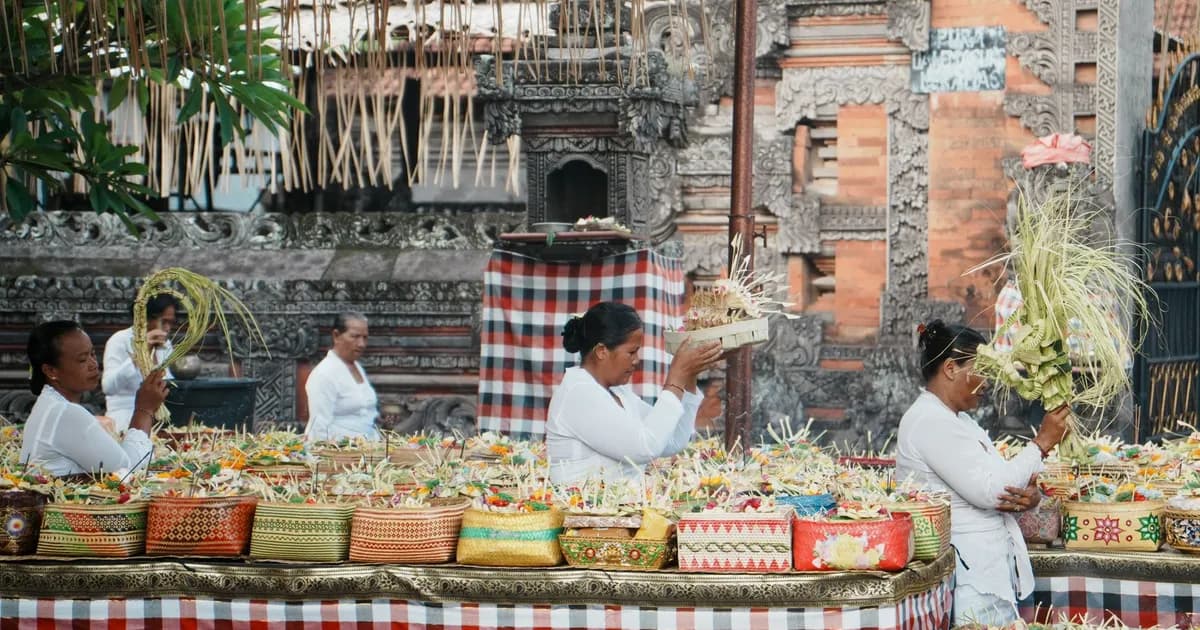
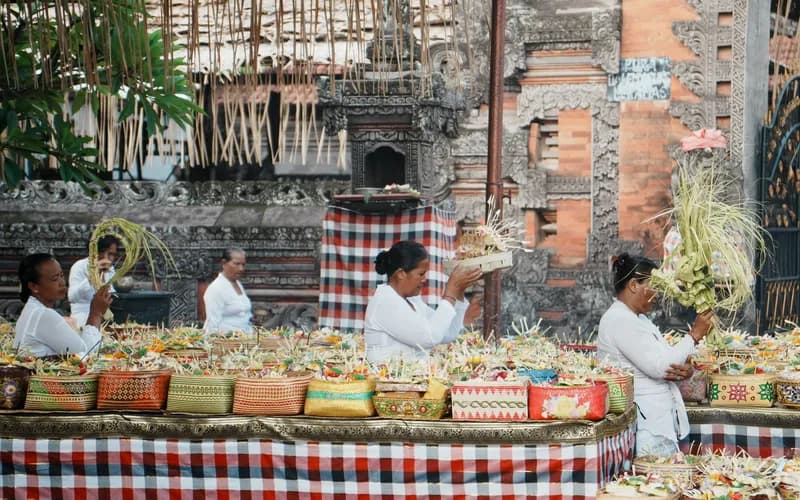
Bali's temples have their own specific customs worth learning. A sarong and a waist sash are required to enter, and are usually available to rent or borrow at major temples. Do not climb on temple structures or shrines, or clamber up for a photograph, and never stand or sit higher than a priest during a ceremony. By long-standing custom, menstruating women are asked not to enter temples. During the frequent ceremonies, keep to the edges, do not walk in front of people who are praying, and follow the lead of worshippers. You will also see small daily offerings, the canang sari, placed on the ground everywhere; take care not to step on them. Bali's living Hindu culture is one of its glories, and moving through it with care is part of the pleasure, as our guide to Yogyakarta and Java's temples also explores for the Buddhist and Hindu monuments of Java.
Mosque etiquette
In the Muslim regions that make up much of Indonesia, mosques may sometimes be visited respectfully outside prayer times, and a few rules apply. Remove your shoes before entering, dress modestly with shoulders, arms and legs covered, and women should cover their hair with a scarf. Behave quietly and avoid walking in front of anyone praying. Always ask before entering or photographing, and accept that some mosques or areas are not open to non-Muslim visitors. The same respect extends to the daily rhythm of the call to prayer, which punctuates life in these regions and is simply part of the soundscape of travel here.
Ramadan and religious observance
If you travel in Muslim areas during Ramadan, the holy month of daytime fasting, a little sensitivity goes a long way. Avoid eating, drinking or smoking openly in public during daylight hours out of respect for those fasting, even though restaurants catering to travellers usually remain open, sometimes discreetly. Dress and behave a touch more conservatively, and be patient with altered hours and a slower pace. The timing of Ramadan and other observances shifts each year, and we cover how to plan around it, along with Bali's Nyepi, in our guide to Ramadan, Nyepi and the religious calendar.
Greetings, face and keeping calm
Indonesian social life places a high value on politeness, harmony and not causing anyone to lose face. Greetings are gentle: a soft handshake, sometimes followed by touching your own heart, and a warm smile. Learning a few words, terima kasih for thank you, goes a long way. Above all, keep your temper. Raising your voice, showing anger or confronting someone publicly is deeply frowned upon and rarely achieves anything; the person who stays calm and smiling, even when frustrated, is respected, while the one who explodes loses face and sympathy. Patience and good humour are the master keys to travelling well here.
Photography and ceremonies
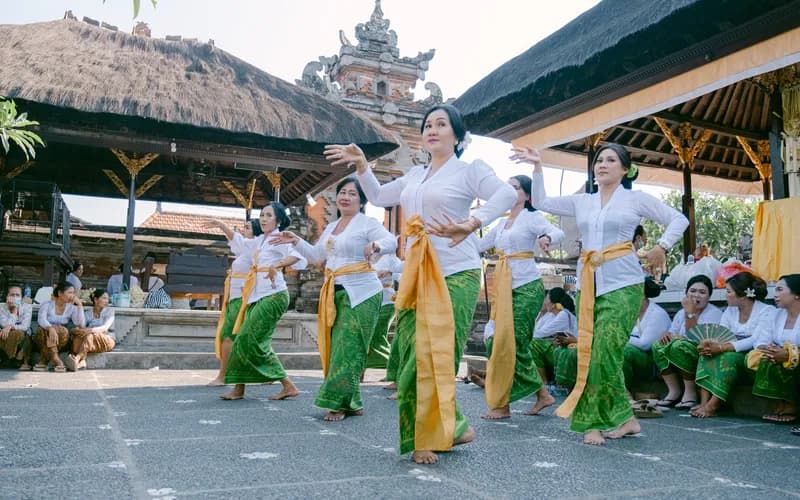
Indonesia is endlessly photogenic, and its ceremonies and people are part of that, but the camera calls for manners. Always ask before photographing people, especially at close range, and respect a no. At religious ceremonies, funerals in Toraja, temple festivals in Bali, prayers anywhere, be a discreet observer rather than an intrusive spectator: keep your distance, avoid flash, do not climb or push for a shot, and never let your photography interrupt what is a sacred event for those taking part. A ceremony is not a performance staged for you, and treating it as one is the fastest way to give offence.
Public behaviour and affection
Across most of Indonesia, and especially outside the more relaxed tourist areas, public behaviour is fairly conservative. Keep public displays of affection modest, dress reasonably even away from religious sites, and be aware that attitudes to alcohol, dress and conduct vary widely, from liberal Bali beach clubs to strictly observant regions where far more restraint is expected. Reading the local norm and matching it, rather than importing your own, is the courteous default. When in doubt, err toward modesty and quiet; you will rarely go wrong.
A few island-by-island notes
Finally, a few specifics reward attention. In Bali, respect the offerings and temple customs above; in Java and Sumatra, lean more conservative, particularly in rural and strongly religious areas; in Toraja in Sulawesi, funeral ceremonies are open to respectful visitors but demand real sensitivity and ideally a local guide, as our piece on the Toraja highlands describes. Some regions, such as Aceh, apply religious law and expect strict modesty. The through-line everywhere is the same: watch, ask, and follow local lead, and you will be welcomed warmly.
Above all, remember that Indonesians are, almost without exception, extraordinarily gracious hosts who forgive the honest mistakes of a well-meaning guest. Nobody expects you to know every local custom, and a visible effort to be respectful, a covered shoulder, a right hand offered, a quiet manner at a shrine, counts for far more than flawless execution. Ask when unsure; a polite question is itself a courtesy, and it almost always earns a warm and patient answer. Travel this way and the country opens to you.
What to do next
- Pack a scarf or sarong and modest clothing that covers shoulders and knees for temples, mosques and villages.
- Make the right hand your default for giving, receiving and eating, and avoid pointing with a single finger.
- Never touch anyone's head, keep your feet respectfully low, and step around offerings on the ground in Bali.
- Ask before photographing people or ceremonies, and be a discreet, respectful observer.
- Read local norms, dress and behave a little conservatively, and plan around Ramadan and Nyepi using our religious-calendar guide.
Frequently Asked Questions
How should I dress at temples and mosques in Indonesia?
Cover your shoulders and knees, and carry a scarf or sarong for when it is needed. Balinese temples require a sarong and sash, usually available on site, and mosques require modest dress with women covering their hair; shoes are removed before entering prayer areas. Beachwear is never appropriate at a religious site.
Why is the left hand considered rude in Indonesia?
The left hand is traditionally regarded as unclean, so Indonesians use the right hand, or both together, to give and receive items, eat and gesture. Handing something over with the left hand alone can seem impolite, even unintentionally. Making the right hand your default is one of the most appreciated small courtesies a visitor can show.
Can tourists visit mosques in Indonesia?
Often yes, respectfully and usually outside prayer times, though some mosques or areas are reserved for worshippers. Remove your shoes, dress modestly with arms, legs and, for women, hair covered, behave quietly, and do not walk in front of anyone praying. Always ask permission before entering or taking photographs.
What should I know about etiquette during Ramadan?
In Muslim areas during Ramadan, avoid eating, drinking or smoking openly in public during daylight out of respect for those fasting, dress and behave more conservatively, and expect altered opening hours and a slower pace. Restaurants for travellers usually stay open, sometimes discreetly, and a little patience and sensitivity is warmly appreciated.
Is it rude to take photos of people and ceremonies in Indonesia?
It can be if done without care. Always ask before photographing people at close range and respect a refusal. At ceremonies, keep your distance, avoid flash, do not climb or push for a shot, and never let your camera disrupt what is a sacred event. Treat ceremonies as things to witness respectfully, not performances staged for tourists.