Yogyakarta and Central Java: Slow Travel Through Indonesia's Cultural Heart
Indonesia is so often reduced to Bali that its cultural heart gets overlooked. Yet on the island of Java, the city of Yogyakarta sits at the centre of the country's artistic and spiritual life, within easy reach of two of the greatest temple complexes in Asia. This is where batik is a living craft, where a sultan still keeps a palace, and where you can watch the sun rise over the world's largest Buddhist monument. For a slow traveller looking for depth rather than beach, Yogyakarta and central Java reward every extra day you give them.
Java's cultural capital
Yogyakarta, affectionately shortened to Jogja, is a university city and the beating heart of Javanese culture. It has an energy quite unlike Bali's: creative, intellectual and proudly traditional all at once, filled with batik studios, silversmiths, street art, markets and shadow-puppet performances. It is also refreshingly walkable and welcoming, an easy place to slow down and simply absorb daily life. Three or four days is the usual recommendation and a fair minimum, enough for the great temples, the city's own sights, and a craft village or two, in the balanced, immersive spirit of our slow traveller's guide to Indonesia.
One request. Up to five tailored proposals.
Skip contacting agencies one by one — share your trip once and let up to five trusted Indonesia agencies come to you. Free, with no obligation.
Get my free quotesBorobudur: sunrise over a Buddhist wonder
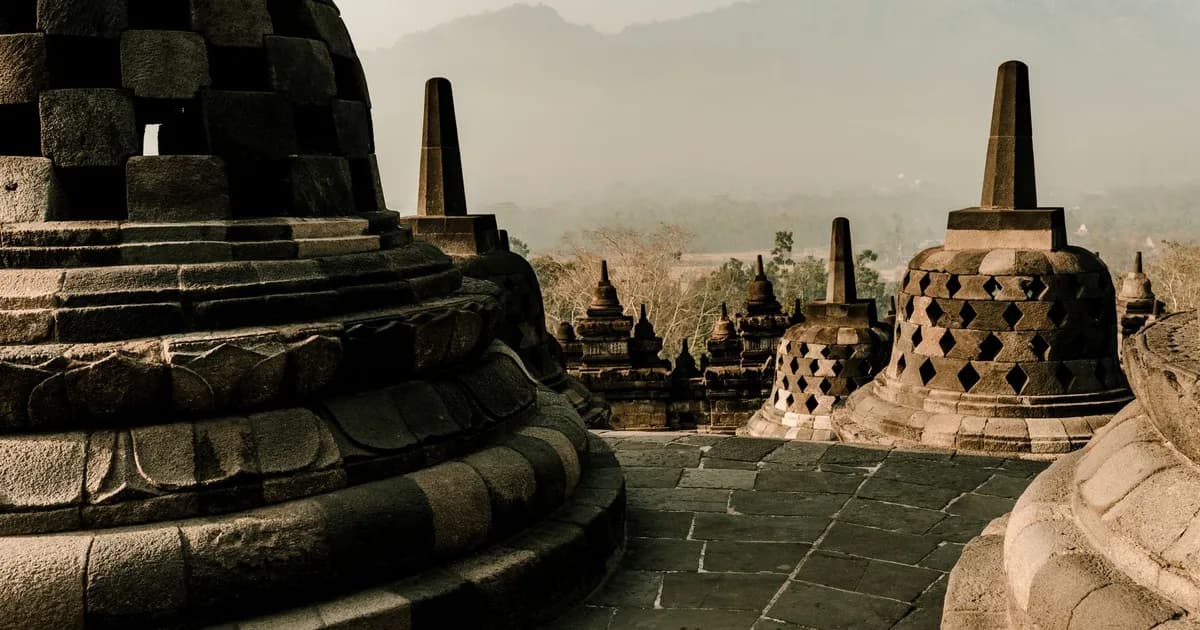
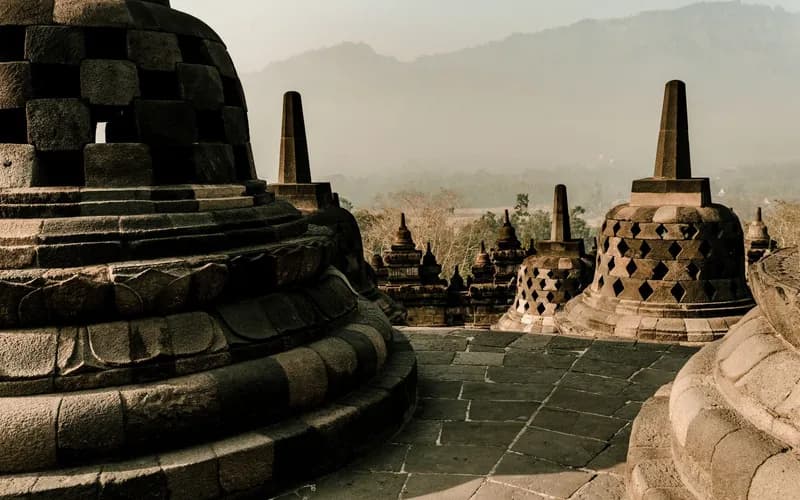
About 45 minutes from the city, rising above a sea of paddy fields and pockets of jungle, stands Borobudur, the UNESCO-listed and largest Buddhist temple in the world. Built in the ninth century, it is a vast stone mandala of terraces and stupas that you climb as a symbolic journey toward enlightenment, its walls carved with kilometres of narrative reliefs. Seeing it at first light, as the mist lifts off the surrounding valley and the volcanoes emerge on the horizon, is one of the defining experiences of travel in Java. Go early to beat both the heat and the crowds, and give yourself time to walk the terraces slowly rather than rushing to the summit.
Prambanan: Java's Hindu masterpiece
An hour from Yogyakarta in another direction stands Prambanan, Indonesia's largest Hindu temple complex and Borobudur's equally magnificent counterpart. Also ninth-century and UNESCO-listed, its soaring, sharply pointed towers dedicated to the Hindu trinity make a dramatic contrast with Borobudur's rounded, meditative bulk. Together the two temples tell the story of Java's layered religious history, Buddhist and Hindu, centuries before Islam became the island's dominant faith. Visiting Prambanan in the late afternoon, when the stone warms to gold and the crowds thin, and staying for a performance of the Ramayana ballet on some evenings, rounds out the experience beautifully.
Get matched with up to 5 trusted Indonesia agencies
- Free
- No obligation
- Up to 5 agencies
The Kraton and the living city
Yogyakarta is not just a base for temples; the city itself is a destination. At its centre lies the Kraton, the walled palace of the sultan, still a functioning royal court and the symbolic heart of Javanese identity. Nearby, the ruined bathing complex of Taman Sari, the water castle, invites slow wandering through its tunnels and pools. The famous Malioboro street is the city's spine, lined with shops, food stalls and life, best explored on foot in the cooler evening. These sights are close together and unhurried, and they reward the traveller who lingers over one more coffee rather than dashing to the next stop.
Batik, silver and the craft villages
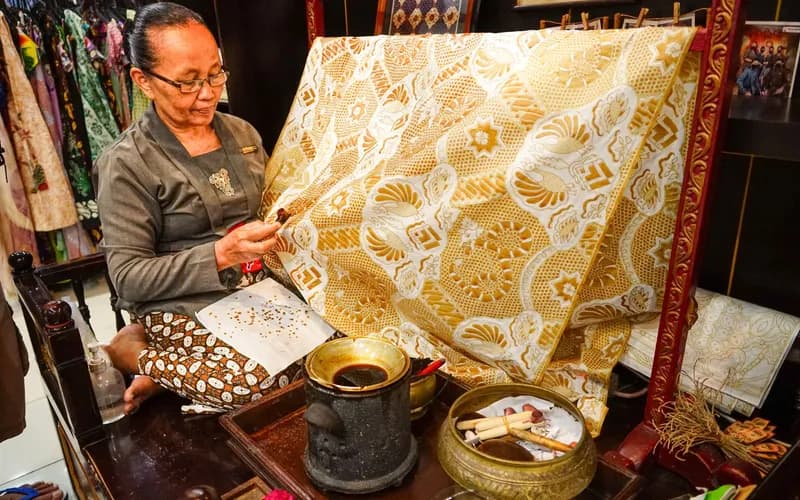
Central Java is one of Indonesia's great craft regions, and engaging with that is among the most rewarding things to do here. Yogyakarta is a centre of batik, the intricate wax-resist textile art, and joining a batik-making workshop turns a souvenir into a skill and a memory. In the suburb of Kotagede, silversmiths carry on a centuries-old tradition; in Kasongan, potters shape clay as they have for generations. Visiting these craft villages, and buying directly from the makers, puts your money into local hands and connects you to a living heritage rather than a shop shelf. It is exactly the kind of meaningful exchange that slow travel is for.
Volcanoes, ruins and the wider region
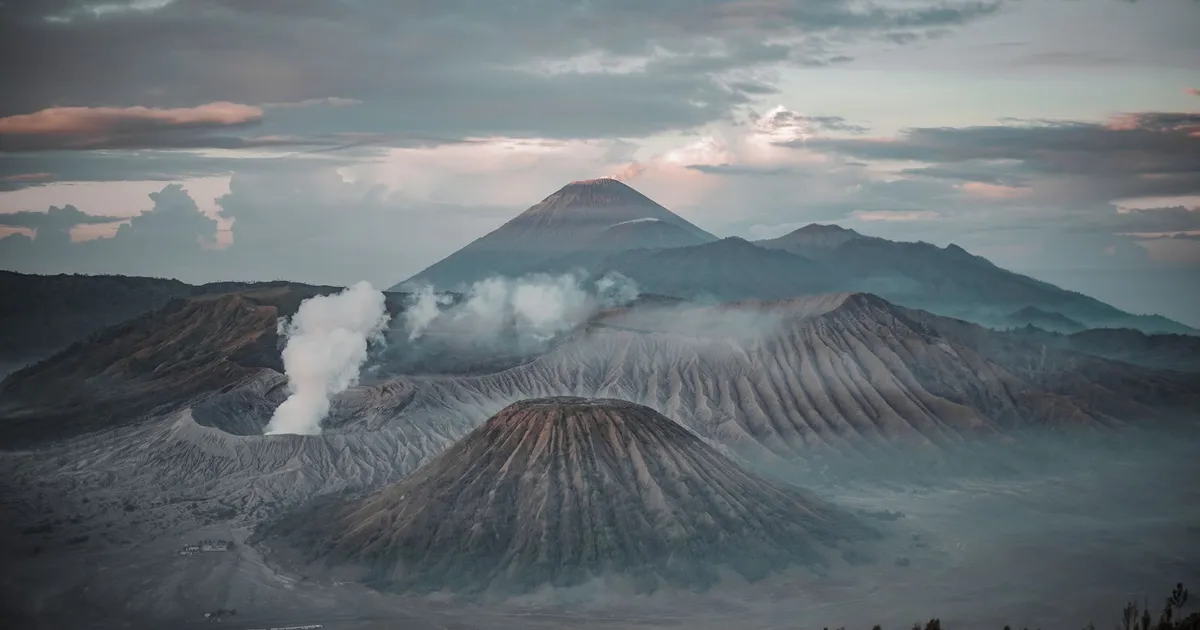
Beyond the marquee sights, central Java offers gentle adventures for those who stay longer. Mount Merapi, one of the world's most active volcanoes, looms over the region and can be explored by jeep tour across its lava-scarred lower slopes. The clifftop ruins of Ratu Boko, a short drive from Prambanan, are a superb spot for sunset. To the south lie wild beaches on the Indian Ocean, and to the north the cooler highlands. If Java's volcanoes draw you, our guide on how to trek Indonesia's volcanoes responsibly covers doing it safely and ethically.
Food and everyday Java
Javanese food is distinctive and worth exploring slowly. Yogyakarta's signature dish is gudeg, a sweet, slow-cooked young-jackfruit stew that captures the region's palate, and the city's markets and warungs are full of tempeh, tofu, spiced vegetables and street snacks. Eating where locals eat, in the evening as Malioboro cools, is one of the simple pleasures of the city. For the wider picture of the archipelago's kitchens, our guide to Indonesian food sets Java's flavours in context.
When to go and how long to stay
The dry season, roughly May to September, brings the clearest skies and the best chance of crisp sunrise views at Borobudur, and is the most reliable time to visit. The wet season is greener and quieter, with afternoon downpours that rarely ruin a morning temple visit. As for duration, three days covers the essentials, four lets you add a craft workshop, a volcano tour or the southern beaches, and a week turns Yogyakarta into a genuine base for exploring central Java at a Javanese pace. This is a place to stay put and go deep, which is why our off-the-beaten-path Indonesia guide treats it as a cornerstone rather than a stopover.
Where to stay in Yogyakarta
Yogyakarta suits slow travellers with its range of places to stay. The Prawirotaman and Sosrowijayan areas are the traditional traveller hubs, full of guesthouses, cafes and small hotels within walking distance of the action, while the streets around the Kraton offer atmospheric heritage stays. For something quieter, a growing number of boutique hotels and homestays sit among the rice fields on the city's edges and out near Borobudur itself, where waking to mist over the paddies and the temple beyond is worth the short commute into town. Whatever your budget, accommodation here is good value by international standards, and staying a few extra nights costs little. Choosing a base you actually enjoy returning to, rather than the cheapest bed, is part of travelling slowly.
Getting around and getting there
Yogyakarta is well connected and easy to navigate. Its airport links the city to Jakarta, Bali and other hubs, and Java's improving rail network makes arriving by train a scenic and comfortable option, part of the wider picture in our guide to island-hopping Indonesia slowly. Within the city, the compact centre is walkable, and ride-hailing apps, becak cycle rickshaws and hired cars with drivers cover longer trips, including the runs out to Borobudur and Prambanan. Because the temples sit in different directions from the city, a car with a driver for a day, or a well-planned pair of half-days, is the most comfortable way to see them at their best light without rushing.
The art of a Jogja day
The real pleasure of Yogyakarta reveals itself when you stop treating it as a checklist. A good Jogja day might begin with the temples in the cool early hours, then slow right down: a long lunch of gudeg, an afternoon in a batik studio with your hands in the wax, a wander through Malioboro as the heat fades, and an evening watching a wayang kulit shadow-puppet performance, the flickering silhouettes telling epics that have entertained Java for centuries. None of this can be hurried, and none of it should be. The city rewards curiosity and patience over efficiency, which is precisely why it sits so comfortably within the ethos of our charter for slow travel: fewer things, felt more deeply.
What to do next
- Give Yogyakarta at least three nights, and four or more if you want craft workshops or volcano trips.
- Visit Borobudur early in the morning and Prambanan in the late afternoon to catch the best light and thinner crowds.
- Spend a full day in the city itself: the Kraton, Taman Sari and Malioboro on foot.
- Book a batik workshop or a visit to the Kotagede silversmiths or Kasongan potters, and buy directly from makers.
- Plan how Yogyakarta fits a wider Java or Indonesia route using our plan your journey page.
Frequently Asked Questions
How many days should I spend in Yogyakarta?
Three to four days is the usual recommendation: one for Borobudur and Prambanan, one for the city's Kraton, Taman Sari and Malioboro, and a further day for craft villages, a Mount Merapi jeep tour or the southern beaches. Stay a week and Yogyakarta becomes a rich base for exploring central Java slowly.
Should I visit Borobudur or Prambanan, or both?
Both, ideally. Borobudur is the world's largest Buddhist temple, best seen at sunrise, while Prambanan is Indonesia's largest Hindu complex, lovely in the late afternoon. They are ninth-century UNESCO sites in different directions from Yogyakarta and tell complementary stories of Java's Buddhist and Hindu past; seeing both is well worth the effort.
Is Yogyakarta worth visiting instead of Bali?
Yogyakarta offers something Bali largely does not: Indonesia's cultural and artistic heart, with world-class temples, a living royal court, batik and craft traditions, and a creative, walkable city. It is not a beach destination, but for travellers seeking depth, culture and history, it is one of the most rewarding places in the country.
What is the best time to visit Yogyakarta?
The dry season from May to September offers the clearest skies and the best sunrise views at Borobudur, making it the most reliable time. The wet season is greener and quieter with afternoon rain, which rarely spoils a morning temple visit. Temples are busiest at weekends and Indonesian holidays, so time visits accordingly.
How do I get from Yogyakarta to Borobudur and Prambanan?
Borobudur is about 45 minutes from the city and Prambanan around an hour, both reachable by organised tour, hired car with driver, or local transport. Many travellers combine them into a single day or, better for a slow pace, visit each at its ideal time of day, Borobudur at sunrise and Prambanan in the late afternoon. Hiring a car and driver for a full day is inexpensive by international standards and lets you set your own pace, which suits an unhurried, light-chasing temple visit far better than a packed group-tour schedule, and it leaves room to stop at a village, a viewpoint or a warung along the way.