


Few things sour an arrival faster than discovering that the phone in your pocket has stopped working. Indonesia is one of a small group of countries that controls which handsets may connect to its mobile networks, and every year a steady trickle of visitors finds out about it the hard way, usually somewhere between the airport and the second week of a trip. The rules are not complicated, but they are badly explained almost everywhere, and the version circulating in traveller forums is frequently out of date.
Here is what the system actually requires in 2026, who it applies to, what it costs, and the simplest way to stay connected without paying customs anything at all.
What the IMEI Rule Actually Is
Every phone carries a unique fifteen-digit identity number, the IMEI. Indonesia operates a central database of IMEIs approved to use its mobile networks, a control originally introduced to suppress the grey import market rather than to inconvenience tourists.
The practical effect is straightforward. If you insert an Indonesian SIM card into a handset whose IMEI is not in that database, the phone will register briefly, work for a short period and then lose service. There is no warning and no appeal at the point of failure. Because the block attaches to the device rather than the SIM, buying another local SIM does not fix it.
The important nuance, and the one most articles get wrong, is that this applies to Indonesian network connections. A phone using international roaming through your home operator is not affected, because it is not attaching to an Indonesian subscription.
One request. Up to five tailored proposals.
Skip contacting agencies one by one — share your trip once and let up to five trusted Indonesia agencies come to you. Free, with no obligation.
Get my free quotesWho Needs to Register and Who Does Not
Break it down by how you intend to connect:
- International roaming only. No customs registration required. Your handset is invisible to the system.
- A tourist SIM or eSIM sold for short visits. Foreign visitors on stays of up to about 90 days are generally handled through operator channels, which grant temporary access for the duration of the visit without a customs procedure. This covers the overwhelming majority of travellers.
- A standard local prepaid SIM used long-term, or a stay beyond the short-visit window. This is where the customs-based IMEI registration becomes necessary.
- Bringing a new phone into the country to keep or to give. Registration applies regardless of how you plan to use it, and the value thresholds below apply.
If you are staying for a season rather than a fortnight, the length of your permission to stay is what determines your path, so read your visa conditions first. Our explainer on what changed with Indonesia's visa on arrival sets out the current stay lengths and extension mechanics.
The Allowance and What You Actually Pay
Indonesian passenger customs rules give each arriving traveller a personal-goods allowance of USD 500 on a free-on-board basis, per person, per arrival. If your device sits inside that allowance, registration is free.
Above the allowance, tax is charged on the excess. The standard structure is an import duty of 10 per cent, value-added tax at the prevailing rate of 12 per cent, and an income-tax component, which is 10 per cent for holders of an Indonesian tax number and 20 per cent for those without one. There is also a device limit: a maximum of two handsets or tablets per passenger.
For a mid-range phone, that means nothing to pay. For a current flagship, it means a real bill, and it is worth calculating before you arrive rather than being surprised at the counter. Note that customs assess value on their own basis, not on what you paid in a sale.
Get matched with up to 5 trusted Indonesia agencies
- Free
- No obligation
- Up to 5 agencies
Registering at the Airport, Step by Step
The process is designed to be completed on arrival, and pre-filling it online beforehand makes it considerably faster.
- Before departure, note your IMEI. On most handsets, dialling star-hash-zero-six-hash displays it, and it also appears in the device settings.
- Complete the online registration with your passport number, flight details and IMEI. You receive a QR code.
- On arrival, after immigration, go to the customs counter rather than walking straight through the green channel.
- Present the QR code, your passport, your boarding pass and the device itself.
- If tax is due, pay it there. If not, the registration is processed free of charge.
- Allow up to two days for the activation to propagate before relying on a local SIM.
Build this into your arrival plan alongside the other formalities. Our guide to entering Indonesia in 2026 covers the arrival card, the Bali levy and the sequence at the airport, and the customs desk fits naturally at the end of that chain.
The 60-Day Fallback, and Why It Costs More
If you leave the airport without registering, you have a window of around 60 days to register at a customs office in the country. This is a genuine safety net, and it is used regularly by people who did not know the rule existed.
It is also more expensive. Registering later means the USD 500 arrival allowance no longer applies, and tax is assessed on the full declared value of the device rather than on the excess above the allowance. On a flagship phone, that difference is not trivial. The lesson is simple: if you know you will need customs registration, do it at the airport.
SIM Cards in 2026: What to Buy and What It Costs
For a physical SIM, Telkomsel remains the default recommendation for anyone travelling beyond Java and Bali, simply because its coverage extends furthest into the archipelago. Its tourist prepaid product sits around 150,000 rupiah for roughly 25 GB with a small voice allowance, and other tourist packs start nearer 100,000 rupiah. Prices move, and packages are repackaged constantly, so treat these as an order of magnitude rather than a quote.
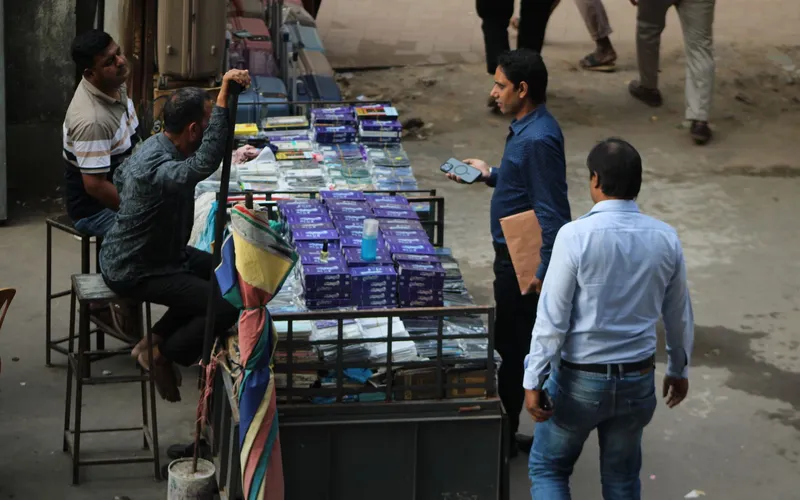
Two rules protect you. Buy from an official operator counter, a GraPARI service centre or a recognised airport kiosk, not from an unmarked stall, where visitors routinely pay several times the going rate for a package that is smaller than promised. And expect to show your passport, because Indonesian SIMs are registered to an identity.
For the wider picture of paying for things and staying online, our companion article on money, cards and connectivity in Indonesia is the piece to read alongside this one, particularly the section on QRIS payments, which need working data to be useful.
eSIMs: The Simplest Route for a Short Trip
For a two or three-week trip, a travel eSIM is now the least troublesome option available. You buy it before departure, activate on landing, and never queue anywhere. Entry-level tourist eSIM packages start around 100,000 rupiah for something in the region of 10 GB over a month, with plenty of larger options.
The practical advantage goes beyond convenience. Travel eSIMs typically connect as roaming partners onto Indonesian networks rather than as domestic subscriptions, which keeps you outside the IMEI registration question entirely. Check two things first: that your handset supports eSIM, and that it is carrier-unlocked. An older or operator-locked phone may not be able to use one.
Keep your home SIM active in the second slot if your device is dual-SIM, so that bank verification codes still reach you.
Coverage Reality Check
Do not confuse having a working SIM with having usable data. Coverage in Jakarta, Yogyakarta, Surabaya, Bandung and southern Bali is genuinely good, often faster than what many visitors have at home. Coverage in the interiors of Sumatra, Kalimantan, Sulawesi and the eastern islands is a different proposition: reliable in towns, thin between them, and occasionally absent for a day at a time.
Plan for that rather than fighting it. Download offline maps for each region before you leave a city, keep your accommodation confirmations and any tickets as screenshots, and tell people at home that a silent day is normal. In places like the Banda Islands, data works in the main settlement and thins out sharply beyond it, which is arguably part of the appeal.
What Can Go Wrong
The recurring problems are predictable. A traveller buys a cheap local SIM, uses it happily for a few days, and then loses service when the temporary window expires because their handset was never properly registered. Somebody buys a phone in Indonesia from an informal seller and finds it was never legitimately imported. A visitor brings three handsets for family members and hits the two-device ceiling at the counter. Or a phone arrives locked to a home carrier and cannot take any local SIM at all, IMEI database or not.
All four are avoidable with ten minutes of preparation before departure, which is the entire argument of this article.
What to Do Next
- Decide now how you will connect: roaming, travel eSIM, tourist SIM or a long-stay local SIM.
- Confirm your handset is carrier-unlocked, and check whether it supports eSIM.
- Note your IMEI and keep it somewhere accessible that is not only on the phone itself.
- If you need customs registration, pre-register online before departure and keep the QR code offline.
- If you are bringing a high-value or second device, calculate the likely duty before you fly.
- Buy any physical SIM from an official operator counter and expect to show your passport.
- Use our Indonesia planning overview to work out which legs of your route will have no signal at all, and prepare offline for those.
Frequently Asked Questions
Do tourists need to register their phone with Indonesian customs?
Usually not. Visitors on short stays who use international roaming or a tourist SIM or eSIM are handled through operator channels and do not need a customs procedure. Customs registration is aimed at long-stay users of standard local SIMs and at devices being imported.
What happens if I do not register my IMEI?
If you use an Indonesian domestic SIM in an unregistered handset, the phone connects for a short period and then loses service on Indonesian networks. Roaming through your home operator continues to work, because it is not a domestic connection.
How much does IMEI registration cost?
Nothing, if the device value falls within the USD 500 personal allowance granted on arrival. Above that, expect import duty of 10 per cent, value-added tax at 12 per cent, and income tax of 10 per cent with an Indonesian tax number or 20 per cent without one.
Can I register my phone after I have left the airport?
Yes, at a customs office within roughly 60 days of arrival, but it costs more. The USD 500 arrival allowance no longer applies, so tax is calculated on the full value of the device rather than only on the amount above the allowance.
How many phones can I bring into Indonesia?
The passenger limit is two handsets or tablets per person. Arriving with more, for example carrying devices for family or friends, will create a problem at the customs counter and may result in tax or refusal.
Is an eSIM the easiest option for Indonesia?
For most short trips, yes. Travel eSIMs are bought before departure, activate on arrival, and generally connect as roaming rather than as domestic subscriptions, which avoids the IMEI question. You need an eSIM-capable, carrier-unlocked handset.
Which network has the best coverage in Indonesia?
Telkomsel has the widest reach, which matters once you travel beyond Java and Bali into Sumatra, Sulawesi, Kalimantan and the eastern islands. In major cities the differences between operators are small, and price and package size matter more than footprint.