
Indonesia is not a country you visit. It is a scale you have to make peace with. More than seventeen thousand islands, spread across three time zones and a distance roughly equal to London-to-Baghdad, stitched together by ferries, propeller planes and a shared love of rice, incense and the long unhurried conversation. Travellers arrive with a checklist — Bali, orangutans, Komodo dragons, a volcano at dawn — and quickly discover that Indonesia will not be checked off. It is too big, too varied, too gloriously slow.
That is exactly why it rewards the slow traveller more than almost anywhere on earth. The temptation is to island-hop the whole archipelago in a fortnight, collecting stamps and sunrises. The mistake is the same. You end up spending your holiday in airport queues and on overnight ferries, exhausted, having seen everything and understood nothing. The better way — the UNRUSH way — is to pick one or two regions, sink into them, and let Indonesia come to you: the smell of clove cigarettes and frangipani, the gamelan drifting from a temple you didn't know was there, the fisherman who becomes your guide because you had time to sit and drink coffee with him.
This guide is about where to go and when. It is honest about the weather, because in a country this large the "best time to visit" genuinely depends on which island you choose. It is honest about crowds, because July in Bali and Komodo is a different experience from July in Sulawesi. And it is built around the idea that depth beats distance every single time.
The slow-travel mindset: choose your archipelago
Here is the single most useful thing anyone can tell you about planning an Indonesian trip: you cannot do it all, so stop trying.
Look at the map properly. Sumatra alone is the sixth-largest island on the planet. Getting from the orangutans of the north to the surf breaks of the west is a full travel day in itself. Flores and Sumatra sit at opposite ends of the country; flying between them can take longer, door to door, than flying from Jakarta to Singapore. Distances that look trivial on a small map are anything but.
So the slow traveller does something counterintuitive. Instead of asking "how many islands can I fit in?", they ask "which one region will I get to know?" A fortnight spent between Yogyakarta, Mount Bromo and Ijen gives you a coherent, deeply satisfying journey through the cultural and volcanic heart of Java. A fortnight spent bouncing between Bali, Lombok, Flores, Sulawesi and Sumatra gives you a blur.
Pairing works beautifully when the geography cooperates. Bali and the Nusa Tenggara islands to its east — Lombok, Komodo, Flores — form a natural corridor you can travel by short flights and boats. Java and Bali connect overland and by a single quick hop. But Sumatra, Kalimantan (Indonesian Borneo), Sulawesi and Papua each deserve to be their own trip. Treat them that way and you will come home rested instead of wrecked.
If it's your first visit and you want the classic introduction, most slow travellers combine some of Java and Bali, or Bali with its eastern neighbours. If you're returning, the wilder regions — Sulawesi's highlands, the jungles of Kalimantan, the reefs of Raja Ampat — are where Indonesia goes quiet and strange and unforgettable. Before you lock anything in, it's worth reading our guide to Indonesia's hidden gems to see which off-radar corners might reshape your whole plan.
One request. Up to five tailored proposals.
Skip contacting agencies one by one — share your trip once and let up to five trusted Indonesia agencies come to you. Free, with no obligation.
Get my free quotesWhen to go: the season, region by region
Indonesia straddles the equator, so it doesn't have spring, summer, autumn and winter. It has two seasons — dry and wet — and the timing shifts depending on where you are.
As a broad rule, the dry season runs roughly April to October and the wet season November to March. In the wet season, rain tends to arrive as dramatic afternoon and evening downpours rather than all-day grey drizzle, so it rarely writes off a whole day. But the general rule bends island by island, and getting this right is the difference between a magical trip and a soggy one.
April to October — the dry season and the sweet spot. This is prime time for most of the country: Bali, Java, Nusa Tenggara, Komodo, Sulawesi and Kalimantan are all at their best. Volcanoes like Bromo and Ijen are clear at dawn, dive visibility is excellent, and jungle trails are firmer underfoot. The trade-off is crowds and prices in the peak of July and August, especially in Bali and around Komodo, where you should book accommodation and boats well in advance.
May, June and September — the shoulder-season sweet spots. These are, quietly, the best months to travel. You get full dry-season weather without the July–August peak crush and its inflated prices. If you can only go once and want our honest recommendation, aim here.
November to March — the wet season. Rain, yes, but also lush green landscapes, dramatic skies, far fewer tourists and lower prices. Bali stays perfectly visitable — the rain comes and goes — and the wet months can be a wonderful time for a slower, cheaper, more contemplative trip if you don't mind the odd downpour and pack accordingly.
Now the important regional exceptions:
- Sumatra runs on a slightly different clock. The north (around Bukit Lawang and Lake Toba) gets wettest roughly October to January; the south a little later. May and June are often the driest, clearest window in the north.
- Sulawesi is best around August and September, when rainfall is low and the diving off Bunaken and Wakatobi is superb. The far north can see showers in June and July.
- Raja Ampat and eastern Indonesia (Maluku, Papua) flip the calendar. Their calmest, best diving season is roughly October to April — the opposite of Bali. Don't assume "dry season everywhere" and you'll dive glass-flat seas while the rest of the country is quietening down.
If your budget is a deciding factor in when to travel, the wet-season savings are real and worth weighing up — we break the numbers down in our Indonesia trip cost and budget guide.
Java: volcanoes, temples and the cultural heart
Java is Indonesia's engine room — home to more than half the country's people, its capital, and some of its most extraordinary sights. It's where many slow-travel journeys begin, and it deserves far more than the airport transit most visitors give it.
Jakarta is a sprawling, humid megacity that few travellers love at first sight, but its old town of Kota Tua, its museums and its astonishing street food reward a day or two if you slow down. Most people, though, make for the cultural capital.
Yogyakarta (say "Jogja") is the soul of Javanese culture: batik workshops, silversmiths, a living sultan's palace, gamelan orchestras and shadow-puppet theatre. It's also the base for the two greatest monuments in the country. Borobudur, the largest Buddhist temple on earth, is a ninth-century mandala of stone best seen at dawn, when mist pools between the volcanoes and the stupas emerge from the dark. Prambanan, a soaring Hindu complex nearby, is its slender counterpart. Give Jogja three or four days and you'll leave understanding why Javanese culture is spoken of with such reverence.
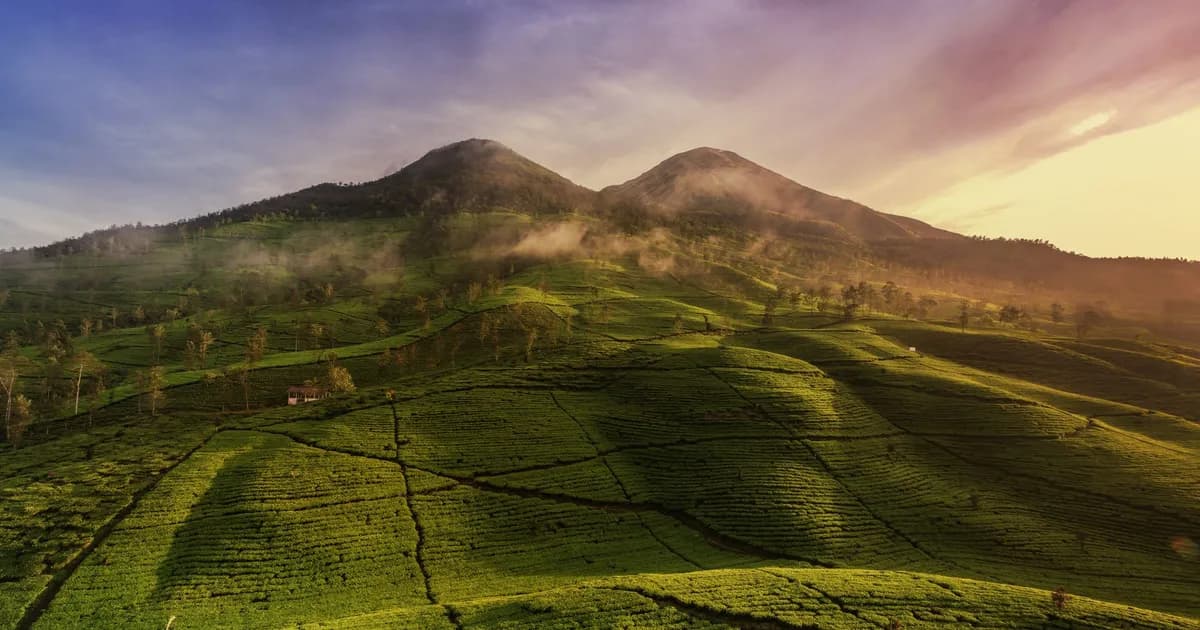
East, the landscape turns volcanic. Mount Bromo delivers one of Asia's iconic sunrises — a smoking cone rising from a vast sea of sand, ringed by a caldera, glowing pink at dawn. Further on, Ijen offers something stranger still: an acidic turquoise crater lake, sulphur miners hauling loads up impossible paths, and the ghostly electric-blue flames that flicker in the dark before sunrise. These two together make an unforgettable multi-day overland trip, best attempted in the dry season when the summits are clear.
The best time for Java is May to September, when the volcanoes are reliably clear at dawn and the temples are dry underfoot. A natural slow route runs Yogyakarta → Bromo → Ijen → and then across the strait to Bali, threading Java's culture and fire onto a single string.
Get matched with up to 5 trusted Indonesia agencies
- Free
- No obligation
- Up to 5 agencies
Bali and its neighbours: the island everyone knows, done slowly
Bali's reputation precedes it, for better and worse. Yes, the south — Kuta, Seminyak, Canggu — is developed, busy and, in places, overrun. But Bali is also a Hindu island of terraced rice fields, water temples, volcanic lakes and a genuinely living spiritual culture, and the slow traveller who moves inland and east finds it easily.
Ubud remains the cultural centre — art, dance, temples, and rice terraces at Tegallalang — though it's no secret, so rise early and wander the back lanes. The east and north (Sidemen, Amed, Munduk, the slopes of Mount Agung and Batur) are quieter, greener and far closer to the island's older rhythm. This is where to base yourself for a week and let Bali reveal itself. Bali's food culture alone rewards a slow approach; our guide to Indonesian food is a good companion for the eating you'll do here.
Just off the coast lie the islands that give Bali its breathing room. The Nusa islands — Nusa Penida, Lembongan and Ceningan — offer dramatic cliffs, manta rays and a slower pace a short boat ride away. Further east, the Gili Islands (Trawangan, Meno and Air, technically part of Lombok) are three tiny car-free sandbars ringed by reef; Gili Meno in particular is a hammock-and-snorkel kind of place made for doing very little.
Bali works year-round, but the dry season (roughly April to October) brings the most reliable sunshine, with May, June and September the sweet spot. One date to plan around: Nyepi, the Balinese Day of Silence, falls on 19 March in 2026. For twenty-four hours the entire island stops — no flights, no traffic, no lights, everyone indoors, including visitors. The Ogoh-Ogoh monster parades the evening before are spectacular. Far from a day to avoid, it's a profound thing to experience, if you plan for it.
Nusa Tenggara: Lombok, Komodo and the wild east of Flores
East of Bali, the islands grow drier, wilder and less visited — this is where slow travel starts to feel like exploration.
Lombok is Bali's larger, quieter neighbour: the mighty volcano of Mount Rinjani (a serious multi-day trek), empty white-sand beaches in the south around Kuta Lombok, and Sasak villages that keep their own traditions. It has none of Bali's frenzy and much of its beauty.
Further east, Flores is a long, mountainous, deeply Catholic island of hairpin roads and staggering scenery. Its crown is Kelimutu, a volcano crowned by three crater lakes that shift colour — turquoise, black, olive-green — as minerals react with volcanic gas. Climbing to the rim for sunrise is one of Indonesia's quiet wonders.
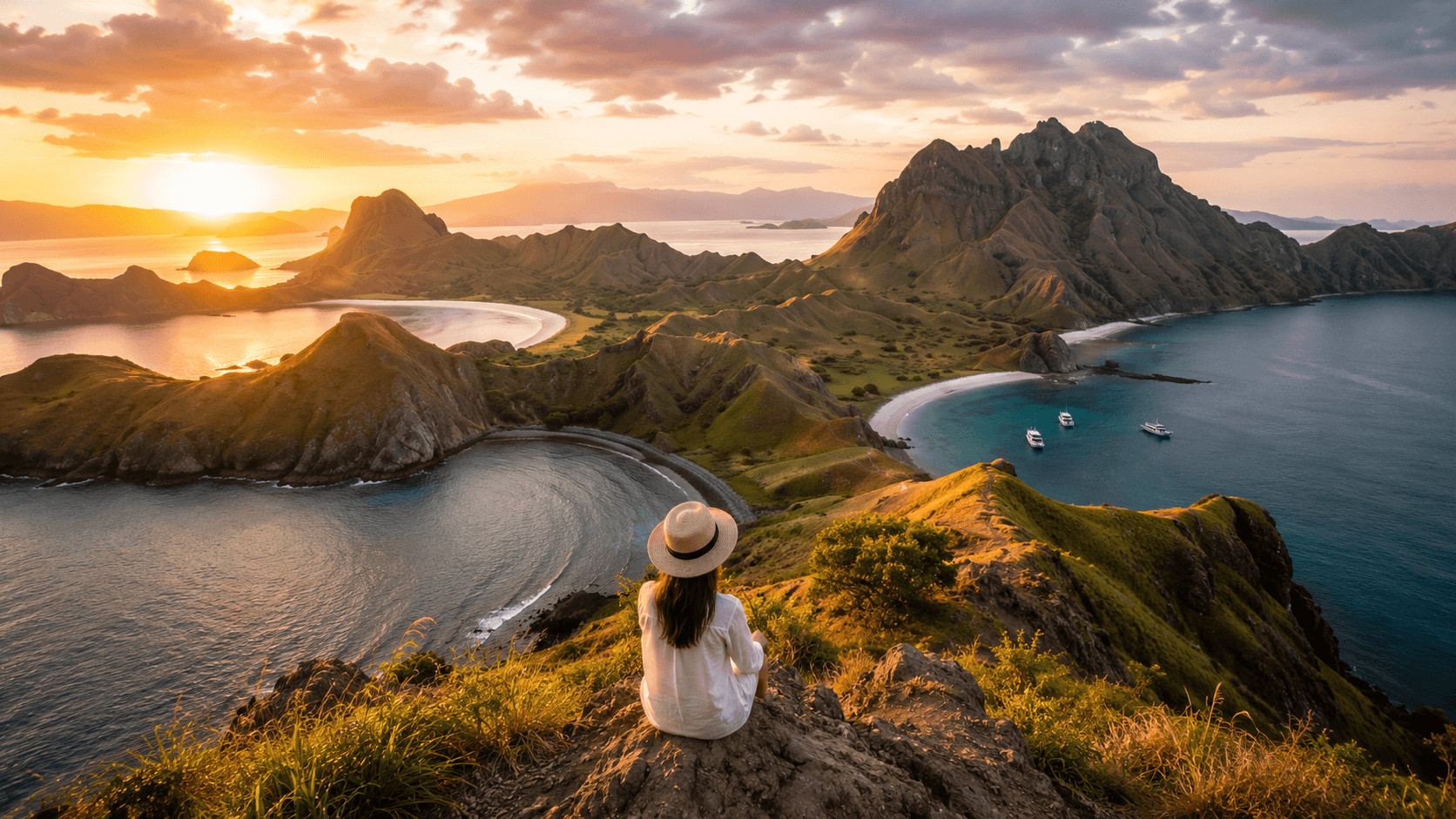
Flores is also the mainland gateway to the Komodo National Park, reached from the port town of Labuan Bajo. This is where you come to see the world's largest lizards — the Komodo dragons — in the wild on Komodo and Rinca islands, alongside pink-sand beaches and some of the finest diving and snorkelling in Asia. A few practical things to know for 2026: the park has moved to advance booking through the official SiORA system — walk-in tickets are no longer sold — and from April 2026 a daily visitor cap of 1,000 people applies, with tighter limits at individual sites like Padar. If you join a liveaboard or a licensed tour from Labuan Bajo, the operator handles the permits and quota for you, which is by far the least stressful way to do it. The dry season (April–October) is the best time to visit, with the water clearest for diving.
For a trip that strings these together well, Bali → Lombok → Labuan Bajo/Komodo → Flores is a superb one- to two-week corridor. Ready to shape it around real routes and operators? Start with our plan-your-journey page for Indonesia.
Sumatra: orangutans, lakes and empty coastlines
Sumatra is Indonesia's wild west — vast, rugged, jungle-clad, and far less travelled than Bali or Java. It's a region for people who want their nature raw and their crowds absent.
The headline is the orangutans of Bukit Lawang, a village on the edge of Gunung Leuser National Park, a few hours from Medan in the north. This is one of only two places on earth (the other being Borneo) where you can trek to see wild orangutans, alongside Thomas's leaf monkeys, hornbills and, if you're extraordinarily lucky, the tracks of a tiger. The trekking here is on foot and often multi-day, sleeping in simple jungle camps — an active, immersive experience rather than a boat cruise.
Inland lies Lake Toba, the largest volcanic lake in the world, a caldera so huge it holds an island the size of Singapore at its centre — Samosir, homeland of the Batak people. The pace here is gentle: swimming, cycling, church bells, and the deep quiet of high water. It's one of the great places in Indonesia to simply stop and rest.
Off the west coast, the Mentawai Islands draw surfers to some of the best waves on the planet and travellers to the Mentawai people, who maintain a distinct semi-nomadic culture in the rainforest interior.
Sumatra's weather is its own affair. The north is wettest roughly October to January, so May and June tend to be the driest, clearest window for the orangutans and Lake Toba. It's a region best given its own dedicated trip rather than tacked on to a Bali holiday.
Sulawesi: highland funerals and world-class reefs
Shaped like a drunken orchid, Sulawesi is one of Indonesia's most rewarding and least-understood islands — a place of extraordinary living cultures and staggering underwater life.
In the central highlands lies Tana Toraja, home to the Toraja people and some of the most remarkable funerary traditions on earth. Here death is not hidden away but honoured with days-long ceremonies, buffalo sacrifice, cliff-face graves and carved wooden effigies of the dead, all set among soaring peaked-roof houses called tongkonan and impossibly green rice terraces. The main funeral season runs June to October — the dry months — though ceremony dates are set at the last minute by families, so a good local guide is essential to witness one respectfully. This is culture as it's genuinely lived, not staged for tourists, and it asks to be approached with humility.
To the north and around the coasts, Sulawesi turns to water. Bunaken, off Manado in the far north, is a marine park famous for its dramatic coral walls dropping into the blue. Further southeast, the remote Wakatobi islands offer some of the most pristine reefs in the country, a bucket-list destination for serious divers. Sulawesi is best around August and September, when the rain eases and the diving is at its clearest.
A classic slow Sulawesi trip pairs the highland culture of Toraja with a week of diving in the north — a combination of land and sea that few other places can match.
Kalimantan: the slow river through orangutan country
Kalimantan — the Indonesian two-thirds of Borneo — is for many travellers the single most magical wildlife experience in the country, and it happens at the gentlest pace imaginable.
The heart of it is Tanjung Puting National Park in Central Kalimantan. Here you don't trek — you drift. You board a klotok, a traditional wooden riverboat that doubles as your floating hotel, and glide up the tea-dark Sekonyer River for two or three days, sleeping on deck under a mosquito net, eating meals cooked in the tiny galley, and watching the jungle slide past. Proboscis monkeys leap between the trees, hornbills clatter overhead, and at feeding platforms deep in the forest, wild and semi-wild orangutans swing down to eat, sometimes an arm's length away. It is one of the most peaceful and profound wildlife encounters anywhere on earth — slow travel in its purest form.
The best time is the dry season, June to September, when the animals gather near the riverbanks and feeding stations and the mosquitoes are fewer. Like Sumatra and Sulawesi, Kalimantan is best treated as its own trip; it doesn't slot neatly into a Bali-and-beaches itinerary, and it shouldn't have to.
Raja Ampat and the east: the last great reef
At the far eastern edge of Indonesia, off the coast of West Papua, lies Raja Ampat — the "Four Kings" — a scatter of jungle-topped karst islands sitting in the most biodiverse marine environment on the planet. More species of fish and coral have been recorded here than anywhere else on earth. For divers and snorkellers, it is the summit, the place every other reef is measured against.
Getting there takes commitment: flights via Sorong, then a boat transfer, and it is not cheap. All visitors must arrange the official permits before entering the marine park — in 2026 this means both a Marine Park Entry Permit (valid for a year) and a separate single-visit Visitor Entry Ticket, the fees funding local conservation. Reputable liveaboards and homestays will help you sort these out, and you should always confirm your permits are genuine.
Crucially, Raja Ampat runs on the opposite calendar to Bali. Its best, calmest diving season is roughly October to April — precisely when much of Indonesia is wet. Plan accordingly and you'll have flat seas and superb visibility while the rest of the country is under cloud. The broader region of Maluku (the historic Spice Islands) and the rest of Papua offer their own remote diving and untouched cultures for travellers willing to go slow and far.
Raja Ampat is the definition of depth over distance: go once, stay two weeks, and let it be the whole trip. If you'd rather have the sea take you between the islands, our slow charter and boat travel page is the place to start.
How to put it together: slow routes for one, two and three weeks
The single biggest favour you can do yourself is to under-plan. Fewer stops, longer stays, more space to breathe.
One week. Pick a single region and go deep. Options: (1) Java's cultural-volcanic core — Yogyakarta and Borobudur, then Bromo and Ijen. (2) Bali, slowly — Ubud and the east (Sidemen, Amed), skipping the crowded south almost entirely. (3) Komodo and Flores — fly into Labuan Bajo, a liveaboard or day trips into the national park, then Kelimutu. (4) Tanjung Puting — a klotok river journey with a couple of buffer days. Any one of these is a complete, satisfying holiday.
Two weeks. Now you can pair regions that connect naturally. The classic is Java + Bali: Yogyakarta → Bromo → Ijen → Bali's east and Ubud. Or the eastern corridor: Bali → Lombok → Komodo → Flores, moving by short flights and boats. Alternatively, give the full fortnight to a single wilder region — Sumatra (Bukit Lawang orangutans + Lake Toba) or Sulawesi (Toraja + a week's diving in the north).
Three weeks. Enough time to combine a cultural region with a wildlife or diving region without rushing — for example Bali and Nusa Tenggara, then a flight to Sulawesi for Toraja and the reefs; or Java and Bali followed by Kalimantan's rivers. Even with three weeks, resist the urge to add a fourth and fifth region. Two, done well, will always beat five done badly.
Getting around: islands, planes, boats and patience
Indonesia's transport is better than its reputation, but it runs on its own clock, and the slow traveller learns to build in slack.
Domestic flights are the workhorses of long-distance travel — the country is simply too big to cross overland in a normal holiday. Garuda, Batik Air, Lion Air, Citilink and others connect the major hubs, though smaller routes (Flores, Sumatra's interior, Papua) can be delayed or cancelled by weather. Never book a tight connection onto an international flight the same day; leave a buffer night.
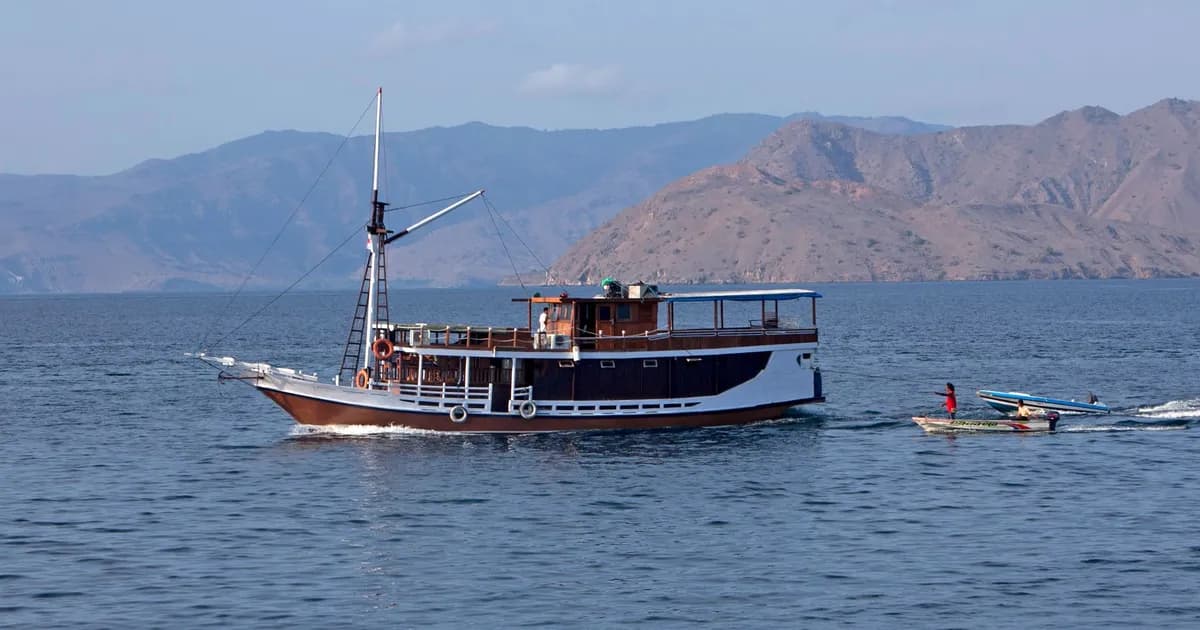
Ferries and boats connect neighbouring islands — Bali to Lombok, Lombok to the Gilis, Flores to Komodo — and range from fast tourist speedboats to slow, characterful public ferries. For Komodo and Raja Ampat, multi-day liveaboards and phinisi sailing boats are the classic way to explore, with the boat as your moving hotel.
Overland, expect winding mountain roads (Flores and Sumatra especially test the stomach), affordable private drivers for day trips, and trains only on Java, where they're comfortable and scenic. The golden rule everywhere: distances take longer than the map suggests. Plan for it, and the journeys become part of the pleasure rather than a source of stress.
Festivals: the calendar that runs the islands
Timing your trip to a festival can transform it — provided you plan, because some celebrations shut things down.
Nyepi, the Balinese Hindu Day of Silence, is the most dramatic. On 19 March 2026, the whole of Bali stops for twenty-four hours: airport closed, streets empty, lights off, everyone (visitors included) staying in. The night before brings the extraordinary Ogoh-Ogoh parades, where villages carry giant demon effigies through the streets before burning them. Plan around it and it's unforgettable.
Galungan and Kuningan are Bali's other great Hindu festivals, celebrating the victory of good over evil and the return of ancestral spirits. In 2026, Galungan falls on 17 June and Kuningan ten days later on 27 June, with tall, curved penjor bamboo poles lining every street. It's Bali at its most beautiful and devout.
In Sulawesi, the Toraja funeral season (June to October) offers a chance to witness the region's astonishing ceremonies, and the rare Ma'nene ritual — when families exhume, clean and re-dress their ancestors — draws visitors in some years, typically in the second half of the year. Dates are set locally and at the last minute, so a guide is essential.
Elsewhere, look out for Independence Day (17 August) celebrated nationwide with village games and races, and Java's calendar of royal palace ceremonies in Yogyakarta and Solo. Whatever you catch, approach religious ceremonies as a respectful guest, not a spectator.
Responsible travel: going slow, going gently
Slow travel and responsible travel are the same instinct. When you stay longer and move less, your money reaches local families, your footprint shrinks, and you actually meet the people whose home you're in.
A few principles worth holding to. Choose local. Homestays, family warungs, community-run treks and licensed local guides keep tourism income in the community — this is especially true in places like Toraja, Bukit Lawang and Flores, where a good guide is also the key to understanding what you're seeing. Respect the wildlife. Keep your distance from orangutans (never feed or touch them — disease transmission is a genuine risk), and choose Komodo and Raja Ampat operators who follow the marine-park rules and don't chase or crowd animals. Dress and behave modestly at temples and in conservative regions, especially in Muslim Sumatra and Aceh and around ceremonies. Cut the plastic — refill bottles, refuse single-use where you can; Indonesia's waste problem is visible and worsening, and travellers are part of the solution. Protect the reefs with reef-safe sunscreen and good buoyancy. Choosing an agency that shares these values makes all of it easier; our directory of vetted Indonesia travel agencies is a good place to find operators who travel the way you want to.
Go slowly, tip fairly, learn a few words of Bahasa Indonesia, and Indonesia will open in ways the rushing traveller never sees.
Frequently Asked Questions
When is the best time to visit Indonesia overall?
For most of the country — Bali, Java, Nusa Tenggara, Komodo, Sulawesi and Kalimantan — the dry season from April to October is best, with May, June and September offering the finest balance of good weather and manageable crowds. July and August are the sunniest but busiest and priciest, especially in Bali and around Komodo. The big exception is eastern Indonesia, particularly Raja Ampat, whose best season is the opposite: roughly October to April.
Should I try to see the whole of Indonesia in one trip?
No — and this is the most important advice in this guide. Indonesia spans over seventeen thousand islands and three time zones; trying to island-hop the whole country in two or three weeks means spending your holiday in airports and on ferries. Pick one or two regions that connect naturally — Java and Bali, or Bali and its eastern neighbours — and go deep. You'll see less on paper and understand far more.
How do I get around between the islands?
Domestic flights handle the long distances, with hubs in Jakarta, Bali (Denpasar), Medan, Makassar and elsewhere. Ferries and boats connect neighbouring islands — Bali to Lombok and the Gilis, Flores to Komodo — and multi-day liveaboards are the classic way to explore Komodo and Raja Ampat. Always leave a buffer day before any international flight, as regional routes can be delayed by weather.
Where can I see orangutans in the wild?
Two regions: Sumatra and Kalimantan (Indonesian Borneo). In Sumatra, Bukit Lawang offers active jungle trekking on foot in Gunung Leuser National Park. In Kalimantan, Tanjung Puting is a gentle river journey by klotok boat, drifting to feeding platforms where orangutans gather — one of the most peaceful wildlife experiences anywhere. Both are best in the dry season, roughly June to September.
What do I need to know about visiting Komodo National Park in 2026?
Komodo is reached from Labuan Bajo on Flores. As of 2026, the park uses an advance-booking system (SiORA) — walk-in tickets are no longer sold — and from April 2026 a daily cap of 1,000 visitors applies, with tighter limits at popular sites like Padar Island. Booking through a licensed liveaboard or tour operator is the easiest route, as they handle the permits and quota for you. The dry season, April to October, offers the best conditions and clearest diving.
Is Bali's Nyepi worth planning around, or should I avoid those dates?
It's genuinely worth experiencing. Nyepi, the Balinese Day of Silence, falls on 19 March in 2026, when the whole island shuts down for twenty-four hours — no flights, no traffic, no lights, everyone indoors including visitors. The Ogoh-Ogoh parades the evening before are one of Bali's great spectacles. As long as you're settled in your accommodation with supplies, it's a profound and peaceful day, not one to avoid.
Is Indonesia expensive, and does the season affect costs?
Indonesia can be very affordable or genuinely high-end, depending on how you travel — a homestay-and-warung trip costs a fraction of a private-villa-and-liveaboard one. The season matters: the wet months (November to March) bring noticeably lower prices and fewer crowds across most of the country, while July and August in Bali and Komodo are the peak for both demand and cost. For a full breakdown of what to budget, see our dedicated Indonesia cost and budget guide.