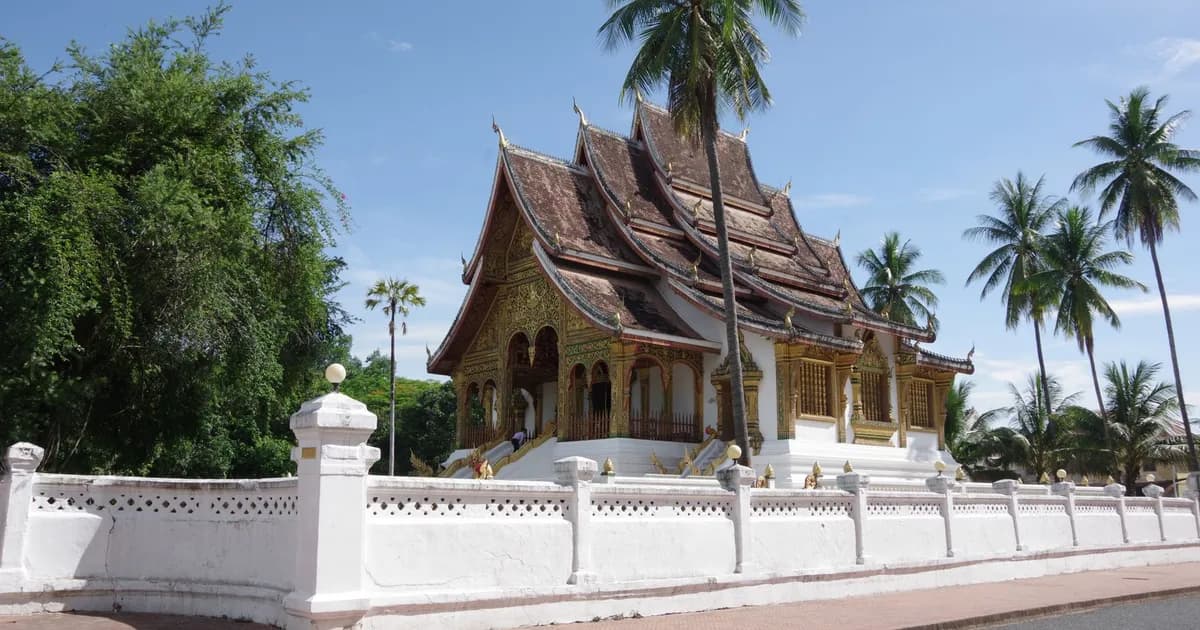

Luang Prabang recorded more than 824,000 visitor arrivals between January and April 2026 alone, and provincial authorities are now targeting upward of 2.3 million visitors for the year, with tourism revenue projected near USD 1.27 billion. For a town of roughly 55,000 residents, built around a UNESCO World Heritage core of temples, colonial-era shophouses, and a narrow peninsula between the Mekong and Nam Khan rivers, those numbers represent a genuine inflection point. The question worth asking in 2026 is not whether Luang Prabang is booming, it clearly is, but what kind of place it will remain once the boom settles into something more permanent.
Why the Numbers Are Climbing Now
Several forces are converging on Luang Prabang at once. The Laos-China Railway, now several years into operation, has cut the journey from Kunming to a matter of hours rather than days, and cross-border passenger trips were up nearly a third year-on-year in the first quarter of 2026 alone. A same-day round-trip international service between Xishuangbanna and Luang Prabang, launched in April, has made the town newly accessible to short-break Chinese travelers in a way it never was before. Layer onto that a string of 2026 rankings, including a placement among the world's 50 most beautiful cities, and Luang Prabang has moved from a well-regarded stop on the Southeast Asia backpacker circuit to a genuine international headline destination.
None of this is happening in isolation. Laos as a whole is targeting between 5 and 6 million international visitors in 2026, with Chinese arrivals expected to account for roughly 2 million of that total. Luang Prabang, as the country's most recognizable heritage brand, is absorbing a disproportionate share of that growth.
One request. Up to five tailored proposals.
Skip contacting agencies one by one — share your trip once and let up to five trusted Laos agencies come to you. Free, with no obligation.
Get my free quotesWhat UNESCO Status Actually Restricts
Luang Prabang's UNESCO World Heritage listing, granted in 1995, is not a marketing badge; it comes with binding heritage management guidelines that shape what can and cannot be built. Height limits apply across the old town, new construction must follow traditional architectural forms and materials, and the historic streetscape of the peninsula is protected from the kind of high-rise transformation seen in parts of the wider Mekong region. New boutique hotels and cafés continue to open at a steady pace, but nearly all are required to work within existing shophouse structures or match traditional design codes rather than build upward.
This is precisely why Luang Prabang still feels calmer than the visitor numbers might suggest. There are no resort towers on the peninsula and no beachfront-style nightlife strips. The tension is not yet about physical overdevelopment in the way that has affected other heritage sites in the region; it is more about density, congestion at key temple sites during peak hours, and pressure on infrastructure, roads, waste management, water supply, that was not originally built for millions of annual visitors.
The Overtourism Conversation, Honestly Assessed
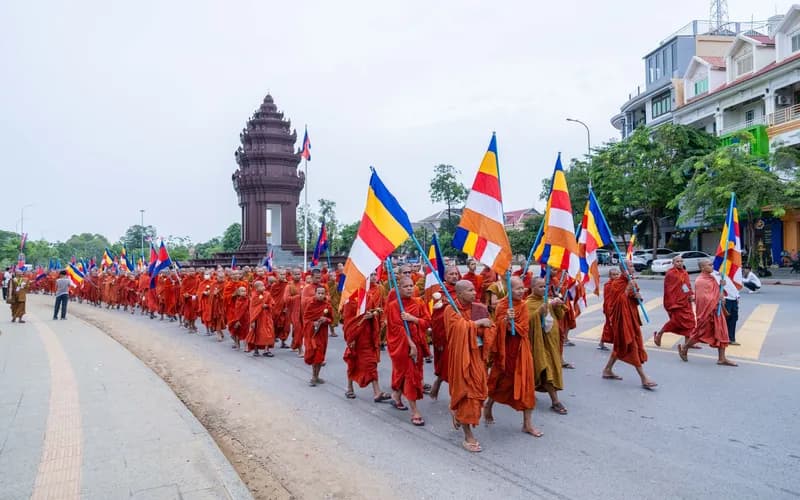
Concerns about strain on local infrastructure and shifting neighborhood character are increasingly visible in regional commentary and on travel forums, and they deserve to be taken seriously rather than waved away. Certain streets and temples, particularly during the early morning alms-giving ceremony and at popular sunset viewpoints, now see crowding that did not exist a decade ago. Guesthouse and rental prices in the old town have risen as demand has grown, a pattern familiar from other heritage destinations under similar pressure.
At the same time, it would be inaccurate to describe Luang Prabang as having tipped into full-scale overtourism on the model of, say, Venice or Angkor Wat's central temples at their peak. The absence of large resort development, the UNESCO-driven height and design controls, and a town layout that spreads visitors across a peninsula rather than concentrating them in a single plaza all work in the town's favor. For now, most visitors who spend more than a day or two, moving beyond the handful of headline sights, still describe Luang Prabang as measured and calm relative to regional peers. Whether that holds as visitor numbers keep climbing toward the 2.3 million target is the open question shaping how the town is managed through the rest of 2026.
Get matched with up to 5 trusted Laos agencies
- Free
- No obligation
- Up to 5 agencies
What This Means for How You Should Visit
The practical takeaway for travelers is not to avoid Luang Prabang, but to visit it deliberately rather than as a two-night box to tick between Vang Vieng and the airport. Staying longer, three or four nights rather than one or two, spreads your presence across quieter hours and lets you see the parts of town that day-trippers skip entirely. UNRUSH's broader guide to where to go and when in Laos makes the case for treating Luang Prabang as an anchor for a longer northern loop rather than a rushed stop, which naturally reduces the pressure that comes from everyone trying to see everything in 48 hours.
Timing within the day matters as much as timing within the trip. The alms-giving ceremony and the morning market are calmest just after dawn, before large tour groups arrive; the same is true of the major temples, which are markedly quieter before 9am. Sunset viewpoints, by contrast, are almost always crowded regardless of season, so travelers seeking a quieter version of that experience are often better served exploring the quieter residential lanes on the peninsula's northern end instead.
What It Means for the Town's Long-Term Character
Heritage authorities are, by most accounts, taking the growth seriously rather than treating it as a problem to manage away quietly. The continued enforcement of height and design guidelines, even as investment pressure grows, suggests the physical fabric of the old town is likely to remain intact for the foreseeable future. The bigger uncertainty is less architectural than experiential: whether the daily rhythms that make Luang Prabang distinctive, monks walking at dawn, quiet riverside cafés, unhurried temple visits, can be preserved as visitor volume continues rising toward and beyond the 2026 target.
For slow travelers, this is worth watching over the next several years rather than treated as settled. The town's own management choices, how it paces visitor flow, protects quieter neighborhoods from short-term rental conversion, and balances Chinese railway-driven arrivals with longer-staying independent travelers, will likely determine whether Luang Prabang holds its character or drifts toward the more generic heritage-tourism pattern seen elsewhere in the region.
How Luang Prabang Fits Into a Longer Laos Itinerary
Treating Luang Prabang as a single, isolated stop is part of what drives the crowding at its best-known sights. Much of the pressure travelers feel, and contribute to, comes from compressing the entire visit into a single overnight or two-night stay wedged between Vang Vieng and an onward flight. Extending the itinerary north toward the Nam Ou valley, or simply building in more unstructured time on the peninsula itself, spreads demand more evenly across the region rather than concentrating everyone in the same six or seven UNESCO-listed blocks during the same few hours each morning.
This is less a matter of avoiding Luang Prabang and more a matter of proportion. If your route is being planned around Laos's north-central loop, UNRUSH's plan your journey page for Laos is a useful place to sequence how much time to give the town relative to quieter stops nearby, so that Luang Prabang functions as one anchor among several rather than the entire trip compressed into a long weekend.
Working With Local Operators as the Town Changes
As visitor numbers climb, the gap between well-run, heritage-conscious operators and those simply capitalizing on demand is widening. This matters more than it might in a less pressured destination: a guide or agency with genuine local knowledge can route you around the worst of the midday crowds, recommend which temples are worth an early visit versus a skip, and flag which guesthouses are operating within the UNESCO conservation guidelines rather than pushing at their edges. Travelers who want that kind of local judgment built into their visit, rather than assembling it themselves from outdated blog posts, can compare options through UNRUSH's directory of Laos travel agencies.
What Repeat Visitors Notice
Travelers returning to Luang Prabang after a gap of several years consistently mention the same shift: more guesthouses, more cafés catering specifically to short-stay visitors, and noticeably busier mornings around the most photographed temples, alongside a genuine sense that the core of the old town, its layout, its architecture, its daily rhythms, has held up better than they expected given the visitor numbers. That combination, visible growth without a wholesale change in character, is arguably the most useful signal for anyone deciding whether to visit now or wait. The heritage guidelines that have kept the physical town intact so far are still in force, but they say nothing about pacing or crowd management, which is the part now being tested in real time as 2026 arrival numbers climb toward their target.
What to Do Next
- Plan three to four nights in Luang Prabang rather than a one- or two-night stopover, to spread your visit across quieter hours and days.
- Schedule temple visits and the alms-giving ceremony for the first hour after dawn, before tour groups arrive.
- Skip the most crowded sunset viewpoint at least once in favor of a quiet walk through the peninsula's northern residential lanes.
- Book accommodation inside a heritage-listed shophouse rather than a newer development outside the protected core, both for atmosphere and to support businesses operating within the conservation guidelines.
- If arriving by the Laos-China Railway from Kunming or Xishuangbanna, build in at least one buffer day before onward travel, since peak arrivals can strain local transport connections.
Frequently Asked Questions
Is Luang Prabang overcrowded in 2026?
It is busier than it has ever been, with over 800,000 arrivals in the first four months of 2026 alone, and certain sites do feel crowded at peak hours. Overall, though, height and design restrictions tied to its UNESCO status have kept the town calmer than many regional heritage destinations facing similar visitor growth.
What is driving the surge in visitors?
A combination of the Laos-China Railway cutting travel time from southern China, new same-day international rail service to Xishuangbanna, and a string of 2026 recognitions ranking Luang Prabang among Asia's and the world's most beautiful cities.
When is the best time of day to visit the temples?
Before 9am, ideally right after the alms-giving ceremony at dawn, when temples and streets are noticeably quieter than during the mid-morning to afternoon tour group window.
Does UNESCO status mean Luang Prabang cannot build new hotels?
No, but it restricts how they are built. Height limits and traditional design requirements mean new accommodation is generally built within existing shophouse structures rather than as standalone high-rise developments.
How does Luang Prabang compare to other Southeast Asian heritage towns facing overtourism?
It remains less affected than some regional comparisons, largely because there has been no large-scale resort or high-rise development on the peninsula, though rising prices and localized crowding at peak sites suggest the gap is narrowing.
Is the Laos-China Railway the main reason to visit Luang Prabang now?
It is a major factor in how visitors are arriving, particularly from China, but the town's core appeal, its temples, riverside setting, and heritage architecture, predates the railway and remains the primary draw for most independent travelers.
How many days should I spend in Luang Prabang to visit it responsibly?
Three to four nights allows time to see the major sights during quieter hours, explore beyond the peninsula's busiest streets, and support small, heritage-based businesses rather than rushing through in a single overnight stop.