


Laos is one of the few countries where mobile data is both cheap and genuinely unreliable, and where getting the decision right shapes your itinerary rather than just your inbox. Coverage has improved steadily along the railway corridor and the Mekong towns, while whole valleys in between remain silent. This is the current state of play for 2026: which network to buy, what you will pay, what the passport rule actually means at the counter, and where you should plan to be offline.
What has changed, and what has not
Two things have shifted in the past couple of years. The first is that eSIM has arrived properly. Until recently, travellers to Laos had essentially one option, which was to queue at a counter with a physical passport. Now international eSIM resellers offer Laos plans that connect over the domestic networks, and the local operators have begun supporting eSIM directly, so it is possible to land with data already working.
The second is that registration has tightened. Buying a Lao SIM requires your physical passport, scanned at the point of sale. This is a legal requirement applied across all the operators, not a shop policy, and a photograph of your passport on your phone will usually be refused.
What has not changed is the geography. Laos is mountainous, sparsely populated and expensive to cover with towers. Signal follows roads, rivers and towns. Once you leave those, it stops, and no amount of buying the better network will change that. One related shift is worth noting: arrival formalities have moved substantially online, as our summary of the digital immigration form and entry rules sets out in full.
One request. Up to five tailored proposals.
Skip contacting agencies one by one — share your trip once and let up to five trusted Laos agencies come to you. Free, with no obligation.
Get my free quotesThe networks, and who covers what
Four operators serve the country, but for a traveller the choice narrows to two.
Unitel is the largest and generally the strongest, with 4G across all provinces, 5G in Vientiane since 2021, and coverage reaching the large majority of the population. It is the default recommendation and the network most international eSIMs route through.
Lao Telecom, often written LTC, is the main alternative and frequently the cheaper one for large data bundles. Its urban performance is comparable and its rural reach is a little thinner in the far north.
The two smaller operators, ETL and Tplus, are worth considering only if you are staying in Vientiane and find a promotion. Their rural coverage is not competitive.
If you are travelling the standard north-south route through Vientiane, Vang Vieng, Luang Prabang and Pakse, either of the two main networks will serve you. If your trip leans toward Phongsaly, Houaphanh, Attapeu or the eastern border districts, choose Unitel and lower your expectations anyway.
Buying a local SIM: what actually happens
There are three practical places to buy.
At Wattay International Airport in Vientiane and at Luang Prabang airport, operator desks sit in the arrivals area and sell tourist bundles. It is the fastest option and the most expensive per gigabyte, but the staff speak English and the SIM is active before you leave the building.
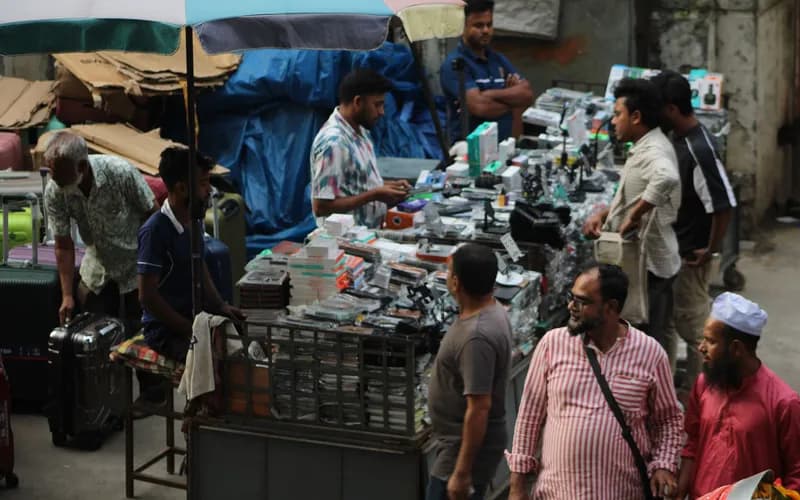
At an official operator shop in any provincial capital you get the full range of plans at standard prices and proper support if something goes wrong. Bring the passport, expect five to ten minutes, and ask them to test data before you leave.
At a general phone shop or minimart you may find SIMs sold informally. These are cheaper and often already registered to someone else, which is precisely the problem: an unregistered or wrongly registered SIM can be cut off without notice. It is not worth the saving.
At any of these, the process is the same. Passport handed over, details recorded, SIM inserted, a bundle activated by short code, and a test of data before you walk away. Ask the assistant to write down the top-up code and the balance-check code, because the menus are frequently in Lao only.
Get matched with up to 5 trusted Laos agencies
- Free
- No obligation
- Up to 5 agencies
What you will pay
Prices are low and move around, so treat these as orientation rather than a quote.
- A bare SIM card generally costs 10,000 to 20,000 kip.
- Airport tourist packages typically fall somewhere between 50,000 and 250,000 kip, depending on the data volume and validity.
- In-country data bundles are the real value. Around 125,000 kip has commonly bought a 30GB monthly package on Lao Telecom, while comparable Unitel bundles have sat nearer 200,000 kip for a similar allowance.
- International eSIM plans start around 5 US dollars for a few gigabytes over a week and rise steeply for larger allowances.
The general rule is that local SIMs win on cost per gigabyte by a wide margin, and eSIMs win on convenience for short trips. Note that the kip has been volatile, so dollar equivalents shift; our explainer on what the weak kip means for travellers is worth reading before you convert anything in your head.
When an eSIM is the better answer
An eSIM makes sense in four situations: a trip of under a week, an arrival late at night when counters are shut, a route that crosses several countries where a regional plan is simpler, and any case where you would rather not hand over your passport at a kiosk.
The trade-offs are real. You pay several times more per gigabyte. You are dependent on the reseller's roaming agreement, which means you cannot always choose the underlying network. You get no Lao phone number, which matters more than travellers expect, because guesthouses, drivers and boat operators here communicate by phone call and WhatsApp rather than email, and a local number smooths every booking.
A reasonable hybrid: buy an eSIM before departure so you land connected, then pick up a local SIM in your first provincial capital for the rest of the trip and keep both active in dual-SIM mode.
Where the signal actually fails
This is the part worth planning around.
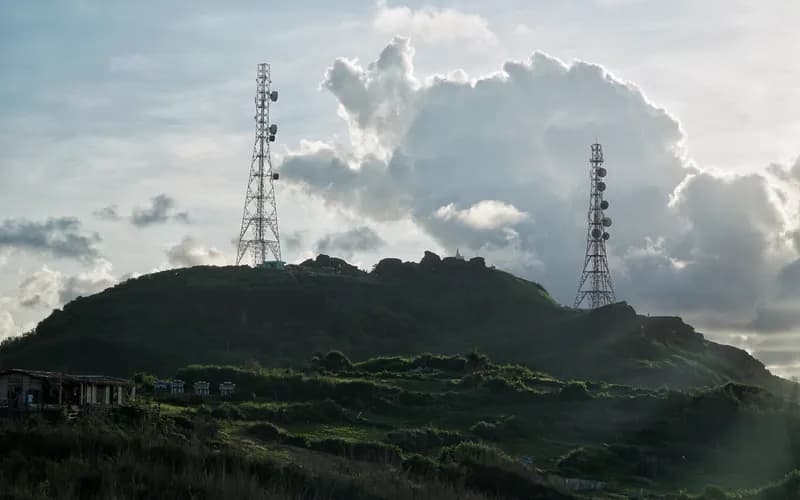
- Trekking in the Nam Ha protected area, where coverage disappears within an hour of leaving Luang Namtha town.
- The upper Nam Ou valley beyond Nong Khiaw and Muang Ngoi, which is patchy at best.
- Long sections of the Thakhek Loop in Khammouane, particularly around the drowned forest and on the eastern leg.
- Inside any cave system, obviously, and along the Xe Bang Fai river approaches.
- Stretches of the Mekong slow boat route between Huay Xai and Pakbeng.
- Much of Phongsaly and the eastern border districts of Houaphanh and Attapeu.
The practical countermeasures are simple. Download offline maps for the whole country before you arrive. Screenshot your bookings and addresses. Carry your accommodation's phone number written on paper. Tell someone your route before a multi-day trek. If you are riding, treat a dead phone as a certainty rather than a risk, and read our honest guide to renting and riding a motorbike in Laos for the rest of the self-sufficiency argument.
Wi-Fi, payments and the things that need data
Guesthouse and cafe Wi-Fi is widespread in towns and mostly adequate for messaging and browsing. It is not reliable for video calls, and it degrades sharply in the evening when everyone is online. Power cuts are not unusual in the provinces, and the router goes with them.
Payments are the underrated reason to have data. Lao daily life has moved substantially onto QR-code payments through domestic banking apps, but those apps require a Lao bank account, which visitors cannot readily open. In practice you will still be paying cash almost everywhere, which is why our guide to paying for things in Laos matters more than your data plan does.
Data also matters at the border. Completing an entry form or an e-visa application at the last minute in a border town with weak signal is an avoidable stress. Do it before you travel, ideally on a fixed connection rather than a bus seat.
One last note on roaming. Standard roaming from European and North American carriers in Laos is expensive, often several dollars a day for a token allowance, and some travel plans exclude Laos from their country lists entirely. Check before you rely on it.
What to Do Next
- Decide your trip length first. Under a week, buy an eSIM. Two weeks or more, plan on a local SIM and treat any eSIM as an arrival bridge.
- Keep your physical passport accessible on arrival day. It is required at the counter, and a copy will usually not be accepted.
- Buy at an official operator shop rather than a street stall, and have the assistant activate the bundle and test data before you leave.
- Ask for the balance and top-up short codes in writing, since the on-screen menus are often in Lao.
- Download offline maps and your accommodation details before you leave the last town with coverage, especially before treks, loops and river journeys.
- Check whether your phone is carrier-unlocked and eSIM-capable before departure. Both are easier to resolve at home than in Vientiane.
- If you are still shaping the route, our plan your journey page for Laos sets out how the regions connect and where the genuinely remote stretches are.
Frequently Asked Questions
Do I need my passport to buy a SIM card in Laos?
Yes. Registration with a physical passport is a legal requirement across all Lao operators, and the document is scanned at the point of sale. A photocopy or a photo on your phone is normally refused. The process itself takes only a few minutes.
Which network has the best coverage in Laos?
Unitel is generally the strongest, with 4G in every province, 5G in Vientiane and the widest rural reach. Lao Telecom is a close and often cheaper alternative in towns. In the far north and the eastern border districts, Unitel is the safer choice.
How much does mobile data cost in Laos?
Very little by international standards. A SIM card itself runs about 10,000 to 20,000 kip, and monthly data bundles of around 30GB have commonly been priced between roughly 125,000 and 200,000 kip depending on the operator. Airport tourist packages cost more for the same data.
Is an eSIM available in Laos?
Yes. International eSIM providers sell Laos plans that roam onto the domestic networks, and local operators have begun offering eSIM directly. It is convenient and works from the moment you land, but it costs several times more per gigabyte than a local SIM and gives you no Lao phone number.
Will I have signal while trekking or on the Thakhek Loop?
Frequently not. Coverage drops within an hour of leaving Luang Namtha for the Nam Ha forest, is patchy on the upper Nam Ou, and disappears for long stretches of the Thakhek Loop. Plan those days as offline days and carry printed or screenshotted details.
Can I use my home SIM roaming instead?
You can, but it is usually poor value. Roaming rates in Laos are high, daily passes buy small allowances, and several carrier travel bundles exclude Laos altogether. Check your operator's Laos rate specifically before assuming your regional plan covers it.
Is Wi-Fi good enough to work from Laos?
In Vientiane and Luang Prabang, generally yes for email and messaging, with the caveat that evening congestion and power cuts are common. For reliable video calls, tether from a local 4G SIM rather than relying on guesthouse Wi-Fi, and do not plan critical calls from smaller provincial towns.