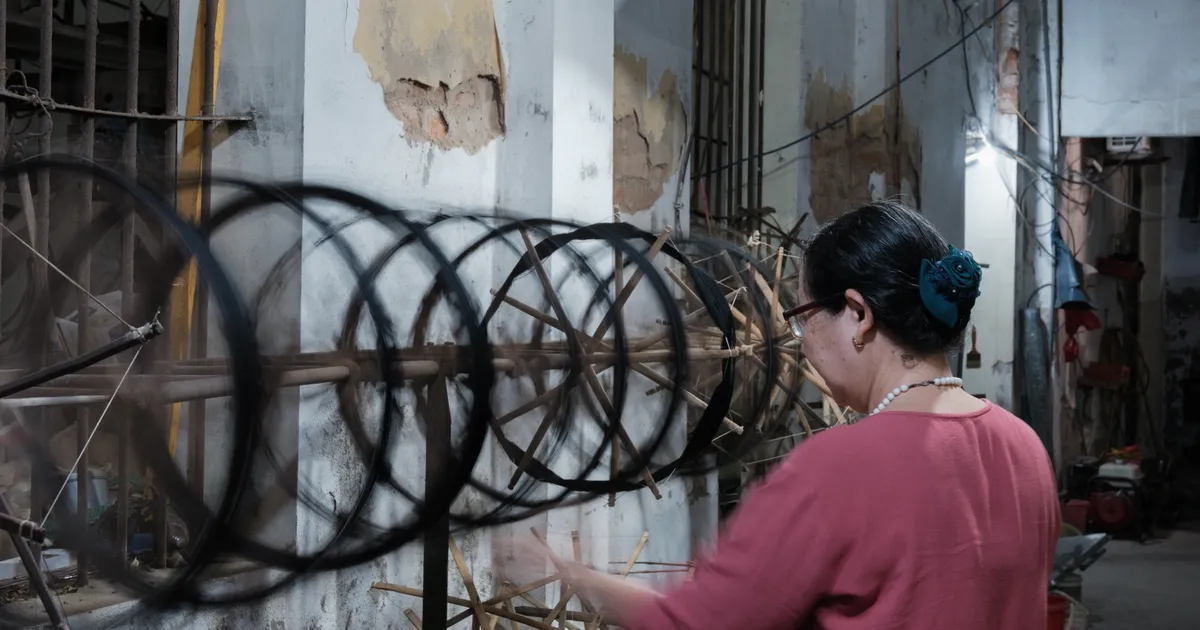


A motorbike is the best way to see rural Laos and the fastest way to ruin a trip. Both statements are true, and the gap between them is almost entirely made of preparation. This is the practical version: what you legally need, what you will actually be asked for, what things cost, what your insurance will and will not cover, and where the real dangers are. No romance about the open road until the paperwork is straight.
Why a motorbike makes sense here, and when it does not
Laos is a country of long distances between small places. Public transport connects the towns competently, but it cannot stop at a weaving village, a roadside noodle stall or a viewpoint that appears around a bend. A bike converts a transfer into a day, which is the whole slow-travel argument in one sentence.
Why rent
- Stops at weaving villages, roadside noodle stalls and viewpoints no bus can reach
- Turns a plain transfer into a full day of slow travel
- Ideal for multi-day loops like Khammouane or the Bolaven Plateau and day rides around Luang Prabang, Pakse, Thakhek or Luang Namtha
Think twice if
- You have never ridden before, because Laos is a poor place to learn
- You are covering long point-to-point stretches on Route 13 among trucks and buses
- It is wet season on unsealed mountain roads
It makes most sense in three situations: multi-day loops through sparsely populated country such as Khammouane or the Bolaven Plateau, day exploration around a base like Luang Prabang, Pakse, Thakhek or the quiet valleys around Luang Namtha, and reaching villages that no bus serves.
It makes least sense in three others. Long-haul point-to-point riding on Route 13, where trucks and buses dominate and the scenery does not justify the exposure. Wet-season riding on unsealed mountain roads. And any situation where you have never ridden before; Laos is a poor place to learn, and a two-day scooter lesson in a country with a road-fatality rate several times the western European average is a bad trade. If that is you, the bus, boat and train network covers most of the same ground perfectly well.
One request. Up to five tailored proposals.
Skip contacting agencies one by one — share your trip once and let up to five trusted Laos agencies come to you. Free, with no obligation.
Get my free quotesThe legal position: licences and the IDP
The law is clearer than the roadside practice. To ride legally in Laos as a visitor you need a valid motorcycle entitlement from your home country plus an International Driving Permit that carries category A, the motorcycle category. A licence from an ASEAN member state is also accepted, as is a Lao licence if you are resident.
Three points that catch people out:
- A car-only IDP does not cover you on a motorbike. Category A must be ticked. Many travellers order an IDP and never check.
- An IDP is not a standalone document. It is a translation of your home licence and is only valid presented together with it.
- Rental shops will usually not ask. That is a commercial decision on their part, not a legal exemption for you.
Police checkpoints are routine on main roads and at town entrances, particularly around Vientiane, Luang Prabang and Vang Vieng. If you cannot produce the documents, expect an on-the-spot fine, commonly quoted in the range of roughly 100,000 to 500,000 kip. Pay it, ask for a receipt, and keep the exchange polite. Arguing prolongs it.
Helmets are mandatory for rider and passenger and enforcement has tightened. Wear the helmet even when the locals riding past you are not.
What you can rent, and what it costs
At a glance
- Automatic scooter
- ~100,000-150,000 kip/day
- Semi-automatic Honda Wave
- ~130,000-200,000 kip/day
- Trail bike (Honda CRF)
- ~45-60 US dollars/day
- Deposit
- passport held, or cash / card pre-authorisation
- Licence
- home motorcycle licence + IDP category A
- Fuel
- cheap, but stations thin out off main routes
Three categories cover almost everything on offer.
Automatic scooters of 110 to 125cc are the default in tourist towns. They are easy, adequate for flat roads and short hops, and poor on steep or loose surfaces: fine for a coffee-farm day on the Bolaven Plateau, wrong for a mountain loop. Expect roughly 100,000 to 150,000 kip a day at a local shop, more from booking platforms and hotel desks, and cheaper by the week.
Semi-automatic bikes such as the Honda Wave, 100 to 125cc with a foot gear change and no clutch lever, are the Lao workhorse. They are far better than a scooter on hills and rough ground and are typically 130,000 to 200,000 kip a day. If you can manage the gear lever, this is the sensible middle choice.
Manual trail bikes, usually a Honda CRF250L or CRF300L or an older Honda XR, are the right tool for serious loops and unsealed roads. They cost considerably more, commonly 45 to 60 US dollars a day from specialist rental outfits in Vientiane, Luang Prabang, Thakhek or Pakse, and they should only be ridden by someone with real experience on a clutch.
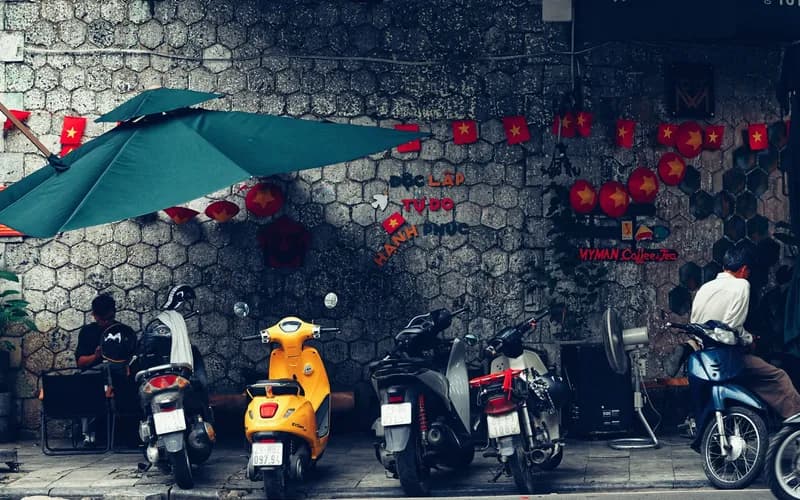
Fuel is cheap relative to Europe but stations thin out fast off the main routes. In the uplands, villages sell petrol from glass bottles or hand pumps; it works, but plan a full tank before any long empty stretch rather than gambling on the next village.
Get matched with up to 5 trusted Laos agencies
- Free
- No obligation
- Up to 5 agencies
The passport deposit problem
Most Lao rental shops want your passport held as security. This is standard local practice and it is also the single biggest exposure in the whole transaction: without a passport you cannot check into a hotel legally, cross a border, or resolve a dispute from a position of strength. Disputes over invented scratch damage do happen, and a held passport is what gives them leverage.
There are three workable responses.
- Offer a cash deposit instead. Larger outfits, especially those renting trail bikes, will often accept the equivalent of several hundred to a thousand US dollars, or a card pre-authorisation. Get the deposit terms in writing.
- Offer a photocopy plus another form of ID, such as a driving licence. Smaller shops in less-touristed towns sometimes agree, especially for a multi-day rental paid up front.
- If neither works and you must leave the passport, choose an established shop with a physical premises and a visible track record, and accept it as a calculated risk for a short rental.
Whatever you agree, photograph the rental contract and note the shop's name, address and phone number separately.
Insurance: the part most travellers get wrong
Watch out
Most travel insurance excludes motorbike accidents unless you held the right licence for that engine size at home, carried the correct documents and wore a helmet - and some policies exclude engines above 125cc entirely. A medical evacuation from central Laos to Bangkok runs to five figures in US dollars. Read your policy's motorcycle clause before you ride.
Two different things are being confused when people say a bike is insured.
The first is the bike's third-party cover, which some rental shops include. It relates to damage you cause to others and it is usually thin. Damage to the rental bike itself is nearly always your problem, and shops price repairs generously.
The second is your own travel insurance, and this is where trips get financially catastrophic. The great majority of policies exclude motorbike accidents unless you were licensed to ride that engine size in your home country, carrying the correct documents, and wearing a helmet. Some exclude engines above 125cc entirely. A medical evacuation from central Laos to Bangkok is a five-figure bill in US dollars, and it is exactly the bill that gets refused.
Do this before you rent: read the motorcycle clause of your policy, confirm the engine capacity limit, confirm whether an IDP is required, and buy an add-on if one is available. If your policy will not cover you, either fix the licence problem or do not ride.
Reading the bike before you take it
Five minutes here saves a week of argument later.
Walk the whole bike on video, narrating the existing damage out loud, with the shop staff present. Squeeze both brakes hard, standing still, then roll it and test them again. Check tyre tread and sidewalls, since tyres are the most commonly neglected component on rental bikes. Check that both mirrors exist and adjust. Test the horn, which in Laos is a safety device rather than an insult. Confirm the headlight works on both settings even if you plan not to ride at night, because plans change.
Then ask for the bike's registration document or a copy to carry, a working lock, and the shop's phone number for breakdowns. On loop routes, ask specifically who they will send and how far their assistance extends.
Riding conditions, honestly
Laos drives on the right. Sealed main roads are generally decent, secondary roads range from good to gravel, and mountain routes deteriorate sharply in and after the rains, when landslips and washouts are routine.
The hazards, in rough order of how often they cause trouble:
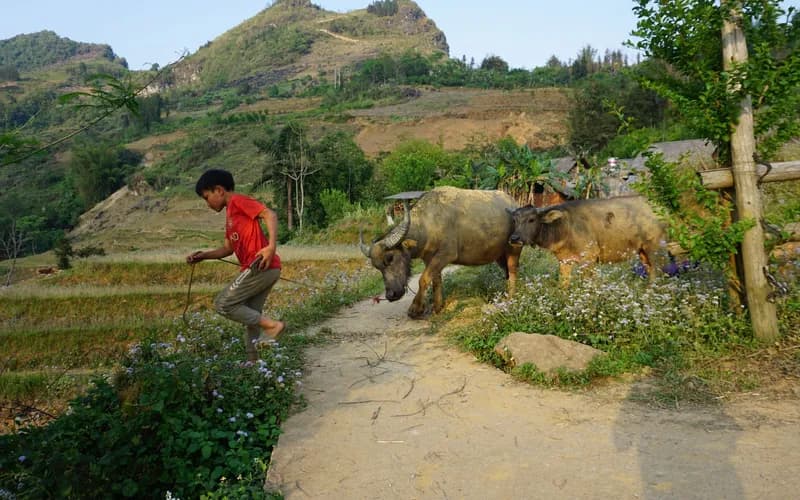
- Livestock. Buffalo, cows, goats, dogs and chickens use the road as their own, and they move unpredictably. Slow down through every village.
- Trucks and buses, which overtake into oncoming traffic and expect you to move onto the shoulder. Do it.
- Potholes and edge breaks, particularly on the outside of bends.
- Dust and gravel on corners in the dry season, mud and clay in the wet.
- Night. There is almost no street lighting outside cities, many vehicles run without lights, and animals are invisible. Plan every day so you are off the road by dusk. This is the most valuable rule in this article.
One further caution particular to Laos. Away from surfaced roads, unexploded ordnance remains a genuine hazard in the eastern provinces and the north. Do not park or camp on unmarked ground, do not ride onto bomb craters or field edges for a photograph, and read our briefing on staying safe from UXO before heading into Xieng Khouang, Savannakhet or the old trail country.
The routes that justify the risk
Four rides stand out, and all reward a slower schedule than the standard version.
The Thakhek Loop in Khammouane runs roughly 450 kilometres through karst, caves and a drowned forest, and is usually ridden in three or four days. It is the most popular multi-day loop in the country and the one most often attempted on an unsuitable scooter. Our full account of the Thakhek loop and Konglor cave covers the stages and the state of the road.
The Bolaven Plateau loop from Pakse can be done as a short two-day circuit or a longer four-day version, and it is the gentlest of the major loops: cooler air, coffee farms, waterfalls and short daily distances. Coffee stops and short daily distances make it the best first multi-day ride in the country.
The northwest around Luang Namtha and Muang Sing offers day rides through Akha and Tai villages on mostly sealed roads, best combined with the trekking the province is known for.
Finally, the roads east of Luang Prabang towards Nong Khiaw and the Nam Ou give some of the best short rides in Laos, with the caveat that the mountain sections are unforgiving in rain.
What to Do Next
- Check your driving licence entitlement and order an International Driving Permit with category A before you leave home. It cannot be obtained in Laos.
- Read the motorcycle exclusions in your travel insurance policy and note the engine capacity limit in writing. If you are not covered, change the plan rather than the paperwork.
- Choose the machine for the route, not the price. A semi-automatic Wave or a trail bike for loops and hills, a scooter only for flat town-based days.
- Negotiate the deposit before you agree the price, and try cash or a card hold before surrendering your passport.
- Film a full walk-around of the bike with the shop present, and keep the video until the deposit is returned.
- Build your days around daylight, allowing for one mechanical stop, and never plan an arrival after dark.
- If any of this sounds like more than you want to manage, a local operator can arrange a supported ride or a driver instead; compare vetted options in our Laos travel agencies directory.
Frequently Asked Questions
Do I really need an International Driving Permit in Laos?
Legally, yes: you need your home motorcycle licence plus an IDP endorsed for category A. Rental shops rarely check, but police at roadside stops do, and your travel insurer certainly will if you make a claim. The IDP must be obtained in your home country before departure.
What happens if I am stopped without the right documents?
You will normally be issued an on-the-spot fine, typically quoted somewhere between 100,000 and 500,000 kip depending on the province and the officer. Stay calm, pay, and ask for a receipt. The larger risk is not the fine but the effect on any insurance claim later.
How much does it cost to rent a motorbike in Laos?
Roughly 100,000 to 150,000 kip a day for an automatic scooter, 130,000 to 200,000 kip for a semi-automatic Honda Wave, and around 45 to 60 US dollars a day for a Honda CRF trail bike from a specialist rental company. Weekly rates are noticeably cheaper.
Should I leave my passport as a deposit?
Avoid it if you can. Offer a cash deposit, a card pre-authorisation or a photocopy with a second form of ID instead. If a shop insists and you accept, use an established business with a fixed address and keep the rental short.
Is riding in Laos dangerous?
It carries real risk. Road fatality rates are high by international standards, road surfaces vary, livestock wander freely and night riding is genuinely hazardous. Most incidents involving travellers are single-vehicle and happen on gravel, in the dark, or after drinking. Riding conservatively in daylight removes most of the exposure. If that risk profile does not suit you, our guide to getting around Laos by bus, boat and train covers the alternatives.
Can I take a rented motorbike into Thailand or Vietnam?
Almost never. Standard Lao rental agreements prohibit border crossings, and taking a vehicle out of the country requires paperwork that rental shops do not provide. Attempting it invalidates any cover and can leave the bike impounded.
Is the Thakhek Loop possible on an automatic scooter?
People do it, and some finish without trouble, but it is the wrong tool. The loop includes long unsealed sections, steep climbs and stretches with no fuel or workshop. A semi-automatic Wave or a trail bike is safer, more comfortable and less likely to strand you.