
There is a faster way to get from the Thai border to Luang Prabang, and most travelers who take it regret it. The two-day slow boat down the Mekong, covering roughly 282 kilometers with an overnight stop in Pakbeng, remains one of the last genuinely unhurried ways to arrive in northern Laos, and it turns a transit day into one of the trip's better memories. Here is what actually booking and riding it looks like in 2026.
Why Take the Slow Boat At All
The alternative routes, a cramped minivan on mountain roads or a flight, get you to Luang Prabang faster, but they skip the point entirely. The slow boat follows the Mekong through a stretch of northern Laos with almost no road access, past riverside villages, water buffalo wading at the banks, and karst hills that close in and open out again over two unhurried days. It is not fast, it is not always comfortable, and that is exactly why it belongs on a slow-travel itinerary rather than a rushed one.
One request. Up to five tailored proposals.
Skip contacting agencies one by one — share your trip once and let up to five trusted Laos agencies come to you. Free, with no obligation.
Get my free quotesWhere the Journey Starts and Ends
The boat departs from Huay Xai, the Lao border town opposite Chiang Khong in Thailand, reachable by a short cross-border ferry or the newer Fourth Thai-Lao Friendship Bridge if arriving from northern Thailand. The journey covers two legs: Huay Xai to Pakbeng on day one, roughly six to seven hours, and Pakbeng to Luang Prabang on day two, a similar duration. There is no way to complete it in a single day on the traditional slow boat; travelers looking for a one-day option should look at the speedboat instead, which is faster, louder, and considerably less relaxing.
Booking: What It Actually Costs and How
Ticket prices vary depending on where you buy them. Buying directly at the pier in Huay Xai is generally the cheapest option, with fares often landing between 210,000 and 400,000 kip for the full two-day journey. Buying through a guesthouse, tour agency, or online platform typically costs more, often 400,000 to 450,000 kip including transport to the pier, but saves the hassle of navigating ticket counters with luggage in an unfamiliar border town. For travelers on a tighter schedule, booking a day ahead is sensible; for everyone else, buying the morning of departure is usually fine outside major holiday periods.
Get matched with up to 5 trusted Laos agencies
- Free
- No obligation
- Up to 5 agencies
What to Expect on Board
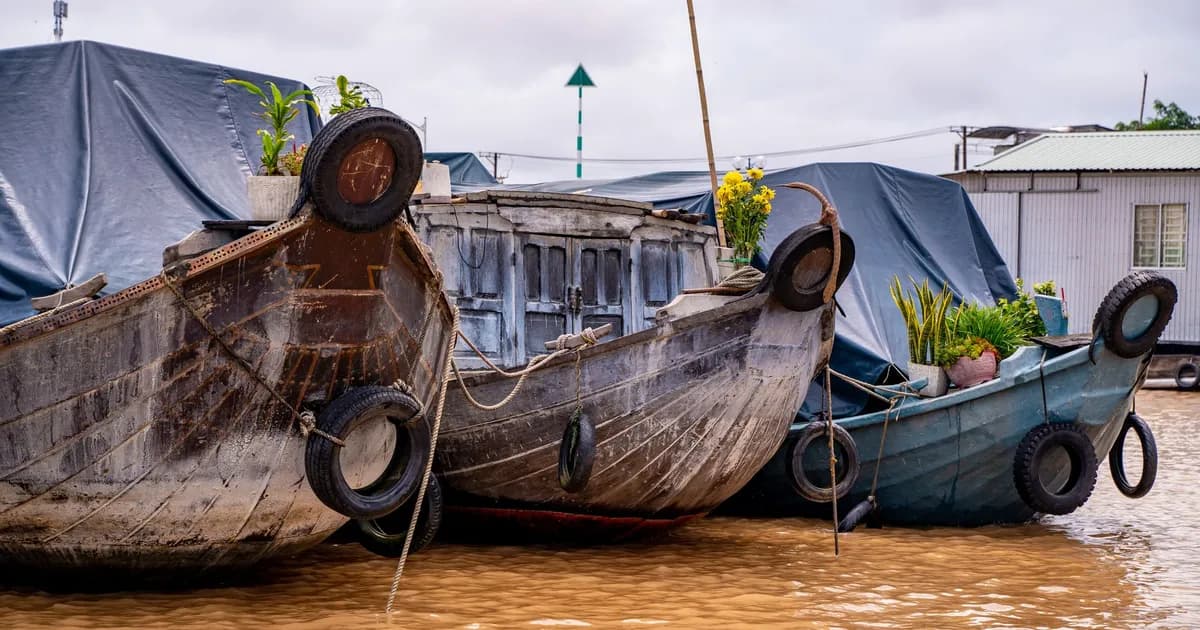
The boats themselves are long, narrow wooden vessels with rows of bench or car-style seating, no assigned seats in most cases, and limited legroom. Arriving early to claim a seat near a window, away from the engine noise at the back, makes a meaningful difference over a six-hour leg. There is generally a small onboard snack and drink stall, but bringing your own water and snacks is worth doing, since selection and availability can be inconsistent.

Toilets on board are basic, the ride can be genuinely loud from the engine, and cushions or padding for the seats are inconsistent between boats, so a light travel pillow or rolled jacket is a small addition that pays off. None of this is a complaint so much as a description: this is not a cruise, it is river transport, and travelers who arrive with realistic expectations tend to enjoy it far more than those expecting a polished tourist experience.
The Pakbeng Overnight
Pakbeng exists almost entirely because of the slow boat; it is a one-street riverside town with guesthouses, restaurants, and touts meeting the boat at the pier offering rooms. Prices and quality vary widely, and it is worth walking a short distance up the main street rather than accepting the first offer at the dock. An overnight here is not a place to build extra days around, but it is worth treating as more than a forced stopover: sunset over the river from one of the hillside guesthouses is genuinely worth the walk up, and the town's small night market offers a reasonable dinner without much searching.
Arriving in Luang Prabang
The boat typically docks a short distance from central Luang Prabang, with tuk-tuks waiting to take arriving passengers into town for a set fare, worth confirming before boarding. Arrival timing on day two varies with river conditions and can run later than expected, so travelers with same-day onward plans, a flight or a tightly booked guesthouse, should build in a buffer rather than cutting it close. For a broader sense of how this river route fits into a wider trip, UNRUSH's guide to where to go and when in Laos places the slow boat within a natural northern Laos sequence rather than as an isolated novelty.
Practical Tips That Actually Matter
A short list of details that make more difference than most guides suggest:
- Bring more cash than you think you need; ATMs in Huay Xai and Pakbeng are limited and occasionally out of service.
- Pack a light day bag for the boat itself and keep your main luggage stowed rather than at your seat, since space fills quickly.
- Sun protection matters more than expected; the open sides of the boat let in direct sun for long stretches of the afternoon.
- Confirm whether your fare includes the Pakbeng-to-pier transfer on day two, since this varies by operator.
- If seasickness or motion sensitivity is a concern, the boat's motion is generally mild compared to open water, but the engine vibration can still be uncomfortable over six hours.
How This Fits Into a Longer Northern Laos Route
The slow boat works best not as a standalone activity but as one leg of a longer, unhurried northern Laos route. Travelers who fly directly into Luang Prabang and treat the boat as an isolated two-day excursion often find it feels disconnected from the rest of the trip; those who use it as the opening chapter of a wider northern loop, continuing on toward Nong Khiaw and the Nam Ou valley or looping back through the Bolaven Plateau further south, tend to describe it as one of the highlights rather than a curiosity ticked off a list. If you are still working out how the river journey connects to the rest of your route, UNRUSH's plan your journey page for Laos is a useful place to sequence it against the rest of your itinerary.
Considering a Slower Alternative to the Standard Route
For travelers who want the river experience without the uncertainty of pier-side ticket queues, seat scrambles, and unpredictable Pakbeng guesthouse quality, there is a slower, more organized alternative: private or small-group boat charters that follow a similar route at a gentler pace, often with better seating, planned stops, and a fixed itinerary. It costs more than the standard public boat, but it removes most of the friction described above, which matters if you are traveling with limited time, young children, or simply prefer not to negotiate for a guesthouse room at a dock at dusk. UNRUSH's charter approach to slow travel outlines how this kind of arrangement works for travelers who want the Mekong experience built around their pace rather than the standard boat's fixed one.
Traveling the River Respectfully
The slow boat passes through villages where daily life, fishing, washing, ferrying goods, continues around the tourist traffic rather than because of it. A few small habits make the journey sit better with the communities along the banks: keeping noise down when the boat passes close to a village, not throwing anything into the river regardless of what fellow passengers might be doing, and treating stops at riverside settlements as brief windows into someone else's routine rather than a photo opportunity to move through quickly. None of this is complicated, but it is easy to forget over six hours of engine noise and scenery, and it is exactly the kind of detail that separates a slow-travel mindset from simply taking the cheapest way north.
How the Season Changes the Journey
Water levels on the Mekong shift considerably between the dry season, roughly November through April, and the wet season that follows, and this affects the trip more than most first-time travelers expect. In the dry season, lower water can expose more rocks and sandbars, occasionally adding time to the journey or requiring more careful navigation through narrower channels; boats also tend to be fuller, since this coincides with peak tourist season. In the wet season, higher water generally speeds the downstream journey toward Luang Prabang, sometimes shaving an hour or more off the standard schedule, though the current runs faster and rougher, and heavy rain can occasionally delay departure altogether. Neither season is a reason to avoid the trip, but knowing which one you are traveling in helps set realistic expectations for timing rather than assuming the six-to-seven-hour estimate holds exactly regardless of month.
What to Do Next
- Arrive in Huay Xai the evening before departure so you are not rushing to buy tickets and cross the border on the same morning as the boat leaves.
- Get to the pier at least 30 to 45 minutes before departure to claim a decent seat away from the engine.
- Book a Pakbeng guesthouse loosely in mind before arrival, but confirm in person rather than prepaying, since availability and quality shift day to day.
- Pack snacks, water, sun protection, and a light layer for the boat, since onboard options are limited and inconsistent.
- Once in Luang Prabang, consider UNRUSH's directory of Laos travel agencies if you want the next leg of your trip, temples, the Nam Ou valley, or the south, organized through a local specialist rather than pieced together solo.
Frequently Asked Questions
How long does the slow boat from Huay Xai to Luang Prabang take?
Two days, with an overnight stop in Pakbeng. Each leg runs roughly six to seven hours, depending on river conditions and the number of stops along the way.
How much does the slow boat cost?
Fares generally range from about 210,000 to 450,000 kip (roughly USD 10 to 22) for the full two-day journey, depending on where and how you book. Buying directly at the pier is usually the cheapest option.
Is the slow boat safe?
Yes, for the standard daytime service. It is a well-established route used daily by both tourists and local passengers. As with any river travel, checking that lifejackets are available before departure is a reasonable precaution.
Can I do the trip in one day instead of two?
Not on the traditional slow boat. A faster speedboat option exists and completes the route in around six to eight hours total, but it is louder, less comfortable, and considered less safe by most experienced travelers and guides.
Do I need to book in advance?
Not usually. Outside major holiday periods, buying a ticket the morning of departure is generally fine. If you are traveling during a peak period or have a tight onward connection, booking a day ahead removes the uncertainty.
What should I pack for the two-day journey?
Snacks and water, sun protection, a light jacket or travel pillow for comfort, cash for both legs and Pakbeng, and any medication or essentials in your day bag rather than checked luggage.
Is the slow boat suitable for families or older travelers?
It can be, but the seating is basic, the engine noise is constant, and toilet facilities are minimal. Families and travelers with mobility concerns should weigh this honestly against the alternative of a private minivan, which is faster and more comfortable but misses the river experience entirely.