Travelling Laos With Children: A Realistic Guide for Slow Families
Laos is not Disneyland, and that is exactly why it works for some families. There are few queues, few rules and almost no pressure to see everything. There are also long bumpy roads, fierce midday sun, limited medical facilities and a lot of improvisation. Children who are curious, reasonably sturdy and happy to splash in a river tend to love it. Families who arrive with a packed itinerary and fixed expectations tend to come home exhausted. This is a practical guide to doing it the slow way, with honest notes on what is easy, what is not and where the information we found is thin.
Is Laos Right for Your Family?
Our view, based on what families report and on how the country works, is that Laos suits children from around five or six upwards best. Toddlers and babies can manage, but heat, vehicle journeys and a lack of paediatric care make everything harder. Teenagers often do well, especially if there is kayaking, caving or cycling involved.
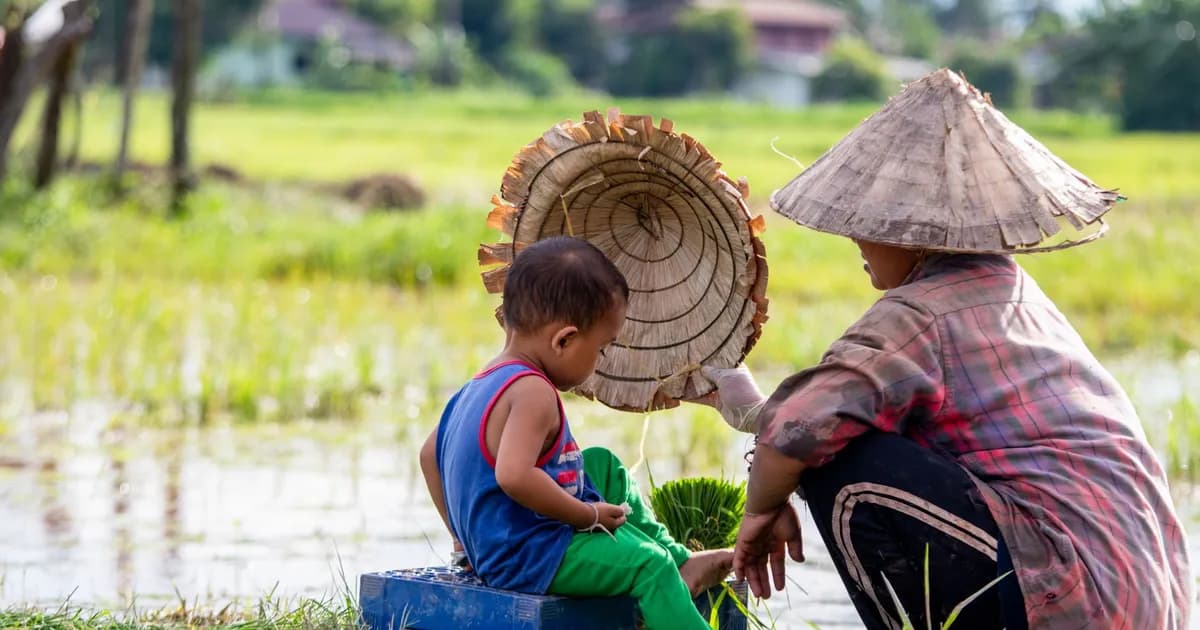
Laos is also an easy country to be a parent in socially. People are warm toward children, monks and market sellers will smile at your toddler, and nobody minds a noisy table. What you give up is predictability. Timetables slip, rooms are basic and there are fewer familiar brands and facilities than in Thailand. If your children cope with a change of plan, you will be fine. If you want certainty, build in more slack than you think you need. Our slow traveller's guide to where to go in Laos and when is a good place to choose a shape for the trip before you book anything.
Timing matters more than usual. October to February is the most comfortable season, with cooler nights, and in the north you will want a fleece for the evenings. The rainy season, roughly May to October, brings lush scenery, fewer visitors and some sharp discounts at hotels, but also more mosquitoes and heavier rain. March and April are hot and can be smoky.
One request. Up to five tailored proposals.
Skip contacting agencies one by one — share your trip once and let up to five trusted Laos agencies come to you. Free, with no obligation.
Get my free quotesGetting Around With Children
Transport is where most families feel the strain, so plan it around your children, not around the map.
The easiest big journey is the railway. The Laos-China line links Vientiane, Vang Vieng and Luang Prabang quickly, with proper seats and toilets, and it removes the winding road that makes many children sick. Ask about child fares when you book, because the rules usually depend on age or height and we have not verified the current Lao scheme. Our guide to getting around Laos by train, boat, bus and slow road covers the options in more detail.
Where roads are the only choice, minivans are the usual answer. They are air-conditioned, have seatbelts and stop every hour or two. A family travel writer's 2026 update puts the Vientiane to Vang Vieng run at about three hours and Vang Vieng to Luang Prabang at about four by minivan, at a few dollars to ten dollars a seat. Treat those as rough guides, since the railway and expressway have changed the picture and prices drift. Bring paper bags, wipes and a change of clothes, because the mountain bends are hard on small stomachs.
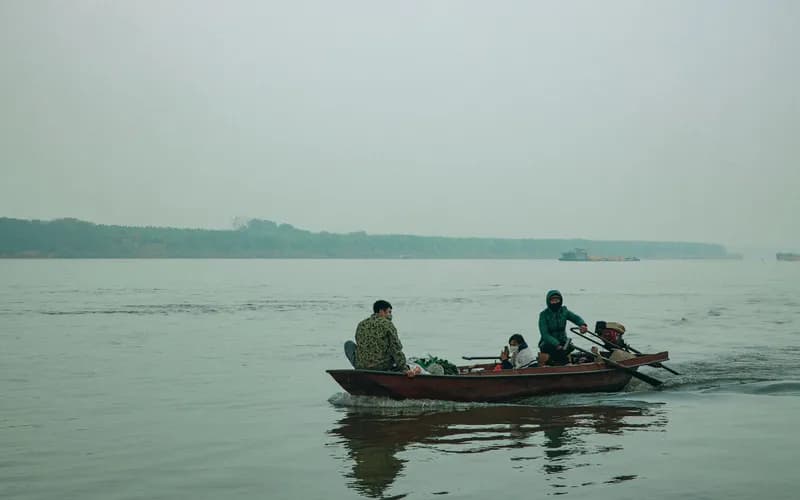
Car seats are the awkward gap. Child seats are rarely provided. You can bring a lightweight booster, book an extra seat for a younger child so there is room to strap them in, or hire a private car and ask the driver in advance. Tuk-tuks usually have no seatbelts at all, so keep them for short, slow trips. We would not carry children on a rented motorbike. The two-day slow boat from Huay Xai to Luang Prabang is wonderful for adults, but the hard benches and long hours are a lot for small children, so a shorter river trip is often a better introduction.
Where to Stay: Space, a Pool and a Fan
Families do best in guesthouses and small hotels with a family room, air-conditioning and a bit of outdoor space. A family travel writer's survey of Laos suggests roughly US$25 to US$50 a night for a room with air-conditioning, an extra bed and often a pool in the main tourist towns. That matches what we see, though rates swing with the season and you should confirm before you book. Ask for connecting rooms or a room with a third bed when you reserve, and ask whether the bed comes with a mosquito net.
A pool is a gift on a hot afternoon, but check it carefully. Pools in small hotels are often unfenced and have no lifeguard. Keep younger children in sight at all times. Homestays can be wonderful with older children, who get a window into village life, but facilities are simple, with shared bathrooms, mosquito nets and floor mattresses. Our guide to where to stay in Laos, from guesthouses to homestays explains how to book each kind and what to ask first.
Stay longer in fewer places. Two weeks works well with three bases, for example five nights in Luang Prabang, three in a smaller riverside town such as Nong Khiaw and two in Vientiane. Every change of bed costs a morning, and children feel the cost more than adults do.
Get matched with up to 5 trusted Laos agencies
- Free
- No obligation
- Up to 5 agencies
Heat, Food and Health
The sun is the first thing to manage. Midday heat can be fierce, so plan outings for early morning and late afternoon, and build a long break into the middle of the day. Sunscreen, wide-brimmed hats and plenty of water matter more than any gadget. Children dehydrate fast, so carry oral rehydration salts.
Lao food is delicious and mostly fresh, but it can be very spicy. Plain sticky rice is a safe starter, and most children will eat it. Grilled chicken, fried rice, noodle soups, rice congee, fruit and fruit shakes cover most days. Ask for dishes without chilli, a useful phrase to learn is "bo phet", meaning not spicy. A simple street meal usually costs just a few dollars per person, though prices vary. Food is generally safe if it is freshly cooked and served hot, but an upset stomach is not unusual, so pack snacks and remember that tap water is not safe to drink. Our guide to staying healthy in Laos covers water, food and mosquitoes in more depth.
On health, speak to a travel clinic well before you go and ask specifically about children. Two issues come up often. Rabies is present, so teach children not to touch dogs, cats or monkeys, however friendly, and know what to do after a scratch or bite. Dengue is carried by daytime mosquitoes, especially in the rainy season, so use repellent that is suitable for children, long clothes at dusk and nets or air-conditioning at night.
Medical care is the honest weak point. There are reasonable clinics in Vientiane, including ones with paediatric and French or English-speaking staff, but outside the capital facilities are limited. In Luang Prabang, the Lao Friends Hospital for Children treats local children free of charge and says it has served over 200,000 since 2015. It exists for Lao families, so treat it as a charity you might support, not as your plan. For anything serious, foreign families often need evacuation to Thailand, so good travel insurance with medical evacuation cover is non-negotiable. Pack a well-stocked medical kit and any regular medicines, and keep copies of prescriptions.
What Children Actually Enjoy
The best days are usually the simplest. Water, animals that you are allowed to watch, caves and bicycles beat any museum.
In Luang Prabang, the flat roads suit cycling, and Kuang Si Falls has turquoise pools where swimming is allowed in the designated areas, plus a rescue sanctuary for Asiatic black bears. Go early to avoid the crowds. The Pak Ou Caves are a good boat trip for older children. Our slow week in Luang Prabang lays out an unhurried way to combine them.
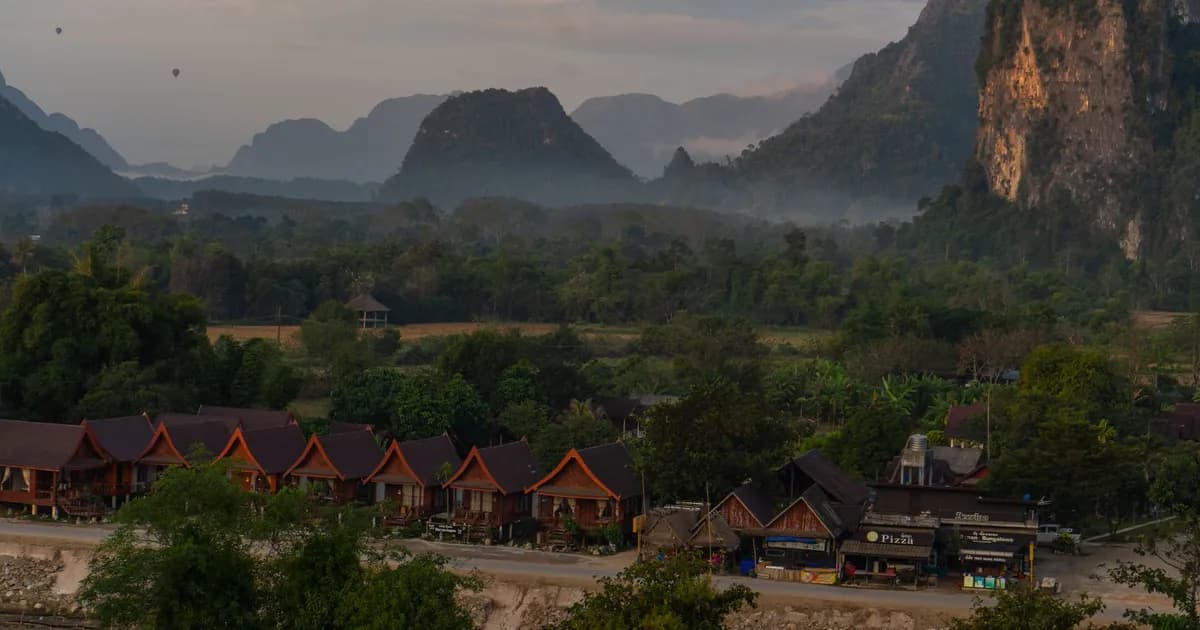
Further north, Nong Khiaw offers kayaking on the Nam Ou, short walks to caves and viewpoints and far fewer boats than the Mekong. In Vang Vieng, kayaking, ziplining and cave visits are popular with teenagers. River tubing there is for strong swimmers only, since the river has a poor safety record, and we would skip it with younger children. In central Laos, the boat ride into Tham Kong Lo is magical for children old enough to enjoy a dark river cave, while in Sainyabuli, the Elephant Conservation Center focuses on rescued elephants and does not offer rides. Wherever you meet animals, choose places that do not ride, chain or perform them.
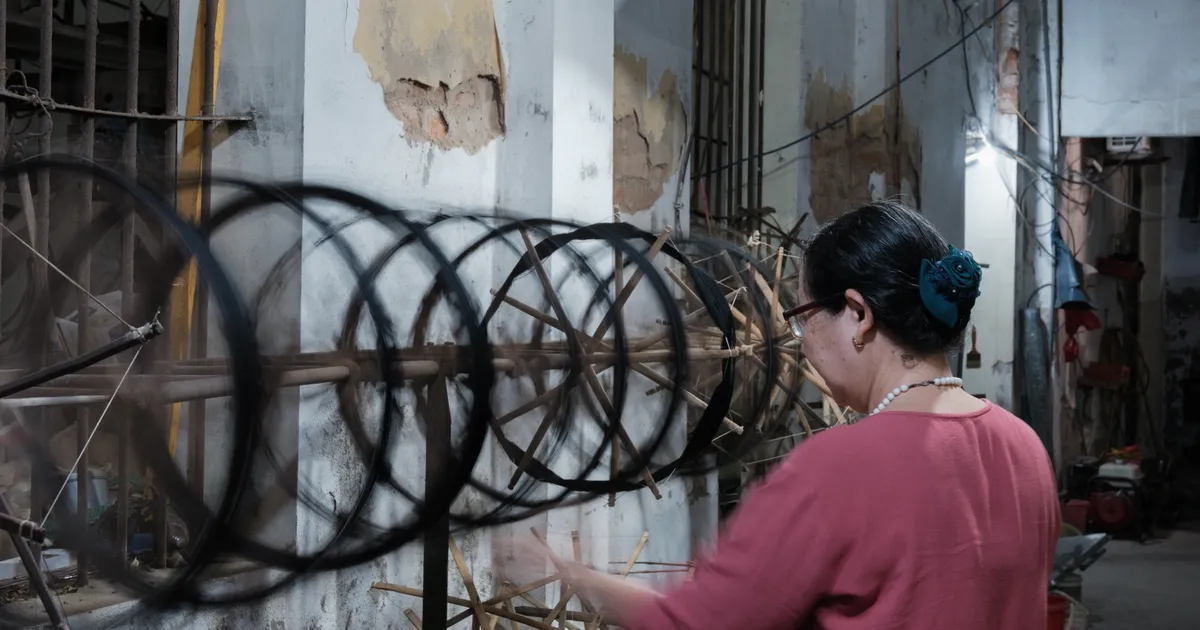
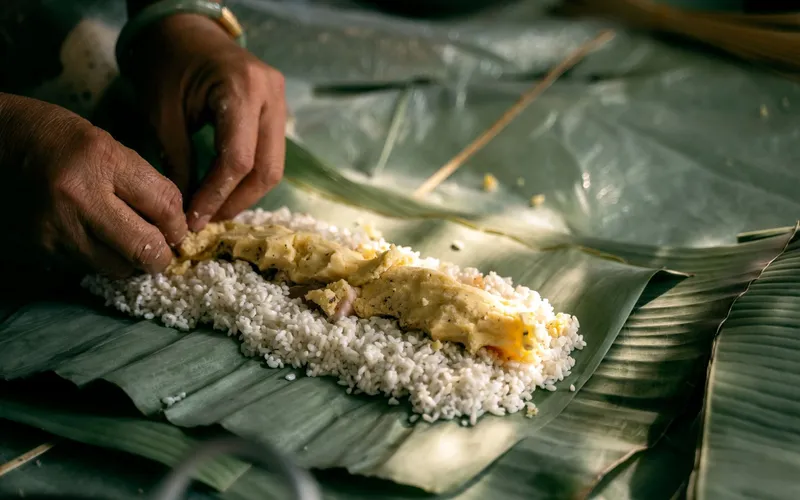
Cooking classes, weaving workshops and village visits give children something to do with their hands. Keep them short, choose small groups and prepare children to be polite, which brings us to temples. Teach them not to point their feet at people or Buddha images, not to touch anyone's head and not to climb on statues. Lao people are generally very tolerant of children, but monks should not be touched, and a quiet word before you enter a temple goes a long way.
Safety on the Road and in the Countryside
Three risks deserve your attention. The first is traffic. Driving can be erratic, with overtaking on blind bends and few helmets worn, so avoid night journeys and choose reputable drivers. The second is water, whether river currents in the rainy season or unfenced pools. Never let children swim unsupervised, and check flows before entering any river.
The third is unexploded ordnance. Parts of Laos are still contaminated with bombs from the war, and most victims are children. Visitors face little risk on normal routes, but children are curious, so teach one rule before you leave: never touch metal objects on the ground, and tell an adult immediately. Our guide to staying safe from UXO in Laos has a short briefing you can read with older children.
Pacing the Days
A good family day in Laos has one main activity, a long lunch, a rest and an easy evening. Aim to be out by eight in the morning, back in the shade by noon and out again after four. Leave one empty day in every five. Children who are allowed to do nothing for a day will cope better with the next long drive, and so will parents.
Budget extra for comfort. A private driver for one long leg, a hotel with a pool or a family room that sleeps everyone comfortably usually costs less than a day of tantrums. For help matching your children's ages and your timing to a route, a local operator listed in our travel agencies directory can arrange transport and rooms in advance.
What to Do Next
- Choose a short route with two or three bases and a railway leg if possible.
- Book family rooms with air-conditioning and ask about nets, pools and extra beds.
- See a travel clinic early, ask about rabies and dengue and arrange insurance with medical evacuation.
- Pack sun protection, rehydration salts, a lightweight booster seat, snacks and a basic medical kit.
- Plan one main activity a day with a rest in the middle and one empty day in five.
- Teach three rules before you fly: do not touch animals, do not touch metal objects on the ground and be polite in temples.
- Use our plan your journey page to sketch dates and a route.
Frequently Asked Questions
What is the best age to take children to Laos?
Children from about five or six upwards usually enjoy it most, because they can handle long journeys, heat and a basic hotel. Babies and toddlers can go, but the climate, vehicle journeys and limited paediatric care make it harder.
When is the best time to visit Laos with kids?
October to February is the most comfortable, with cooler nights. The rainy season is quieter and cheaper but brings more mosquitoes. March and April can be very hot and hazy.
Is Laos safe for children?
Generally yes, and crime against families is rare. The main risks are road accidents, unsupervised water, mosquito-borne illness and old unexploded ordnance in the countryside. Sensible habits keep these manageable.
Do I need to bring a car seat?
Child seats are rarely provided. Many families bring a lightweight booster, book an extra seat in a minivan or arrange a private car in advance. Tuk-tuks usually have no seatbelts, so use them only for short, slow trips.
Will my children eat Lao food?
Most will, especially if you start with sticky rice, grilled chicken, noodle soup, fried rice and fruit. Lao food can be spicy, so ask for it without chilli.
Which vaccines do we need?
We cannot give medical advice. See a travel clinic several weeks before departure, ask specifically about children and raise rabies and dengue prevention.