
How to Buy Lao Textiles Well: Weaving, Markets and Fair Prices
Almost every traveller leaves Laos with a piece of cloth. A scarf from the night market, a silk shawl from a cooperative, a sinh bought for a temple visit and never quite worn again at home. Lao weaving is one of the great textile traditions of Asia, and buying it well is one of the most direct ways a visitor can support rural women and keep a living craft alive. It is also a market full of imports, synthetics and confusing prices. This guide explains what you are looking at, where to buy, how to judge quality and what a fair price looks like, so that the cloth you take home is worth the money and the story.
Why Lao Textiles Matter
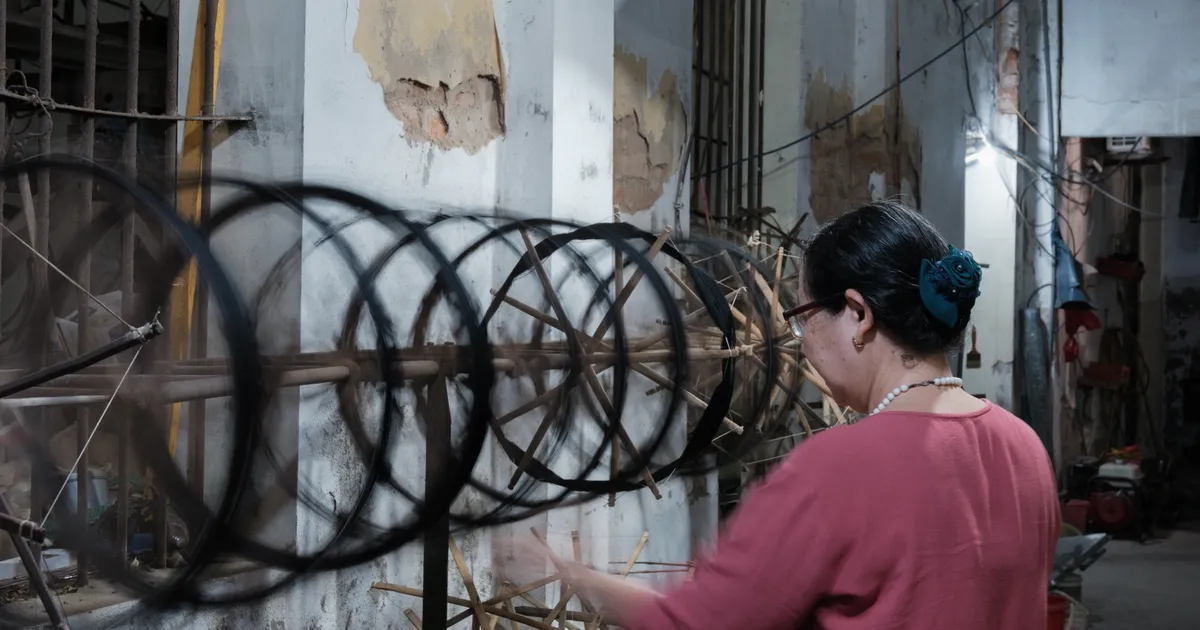
In Laos, weaving has never been a souvenir industry that happened to find tourists. For generations, cloth was part of daily life and ritual: the sinh, the tube skirt worn by Lao women; the pha biang, a sash draped over the shoulder for ceremonies and temple visits; blankets, baby carriers, shrouds and offerings. Girls traditionally learned to weave at home, and a woman's skill at the loom was part of her standing in the village.
Different ethnic groups developed distinct styles. Lowland Lao and Tai groups such as the Tai Lue and Tai Dam are known for intricate silk and cotton weaving with supplementary weft patterns, where extra threads are floated across the cloth to create motifs of nagas, birds, diamonds and temple shapes. Ikat, known locally as mat mii, involves tying and dyeing threads before weaving, so the pattern emerges as the cloth is made. Hmong communities are famous for batik, embroidery and reverse appliqué, while some Mon-Khmer groups in the south, such as the Katu, weave on backstrap looms and work beads into the cloth.
This diversity is the first thing worth knowing. There is no single Lao textile, and the best purchases often come from understanding which tradition a piece belongs to.
One request. Up to five tailored proposals.
Skip contacting agencies one by one — share your trip once and let up to five trusted Laos agencies come to you. Free, with no obligation.
Get my free quotesThe Regional Traditions Worth Knowing
You do not need to become an expert, but a few names help you recognise quality and origin.
- Houaphanh province in the north-east, around Sam Neua, has a long reputation for some of the finest Lao silk weaving, with dense, complex supplementary weft patterns. Our guide to Vieng Xai, Sam Neua and the slow north-east covers visiting the region itself.
- Luang Prabang and the villages around it combine royal-court traditions with Tai Lue influences, and the town is the easiest place to see weavers at work.
- Tai Dam and Tai Lue textiles from the northern provinces often use bold colour and geometric motifs.
- Hmong textiles, sold widely at markets, feature fine cross-stitch, batik with indigo and appliqué, and are made by women from Hmong communities across the north.
- Southern backstrap weaving, from groups on the Bolaven Plateau and in Sekong and Attapeu, is rarer on the tourist market and often incorporates beadwork.
Asking a seller where a piece was woven, and by whom, is not rude. Good sellers are proud to tell you, and the answer often tells you a great deal about quality.
Handwoven or Machine-Made? How to Tell
The central problem of textile shopping in Laos is that the market is flooded with machine-made and imported cloth sold alongside the real thing, sometimes at similar prices. Much of what fills the stalls at busy tourist markets is made in factories elsewhere in the region. There is nothing wrong with buying a cheap printed scarf, as long as you know that is what you are buying. The problem comes when you pay handwoven prices for machine-made goods.
A few practical checks help.
- Look at the back. In handwoven supplementary weft cloth, the reverse usually shows floating threads or a mirror-image pattern. Printed fabric looks faded or blank on the back.
- Look for small irregularities. Handwoven cloth has slight variations in tension, pattern and edge. Perfect, mechanical regularity suggests a machine.
- Check the edges. Handwoven pieces usually have a neat, firm selvedge where the weft turns, and may have fringes finished by hand.
- Feel the weight. Real silk is smooth, slightly cool and has a soft, natural sheen. Polyester tends to feel slippery, look shinier and have a harsh, uniform gloss.
- Look at the colour. Natural dyes such as indigo, lac, jackfruit wood and turmeric give softer, slightly uneven colours. Uniformly bright, neon shades are almost always synthetic.
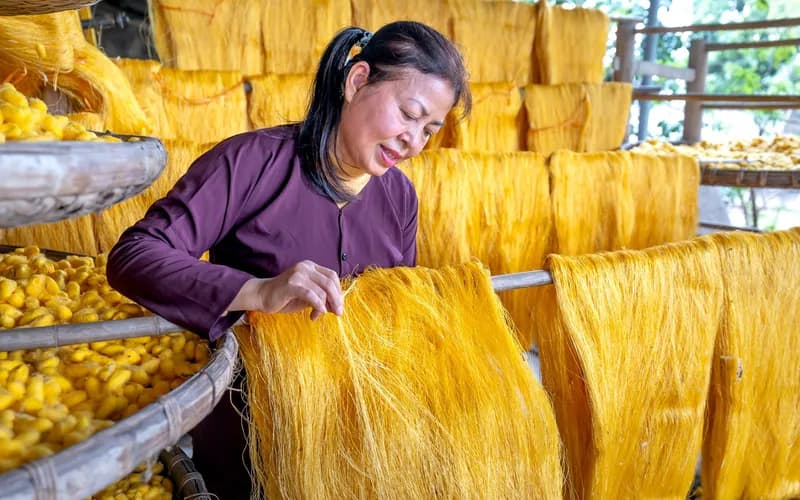
If a large silk piece with complex patterns is offered for a very low price, it is almost certainly not handwoven silk. A single complex piece can take a skilled weaver weeks. Price, in this case, is information.
Get matched with up to 5 trusted Laos agencies
- Free
- No obligation
- Up to 5 agencies
Where to Buy: Markets, Cooperatives and Workshops
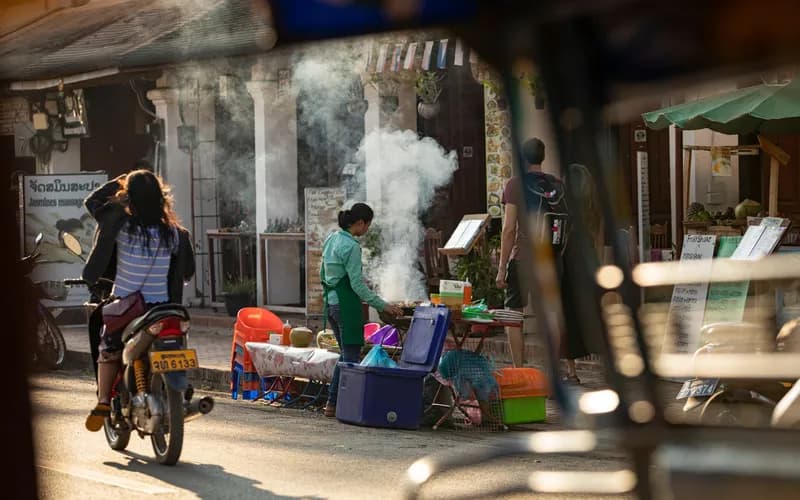
The Luang Prabang night market is where most visitors start, and it is worth a slow evening wander. Be aware, though, that it is a mix: some stalls sell genuine local work, many sell imported or machine-made goods, and the two are not always distinguished. Look for stalls where the seller can explain the piece, and treat the market as a place to learn rather than to make your most important purchase.
For serious buying, cooperatives and social enterprises are safer. In Luang Prabang, Ock Pop Tok, founded in 2000, works with weavers across the country and runs the Living Crafts Centre on the Mekong a short ride from town, where you can take a free guided tour, meet weavers and see silkworms, dyeing and looms in action. It also offers paid classes in weaving, natural dyeing and batik, from half a day upwards. The Traditional Arts and Ethnology Centre in Luang Prabang, a small museum devoted to Laos's ethnic groups, is an excellent place to understand the context before you shop, and its shop works directly with craft producers.
In Vientiane, the textile floor of Talat Sao, the Morning Market, is the place to see the range of everyday silk and cotton that Lao people buy for themselves, and some higher-end studios and boutiques sell museum-quality work. Our guide to spending three slow days in Vientiane suggests how to fit a market morning into the city.
Village visits are the other option. Around Luang Prabang, weaving villages such as Ban Phanom and Ban Xang Khong have long been known for textiles, though both have become more commercial over time. Buying directly from a weaver, ideally with a local guide, puts the most money into the maker's hands.
What to Pay: A Rough Guide
Prices in Laos vary enormously with material, technique, size and where you buy. As a rough guide from the market in 2026, imported and machine-made pieces sell for a few dollars to a few tens of dollars. Handwoven cotton scarves and simple silk pieces cost more, and complex handwoven silk, particularly full sinh sets with elaborate borders, can reach several hundred US dollars, reflecting weeks of work.
Cooperatives and social enterprises usually charge fixed prices that are higher than the market, because they pay weavers fairly, cover natural dyes and quality control, and invest in training. That premium is the point. If you are planning your overall spending, our 2026 guide to what a trip to Laos costs helps you set a realistic shopping budget alongside accommodation and transport.
Two principles help. First, decide in advance what you want: one excellent piece is usually better value than five mediocre ones. Second, if you love something and the price seems fair for the work involved, simply pay it.
Bargaining Without Damaging Anything
Gentle bargaining is normal at markets in Laos, and sellers expect it. It is not normal at cooperatives, galleries or social enterprises with marked prices, and trying to haggle there is awkward for everyone.
At markets, keep it calm and friendly. Ask the price, smile, suggest something reasonable, and be prepared to meet in the middle. Never push aggressively over what may be a dollar or two that matters far more to the seller than to you. Lao culture places great value on staying calm and avoiding confrontation, and raising your voice or showing irritation will get you nowhere.
A few words of Lao go a long way, particularly numbers and polite phrases. Our short guide to speaking a little Lao covers the basics, including how to ask a price and say thank you.
Who Actually Benefits
The honest question behind every textile purchase is where the money goes. At a market stall selling imports, very little reaches a Lao weaver. When you buy directly from a weaver, or from a cooperative that pays fair rates, far more of the price stays in the village.
Weaving is often one of the few sources of cash income for rural women in Laos, and it can be combined with farming and childcare at home. When travellers pay fairly for good work, they help make the craft economically worthwhile, which is what keeps younger women weaving rather than leaving for factory jobs. The wider picture of how tourism money flows in Laos is set out in our analysis of community tourism and who really benefits.
It is also worth asking about natural dyes and working conditions. Many good cooperatives are happy to explain how they source silk and dyes, what they pay weavers, and how long a piece takes.
Taking Textiles Home and Caring for Them
Modern textiles can be taken out of Laos freely. Be cautious, however, with anything sold as antique. Laos restricts the export of genuine antiques and religious objects, and Buddha images in particular should not be bought as souvenirs. Old textiles offered as antiques are also frequently newer pieces aged to look old.
At home, handwoven silk and cotton need gentle care. Hand wash in cold water with a mild soap, especially the first time, because natural dyes can bleed. Do not wring the cloth, dry it flat in the shade rather than direct sun, and store it folded with a little air circulation rather than in sealed plastic. A good piece of Lao silk, treated well, will outlast most of what you buy on the trip.
What to Do Next
- Visit a textile museum or crafts centre early in your trip, before you buy, so you can recognise quality.
- Decide on one or two pieces you really want, rather than many cheap ones.
- Use the practical checks for handwoven cloth, and ask sellers where and by whom a piece was made.
- Buy important pieces from cooperatives, social enterprises or directly from weavers, and bargain only gently at markets.
- Read our slow travel charter for the principles that guide how we shop, stay and move responsibly.
Frequently Asked Questions
How can I tell if a Lao silk scarf is handwoven?
Check the back for floating threads or a mirrored pattern, look for small irregularities, examine the edges and feel the weight. Very bright, perfectly uniform colours and a very low price usually indicate machine-made or synthetic cloth.
Is it fine to bargain for textiles in Laos?
Gentle bargaining is normal at markets, but not at cooperatives, galleries or social enterprises with fixed prices. Stay calm and friendly, and do not push hard over small amounts.
Is everything at the Luang Prabang night market handmade?
No. The market mixes genuine local work with imported and machine-made goods. It is a pleasant place to browse and learn, but for important purchases, cooperatives and direct purchases from weavers are safer.
Can I take a weaving class in Laos?
Yes. In Luang Prabang, Ock Pop Tok's Living Crafts Centre runs classes in silk weaving, natural dyeing and batik, from half a day upwards, and offers free guided tours of its workshops.
Can I take old textiles out of Laos?
Modern textiles are fine. Laos restricts the export of genuine antiques and religious objects, so be cautious with anything sold as antique, and avoid buying Buddha images as souvenirs.
How should I wash handwoven Lao silk?
Hand wash in cold water with a mild soap, especially the first time, as natural dyes may bleed. Do not wring it, and dry it flat in the shade.