
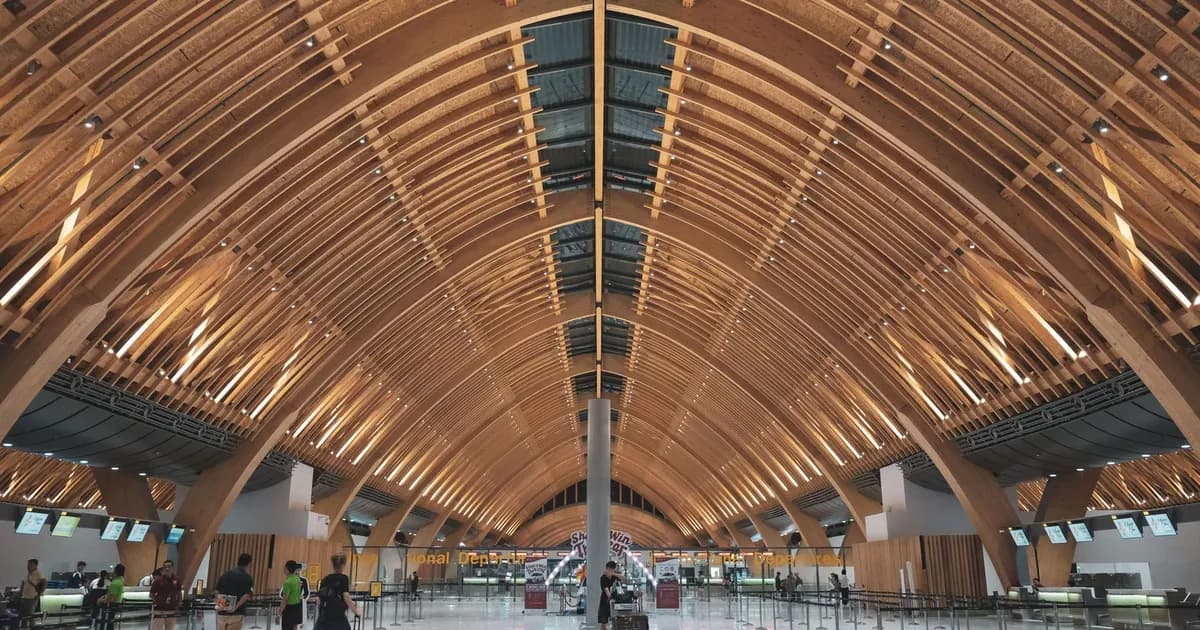
The Philippines' New Airports and Domestic Travel in 2026
Getting around the Philippines has long meant flying, and in 2026 the country's air network is in the middle of its biggest shake-up in decades. Manila's overloaded main airport is being overhauled, a vast new mega-hub is breaking ground north of the capital, and Clark is growing as an alternative gateway. For a traveller island-hopping across thousands of islands, these changes reshape how you arrive and connect. This is a practical rundown of the Philippines' airport transformation and what it means for domestic travel in 2026.
The Philippines rebuilds its gateways
For years, the country's aviation infrastructure struggled to keep pace with booming travel, and Manila's Ninoy Aquino International Airport, NAIA, became a byword for congestion. That is now changing on several fronts at once: NAIA has been handed to a private operator and is being modernised, an entirely new international airport is under construction north of Manila, and Clark, to the north, is positioning itself as a low-cost and alternative hub. Together these amount to a genuine rebuilding of the country's front doors, and for the visitor the practical effects are already beginning to show. Understanding the entry side of arrival is covered in our eTravel entry guide.
One request. Up to five tailored proposals.
Skip contacting agencies one by one — share your trip once and let up to five trusted Philippines agencies come to you. Free, with no obligation.
Get my free quotesNAIA's overhaul and the terminal reshuffle
NAIA remains the country's main gateway, and its modernisation is the change most travellers will notice first. A new domestic terminal, Terminal 4, is under construction between the existing terminals, with an initial target to open around the middle of 2026, and a broader reshuffle is planned so that several terminals are dedicated to domestic flights and others to international, creating a more logical layout. An even larger domestic terminal is projected further out, toward the end of the decade. The upshot for travellers is that terminal assignments at NAIA are in flux, so always confirm which terminal your specific flight uses, especially for domestic connections, as the old assumptions may no longer hold.
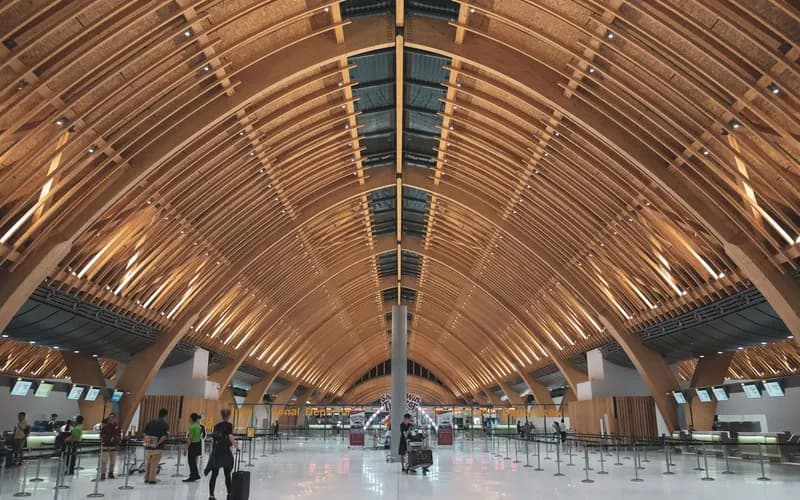
The new Manila airport at Bulacan
The headline project is entirely new: a massive international airport at Bulacan, north of Manila, intended to relieve NAIA and give the capital region the capacity it has long lacked. This multi-billion-dollar mega-hub, with multiple runways and a large modern terminal designed to handle tens of millions of passengers a year, is slated to begin construction in early 2026, with completion projected toward the end of the decade. It will not affect your trip in 2026 beyond the headlines, but it signals the scale of the country's ambitions and is worth knowing about for future journeys, as it will eventually reshape how travellers reach Manila entirely.
Get matched with up to 5 trusted Philippines agencies
- Free
- No obligation
- Up to 5 agencies
Clark: the alternative gateway
Already useful today is Clark International Airport, roughly two hours north of Manila, which is establishing itself as a dedicated low-cost carrier hub and a genuine alternative to NAIA. Its modern terminal is fully operational, it is attracting more airlines, and it helps disperse traffic away from the congested capital. For travellers, Clark can be a smoother, calmer entry or exit point than NAIA, particularly on budget carriers, and it opens up northern Luzon, including the route toward the Cordillera and beyond, without the crush of Manila. It is worth checking whether your itinerary works better through Clark, especially if you are heading north.
Why this matters for travellers
These changes matter because in the Philippines, air travel is not a luxury but the practical backbone of getting around. With the country spread across thousands of islands, most longer journeys involve a flight, very often connecting through Manila. A more functional Manila airport, plus growing capacity at Clark and eventually Bulacan, means fewer bottlenecks, more routing options, and a smoother experience over time. In the short term, though, the transition itself, with terminals shifting and construction underway, calls for extra care in planning connections, which is the practical theme of the sections that follow.
Domestic flights: the practical backbone
Domestic flying is how most travellers cover the big distances here, served by a handful of carriers running dense networks between Manila, Cebu and the regional airports that reach the islands. Fares are often very reasonable, especially booked ahead, but the network is heavily hub-based, so a great many routes connect through Manila or Cebu rather than flying point to point. Baggage allowances on budget domestic carriers are tight and strictly enforced, so check them before you fly. Booking domestic legs with enough of a connection buffer, particularly when transferring between international and domestic terminals at a changing NAIA, is essential rather than optional.
Getting into the cities from the airports
On the ground, reaching the city from each airport takes planning. From NAIA, official airport taxis, ride-hailing apps and airport buses serve Metro Manila, but the city's notorious traffic means transfers can take far longer than the distance suggests, so allow generous time, especially heading to the airport. Clark is farther out, around two hours north of Manila, with buses and vans connecting to the capital and to points north. Wherever you land, arrange your first transfer sensibly, allow for traffic, and never plan a tight onward connection that depends on a fast airport run in Manila's congestion.
Ferries and the sea routes
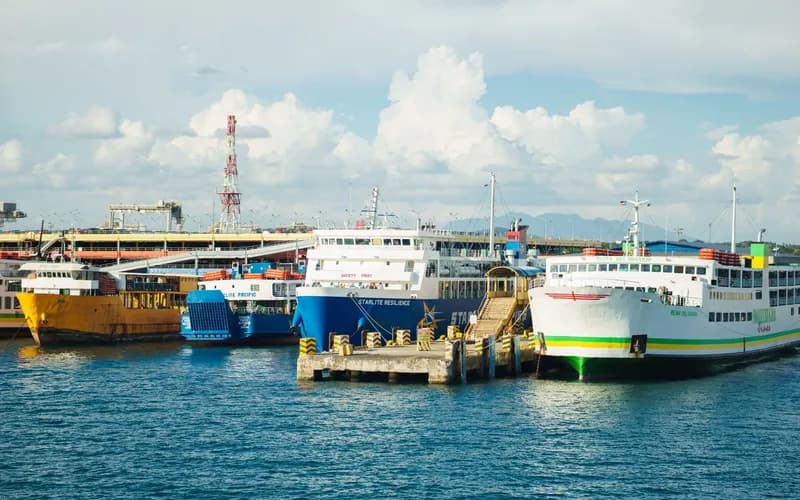
Air travel is only half the picture; the Philippines is also stitched together by an extensive network of ferries, from large inter-island ships to small local boats, which remain essential for reaching many islands and for slower, more scenic travel. Combining flights for the long hops with ferries for the shorter island connections is often the most rewarding way to move, and it is central to the approach in our guide to island-hopping the Philippines slowly. Remember that ferries are weather-dependent and can be suspended in storms, so build in flexibility, particularly in the wetter months.
Planning connections in 2026
Pulling it together, the practical watchwords for 2026 are confirm and cushion. Confirm your terminal for every flight, as NAIA's assignments are shifting, and check whether Clark suits your route better than Manila. Cushion every connection with generous time, both between flights and between airport and city, because construction, terminal changes and traffic all add uncertainty. Keep your plans flexible, especially where domestic flights and ferries link up, and you will glide through a network that is improving even as it is being rebuilt. Our plan your journey page helps you piece the route together.
Regional airports and the wider network
Beyond Manila and Clark, the country's regional airports are quietly being upgraded too, and they are the gateways that actually get you to the islands. Cebu's Mactan airport is a major secondary hub with its own international flights and a huge domestic network, making it a useful alternative to routing everything through Manila. Airports serving the tourist islands, from Palawan to Bohol and beyond, have seen investment to handle growing traffic. For the slow traveller, this dispersal of capacity is good news: it opens up more ways to reach the islands directly, and connecting through Cebu rather than congested Manila can make for a smoother trip. When planning, look at whether a regional hub gives you a better routing than the capital.
What has not changed: patience is still required
For all the investment, it pays to keep expectations realistic. Airport modernisation takes years, congestion at Manila will not vanish overnight, delays remain common on the busy domestic network, and construction itself can add friction in the short term. The improvements are real but gradual, and 2026 is a year of transition rather than arrival. The traveller who plans as though everything runs perfectly will be caught out; the one who builds in slack, expects the occasional delay, and keeps a relaxed attitude will travel happily. This is simply the reality of a fast-growing network being rebuilt while it stays in full use.
Fitting it into a slow itinerary
The deeper point for a slow traveller is that these logistics reward a patient, unhurried approach. Rather than chaining tight domestic connections to squeeze in one more island, base yourself in a region and explore it fully, using fewer flights and more ferries and local transport. Fly in, slow down, and let the improving-but-imperfect air network carry you between a small number of well-chosen bases rather than a frantic circuit. Done this way, the Philippines' transport quirks stop being a source of stress and become simply the rhythm of a country best seen slowly, one island at a time.
What to do next
- Always confirm which NAIA terminal your specific flight uses, as domestic and international assignments are being reshuffled through 2026.
- Check whether flying via Clark suits your route better than Manila, especially on budget carriers or heading north.
- Leave generous connection buffers between flights and between international and domestic terminals.
- Combine domestic flights for long hops with ferries for shorter island links, and allow for weather disruption.
- Plan airport transfers with Manila traffic in mind, and build the route with our plan your journey page.
Frequently Asked Questions
Is Manila getting a new airport?
Yes. A large new international airport is being built at Bulacan, north of Manila, with construction slated to start in early 2026 and completion projected toward the end of the decade. Meanwhile, the existing NAIA is being modernised under a private operator, including a new domestic terminal and a reshuffle of terminal assignments.
Which NAIA terminal will my flight use?
That is in flux in 2026, as NAIA reorganises its terminals, with several being dedicated to domestic flights and a new Terminal 4 opening. Always check your specific flight's terminal when you book and again before you travel, especially for domestic connections, since the previous terminal assignments are changing.
Should I fly into Manila or Clark?
It depends on your route. NAIA is the main hub with the most connections, but it is congested; Clark, about two hours north, is a growing low-cost and alternative gateway that can be calmer and is convenient for northern Luzon. If you are on a budget carrier or heading north, Clark may suit you better; otherwise Manila offers more options.
How do I get around the Philippines domestically?
Mostly by air for the long distances, on carriers running hub-based networks through Manila and Cebu, combined with ferries for shorter island hops and slower travel. Domestic fares are often cheap if booked ahead, but budget-airline baggage limits are strict. Leave generous connection buffers, as the country's island geography and airport changes add complexity.
How much time should I leave for connections in Manila?
More than you think. Manila's traffic and NAIA's ongoing terminal changes make transfers unpredictable, so allow generous buffers between flights and especially between international and domestic terminals, which may require leaving and re-entering security. Never plan a tight onward connection or a same-day international departure right after a domestic flight or ferry in Manila.