Manila Airport in 2026: Terminal Changes and the Turboprop Move to Clark
If you are booking flights in the Philippines for the coming months, two quiet changes at Manila's main airport deserve your attention before you pay for anything. The first is a reshuffle of which international airline uses which terminal. The second is bigger for island travellers: since 29 March 2026, the turboprop flights that served small, popular destinations such as Coron, Siargao and El Nido no longer leave from Ninoy Aquino International Airport (NAIA) at all. They leave from Clark, in Pampanga province, north of the capital.
Neither change is dramatic on paper. Both can wreck an itinerary if you assume the old arrangements still apply. This guide sets out what changed, who is affected, what your options are if you were already booked, and how to build the new reality into a slower, less frantic trip.
What changed, and when
The Manila airport is now run by a private operator, New NAIA Infra Corp. (NNIC). In February 2026, NNIC announced a set of international airline terminal reassignments to take effect with the start of the summer schedule on 29 March 2026. At the same time, the long-planned transfer of turboprop operations to Clark International Airport reached its final deadline. The transfer had begun in March 2025 under a resolution of a Manila slot-coordination committee, directed by the Department of Transportation. The first target date, 26 October 2025, was later moved to 29 March 2026.
Why do this at all? The stated aim was to relieve congestion at NAIA, where slots are tight, by moving smaller turboprop flights elsewhere. Whether it improves your journey depends on where you are going.
One request. Up to five tailored proposals.
Skip contacting agencies one by one — share your trip once and let up to five trusted Philippines agencies come to you. Free, with no obligation.
Get my free quotesInternational terminal changes
The reassignments below concern international flights. Check them against your booking, because an airline's terminal can differ from the one you used on a previous trip.
- Terminal 1 to Terminal 3 (from 29 March 2026): Air China, China Eastern, Vietnam Airlines, Royal Brunei Airlines and Shenzhen Airlines.
- Terminal 3 to Terminal 1 (from 29 March 2026): the international flights of Philippines AirAsia and AirAsia Berhad.
- Terminal 1 to Terminal 3 (from 1 April 2026): Japan Airlines.
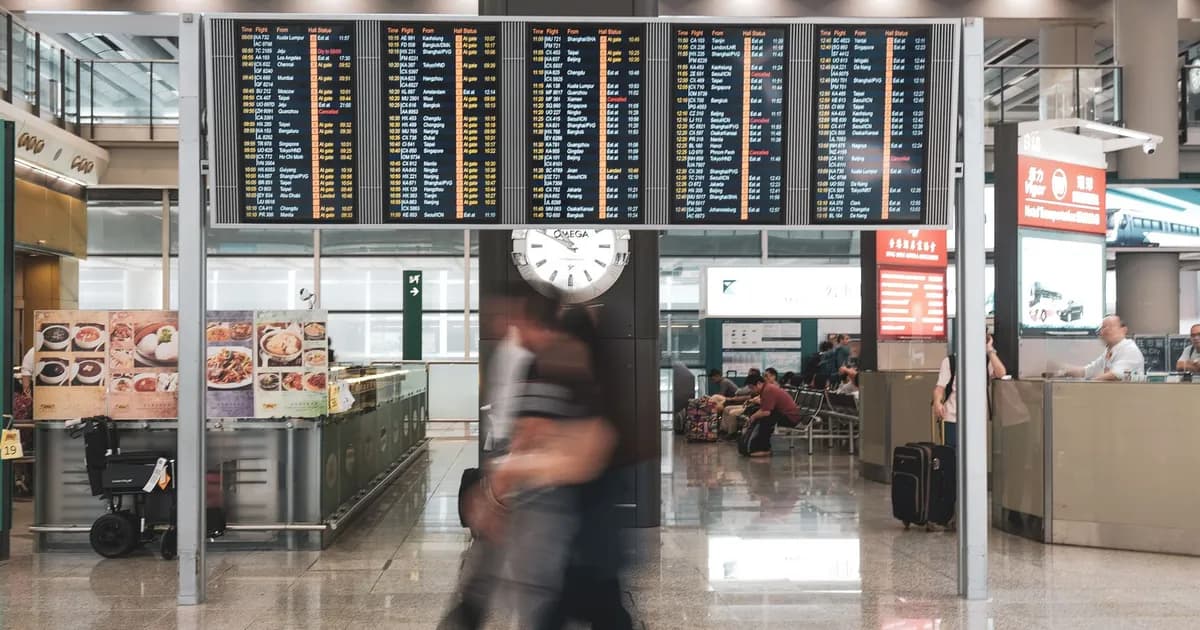
The announcements did not describe domestic carriers, so do not assume anything about domestic terminals from this list. The operator's own advice is simple and worth following: verify your terminal assignment with your airline before you travel. NAIA's terminals are far enough apart that a wrong guess can cost you a long, hot transfer and, on a tight connection, a missed flight.
For a wider look at the capacity picture, our overview of the Philippines' new airports and domestic travel explains where the system is heading.
The turboprop move: which routes are affected
This is the change that matters most to slow travellers, because turboprops are the aircraft of the small islands. From 29 March 2026:
- Philippine Airlines (PAL): Manila to Coron (Busuanga) and Manila to Siargao moved to Clark, so you now fly Clark to Coron and Clark to Siargao. Manila to Antique is now served through Iloilo, and Manila to Catarman through Cebu.
- Cebgo (Cebu Pacific's regional arm): Coron flights and additional Naga flights moved from NAIA to Clark.
- AirSwift: El Nido flights moved from NAIA Terminal 2 to Clark.
Passengers already booked on affected flights were offered updated itineraries, with the choice of rebooking, rerouting or a refund. Cebu Pacific described a similar package: automatic rebooking onto Clark departures, with free rebooking, a travel fund or a full refund for those who preferred something else. If your original booking is still active, check your confirmation email and the airline's manage-booking page before assuming anything.
PAL and Cebu Pacific also added jet capacity on trunk routes from Manila at the same time, including Cebu, Iloilo, Tacloban, Dumaguete, Davao and Cagayan de Oro, among others. For example, Cebu Pacific planned to raise weekly Manila to Cebu frequencies from 98 to 108. In practice, if your destination has a jet airport, Manila connections may be a little easier than before, while the small-island routes get a new leg.
Get matched with up to 5 trusted Philippines agencies
- Free
- No obligation
- Up to 5 agencies
What this means for Coron, Siargao and El Nido
These three places are among the most popular island destinations in the country, and all are affected. Here is the practical picture.
Coron. Flights to Busuanga now operate from Clark, with Cebu as another gateway. In mid-2026, return fares from Clark were reported at about ₱1,500 to ₱4,000, and the airport is about 30 kilometres from Coron town, with shared vans around ₱150 to ₱250 per seat. For a destination-level guide, see our piece on Coron and Busuanga at a slower pace.
Siargao. PAL's Siargao flights from Manila moved to Clark. Check whether your best option is Clark, a Cebu connection, or another route, and compare total time and cost, not just the headline fare.
El Nido. AirSwift's service left NAIA Terminal 2 for Clark. The alternative to flying is the long road or sea route from Puerto Princesa or Coron, which is slower but can be part of a deliberate overland trip.
Each of the three works better as a slow stay than as a rushed stop.
The ground transfer nobody mentions
Clark is not in Manila. It sits in Pampanga province, north of the capital, and the practical question is how you get there. We could not find an official, current timetable to quote for the transfer between Manila and Clark, so we will not invent one. What we can say is this:
- Allow a long transfer, comfortably more than two hours each way once you factor in traffic and check-in, and more on weekends and holidays.
- Look at airport-to-airport bus services and pre-booked private transfers, and confirm schedules close to travel.
- If you arrive internationally into NAIA and fly onward from Clark the same day, build in a very generous buffer, or sleep near the departure airport the night before.
- Never book a self-made connection between an international arrival at NAIA and a Clark departure within a few hours of each other.
This is where the slow-travel approach earns its keep, and our article on island-hopping slowly with buffer days shows how. The new arrangement punishes tight itineraries, and it rewards one-night pauses. A night near Clark, or in Manila before a morning transfer, costs little compared with a missed flight.
Costs, fuel and the wider picture
Transport costs have been moving in 2026, and the airline side is part of that story. Our analysis of the 2026 oil shock and fuel surcharges explains why fares and surcharges can change between booking and flying. Compare the total price, including any checked-bag or surcharge changes, rather than the base fare alone.
If you are travelling on a flexible plan, it is worth knowing that moving a flight to Clark shifts costs from the air to the ground: a cheaper seat can be offset by a long bus or private transfer. Add up both before deciding.

Three sample routings that work
Theory is easy, but itineraries are harder. These outlines are patterns to adapt, and every fare and schedule should be confirmed with the airline.
A northern arc. Land at NAIA on an international flight, rest in Manila or travel north to Clark the same evening, and take the first reasonable flight to Busuanga the next morning. Spend four nights around Coron, then return to Clark and add a night before your onward flight. The extra night absorbs a delayed aircraft, a rain squall or a long road transfer.
A Visayas loop. Skip the turboprop question entirely by flying Manila to Cebu, Iloilo or Dumaguete on a jet, where extra frequencies were added, and moving between islands by ferry. This suits travellers who prefer water to runways. Ferry timetables change with weather, so keep a spare day on either side.
A Clark-first trip. If you are heading to Siargao or El Nido, consider treating Clark as your gateway from the beginning rather than an inconvenient detour. Arrive at NAIA, take a pre-booked transfer, rest, and fly out the following morning. It is slower on paper and calmer in practice.
A few rules apply to all three. Keep checked luggage modest, because small aircraft have tight weight limits. Carry essentials, medication and valuables in your cabin bag. Keep offline copies of your booking confirmations. And spend your last night before an international departure in the city you fly from, not at the far end of an island.
Who is hit hardest
- First-time visitors who built an itinerary from older blog posts or videos, which describe Manila flights that no longer exist.
- Travellers on tight international connections at NAIA, particularly on the airlines that changed terminals.
- Groups with heavy luggage, for whom a long road transfer is harder than a short hop.
- Anyone using vouchers or old bookings who has not yet checked how their flight was rerouted.
What to Do Next
- Open every flight confirmation and check the departure airport and terminal. Do this today, not the week before travel.
- If you were booked on an affected turboprop route, read the airline's rebooking, reroute or refund options before accepting the new itinerary.
- Compare total cost and time for Clark, Cebu and other gateways, including ground transfers.
- Add a buffer night near your departure airport for any early flight.
- Re-confirm terminals and flight times 48 hours before departure.
- Share the updated plan with whoever is meeting you at your destination, as arrival times and airports may now differ.
- If you want help rebuilding a route, start with our journey planner.
Frequently Asked Questions
Do flights to Coron still leave from Manila?
Not from NAIA. Since 29 March 2026, Coron (Busuanga) flights operate from Clark, and you can also reach Busuanga via Cebu. Check your airline for the latest schedule.
Which international airlines changed terminals?
Air China, China Eastern, Vietnam Airlines, Royal Brunei and Shenzhen Airlines moved from Terminal 1 to Terminal 3, and Japan Airlines followed on 1 April. The international flights of Philippines AirAsia and AirAsia Berhad moved from Terminal 3 to Terminal 1.
What if I booked a turboprop flight from Manila before the move?
Airlines offered updated itineraries along with free rebooking, a travel fund or a refund. Read your confirmation email and contact the airline directly if you do not see a change.
How far is Clark from Manila?
Clark is in Pampanga province, north of Manila. The transfer takes a couple of hours or more depending on traffic, so allow a generous margin and confirm current transport options close to travel.
Is the move to Clark permanent?
It followed a transport-department process that ran from March 2025 with a deadline moved to 29 March 2026. Airlines and the operator may adjust details, so keep an eye on official airline notices rather than relying on older articles.
Will the changes make flights cheaper?
Not necessarily. Some routes gained jet capacity, but ground transfers and fuel-related surcharges can offset savings. Compare total trip cost.
Keep reading
More from the ground · Philippines