

If you have read that Bangkok now charges a flat twenty baht for any journey on its rail network, you have read something true and something that almost certainly does not apply to you. The policy is real, it covers most of the electric rail lines in the capital, and it has been running since October 2025. It is also restricted to Thai nationals, who must register with a thirteen-digit national identity number to receive it. Foreign visitors, and foreign residents holding long-term visas and work permits, continue to pay standard distance-based fares. This article sets out what that means in practice, what has changed about how you pay in 2026, and how to keep Bangkok transport cheap anyway.
What the 20-baht policy actually is
The flat fare launched on 1 October 2025 and applies across the greater Bangkok electric rail network, covering the Green, Gold, Yellow, Pink, Blue, Purple and Red lines and the Airport Rail Link. Counting the branches, the scheme covers something close to 280 kilometres of track and around 194 stations. Under it, a registered Thai passenger pays twenty baht for a single journey regardless of distance, including journeys that cross between operators, which previously stacked separate fares on top of each other.
That last point is the significant one. Bangkok's rail network grew as a set of separately concessioned lines with separately calculated fares, and a commuter changing from the Purple Line to the Blue Line to the Green Line could easily pay more than a hundred baht each way. The flat fare was designed to fix a genuine affordability problem for outer-suburb commuters, and the Transport Ministry has projected benefits worth around ten billion baht in the 2026 fiscal year from travel-cost savings, social benefits and reduced emissions.
One request. Up to five tailored proposals.
Skip contacting agencies one by one — share your trip once and let up to five trusted Thailand agencies come to you. Free, with no obligation.
Get my free quotesWhy foreigners are excluded
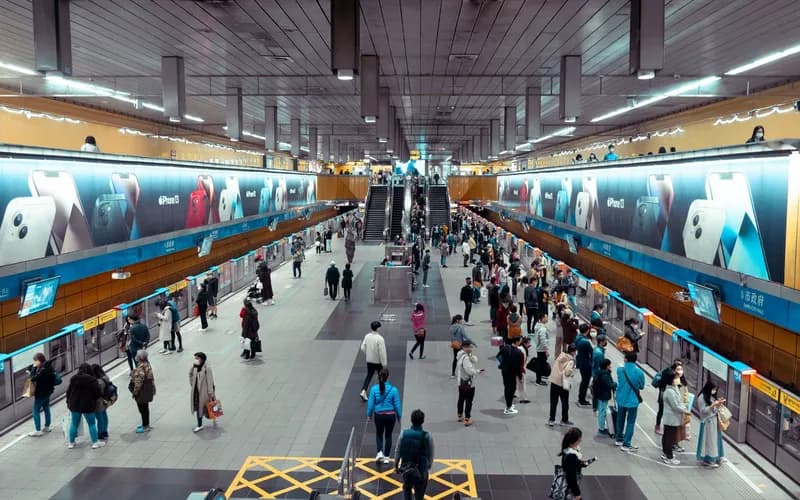
The mechanism explains the exclusion. Rather than lowering posted fares, the government reimburses operators for the difference between the twenty baht collected and the normal fare. That requires knowing exactly who travelled and how far, which requires an identified account rather than an anonymous stored-value card. Registration runs through a government app, using a Thai national identity number as the key, after which the passenger links a Rabbit card or a contactless bank card to the account.
Because the identity number is the gate, the scheme excludes everyone without one. That includes tourists, and it also includes long-term foreign residents who pay Thai tax, which has been a persistent source of complaint since registration opened in August 2025. There have been recurring reports of legal questions around the scheme's structure, and the eligibility rules have been debated, but as of the second half of 2026 the position is unchanged: no Thai identity number, no flat fare.
It is worth being calm about this. Dual pricing is a long-established feature of Thai public services, most visibly at national parks, and the twenty-baht scheme is a domestic cost-of-living subsidy rather than a tourist product. It is nonetheless worth knowing before you arrive expecting a bargain that will not materialise.
What you will actually pay
Standard fares are distance-based and modest by international standards. The BTS Skytrain runs roughly seventeen to sixty-five baht for an adult journey. MRT Blue and Purple Line fares vary similarly with distance. A typical central Bangkok hop, say Asok to Siam or Silom to Chatuchak, lands somewhere in the thirty to fifty baht range. Cross-network journeys involving two or three operators are where the cost climbs, because each operator still charges its own fare for a non-registered passenger.
In practical terms, a visitor using rail four or five times a day in central Bangkok should budget roughly 150 to 250 baht per person per day. That is more than a Thai commuter now pays but still cheap compared with a taxi in Bangkok traffic, and dramatically faster at almost any hour. For how this fits into overall trip costs, our Thailand budgeting guide puts city transport in context against accommodation and food.
Get matched with up to 5 trusted Thailand agencies
- Free
- No obligation
- Up to 5 agencies
The card question has changed in 2026
The bigger practical change for visitors this year is not the fare cap but the payment technology, and it genuinely simplifies things.
From 1 June 2026, the MRT stopped accepting its own stored-value MRT and MRT Plus cards and tokens on the Blue and Purple lines. Entry is now by EMV contactless: you tap an ordinary contactless Visa or Mastercard credit or debit card directly on the gate, or use the dedicated Mangmoom EMV card. The Mangmoom card requires a Thai identity card and is therefore not an option for visitors, but the first route is, and it is excellent. For most travellers this means the MRT now needs no ticket, no queue and no card purchase at all: tap in with the card already in your wallet or on your phone and tap out at the other end.
The BTS Skytrain has not fully converged. Contactless bank card acceptance has been rolling out but is not yet universal across every BTS station, so the Rabbit card remains the reliable option there, and it also works on the Gold, Yellow and Pink lines and at a wide range of convenience stores. A Rabbit card costs a small issuing fee plus whatever you load, and it can be bought at any BTS ticket office.
The sensible 2026 setup for a visitor is therefore: carry a contactless bank card for the MRT and buy one Rabbit card for the BTS. That covers effectively everything you will use.
The Airport Rail Link is its own world
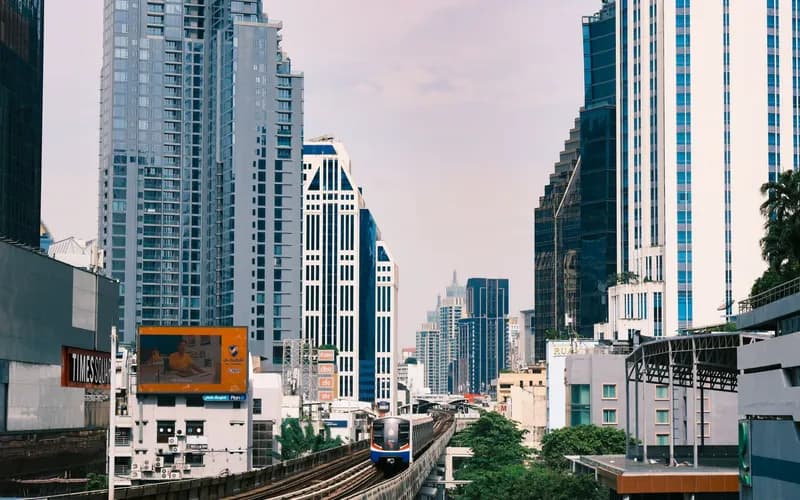
The Airport Rail Link connecting Suvarnabhumi to Phaya Thai has historically operated on its own ticketing island, selling single-journey tokens from machines at the airport station and not accepting Rabbit or MRT cards. Acceptance of contactless bank cards on the line has been reported inconsistently during the ongoing payment migration, so the safe approach is to allow a couple of minutes to buy a token at the machine and treat any tap-in that works as a bonus.
The line itself is the right way into the city from Suvarnabhumi in daylight hours: it reaches Phaya Thai in around half an hour for well under fifty baht, against an hour or more and several hundred baht by taxi in traffic. Note that it is Suvarnabhumi only. Don Mueang, Bangkok's other airport, is served by the SRT Red Line from Krung Thep Aphiwat, which is a good connection and often overlooked. If you are arriving internationally, our guide to Thailand's automated immigration e-gates explains what to expect between the aircraft door and the station platform.
What rail does not reach
Bangkok's rail map has expanded enormously but still leaves gaps, and the flat-fare debate can obscure how much of the city runs on other things. The Chao Phraya express boats remain the best way to move along the river and reach Rattanakosin, the old royal quarter, where there is no convenient station. The orange-flag and blue-flag boats cost between about sixteen and thirty baht, and a Rabbit card is accepted on some services. The khlong boat along Saen Saep is faster than any road vehicle across the middle of the city and costs even less, if you are willing to accept a certain amount of splash and noise.
Buses are cheap and slow. Motorbike taxis, identified by orange vests, are the standard Thai solution for the last kilometre from a station to a destination, and they are quick and inexpensive, though they carry the road risk that comes with any two-wheeler in Bangkok traffic. Our wider guide to getting around Thailand slowly covers how these pieces link up beyond the capital.
Is the flat fare permanent?
Treat it as policy rather than infrastructure. The scheme depends on annual budget appropriations to reimburse operators, and it has been debated on legal and fiscal grounds since before it launched. Governments change and subsidies get revisited. There have also been commitments to upgrade the system so that fares can be paid by QR code through the government app across all lines by late 2026, which would further separate the registered-Thai payment path from the anonymous tap-and-go path that visitors use.
What is more durable is the direction of travel: Bangkok rail is getting cheaper for residents, more integrated across operators, and simpler to pay for. None of that is bad for visitors even if the headline discount is not available to them. The same broad modernisation story is playing out on the intercity network, which we cover in our update on Thailand's high-speed and dual-track rail programme.
What it means for a slow itinerary
If you are spending a week in Bangkok rather than two nights, the arithmetic changes in a useful way. Base yourself within walking distance of one station rather than moving your bags across the city, and the daily rail spend falls to two or three journeys. Choose a neighbourhood with real street life, such as Ari, Phra Khanong or the Bang Rak side, rather than a hotel district optimised for airport transfers, and you will walk more and ride less.
The other slow-travel move is to treat Bangkok as a hub rather than a stop. Krung Thep Aphiwat station is now the main long-distance terminal and connects to the MRT Blue Line, which makes an overnight train out of the city genuinely easy, including the through service towards Laos described in our piece on the Bangkok to Vientiane rail connection. Arriving on the metro and departing on a sleeper is one of the more satisfying transitions in Southeast Asian travel.
What to Do Next
- Do not budget for the twenty-baht fare. Assume standard distance fares of roughly seventeen to sixty-five baht per BTS journey and similar on the MRT.
- Check that your bank card supports contactless payment abroad and that your bank will not block Thai transactions, then use it directly on MRT gates.
- Buy one Rabbit card at any BTS ticket office on your first day and load two or three hundred baht for Skytrain and Gold, Yellow and Pink line journeys.
- From Suvarnabhumi, take the Airport Rail Link to Phaya Thai and be prepared to buy a token at the machine rather than relying on tapping in.
- From Don Mueang, use the SRT Red Line to Krung Thep Aphiwat rather than queuing for a taxi.
- Book accommodation within a five-minute walk of a station, and choose one base for the whole stay instead of moving hotels.
- Add the Chao Phraya express boat and the Saen Saep khlong boat to your mental map. They reach parts of Bangkok that rail does not and cost less than either.
Frequently Asked Questions
Can tourists get the 20-baht flat fare in any way?
No. Registration requires a Thai national identity number through the government app, and there is no visitor equivalent. Buying a Rabbit card or using a contactless bank card gets you convenience, not the capped fare. Long-term foreign residents are also excluded, which has been raised repeatedly but not changed.
What is the cheapest way for a visitor to use Bangkok rail?
Use a contactless bank card on the MRT, a Rabbit card on the BTS, and plan your days by neighbourhood so you are not crossing the city twice. If you are staying more than a few days, staying near a station and walking locally will save more than any ticketing product.
Do I still need an MRT card?
No, and you cannot use an old one. MRT stored-value cards and tokens stopped being accepted on the Blue and Purple lines on 1 June 2026. Tap a contactless Visa or Mastercard directly at the gate instead. The Mangmoom card that replaced them requires a Thai identity card and is not available to visitors.
Does the Rabbit card work on the MRT?
No. Rabbit covers the BTS Skytrain and the Gold, Yellow and Pink lines, plus many shops. The MRT Blue and Purple lines run on EMV contactless. Carrying both a Rabbit card and a contactless bank card covers the whole network without any further thought.
How do I get from Suvarnabhumi to central Bangkok cheaply?
The Airport Rail Link runs to Phaya Thai in roughly thirty minutes for well under fifty baht, connecting to the BTS there and to the MRT at Phetchaburi station. Buy a token from the machine at the airport station. A metered taxi is far more expensive and, at peak times, considerably slower.
Will the flat fare ever be extended to foreigners?
There is no announced plan to do so. The scheme is funded as a domestic cost-of-living measure and is administered through the Thai identity system, so extending it would require both a policy decision and a technical redesign. Plan on paying standard fares for the foreseeable future.