Bangkok's Airport Rail Link Handover: Getting Into the City in Late 2026
If you are landing at Suvarnabhumi between now and early 2027, one line on your arrival plan deserves a second look. The private company that has run Bangkok's Airport Rail Link for the past decade is on its way out, its operating agreement expires at the end of September 2026, and the State Railway of Thailand is arranging a handover under visible time pressure. Nobody expects the trains to simply stop. But the arrangement keeping them running is now a short-term one, negotiated month by month, and travellers arriving with a tight connection or a four in the morning landing should know what the alternatives cost before they need them.
What Is Actually Happening
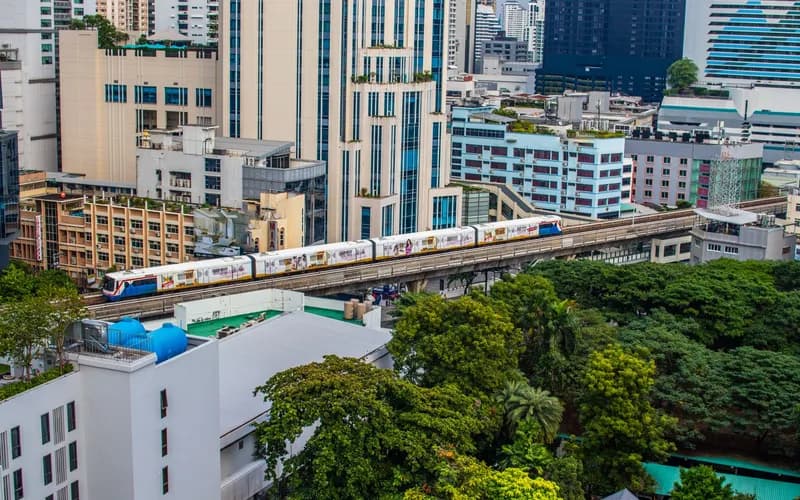
The Airport Rail Link, the eight-station line between Suvarnabhumi and Phaya Thai, has been operated by Asia Era One, a company linked to the Charoen Pokphand group, under an agreement that expires on 30 September 2026. In September the company reaffirmed its intention to exit the wider three-airport high-speed rail project, raising the prospect that it also stops operating the Airport Rail Link on that date.
The State Railway of Thailand has spent the month arranging continuity. Two tracks have run in parallel. The first is a short memorandum of understanding keeping Asia Era One in place for about four more months, to the end of January 2027, on terms the company set conditionally: a reported 60 million baht a month, and the right to walk away if the SRT takes specified legal action over the high-speed rail contract. The second is a takeover by S.R.T. Electrified Train Company, the SRT subsidiary that already runs Bangkok's Red Line commuter railway. Its acting chief executive has said the company is ready in principle but needs roughly a month to recruit staff and complete the administrative transfer.
Senior meetings have gone as high as the Prime Minister and the Transport Ministry, which tells you how sensitive an interruption on an airport line would be. The most likely outcome is continuous service under a stopgap contract, followed by a state-run operator sometime in the first half of 2027.
One request. Up to five tailored proposals.
Skip contacting agencies one by one — share your trip once and let up to five trusted Thailand agencies come to you. Free, with no obligation.
Get my free quotesWhy the Dispute Exists
This is not a railway problem. It is a contract dispute about a much larger project: the three-airport high-speed line meant to connect Don Mueang, Suvarnabhumi and U-Tapao, which was awarded to the same private consortium and bundled with the right to operate the existing Airport Rail Link. The consortium sought to change the payment structure, from a lump sum on completion to staged payments against construction progress, and the negotiation has never fully resolved. The Airport Rail Link is the part of that package that carries passengers today, which is why an investment disagreement has become an arrival-hall question. Our status report on high-speed and dual-track rail in Thailand sets out where the wider programme has actually got to.
For travellers the useful takeaway is that the risk is administrative, not mechanical. The trains, stations and track are not in question. What is in question is who employs the drivers next quarter.
What It Means for Your Arrival
Realistically, three scenarios. In the most likely one, nothing visible changes: the same trains run on the same timetable under a new short contract or a new operator, and you notice only that the branding on the tickets has changed. In the second, there is a brief transition period with reduced frequency, longer gaps between trains and a thinner late-evening service, the classic signature of an operator change with a lean staff roster. In the third, least likely scenario, there is a short suspension and the airport falls back on road transport for a few days.
The sensible response is not to avoid the train. It is to stop treating it as the only plan. If you are arriving on a late flight, connecting to a train from Bangkok's main stations, or travelling with someone who cannot stand on a platform for forty minutes, budget for a taxi and treat the rail link as the cheaper option if it is running normally.
Get matched with up to 5 trusted Thailand agencies
- Free
- No obligation
- Up to 5 agencies
How the Airport Rail Link Works Today
For anyone who has not used it: the line runs from a basement station beneath Suvarnabhumi to Phaya Thai in central Bangkok in around 30 minutes, with fares set by distance from about 15 baht up to 45 baht for the full run. Contactless bank cards are accepted at the gates at all stations, which has removed most of the old token-machine queueing. Trains run from roughly half past five in the morning until around midnight, which matters, because a significant share of long-haul arrivals land outside those hours.
The two interchanges are what make it useful. Makkasan connects to the MRT Blue Line at Phetchaburi, and Phaya Thai connects to the BTS Sukhumvit Line. Neither interchange is seamless; both involve a walk with luggage, and in Makkasan's case a long one. For a hotel near either network, the train is still comfortably the fastest and cheapest way in during traffic hours.
One thing it is not: part of Bangkok's headline fare reform. The capital's 20-baht flat fare applies to specified electric rail lines and under conditions that exclude most visitors, as we explained in our piece on what the 20-baht flat fare actually means for travellers. Do not expect the airport journey to cost 20 baht.
The Alternatives, Priced
Know these numbers before you land rather than at the taxi rank at one in the morning.
- Public metered taxi from the official rank on level 1: expect 400 to 600 baht total to central Bangkok, made up of the meter, a 50-baht airport surcharge that is legitimate and posted, and expressway tolls of roughly 50 to 75 baht paid in cash along the way. Insist on the meter.
- Ride-hailing through Grab or Bolt: commonly around 350 to 520 baht with the price fixed in advance, collected from a designated pickup area. Driver availability thins out badly between one and four in the morning, which is precisely when the train is not running either.
- The S1 public bus to the old town and Khao San area: around 60 baht, slow, and the cheapest way into that side of the city.
- Airport minibuses and vans to other districts and to Don Mueang: cheap, useful, and dependent on demand rather than a strict timetable.
- Hotel transfers: typically two to three times the taxi fare, occasionally worth it after a twelve-hour flight, rarely worth it otherwise.
Our broader guide to getting around Thailand by bus, boat and everything in between covers the onward connections from the city once you are in.
Don Mueang Is a Separate Problem
If you fly into Don Mueang rather than Suvarnabhumi, none of the above applies. Don Mueang has no direct link to the Airport Rail Link. Its rail option is the SRT Dark Red Line into Krung Thep Aphiwat, the enormous new central station north of the old Hua Lamphong, from which you can pick up the MRT Blue Line or long-distance trains. In practice most travellers take a taxi, which carries the same 50-baht airport surcharge, or one of the airport buses.
This matters more than it sounds for a slow itinerary: many domestic and regional budget flights use Don Mueang while long-haul arrivals use Suvarnabhumi, and a same-day transfer between the two airports means a road crossing of Bangkok with all the traffic risk that implies. Give it three hours, not ninety minutes, and if your itinerary lets you avoid the transfer entirely, do that.
What This Does Not Change
Plenty of arrival logistics are unaffected by the handover and are worth separating out. The digital arrival card requirement, immigration procedure and automated gates are unchanged. Departure charges are unchanged: the passenger service charge remains built into ticket prices, and we covered the 2026 airport fee picture in our update on Thailand's departure fee and what else changed at the airport. Suvarnabhumi's satellite terminal and its automated people mover continue to run normally, as does the ongoing east-side expansion work, which will shape the airport for years but does not affect how you leave it this month.
The only thing genuinely in flux is who runs one commuter line, and how reliably it runs during the transition.
How to Plan an Arrival in the Next Few Months
For anyone landing between now and the middle of 2027, three habits cover almost all of the risk. Check the operating hours against your flight's scheduled arrival plus two hours for immigration and bags. Have a taxi or ride-hailing budget in baht as a fallback, in cash, because a card-only traveller at 2 am is a stranded traveller. And choose your first-night accommodation with the arrival in mind rather than the sightseeing: a hotel near Phaya Thai, Ratchathewi or the Blue Line lets you use whichever mode is working, while a guesthouse deep in the old town commits you to the road.
If you are building a Thailand itinerary from scratch and want the arrival sequenced sensibly with everything after it, start with our plan-your-journey framework for Thailand.
What to Do Next
- Note your actual arrival time at Suvarnabhumi and add two hours; if that lands you after midnight or before 5.30 am, the train is not an option and you need a road plan.
- Carry 600 baht in cash from the first ATM or exchange booth, enough for a metered taxi with tolls and surcharge, regardless of how you intend to travel.
- Install a ride-hailing app before you fly and add a payment card while you still have reliable data.
- Choose a first-night hotel within reach of both the Airport Rail Link and the MRT or BTS, then move on to wherever you actually want to be.
- If you have a same-day connection to a long-distance train or a Don Mueang flight, allow three hours and treat any tighter plan as unprotected.
- Check the Airport Rail Link service status on arrival day rather than relying on a schedule you saved weeks earlier. During a handover, the timetable is the thing most likely to move.
Frequently Asked Questions
Will the Airport Rail Link stop running?
Almost certainly not for any extended period. The State Railway of Thailand has been negotiating a short extension with the outgoing operator while preparing its own subsidiary to take over, and the political attention on the file makes a prolonged shutdown of an airport line very unlikely. The realistic risks are a brief transition with reduced frequency, or a short interruption, rather than a permanent closure.
What does the journey cost and how long does it take?
Fares are distance-based, from about 15 baht to 45 baht for the full run between Suvarnabhumi and Phaya Thai, which takes roughly 30 minutes. Contactless bank cards work at the gates. That compares with 400 to 600 baht and an unpredictable 40 to 90 minutes by taxi depending on traffic.
Does Bangkok's 20-baht flat fare apply to the airport train?
No. The flat-fare scheme covers specified electric rail lines and is structured in a way that excludes most foreign visitors in practice. Budget the normal Airport Rail Link fare and treat any 20-baht promise you read online with suspicion.
What should I do if I land in the middle of the night?
Plan for road transport. The line does not run between roughly midnight and half past five in the morning, and ride-hailing supply is thin between one and four. The official metered taxi rank on level 1 operates around the clock; take a queue ticket, insist on the meter, and expect the 50-baht surcharge plus tolls. Have the cash ready before you reach the rank.
Is the handover connected to the high-speed rail project?
Yes, directly. The right to operate the Airport Rail Link was bundled into the three-airport high-speed rail concession, so the operator's attempt to exit that larger project is what has put the commuter line in play. The dispute concerns payment structure and contract terms rather than anything to do with train safety or track condition.
Does any of this affect Don Mueang arrivals?
No. Don Mueang is served by the SRT Dark Red Line to Krung Thep Aphiwat station, plus taxis and airport buses, and is unaffected by the Airport Rail Link handover. If your itinerary involves both airports on the same day, the bigger risk is Bangkok traffic between them, so allow three hours.