
An hour or two inland from southern Thailand's busy beaches lies a different country entirely. Khao Sok National Park is the largest tract of virgin rainforest in southern Thailand — a forest older and more biodiverse than the Amazon — and at its heart sits Cheow Lan Lake, an emerald reservoir ringed by limestone cliffs that rise straight from the water. A night in a floating raft house here, with dawn mist on the lake and gibbons calling from the forest, is one of the most memorable experiences in the country, and one almost no package itinerary makes room for.
A Forest Older Than the Amazon
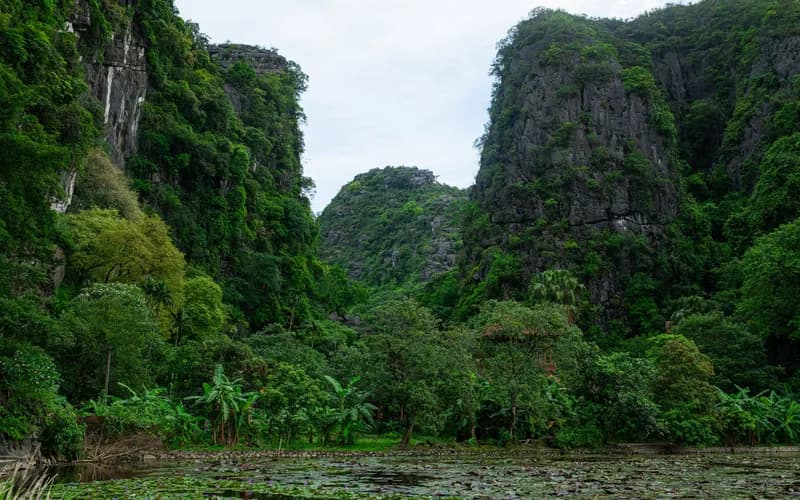
Khao Sok's rainforest is a genuine remnant of the ancient evergreen jungle that once covered much of the region, and its age shows in its richness: towering dipterocarp trees, hornbills, gibbons, langurs, and — for the very lucky and patient — wild elephants. The park protects a vast, contiguous wilderness, and even casual visitors feel the difference between this living forest and the manicured edges of the coast. Jungle trails near the park headquarters lead to waterfalls and viewpoints, and the famous Rafflesia, the world's largest flower, blooms here in season.
The park headquarters area charges a 200-baht entry fee for adults, and a guided walk is the best way to read a forest this dense — much of its life is hidden until someone who knows where to look points it out.
One request. Up to five tailored proposals.
Skip contacting agencies one by one — share your trip once and let up to five trusted Thailand agencies come to you. Free, with no obligation.
Get my free quotesCheow Lan Lake and the Floating Bungalows
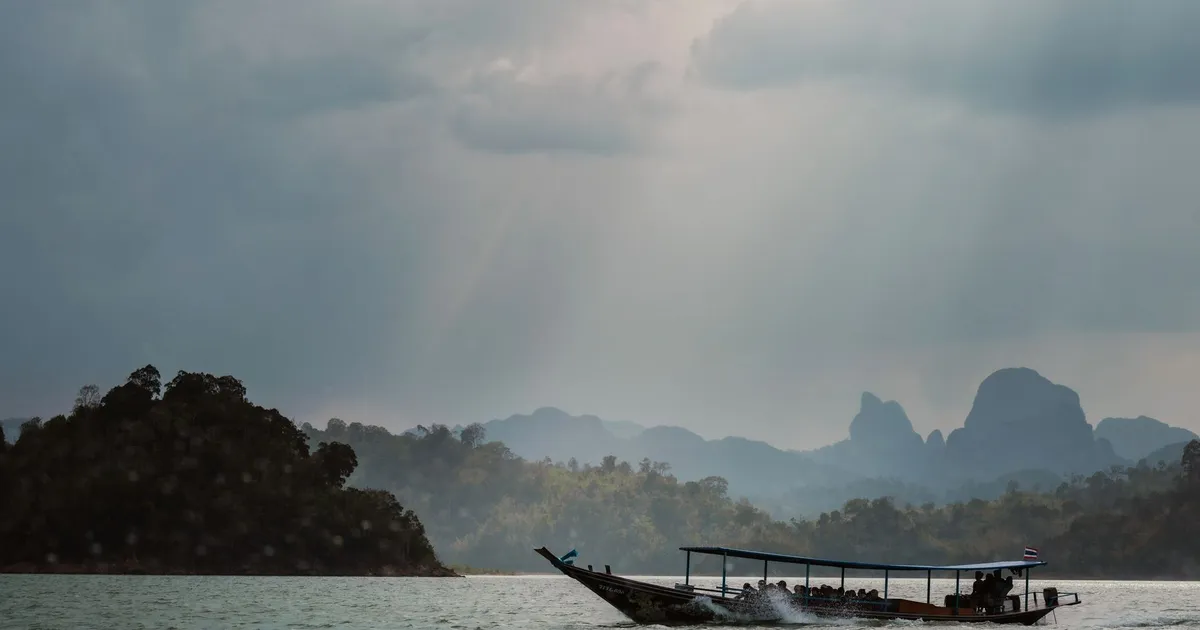
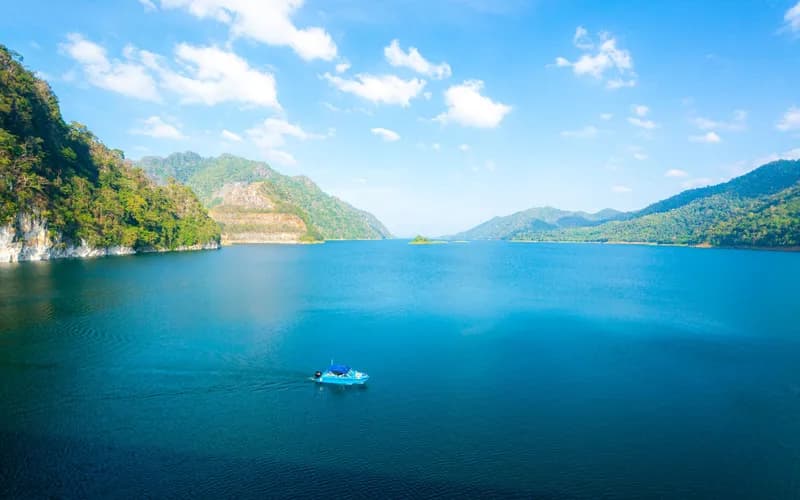
The image that draws most people to Khao Sok is the lake. Cheow Lan, created by a dam in the 1980s, is a sprawling emerald reservoir from which sheer karst peaks erupt — scenery often compared to a freshwater Ha Long Bay, but quieter and wrapped in jungle. Scattered along its arms are floating raft-house bungalows, simple rooms built on pontoons at the water's edge, reached only by longtail boat.
Staying overnight is what separates Khao Sok from a day trip. The rhythm is unforgettable: a longtail ride across the water in the afternoon, a swim straight off your deck, dawn mist rising as the forest wakes, and a quiet early-morning boat safari when wildlife comes to the shoreline. It is rustic by design — limited electricity, no distractions — and that simplicity is exactly the point.
When to Go
Khao Sok sits between Thailand's two coasts and has its own rhythm. The dry season, roughly December to April, brings the easiest conditions and the clearest water, and is the most popular time. The wet season, May to November, makes the forest at its most dramatic and alive — louder with wildlife, thicker with green — with the trade-off of rain and the occasional boat-access disruption, which has affected some operators in recent seasons. Either way, the park's inland position means it does not follow the beach seasons exactly; pairing it with the right coast is part of planning a southern trip, which our guide to where to go and when covers in full.
Get matched with up to 5 trusted Thailand agencies
- Free
- No obligation
- Up to 5 agencies
How It Fits a Southern Trip
Khao Sok's location is its quiet advantage. It sits within reach of both the Andaman coast (Khao Lak, Phuket, Krabi) and the Gulf islands via Surat Thani, which makes it a natural, restorative pause between a city and a beach — green, cool, and slow after the heat and crowds of the coast. Combining a few nights here with one quieter island is one of the most satisfying shapes a southern Thailand trip can take, and it pairs naturally with the off-the-beaten-path destinations in our hidden Thailand guide.
Why Khao Sok Rewards Slow Travelers
Khao Sok is the antithesis of the rushed island-hop. It cannot be rushed — the boat ride, the remoteness, the deliberate lack of distraction all force a slower gear. It asks you to stay overnight, to wake early, to sit still and let an ancient forest reveal itself. That is precisely the experience the headline destinations have lost, and precisely what our slow travel charter is built around. The agencies in our certified network know which raft-house operators run responsibly and how to fold Khao Sok into a coast-and-forest itinerary without the logistical guesswork. When you are ready to plan, our plan-your-journey page is the place to start.
Frequently Asked Questions
Is Khao Sok worth visiting?
Very much so, especially for travelers who want nature and quiet rather than beaches and nightlife. Its ancient rainforest and the floating bungalows on Cheow Lan Lake offer one of the most distinctive experiences in Thailand, and it makes a perfect restorative break between the coast and the city.
How many days do you need in Khao Sok?
Two to three nights is ideal — enough for at least one overnight in a floating raft house on the lake, a guided jungle walk near the headquarters, and an early-morning wildlife boat trip. A single day does not do it justice.
What is the best time to visit Khao Sok?
December to April is the driest and most popular, with the clearest lake conditions. The wet season, May to November, is greener and more alive with wildlife but brings rain and occasional boat-access issues. The park's inland position means it doesn't follow the beach seasons exactly.
How do you get to Khao Sok?
It is reachable by road from the Andaman coast towns (Khao Lak, Phuket, Krabi) and from Surat Thani, the gateway to the Gulf islands. That central position makes it easy to combine with either coast on a southern itinerary.
Are the floating bungalows worth it?
Yes — staying overnight on Cheow Lan Lake is the highlight of Khao Sok for most visitors. The raft houses are simple and rustic, with limited electricity, but waking to mist on the lake and the sound of the forest is unforgettable. Book through a reputable operator that manages the park access well.