Ayutthaya Beyond the Day Trip: Thailand's Old Capital, Slowly
Ayutthaya is the most visited ruin in Thailand that almost nobody sleeps in. Every morning, vans leave Bangkok with a fixed itinerary of five temples, a floating market and a late lunch, and by late afternoon the old capital is handed back to the cyclists, the river and the dogs asleep on warm brick. That is the Ayutthaya worth travelling for. It rewards the person who arrives on a slow train, stays the night, and walks the ruins when the light is low and the tour buses have gone.
This guide is for travellers who want depth over distance. It explains what Ayutthaya actually is, how to get there cheaply, how to structure two unhurried days, what the temples cost, where to eat and sleep, and the honest caveats: the heat, the crowds at two or three famous spots, and the fact that some of the town is simply ordinary Thai provincial life rather than heritage.
Why Ayutthaya deserves more than six hours
The kingdom of Ayutthaya was founded around 1350 and ruled much of what is now Thailand for more than four centuries, until Burmese armies sacked the city in 1767. At its height it was one of the largest and most cosmopolitan cities in Asia, with Portuguese, Dutch, French, Japanese and Persian merchants living in quarters along the rivers. The historic city was inscribed as a UNESCO World Heritage Site in 1991.
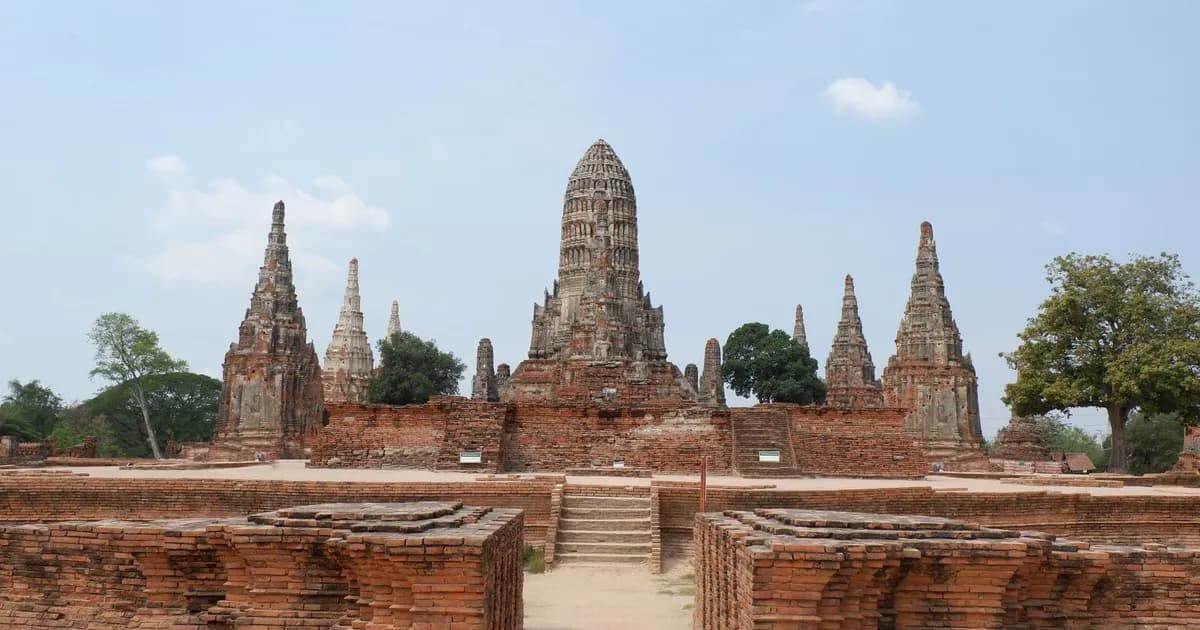
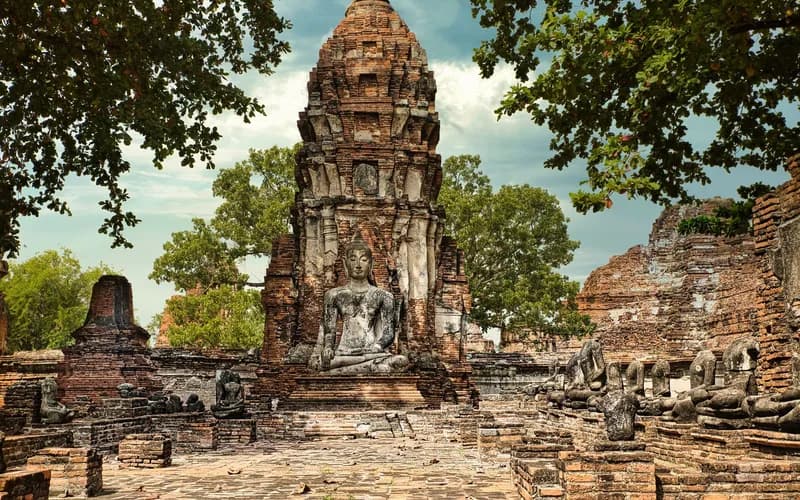
What survives is not a museum but a landscape. The old city sits on an island formed by the Chao Phraya, Lop Buri and Pa Sak rivers, and the ruins are scattered between modern shops, schools, temples still in daily use and rice-and-noodle restaurants. Brick prangs and headless Buddhas stand next to a petrol station. That mix is the point, and it is exactly what a day trip skims past.
A short stay also changes how you see the ruins. At midday they are hot, bright and crowded. At 8:30 in the morning, when most paid temples open, and again in the last hour before closing, they are quiet, the brick glows orange and you can hear the grounds being swept. You only get both of those if you sleep in town.
One request. Up to five tailored proposals.
Skip contacting agencies one by one — share your trip once and let up to five trusted Thailand agencies come to you. Free, with no obligation.
Get my free quotesGetting there without the van
The classic mistake is booking a full-day tour for the price of a good dinner. The town is easy to reach on your own, and the journey is part of the slower pace.
By train, the most useful station is Krung Thep Aphiwat Central Terminal at Bang Sue, which connects to the MRT Blue Line. Ordinary and rapid services to Ayutthaya take roughly 45 minutes to 1 hour 25 minutes depending on the train, and third-class fares are around 20 baht, with higher classes costing more. Older, slower third-class services still run from Hua Lamphong. Timetables and platforms change, so confirm with the State Railway of Thailand or at the station on the day. Ayutthaya station sits on the east bank, and a small ferry across the Pa Sak river to the island costs only a few baht.
Minivans from Bangkok's northern bus terminal at Mo Chit are an alternative, and some travellers continue north by train to Lopburi or onwards, treating Ayutthaya as the first stop on a longer line rather than an excursion. If you are planning that kind of route, our slow rail guide to Thailand covers booking, classes and the trains worth taking.
What the temples cost, and how to pay less
Walking through the historical park is free. Most of the major temples charge a foreigner's entry fee at their own ticket window, and all of them take cash only. At the time of writing, the figures reported for 2026 are roughly:
- 50 baht each for Wat Mahathat, Wat Ratchaburana, Wat Phra Si Sanphet, Wat Phra Ram, Wat Chaiwatthanaram and Wat Maheyong.
- 20 baht each for Wat Yai Chai Mongkhon, Wat Na Phra Meru and Viharn Phra Mongkhon Bophit.
- Free entry at Wat Lokayasutharam, the large reclining Buddha.
A combined ticket of about 220 baht covers the six 50-baht temples and is valid for 30 days, which only saves money if you visit five or six of them. Most paid temples open around 8:30 and close between 5:00 and 6:00 in the evening. Prices and hours change without much announcement, so treat these as a guide and carry small notes.
For a slow trip, I would not try to see all six. Choose three or four, spend real time in each, and leave the rest as a reason to come back.
Get matched with up to 5 trusted Thailand agencies
- Free
- No obligation
- Up to 5 agencies
A two-day rhythm that works
Day one, afternoon. Arrive by mid-morning, drop your bag and eat before you do anything else. Rent a bicycle from your guesthouse; the island is flat, and the distances between temples are short enough that you will be glad of the breeze. Start with Wat Phra Si Sanphet, the royal temple with its three bell-shaped chedis, then continue to Wat Mahathat, where a sandstone Buddha head sits caught in the roots of a banyan tree. Expect a queue for the photograph and be patient with the rule that you must not stand higher than the head. Honour it; it is a sacred image, not a prop.
Day one, evening. The river is the real centre of old Ayutthaya. Watch sunset from the west side and take dinner at one of the riverside restaurants. Several of the main ruins are lit after dark, and a slow walk or ride back past them is worth far more than a second temple at noon.
Day two, early. Be at Wat Ratchaburana or Wat Chaiwatthanaram when the gates open. Chaiwatthanaram, on the western bank, was built in the 17th century in a Khmer-inspired style, with a central prang surrounded by smaller towers, and it is at its most atmospheric in low light. After that, take a longtail boat trip around the island if you like; agree the price and route before you step aboard.
Beyond the postcard ruins
If you have a third day, or just a slow afternoon, there are quieter corners. Wat Lokayasutharam's reclining Buddha, set in an open field, is free and often almost empty. Wat Yai Chai Mongkhon, on the southeast side, is still an active monastery with a large chedi and rows of seated Buddhas wrapped in saffron cloth, and it gives you a sense of living Buddhism rather than ruins. Wat Phanan Choeng, a short ride from the island, houses a large seated Buddha that Thai visitors treat as a place of worship and merit-making, so dress modestly and watch before you photograph.
The Chao Sam Phraya National Museum and the Historical Study Centre, both on the island, explain the city's wider story in air-conditioned calm. They are especially useful in the hottest hours, when cycling is a bad idea.
You should also be honest with yourself about the floating market on the tour circuit. It is a purpose-built attraction aimed at groups. Some people enjoy the boat rides and snacks, but if your time is limited it is not essential.
Eating and sleeping in Ayutthaya
Ayutthaya has its own food identity. River prawns are the local pride, grilled or served in spicy salads. Boat noodles in small, dark broth are a regional staple, and roti sai mai, thin fresh roti wrapped around strands of spun sugar, is the town's sweet souvenir. If food is part of your plan, our Thai food guide will help you place these dishes in the wider regional picture.
For sleeping, small guesthouses and converted teak houses on the island give you the best access to early and late light. Riverside rooms are pleasant but check how far they are from the evening noise. Budget rooms are cheap by Bangkok standards, and a night or two in town rarely costs much more than a day tour would.
When to go, and what to avoid
From November to February, the weather is at its most comfortable, with cooler mornings and clearer skies. March to May is hot, and cycling at midday is genuinely unpleasant; plan around dawn and late afternoon, and carry water. The rainy season brings humid heat and sudden downpours, and the river can rise. Ayutthaya was badly flooded in 2011, so ask your guesthouse about conditions during the wettest months.
Weekends and Thai holidays bring day-tripping families and large groups, and a few key temples can feel crowded. Weekdays outside the main season are noticeably calmer. If you want a wider sense of when to travel across the country, our slow traveller's guide to Thailand sets out the seasons region by region.
Continuing north without hurrying
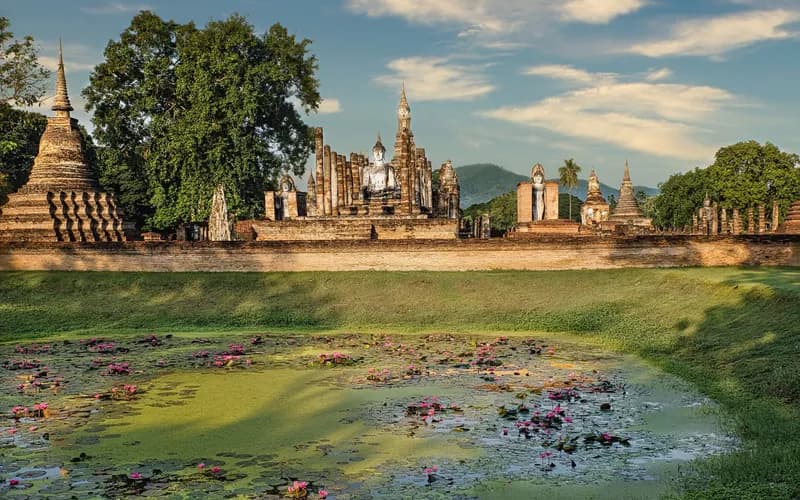
Ayutthaya works well as the first night of a journey toward the old kingdom of Sukhothai and the northern provinces. The two cities tell the story of two different early Siamese capitals, one as a riverine trading empire, the other as an earlier, quieter, more spiritual kingdom. If you are considering that pairing, read our piece on Sukhothai Historical Park to see how the second capital differs.
For getting around once you are there, and for what the rules now are on app-based rides and taxis, see our update on Thailand's ride-hailing rules in 2026. Cycling and walking remain the best ways to see the island itself.
What to Do Next
- Decide how many nights you can give Ayutthaya. Two nights is the sweet spot; one night is still far better than a day trip.
- Check the State Railway of Thailand timetable for the day you travel and choose a train from Krung Thep Aphiwat or Hua Lamphong.
- Book a small guesthouse on the island and ask about bicycle rental and early breakfast.
- Carry 20 and 50 baht notes for ticket windows, and decide which three or four temples matter most to you.
- Plan your first and last hours at the ruins for the soft light, and keep the middle of the day for museums, food and rest.
- If you want help with the wider route, start with our plan your journey page.
Frequently Asked Questions
Is Ayutthaya worth staying overnight, or is a day trip enough?
A day trip lets you see the headline temples, but it forces you to share them with tour groups at the hottest, busiest time. One or two nights give you early and late light, quiet streets and a chance to eat in town, which is the experience most travellers remember.
How do I get from Bangkok to Ayutthaya cheaply?
The train is the cheapest and most pleasant option. Third-class fares are around 20 baht, and the journey takes roughly an hour to two hours depending on the train and station. Confirm times with the State Railway of Thailand before you go.
How much do the temples cost?
The park is free to walk through, but major temples charge around 20 to 50 baht each, in cash. A combined ticket of about 220 baht covers six main temples for 30 days. Check current prices at the ticket window.
Is it better to cycle or take a tuk-tuk?
Cycling suits the flat island and gives you flexibility, but it is tiring at midday between March and May. A tuk-tuk or boat can help you cover distance, though you should agree the price before you start.
What should I wear at the temples?
Cover your shoulders and knees, and be prepared to remove shoes at active temples. Do not climb on ruins or stand higher than Buddha images, including the head in the tree roots at Wat Mahathat.
When is the best time to visit Ayutthaya?
November to February is the most comfortable, with cooler mornings and lower humidity. March to May is very hot, and the rainy season brings downpours and occasional river flooding.
Can I combine Ayutthaya with other places?
Yes. It fits naturally on a route north toward Lopburi, Sukhothai and the northern provinces, and works well as a first or last stop around Bangkok.