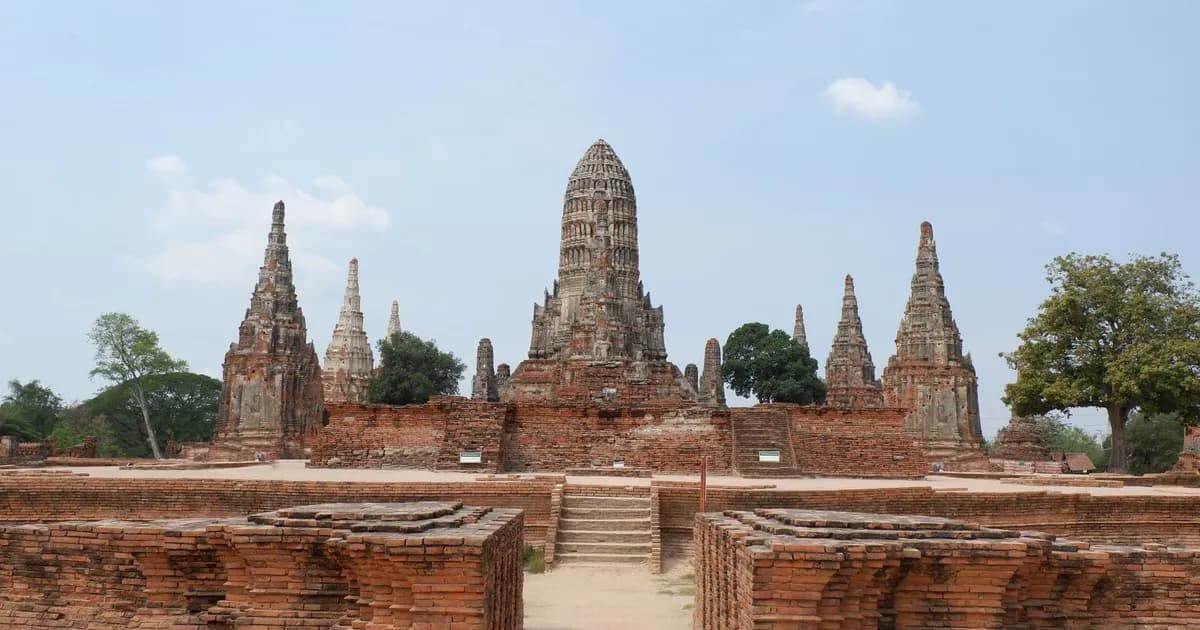


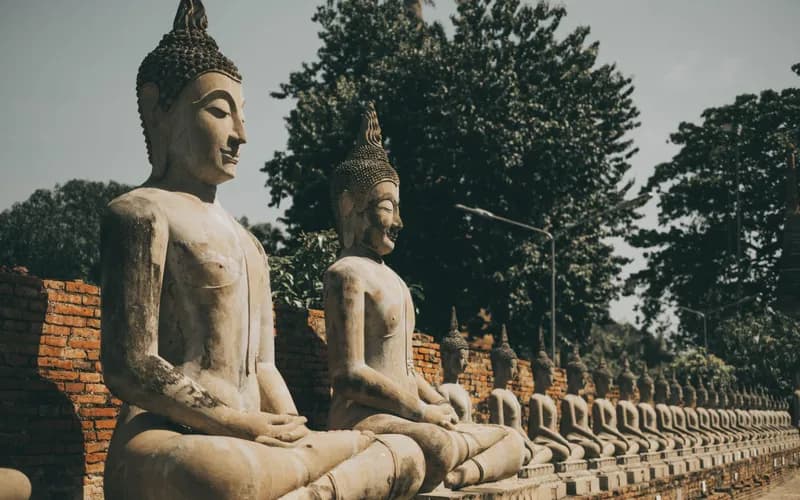
Sukhothai is the place to slow down and watch the foundations of a kingdom emerge from the rice fields. This is where Siam began. In the 13th and 14th centuries, the Sukhothai Kingdom under King Ramkhamhaeng built Thailand's first capital here, and what remains today is a UNESCO World Heritage landscape of brick chedis, weathered Buddhas and lotus ponds spread across flat, walkable, cyclable terrain. It rewards patience. Most visitors give it a few hours; the slow traveler gives it days, and is repaid with quiet mornings, golden afternoons and a sense of how a civilization actually felt on the ground.
This is not a place to rush. The ruins are spread across several zones, the heat is real, and the best light comes at the edges of the day. Treat Sukhothai as a destination in its own right rather than a half-day stop between Bangkok and Chiang Mai, and it becomes one of the most rewarding cultural experiences in the country.
Why Sukhothai matters
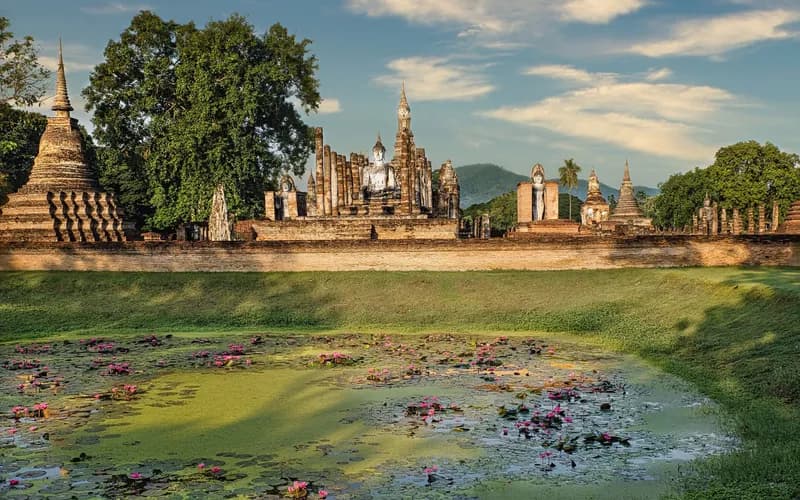
Sukhothai means "dawn of happiness," and the name fits the way historians talk about the period. This was the first independent Thai polity of real consequence, and its art and script shaped what came after. King Ramkhamhaeng is credited with the early Thai alphabet and with a style of Buddha image, the walking Buddha, that is among the most graceful in Southeast Asian art. The architecture blends Khmer influence with something lighter and more distinctly Thai, especially the lotus-bud chedi, a tapering spire shaped like a closed flower that became a signature of the period.
What makes the park special is not any single monument but the coherence of the whole. You are not looking at one restored temple in a city; you are moving through the remains of an entire planned capital, with its moats, ponds, ordination halls and royal precincts still legible in the landscape. The flatness helps. You can cycle from one ruin to the next, and the relationships between them, the sightlines, the water, the spacing, are part of the experience.
One request. Up to five tailored proposals.
Skip contacting agencies one by one — share your trip once and let up to five trusted Thailand agencies come to you. Free, with no obligation.
Get my free quotesOld Sukhothai versus New Sukhothai
The first thing to understand is the geography, because it trips up a lot of travelers. The Historical Park sits in what locals call the Old City, roughly 12 kilometers west of modern New Sukhothai town. New Sukhothai is where most buses arrive and where the cheaper hotels and the night market are. The Old City, right by the park entrance, has its own cluster of guesthouses, restaurants and bicycle-rental shops.
For a slow trip, staying in the Old City is the better choice. You wake up minutes from the gates, you can ride in at sunrise before the tour groups, and you can return for the late-afternoon light without a 12-kilometer commute each way. If you prefer more amenities and a livelier evening, New Sukhothai works, with frequent songthaews (shared pickup trucks) shuttling between the two. For a deeper sense of how to sequence a Thai itinerary around places like this, our slow traveler's guide to where to go and when is a useful companion.
Understanding the zones and fees
The park is divided into five zones, and this is where the practical planning happens. Three of them, Central, Northern and Western, each require a separate paid ticket. The Southern and Eastern zones are free. The old combined all-zones ticket was discontinued, and foreign entry fees were raised in late 2023, so budget accordingly.
As of 2026, foreign fees are:
- Central Zone: 200 THB
- Northern Zone: 120 THB
- Western Zone: 120 THB
Each zone also adds a small bicycle surcharge of 10 THB if you ride in, which almost everyone does. There is no longer a single ticket that covers everything, so decide in advance which zones you want and carry enough cash.
Get matched with up to 5 trusted Thailand agencies
- Free
- No obligation
- Up to 5 agencies
What to see, zone by zone
The Central Zone is the heart of the park and the part nearly everyone visits. It holds Wat Mahathat, the great royal temple, with its rows of columns, seated Buddhas and the iconic lotus-bud chedi rising from the center. You can spend a full, unhurried half-day here alone, and many visitors never go further. That is a shame, because the quieter outer zones are where Sukhothai becomes memorable.
The Northern Zone is home to Wat Si Chum and its enormous enclosed seated Buddha, Phra Achana, framed by a narrow slot in the surrounding wall. The scale is genuinely startling, and the way the figure is revealed through that vertical gap is one of the most photographed sights in the country, for good reason.
The Western Zone asks more of you and gives more back. Its highlight is Wat Saphan Hin, reached by a roughly 200-meter slate path that climbs a low hill. At the top stands Phra Attharot, a 12.5-meter standing Buddha, and from here you get the best countryside view in the park, ruins, rice fields and distant hills laid out below. Because it takes effort to reach, you will often have it nearly to yourself. If you are the kind of traveler who deliberately seeks out the spaces the crowds skip, our guide to Thailand off the beaten path follows exactly this instinct.
If you have more time, the quieter sister site of Si Satchanalai Historical Park lies further north. It sees a fraction of Sukhothai's visitors and is a strong reason to extend your stay.
Cycling, timing and the heat
The terrain is flat, the distances are moderate, and the single best way to experience the park is by bicycle. Rental shops cluster by the Central Zone entrance, and a bike costs around 30 to 50 THB for the day. Bring water and sun protection; shade is intermittent and the open ruins offer little of it.
Timing matters more here than at most sights. The ideal windows are sunrise and late afternoon, when the light is soft and the heat is bearable. In the rainy season, roughly June to October, downpours tend to arrive in the afternoon, so mornings from around 6:30am to 2pm are usually your best bet. Plan your visit around the light and the weather rather than the clock, and the park transforms.
Getting to Sukhothai
Sukhothai has no train station of its own, which surprises travelers expecting to roll in by rail. The practical options:
- By train then bus. The nearest railhead is Phitsanulok, about 60 kilometers east. From Bangkok you can take a train to Phitsanulok, for example the morning Special Express number 7 departing at 07:30 and arriving just before noon, then a cheap and easy bus from Phitsanulok Terminal 1 onward to Sukhothai. This is the slow-travel-friendly route and it pairs well with seeing the country by rail.
- By direct bus. Buses run directly from Bangkok's Mo Chit terminal to Sukhothai, a straightforward if long ride.
- By air. There is a small Sukhothai airport with limited flights, useful if you are short on time and willing to pay for it.
Whichever way you come, the bus from Phitsanulok is genuinely simple, so do not let the lack of a station put you off the rail approach. Once you have settled your dates and routing, our trip cost and budget guide helps you plan the spend realistically.
A note on Loy Krathong and honest history
You will read everywhere that Loy Krathong, the festival of floating lights, was born in Sukhothai. It is a lovely story and it is worth knowing the fuller picture. Historians note that the strong association between Loy Krathong and Sukhothai is largely an invented tradition, popularized from the 1960s onward to support tourism. The festival's actual roots are traceable to Hindu and Khmer influence, including imagery on the Bayon bas-reliefs. None of this makes the festival less beautiful, and Sukhothai does stage a memorable celebration. But part of slow, honest travel is knowing the difference between heritage and marketing, and holding both lightly.
What to do next
- Decide how long to stay. Give Sukhothai a minimum of one full day; two days lets you add the outer zones and Si Satchanalai without rushing.
- Book accommodation in the Old City if you want sunrise access, or New Sukhothai for more amenities and nightlife.
- Plan your route in. The rail-plus-bus option via Phitsanulok is the most rewarding; direct buses from Mo Chit are the simplest.
- Budget your zone tickets in cash: 200 THB Central, 120 THB Northern, 120 THB Western, plus the 10 THB bicycle surcharge per zone.
- Rent a bicycle near the Central Zone for 30 to 50 THB and ride early or late to dodge the heat.
- Prioritize Wat Mahathat, Wat Si Chum and Wat Saphan Hin if your time is limited, and carry water everywhere.
Frequently Asked Questions
How many days should I spend at Sukhothai Historical Park?
One full day covers the Central, Northern and Western zones at a relaxed pace by bicycle. Two days is ideal, letting you slow down further and add the quieter Si Satchanalai Historical Park to the north.
Is there a single ticket for all the zones?
No. The old combined all-zones ticket was discontinued. As of 2026 you buy separate foreign tickets for the Central (200 THB), Northern (120 THB) and Western (120 THB) zones, each with a 10 THB bicycle surcharge. The Southern and Eastern zones are free.
How do I get to Sukhothai without a train station?
The nearest station is Phitsanulok, about 60 kilometers east. Take a train there from Bangkok, then a cheap, easy bus from Phitsanulok Terminal 1. Direct buses from Bangkok's Mo Chit terminal and flights to the small Sukhothai airport are alternatives.
Should I stay in Old Sukhothai or New Sukhothai?
Old Sukhothai, by the park gates, is best for sunrise visits and a quieter pace. New Sukhothai, about 12 kilometers east, has more hotels, the night market and more nightlife, with frequent songthaews linking the two.
When is the best time of day to visit?
Sunrise and late afternoon give the softest light and the most bearable heat. In the rainy season from June to October, afternoon downpours are common, so mornings from roughly 6:30am to 2pm are usually best.
Is cycling really the best way around?
Yes. The terrain is flat and the distances are moderate. Bikes rent for 30 to 50 THB per day near the Central Zone entrance, and cycling lets you move at the unhurried pace the park rewards.
Was Loy Krathong really invented in Sukhothai?
Not exactly. Historians describe the strong Sukhothai association as a largely invented tradition popularized from the 1960s for tourism, with the festival's deeper roots in Hindu and Khmer culture. Sukhothai still hosts a beautiful celebration; the history is just more nuanced than the legend.