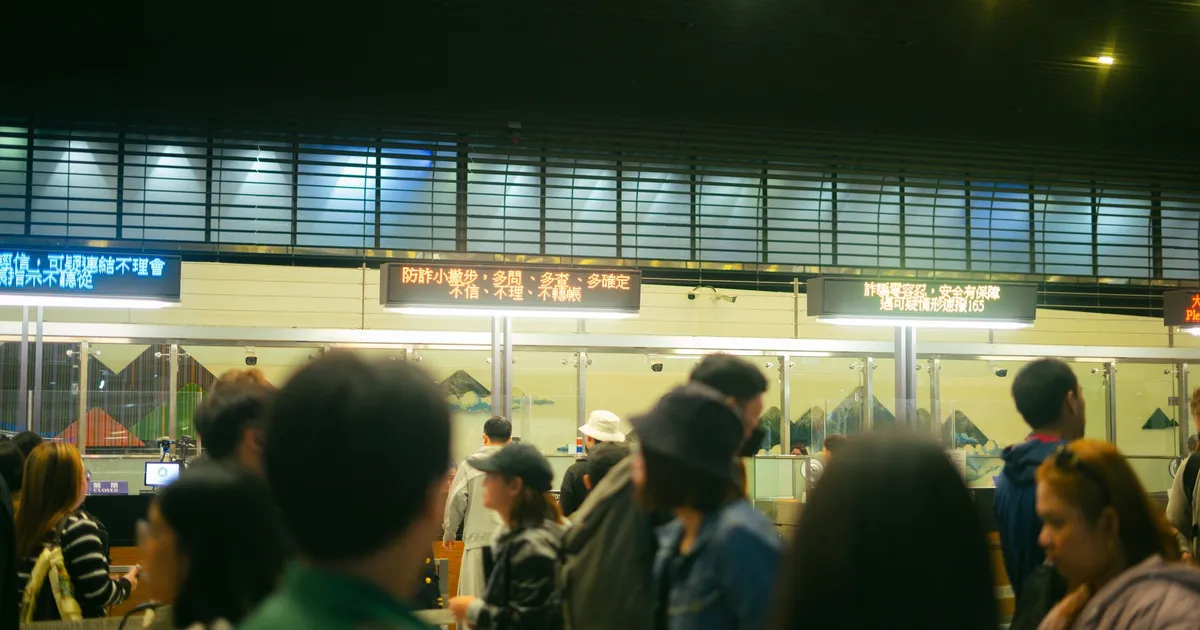


For twenty years, the overland hop from Bangkok to Siem Reap was one of Southeast Asia's most-travelled backpacker routes: a bus to Aranyaprathet, a walk across at Poipet, a shared taxi to Angkor. As of August 2026, that route does not exist. Thailand closed its land checkpoints along the Cambodian frontier in June 2025 during a serious border dispute, and they have stayed closed through more than a year of diplomatic stalemate. If your itinerary assumes you can cross by land, it needs rewriting.
The Short Answer, as of August 2026
Every official land crossing between Thailand and Cambodia is closed to ordinary travellers. There is no tourist crossing point, in either direction, at any hour. Occasional brief openings have been authorised for narrowly defined humanitarian purposes, such as allowing nationals to return home, and these are not available to visitors and are not announced in advance in any usable way.
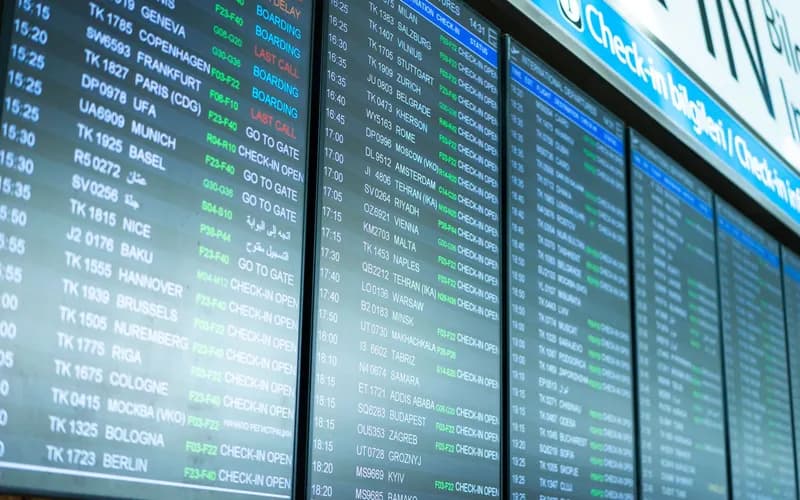
Air travel between the two countries is unaffected and running normally. Flights between Bangkok and both Phnom Penh and Siem Reap operate on full schedules.
Some travel websites still publish opening hours for Poipet-Aranyaprathet and other checkpoints. Those pages are stale. Treat any source that does not carry a recent date and a named official statement as unreliable on this subject.
One request. Up to five tailored proposals.
Skip contacting agencies one by one — share your trip once and let up to five trusted Thailand agencies come to you. Free, with no obligation.
Get my free quotesHow We Got Here
The Thailand-Cambodia frontier has a long history of contested demarcation, most famously around the Preah Vihear temple, where the dispute has produced periodic military standoffs since the 1950s. The current closure grew out of a border incident in mid-2025 that escalated into armed confrontation and a collapse in bilateral relations.
Thailand shut all of its checkpoints unilaterally in June 2025. What began as a security measure hardened into a policy position, and the closure has since outlasted a change of Thai government, an election, and repeated appeals from border-province business associations. Estimates of lost cross-border trade run to several billion US dollars.
Which Crossings Are Affected
All of them. The list includes every crossing a traveller might previously have used:
- Aranyaprathet (Sa Kaeo) to Poipet, the main Bangkok-to-Siem Reap route.
- Hat Lek (Trat) to Cham Yeam, the coastal route toward Koh Kong and Sihanoukville.
- Ban Pakard and Ban Laem (Chanthaburi) to Pailin and Daung, the quieter routes into western Cambodia.
- Chong Chom (Surin) to O'Smach and Chong Sai Taku (Buriram), the northeastern crossings.
International bus operators that ran through services, including the well-known Bangkok-to-Phnom Penh coaches, suspended those routes and have not restarted them.
Get matched with up to 5 trusted Thailand agencies
- Free
- No obligation
- Up to 5 agencies
What the Thai Government Has Said
The position has been stated repeatedly and in unusually blunt terms. Prime Minister Anutin Charnvirakul has said there will be no reopening until Cambodia no longer poses a threat to Thailand, that there has been no diplomatic coordination toward reopening, and that any process would have to proceed step by step. He has also indicated that the final say on reopening rests with the military rather than the civilian cabinet.
In May 2026 the prime minister publicly dismissed an audio clip circulating online that claimed a reopening was imminent, saying it had been generated by artificial intelligence, and restating that there would definitely be no reopening. That episode is worth remembering: this is a topic that attracts rumour, and rumour travels faster than correction.
For planning purposes, the reasonable assumption is that the border stays shut for the foreseeable future, and that any reopening will be partial, conditional and slow.
Flying Instead: The Practical Routing
At a glance
- Land crossings
- All closed to travellers (both directions)
- Closed since
- June 2025
- Open alternative
- Flights Bangkok-Siem Reap and Bangkok-Phnom Penh (~1 hour)
- Humanitarian openings
- Rare, not available to visitors
- As of
- October 2026, no reopening announced
Flying is the only realistic option, and it is not a hardship.
Bangkok to Siem Reap is served by several carriers, including Thai AirAsia, Bangkok Airways, Thai Airways and Air Cambodia, with well over two hundred flights a week between them as of August 2026. Flight time is around an hour. Bangkok to Phnom Penh is similarly well served. Both Suvarnabhumi and Don Mueang have departures, so check which airport your booking uses before arranging ground transport.
Practical points:
- Book direct rather than through a third-party aggregator if you might need to change dates. Regional carriers handle their own changes far more easily.
- Allow a proper connection buffer if you are transiting Bangkok. Suvarnabhumi immigration queues at peak hours are substantial.
- Siem Reap's airport is the newer Siem Reap-Angkor International, roughly forty to fifty minutes from the town centre, not the old in-town airfield. Budget for the transfer.
- Fares rose after the closure removed the cheap overland alternative. Book earlier than you would have in 2024.
If you are working with a Thai operator to build a multi-country itinerary, raise the border question at the quoting stage. The agencies we list for Thailand deal with this weekly and will have current routing knowledge that no article can match for freshness.
The Paperwork on Both Sides
Because you are now flying rather than walking, the documents change slightly.
Entering Cambodia. Most visitors need a visa, obtainable as an e-Visa online in advance. Separately, the Cambodia e-Arrival card is mandatory for air arrivals and must be submitted online within the seven days before your flight. These are two different things and travellers regularly complete one and forget the other.
Re-entering Thailand. You will need to complete the Thailand Digital Arrival Card again for each entry, and your permitted stay resets according to whatever entry route applies to your nationality. If you were using a Cambodia trip as a way of resetting a Thai stay, note that the calculus has changed now that it involves two flights rather than a bus. Our explainer on Thailand's 2026 entry rules covers the arrival card, the visa-exemption period and the associated fees.
Check your travel insurance too. Some policies exclude claims arising in areas subject to a government advisory against travel, and parts of the Thai-Cambodian border zone are covered by such advisories.
Routing Through Laos or Vietnam
A minority of travellers want to keep the trip overland on principle. It can be done, but be clear-eyed about the cost.
The realistic land-and-rail options run north through Laos or east through Vietnam, both of which require a substantial detour and at least one flight to close the loop into Cambodia, since Laos-Cambodia and Vietnam-Cambodia land crossings are open but a long way from Thailand. Adding Vientiane or Ho Chi Minh City to a Bangkok-to-Siem Reap journey typically costs two to three extra days and a few hundred dollars once accommodation is counted.
If you were going to visit Laos or Vietnam anyway, this is not a detour at all, it is a better itinerary. Our guide to travelling Thailand overland covers the northern and southern crossings that remain open and straightforward.
What This Means Inside Thailand
The closure has consequences well beyond the checkpoint itself. Sa Kaeo, Surin, Buriram, Chanthaburi and Trat all built parts of their local economies on cross-border trade and traffic, and all have felt the loss. Border markets that were day-trip destinations for Thai and international visitors have closed or shrunk drastically.
For a traveller, the practical effect is that the eastern provinces are quieter than they have been in years. That is a mixed thing: less commerce, fewer services in the immediate border strip, but also a genuinely uncrowded run down the eastern seaboard. Our profile of Chanthaburi and the slow east describes a province that remains entirely worth visiting on its own terms, provided you do not plan to exit through it.
Safety Near the Border
This part deserves plain language. Several Western governments maintain advisories against travel to areas within a defined distance of the Thai-Cambodian border, in some cases up to fifty kilometres, on the grounds of military activity and landmine contamination. Landmines are not a historical footnote here; there have been injuries in the disputed zones during the current dispute.
Practical guidance:
- Do not go looking at the border. There is nothing to see and the risk is real.
- Stay on made roads and marked paths anywhere in the frontier provinces.
- Read your own government's current advisory before travelling in Sa Kaeo, Surin, Buriram, Si Sa Ket or the border districts of Trat and Chanthaburi.
- Do not attempt an unofficial crossing under any circumstances. Beyond the legal consequences, the terrain itself is dangerous.
The interior and coastal parts of these provinces, including the towns and the beaches, are not the areas the advisories refer to and are normal places to travel.
How to Keep Yourself Updated
Watch out
Border status can change with little notice, and reopening rumours surface often and are usually false. Never build a plan around a land crossing or attempt an unofficial one - confirm the current status with your own government's travel advisory and official Thai and Cambodian sources before you travel.
Rumours of imminent reopening surface every few weeks and are almost always wrong. Use primary sources:
- Your own foreign ministry's travel advisory page for Thailand and Cambodia.
- The Royal Thai Government and Ministry of Foreign Affairs announcements.
- Established Thai and Cambodian news outlets rather than aggregator travel blogs.
If you are within a month of departure and the border matters to your plan, raise it during the planning process with whoever is arranging your trip, and get the routing confirmed in writing.
What to Do Next
- Assume the land border is closed and build your itinerary on that basis.
- If Thailand and Cambodia are both on your route, book the Bangkok-Siem Reap or Bangkok-Phnom Penh flight early, and check which Bangkok airport it uses.
- Apply for the Cambodian e-Visa in advance, and complete the Cambodia e-Arrival card within seven days of your flight.
- Complete a fresh Thailand Digital Arrival Card for your return leg.
- Check whether your insurance excludes areas under a government travel advisory, and adjust if necessary.
- Keep the border provinces on your route only for what they offer in themselves, not as an exit.
- Re-check your own government's advisory in the week before you fly, and again if you hear a reopening rumour.
- Consider whether a Laos or Vietnam leg would make a better trip than a Cambodia leg at all this year.
Frequently Asked Questions
Can I cross from Thailand to Cambodia by land right now?
No. As of August 2026 all official land crossings between the two countries are closed to travellers, in both directions, and have been since June 2025. Websites still listing opening hours for Poipet or Hat Lek are out of date.
Is Cambodia itself safe to visit?
The interior of the country is operating normally. Phnom Penh, Siem Reap and Angkor, Battambang, Kampot, Kep and the southern islands are all functioning tourist destinations. The advisories concern the frontier zone with Thailand, not the country as a whole. Check your own government's current guidance before you book.
How much does flying cost compared with the old bus route?
Considerably more in absolute terms, though it is still a short regional flight. Fares from Bangkok to Siem Reap start in the region of a hundred US dollars return when booked in advance and rise steeply close to departure. The overland route used to cost a fraction of that, which is precisely why it was so popular.
Will the border reopen soon?
Nobody credible is saying so. The Thai prime minister has repeatedly ruled it out pending a change in the security situation, and has said the decision rests with the military. Plan on the basis that it stays shut, and treat a reopening as an unexpected bonus.
Does this affect the Thailand-Laos or Thailand-Malaysia borders?
No. Those crossings are unaffected and operating normally, including the rail link north into Laos described in our piece on the Bangkok to Vientiane train. Only the Cambodian frontier is closed.
I already booked a bus ticket from Bangkok to Siem Reap. What now?
Contact the operator for a refund; through services on that route were suspended and reputable companies have been refunding. Then book a flight. If you booked through a third-party marketplace, escalate through the platform rather than the bus company.
Can I still visit the Thai side of Preah Vihear or the border temples?
Access to the disputed temple areas has been restricted, and several sites in the frontier zone are closed to visitors. Given the advisories in force, this is not the year to build an itinerary around them. Phanom Rung and the other major Khmer-era sites well inside Thailand remain open and are unaffected.