

Chanthaburi does not announce itself. There is no airport, no strip of beach bars, no single monument that lands on the cover of a guidebook. What there is instead is a kilometre of century-old shophouses leaning over a slow brown river, the largest Catholic cathedral in Thailand a footbridge away, and a gem trade that has quietly moved a serious share of the world's coloured stones through a handful of narrow lanes for generations. Chanthaburi sits four hours from Bangkok on the road to the eastern islands, and almost every traveller drives straight past it. That is exactly why it rewards the few who stop.
Where Chanthaburi Sits, and Why It Stayed Quiet
The province occupies Thailand's eastern seaboard, roughly 245 kilometres from Bangkok, wedged between Rayong's resort beaches to the west and Trat's ferry piers to the east. Almost all the traffic on that road is going somewhere else: to Koh Chang, to Koh Kood, to the Cambodian frontier. Chanthaburi has no commercial airport and no useful rail link, so it never built the arrival infrastructure that turns a Thai town into a destination.
It also rains here. Chanthaburi is among the wettest provinces in the country, and the southwest monsoon delivers serious water from May through October. That is inconvenient for a beach economy and excellent for fruit trees, which is a large part of why the province looks the way it does.
The history is layered in a way few Thai provincial capitals are. King Taksin regrouped his forces here after the fall of Ayutthaya in 1767. France occupied the town from 1893 to 1905 following the Paknam incident, leaving an administrative and architectural residue that has never quite faded. Vietnamese Catholic families arrived in successive waves over more than two centuries. The result is a small city, around 30,000 people in the municipality itself, carrying far more history than its size suggests. If you are assembling a route that deliberately avoids the crowds, it belongs on the same list as the places in our guide to Thailand off the beaten path.
One request. Up to five tailored proposals.
Skip contacting agencies one by one — share your trip once and let up to five trusted Thailand agencies come to you. Free, with no obligation.
Get my free quotesThe Waterfront: A Kilometre of Shophouses
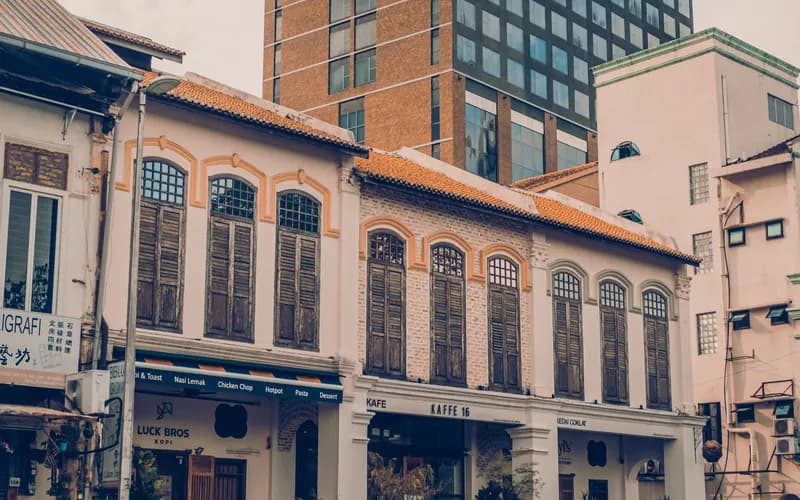
The Chanthaboon Waterfront Community is the reason most people who know about Chanthaburi come at all. It runs roughly one kilometre along the west bank of the Chanthaburi River, lined with timber and stucco shophouses in Sino-Portuguese, Thai and Vietnamese styles, some of them close to 150 years old.
What makes it worth your time is not the architecture alone. Since the mid-2000s the street has been the subject of a resident-led conservation effort rather than a top-down redevelopment, and it shows. There is a small learning house explaining the restoration work, but there is also laundry hanging over the water, an elderly man repairing a bicycle in a doorway, a family shrine with fresh incense. People still live here. It has not been hollowed out into a set.
The honest caveat: you can walk the whole kilometre in twenty minutes. Its value is in repetition, not coverage. Walk it at seven in the morning when the coffee shops open and the light comes flat off the river. Walk it again at dusk when the swifts come out. Sit somewhere with a drink in between. Treat it as a place to be rather than a sight to clear, and it becomes the best hour of your day, twice a day.
The Cathedral and the Vietnamese Thread
Cross the footbridge to the east bank and you reach the Cathedral of the Immaculate Conception, the largest Catholic church in Thailand. The present building dates from 1909, the fifth church raised on the site, and it is unmistakably French Gothic: twin spires, pointed arches, stained glass, a nave that feels transplanted from northern France and then quietly rethought for a tropical climate.
The congregation behind it is Vietnamese in origin. Catholic families fleeing persecution in Vietnam and Cambodia settled along this river from the eighteenth century onward, with further arrivals in the 1940s and 1950s. Their descendants shaped the neighbourhood, and you can taste it. Look for rice-paper rolls, for kanom bueang yuan, the crisp yellow crepe folded over shredded coconut and prawn, and for noodle soups that sit at a slight angle to the standard Thai versions.
It is a working parish, not a monument. Dress as you would for any place of worship, keep your voice down, and if a Mass is in progress either join it properly or come back later.
Get matched with up to 5 trusted Thailand agencies
- Free
- No obligation
- Up to 5 agencies
The Gem Trade: Watch, Do Not Speculate
On Friday, Saturday and Sunday, the lanes off Si Chan Road fill with folding tables, tweezers, loupes and small folded paper packets. This is Talad Ploy, one of the most important coloured-stone trading floors in Asia, and it is startlingly unglamorous. Men in polo shirts tip sapphires onto white paper, hold them to the light, argue in three languages, and hand over cash.
Thailand became a global centre for the heating, cutting and grading of ruby and sapphire, and Chanthaburi is the heart of that industry. The local mines that started it all are largely worked out; today's rough arrives from Madagascar, Mozambique, Sri Lanka, Tanzania and Australia to be transformed here and sold on.
Be clear about your role. This is a wholesale market between professionals who have spent decades learning to read a stone in a second. As a visitor you are not going to out-trade them, and you should not try. Watch, ask polite questions, and if something small appeals to you, buy it as an object you like rather than an investment. Treat any suggestion that you could buy gems here and resell them at a profit at home as the opening line of a scam, because in Thailand that is exactly what it has been for decades. If you want a cutting workshop visit arranged properly, with a translator and a host who has agreed to it in advance, go through one of the vetted operators working in Thailand rather than a man who approaches you on the street.
Durian Country: April to July
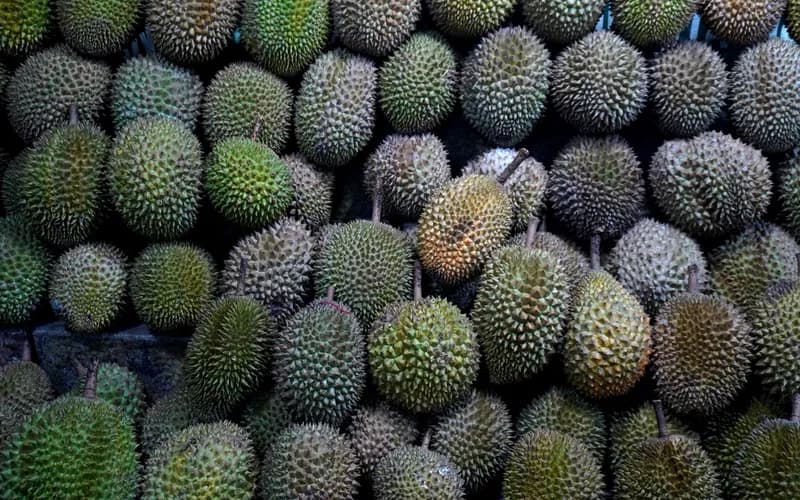
Chanthaburi is Thailand's largest durian-producing province, and in season the whole place smells of it. Rambutan, mangosteen and longkong follow much the same calendar. The fruit season runs roughly from April into July, with the peak usually falling in May and June.
Orchards in the hills outside town open for buffet-style visits during the peak: a fixed price, a plastic table under the trees, and as much fruit as you can manage. It is a genuinely local activity, priced for Thai weekenders rather than tour groups, and it is one of the better food experiences in the country if you have any tolerance for durian at all.
Learn two or three cultivar names before you go. Monthong is the export standard, mild and creamy. Chanee is stronger and more assertive. Kan Yao is the connoisseur's fruit, and priced accordingly. Prices swing hard with Chinese export demand, so what you pay in a given week is a real-time reading of a trade route. Note also that most hotels ban durian in the rooms, and they mean it.
Waterfalls, Mangroves and a Sacred Mountain
Namtok Phlio National Park lies about 14 kilometres from town: a short forest walk to a wide waterfall pool thick with soro brook carp, a protected species that visitors feed. A stone chedi and a small pyramid raised by King Chulalongkorn stand nearby, memorials to a queen who drowned in the river. It is busy on Thai weekends and near-empty on a Tuesday morning.
Khao Khitchakut National Park is the province's strangest and most compelling site. A pilgrimage route climbs to a vast boulder and a Buddha footprint near the summit, and it opens only for a limited season each year, traditionally from Makha Bucha in February through to roughly April, closing afterwards so the mountain can recover. During that window it is thronged, often through the night, with Thai pilgrims. Outside it, the trail is simply shut. Check the current dates before building a trip around it, because the schedule is set annually and can shift. Seasonal closures like this are becoming the norm rather than the exception, as our piece on how Thailand's national parks are changing sets out.
Kung Krabaen Bay, down on the coast, has a long mangrove boardwalk through a royal development project, with crab-eating macaques, mudskippers and a decent chance of kingfishers early in the day.
The Coast: Chao Lao, Kung Wiman and the Quiet Bays
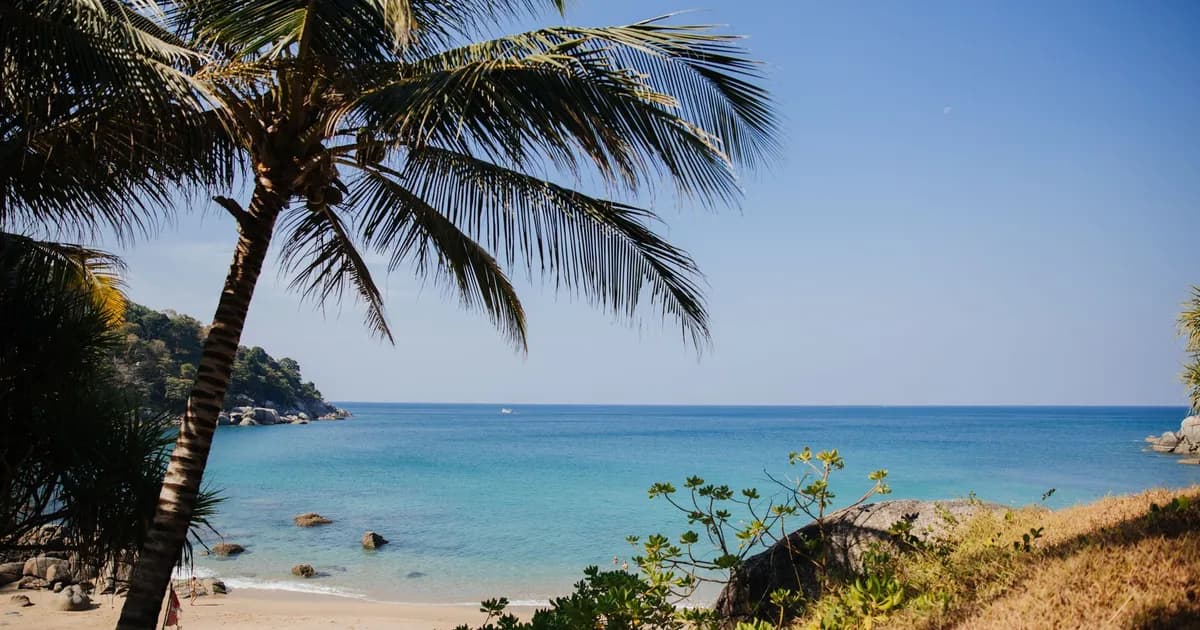
Chanthaburi's beaches are not Andaman postcards, and pretending otherwise sets you up for disappointment. The sand at Chao Lao and Kung Wiman is gold-brown, the Gulf water is warm and often cloudy, and the sea does not glow turquoise. What you get instead is a working coastline: seafood shacks on stilts, squid boats, families from Bangkok on Sundays and almost nobody midweek.
Laem Sing, at the river mouth, is the most atmospheric stop. It is a fishing settlement with the remains of French-era buildings, including a squat red-brick block that locals still call the red building, which served as a prison during the occupation.
Go on a weekday. Eat where the boats land. Do not book three nights on the beach expecting Krabi. Book one, and spend the rest of your time in town.
What to Skip
Chanthaburi has a marine park on the coast road that runs captive dolphin shows. We would not send anyone there. The welfare case against performing cetaceans is settled, and there is nothing in that stadium that justifies it. The same reasoning we apply to elephant venues in our guide to choosing an ethical elephant sanctuary applies exactly here.
Skip the gem investment pitch, as above. And skip the idea of Chanthaburi as a day trip from Bangkok. Eight hours in a vehicle for four hours in a town is the precise opposite of what this place is for.
How Long to Stay, and How to Get Around
Three nights is the minimum that makes sense; four or five if the fruit is in season and you intend to eat properly. Buses leave Bangkok's Ekkamai and Mo Chit 2 terminals through the day and take four to five hours depending on how long it takes to clear the city. Minivans are faster and considerably less comfortable. Coming the other way from the islands, Trat is about ninety minutes east.
In town, everything in the historic core is walkable, and pleasantly so. For the parks and the coast you will want a rented motorbike, a car, or a songthaew hired by the half-day, which any guesthouse can arrange. Rain gear is not optional between May and October, and a dry bag for a phone is a sensible five-dollar purchase. The wider mechanics of moving between provinces are covered in our guide to getting around Thailand.
What to Do Next
- Decide your season. April to July for fruit and heat; November to February for dry, cooler days and no durian; avoid August and September unless you genuinely like rain.
- Book three nights in a restored shophouse or a small hotel within walking distance of the waterfront, rather than out on the highway.
- Take a morning bus from Ekkamai or Mo Chit 2 and arrive with the afternoon still in front of you.
- Walk the waterfront twice on your first full day, once early and once at dusk, before you do anything else.
- Give the gem lanes a Friday, Saturday or Sunday morning. Bring curiosity and no wallet.
- Hire transport for one full day and combine Namtok Phlio, Kung Krabaen Bay and a late seafood lunch at Chao Lao.
- If your dates fall between February and April, check the current Khao Khitchakut pilgrimage schedule before committing to it.
- Continue east to Trat and the islands rather than doubling back to Bangkok.
Frequently Asked Questions
Is Chanthaburi worth visiting if I only have two weeks in Thailand?
Probably not, and we would rather say so. On a first two-week trip, the standard triangle of Bangkok, the north and one island will use your time better. Chanthaburi earns its place on a second or third visit, on a slow eastern loop, or when you want a few days of ordinary Thai provincial life between longer stops.
When is the best time to visit Chanthaburi?
November to February gives the driest, most comfortable weather. April to July gives you the fruit season, which is the province's real signature, at the cost of heat and the first monsoon rains. August to October is genuinely wet, and while the countryside is at its greenest, outdoor plans will be repeatedly rearranged by weather.
Can I cross into Cambodia from Chanthaburi?
Not at present. The province borders Cambodia, but Thailand closed its land checkpoints along the whole frontier in mid-2025 and they have remained shut through 2026. Anyone planning a Thailand-to-Cambodia overland leg should read our update on the closed Thailand-Cambodia land border and plan to fly instead.
Should I buy gemstones at the Chanthaburi market?
Only small, inexpensive stones you like the look of, and only if you accept that you are paying a tourist's price for an object rather than making an investment. Serious buying requires expertise you do not have on a weekend. Any pitch involving resale profit abroad is a scam.
How do I get from Bangkok to Chanthaburi without a car?
Public buses run from both Ekkamai and Mo Chit 2 terminals through the day, take four to five hours, and cost a fraction of a private transfer. Minivans cover the same route faster. There is no practical train and no commercial flight.
Is Chanthaburi a good base for visiting Koh Chang?
It works as a stop on the way rather than a base. Trat, roughly ninety minutes further east, is the actual gateway to the ferry piers. Spend your Chanthaburi nights in Chanthaburi, then move on.
Do I need to speak Thai here?
More than in Bangkok or Chiang Mai, yes. English is limited outside a handful of cafes and guesthouses on the waterfront. A translation app, a few polite phrases and some patience will carry you through comfortably, and the effort is noticed and appreciated.