
In Thailand, food is not something you fit around the sightseeing — it is the sightseeing. No other country makes its national identity so deliciously, democratically available, from a 60-baht plate of noodles on a plastic stool to a three-Michelin-star tasting menu built on the same flavours. This guide maps the dishes, the four regional cuisines, the Michelin scene, and exactly where to eat — because the best way to understand Thailand is to eat your way slowly across it.
Why Thailand Is One of the World's Great Food Destinations in 2026
Thai cuisine sits permanently near the top of every global ranking, and for once the hype is earned. Its genius is balance: the way a single bowl of tom yum holds sour, spicy, salty, and sweet in tension, or the way a green papaya salad can be pounded to your exact tolerance for chilli. It is a cuisine of fresh herbs, fermented depth, and fearless heat, refined over centuries by influences from China, India, Persia, Myanmar, and Laos, yet unmistakably itself.
What sets Thailand apart from almost anywhere else is that this quality runs all the way down. The greatest meals of a trip are as likely to come from a wok on a street corner as from a starred dining room — and in 2026, the Michelin Guide itself agrees, awarding a star to a humble Bangkok street stall and three stars to the country's finest tables in the same breath. The era of treating Thai food as merely "cheap and cheerful" is long over; what has replaced it is one of the most exciting, accessible, and high-value food cultures on earth.
One request. Up to five tailored proposals.
Skip contacting agencies one by one — share your trip once and let up to five trusted Thailand agencies come to you. Free, with no obligation.
Get my free quotesThe Michelin Guide Thailand 2026: Street Stalls and Three Stars
The Michelin Guide Thailand 2026 recognised 468 dining venues and, for the first time, awarded the country a second three-star restaurant — a marker of how far the scene has climbed.
The starred tables
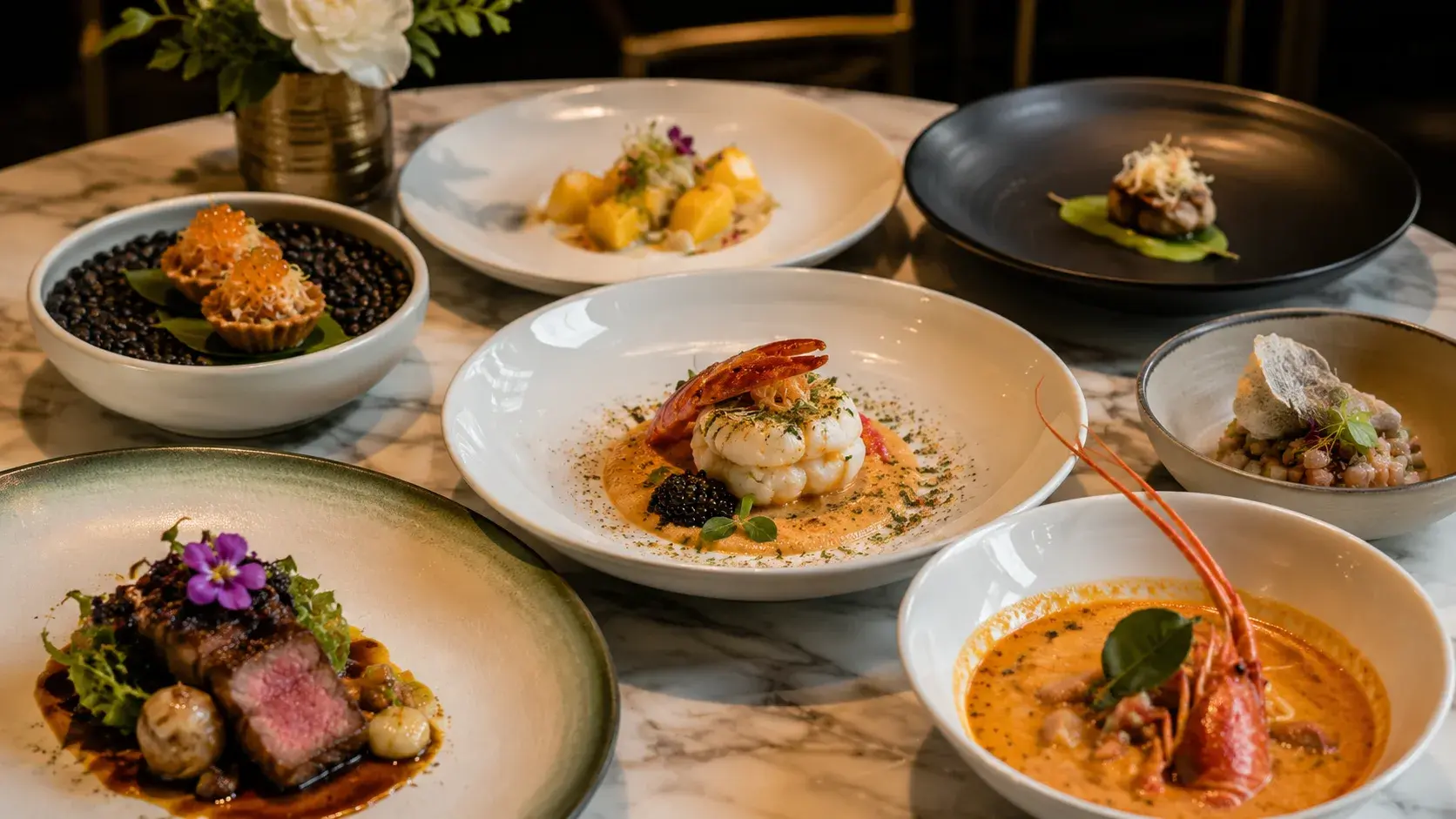
At the summit sit two three-star restaurants. Sorn, in Bangkok, holds Thailand's first-ever three Michelin stars: a refined celebration of southern Thai cooking by self-taught chef Supaksorn "Ice" Jongsiri, harmonising bold traditional flavours with meticulous technique. Joining it in 2026 is Sühring, the modern-German restaurant of twin chefs Thomas and Mathias Sühring, promoted to three stars this edition. Below them, the guide lists 8 two-star and 33 one-star restaurants, a deep bench of fine dining for a trip with a splurge or two built in.
Michelin street food you can actually afford
The most Thai thing about the guide, though, is the street food. Jay Fai has held a Michelin star since 2018 — an open-air stall on Bangkok's Maha Chai Road where 78-year-old chef Supinya Junsuta, ski-goggles on against the wok flames, cooks a crab omelette people remember for years. It remains one of the most affordable starred meals on earth. Beyond it, the guide's Bib Gourmand list (137 venues strong) is a treasure map of cheap brilliance: Jeh O Chula, whose tom yum Mama noodles draw queues only after 11pm, and Go-Ang Kaomunkai Pratunam, the pink-uniformed Hainanese chicken-rice institution serving a perfect few-dollar plate. This is the heart of Thai eating — world-class food at street prices — and exactly why a careful traveler eats extraordinarily well here on very little, as our Thailand budget guide lays out in full.
The Dishes That Define Thailand
A handful of dishes will anchor almost any trip — worth knowing not as a checklist but as a vocabulary.
- Pad thai — the famous tamarind-glazed rice noodles with egg, tofu or prawn, bean sprouts, and crushed peanuts. It became the national dish by design, standardised and promoted by the government in the late 1930s as a piece of nation-building, and it remains the perfect first bite.
- Tom yum goong — the definitive Thai soup, a hot-and-sour prawn broth singing with lemongrass, galangal, kaffir lime, and bird's-eye chilli. One spoonful explains the whole cuisine.
- Green and red curries (gaeng) — coconut-rich, herb-driven, and endlessly variable; the gentler, creamy end of the Thai spectrum.
- Massaman curry — mild, fragrant with cinnamon, cardamom, and star anise, its Persian-Muslim heritage traceable to traders at the 17th-century Ayutthaya court. Proof of how Thailand absorbs outside influence and makes it wholly its own.
- Som tam — pounded green-papaya salad, sour-salty-fiery, the beating heart of Isan cooking and adjustable from mild to genuinely dangerous.
- Khao soi — northern Thailand's glory: soft egg noodles in a golden coconut-curry broth, crowned with crispy noodles, pickled greens, and lime.
- Mango sticky rice (khao niao mamuang) — the dessert that needs no introduction, at its best in the April mango season.
Get matched with up to 5 trusted Thailand agencies
- Free
- No obligation
- Up to 5 agencies
A Country of Four Cuisines
The biggest misconception about Thai food is that it is one thing. In reality Thailand has four distinct regional cuisines, and understanding them is the key to eating the country well — it maps directly onto the regions in our where-to-go-and-when guide.
The North (Lanna)
The cooking of the old Lanna kingdom around Chiang Mai is milder, earthier, and more herbal, shaped by Burmese and Lao neighbours. Its emblems are khao soi, sai ua (a lemongrass-and-herb pork sausage), sticky rice eaten by hand, and an array of nam prik chilli dips with crisp vegetables. Less coconut, more smoke and bitterness — a quieter, more savoury Thailand.
The Northeast (Isan)
The spiciest and, for many, the most addictive regional cuisine. Isan food is built around sticky rice, som tam, larb (a zingy minced-meat salad), and gai yang (grilled marinated chicken), all driven by fermented fish sauce (pla ra), lime, and chilli. It is also the food you will find on street corners nationwide, because Isan migrants carried it everywhere.
The Central Plains
The Thailand most of the world knows: the balanced, refined cooking of Bangkok and the rice-bowl plains. Pad thai, tom yum, green curry, and royal-influenced dishes that prize harmony over heat. This is where Thai fine dining is anchored, and where most first encounters with the cuisine begin.
The South
The fiercest and most pungent of all. Southern cooking leans on fresh seafood, turmeric, and serious chilli heat, in dishes like gaeng tai pla (a pungent fermented-fish curry) and the Muslim-influenced massaman. It is the cuisine that earned Sorn its three stars — proof that regional Thai cooking can stand at the very summit of world gastronomy.
Where to Eat: City by City
Bangkok is the obvious capital of the scene — Michelin stars and street legends within blocks of each other. Eat a starred crab omelette at Jay Fai, chase it with chicken rice at Go-Ang, graze the stalls of Chinatown's Yaowarat at night, and book one fine-dining table to see where the cuisine is heading.
Chiang Mai is the north's table and arguably the best-value food city in the country. Khao soi is everywhere and rarely bad; the Sunday Walking Street market on Ratchadamnoen Road turns into a vast open-air kitchen each week; and the city has quietly become a serious specialty-coffee hub (more below).
The Isan table is less about restaurants than about roadside grills and markets — som tam pounded to order, sticky rice in bamboo baskets, gai yang turning over coals. Eating here, often as the only foreigner around, is one of the rewards of the off-the-beaten-path route in our hidden Thailand guide.
Phuket and the south are seafood country, with a UNESCO "City of Gastronomy" old town in Phuket and southern specialities — grilled squid, giant prawns, oyster omelettes, gaeng tai pla — that bring real heat. Island and beach towns increasingly organise night markets and seafood courts that are reliably good value.
Markets, Stalls, and the Art of Eating Where Locals Eat
The single highest-value habit in Thailand is the simplest: eat where Thai people eat. Night markets are the country's communal dining rooms — most run from roughly 5pm to midnight, and weekday evenings are calmer than weekends. A market dinner of three or four dishes, a fresh fruit shake, and a dessert can cost a few dollars and outshine almost any restaurant meal.
A few habits help. Look for the stall with the longest local queue and the narrowest menu — specialism signals quality. Don't fear the plastic stools; some of the best food in the country is served from them. And let the regional logic guide you: order som tam and grilled chicken from an Isan vendor, khao soi in the north, seafood in the south. The counterintuitive truth, exactly as elsewhere in the region, is that spending more rarely means eating better — the most memorable meals are usually the cheapest.
Thai Coffee and Sweets
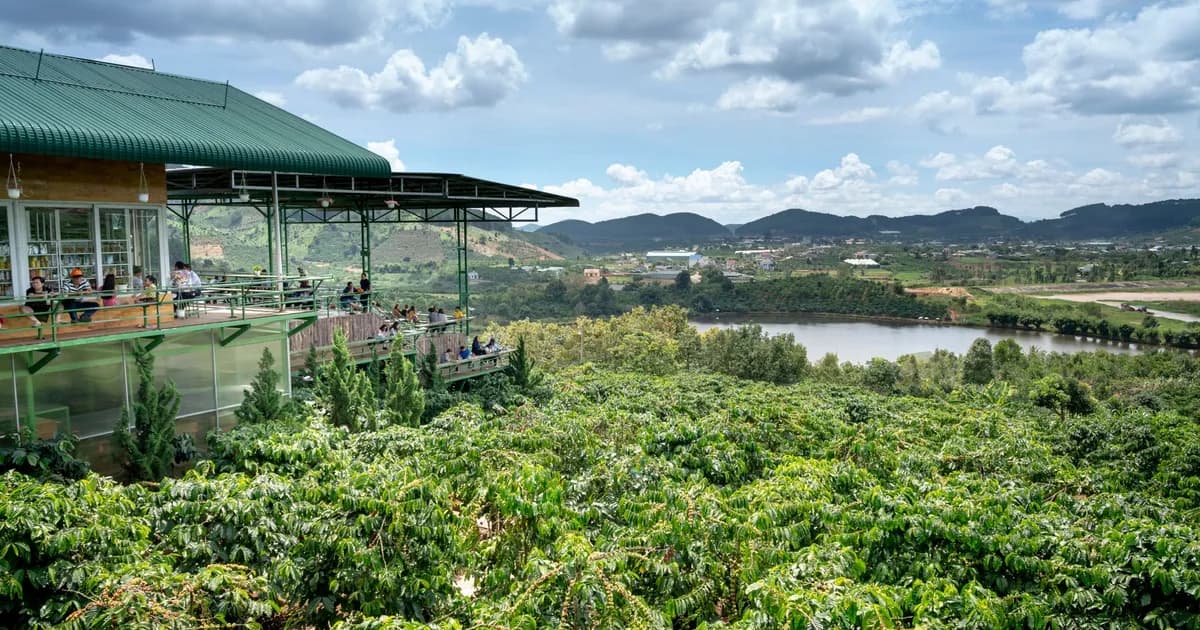
Thailand's drinks deserve their own paragraph. Traditional cha yen (sweet orange Thai iced tea) and oliang (dark iced coffee) are everywhere and cheap. But the bigger story is the rise of northern specialty coffee: the hills around Chiang Mai and Chiang Rai now grow and roast genuinely excellent Arabica, and Chiang Mai's café scene rivals any in Southeast Asia — a perfect, air-conditioned refuge in the heat. For something sweet, beyond mango sticky rice look for roti (griddled, banana-and-condensed-milk), khanom krok (coconut-rice pancakes), and the jewel-like Portuguese-influenced custards of old Bangkok.
How to Eat Thailand Well
Eating Thailand well is, in the end, the same as travelling it well: slowly, locally, and with curiosity rather than a checklist. Stay long enough in one place to find your regular noodle stall. Eat the food of the region you are actually in, not a generic "Thai" menu written for tourists. Spend a little on one or two standout meals — a starred table, a famous market stall — and let the rest be the cheap, perfect, everyday eating that is the real glory of the country.
This is the heart of slow travel, and the philosophy behind our slow travel charter. The local agencies in our certified network build food into their itineraries the way Thais experience it — by region, by season, and by the company of people who know exactly which stall is worth the detour. When you are ready to turn an appetite into an itinerary, our plan-your-journey page is the place to start.
Frequently Asked Questions
What food is Thailand most famous for?
Pad thai, tom yum goong, green and massaman curries, som tam (green papaya salad), khao soi, and mango sticky rice are the best-known dishes. But Thai food is deeply regional, and the country's real range only becomes clear once you eat across its four distinct culinary regions.
Is Thai street food safe to eat?
Generally yes — busy stalls with high turnover are often safer than quiet restaurants, because ingredients are fresh and dishes are cooked to order in front of you. Choose vendors with long local queues, eat freshly cooked hot food, and street food becomes one of the safest and best ways to eat in Thailand.
Which region has the best food in Thailand?
It depends on your palate. The north (Chiang Mai) is milder and herbal; Isan in the northeast is the spiciest and most beloved by locals; the central plains offer the balanced classics; and the south brings fiery seafood curries — so fierce and refined that a southern Thai restaurant, Sorn, holds the country's first three Michelin stars.
Does Thailand have Michelin-starred restaurants?
Yes. The Michelin Guide Thailand 2026 lists 468 venues, including two three-star restaurants (Sorn and Sühring), 8 two-star, and 33 one-star — plus 137 Bib Gourmand spots. Famously, the street stall Jay Fai in Bangkok has held a Michelin star since 2018.
How much does food cost in Thailand?
Very little for how well you eat. A street-food dish runs 40–70 baht (about $1.20–2), and a traveler eating mainly at stalls and local restaurants can eat very well on 300–450 baht ($9–14) a day. See our Thailand budget guide for the full breakdown.
What should vegetarians and vegans know?
Thai food is very accommodating, especially around the October Vegetarian Festival, but fish sauce, shrimp paste, and dried shrimp are widespread. Learn the phrase "jay" (strict vegetarian/vegan) and "mai sai nam pla" (no fish sauce), and you will eat richly across the country.
Ready to taste your way across Thailand? Explore our Thailand travel guides, plan around the regions and seasons with our where-to-go-and-when guide, and start building a trip with our network of certified local agencies on the plan-your-journey page.