Thailand's Coffee Highlands: Why the Farm Trail Is Becoming a Reason to Travel
For years, coffee in Thailand meant an iced drink in a mall or a sweet sachet at a roadside stall. That is changing in the north. In the high villages around Chiang Rai and Chiang Mai, a generation of growers and roasters has built a real specialty scene, and travellers have started to plan trips around it. The farm trail, once a pleasant afternoon between temples, is becoming a reason to travel in its own right.
This is an analysis, not a hype piece. The trend is real, but it is also young, uneven and sometimes oversold. Here is what is driving it, how it fits a slower way of travelling, what a visit costs, and where the honest limits are.
From opium alternative to origin story
The story of Thai Arabica is unusually political, and it explains why the hills feel the way they do. Coffee was introduced to Thailand in the 19th century, but the highland crop took off in the 1970s, when the government promoted it as an alternative to opium in the Golden Triangle. Plantings spread through villages around Doi Chang and Doi Tung, where communities of Akha, Lisu and others began to grow coffee instead of poppies.
The Doi Tung Development Project, begun in 1988 by the Mae Fah Luang Foundation, built livelihoods around coffee, macadamia nuts, handicrafts and gardens, and the area is now one of the best-documented examples of crop substitution in Southeast Asia. Doi Chang Coffee, in Mae Suai district, traces its commercial start to the early 2000s.
That history matters to travellers because it gives the trail a narrative. You are not visiting a theme park. You are visiting hills where coffee carries social weight, and where who owns the farm, who picks the cherries and who gets paid are real questions.
One request. Up to five tailored proposals.
Skip contacting agencies one by one — share your trip once and let up to five trusted Thailand agencies come to you. Free, with no obligation.
Get my free quotesWhy now: three forces behind the shift
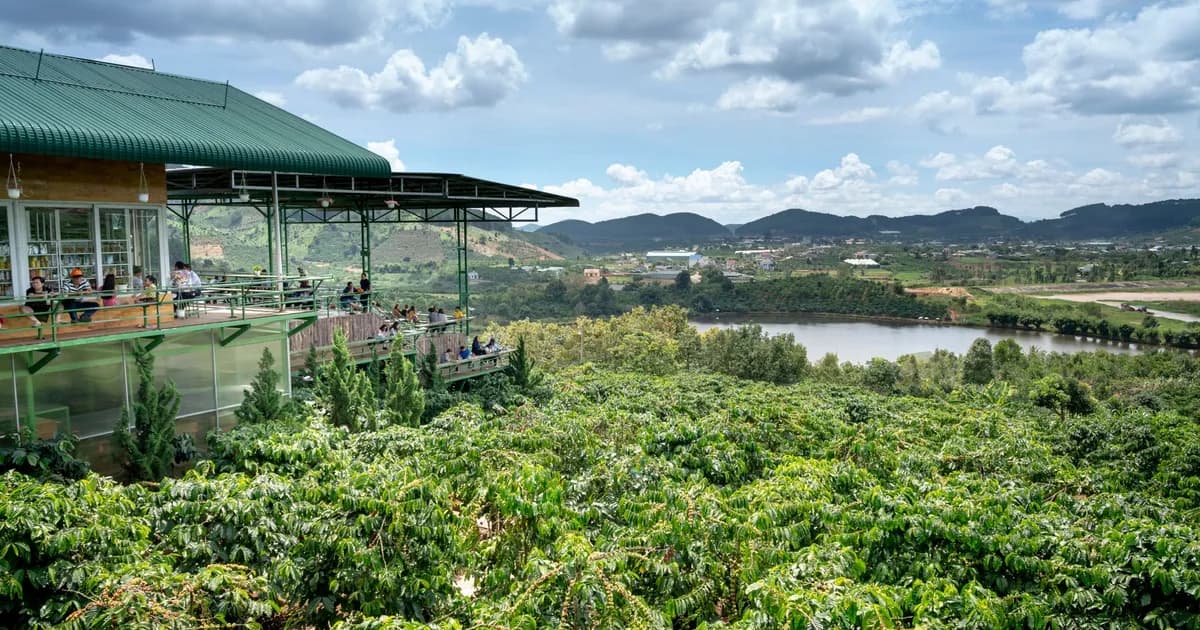
First, the market has matured. Arabica is grown mainly in Chiang Mai, Chiang Rai and Mae Hong Son, at altitudes of roughly 1,000 to 1,700 metres, and quality has risen as growers learned about processing. Washed, natural and honey methods now appear on cafe menus in Chiang Rai town, along with named farms and single-origin pour-overs. Specialty buyers in Japan, the United States and Europe are the main export markets for the best lots.
Second, domestic taste has caught up. Thais drink far more coffee than a generation ago, and young Thai travellers now seek out regional cafes the way European visitors seek out wine villages. That demand supports small cafes in places that were hardly on a map ten years ago.
Third, the wider tourism strategy favours it. Thailand has been steering visitors toward higher-value, lower-impact experiences in provinces beyond Bangkok, Phuket and Chiang Mai city, which we explore in our piece on the secondary-cities push. A coffee farm visit fits that agenda neatly: it spends money in villages, it is seasonal, and it rewards staying longer.
There is also a quieter reason the trend suits slow travel: coffee cannot be rushed. Cherries ripen unevenly, drying takes days, and a farm visit works best when you sit, taste and ask questions. A traveller who gives it half a day will usually leave with a better understanding of the hills than one who ticks off five viewpoints in the same time, and that is precisely the kind of depth the region can offer. It also spreads spending across several small businesses, from the grower to the driver to the cafe owner, rather than concentrating it in one place.
What a coffee trip actually looks like
The two best-known hubs are Doi Chang and Doi Tung, both in Chiang Rai province.
Doi Chang is in Mae Suai district, around 40 kilometres southwest of Chiang Rai city, and the drive takes roughly 1.5 to 2.5 hours depending on the road and the weather. Most visitors combine a village walk with a tasting at a farm or roastery. Organised visits commonly cost around 1,000 to 2,500 baht per person depending on transport and access, and guided coffee experiences more broadly range from about 500 to 3,000 baht or more.
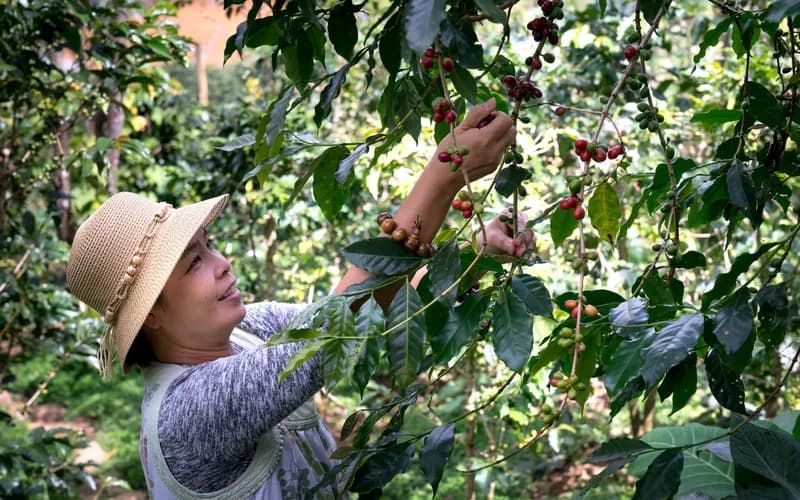
Doi Tung is the other pole. The development project's gardens, villa and viewpoints sit alongside coffee and craft production, and entry fees for the main sites are typically modest, though you should confirm them locally. It is a very different experience: more curated, more visitor-ready, and good if you want context as well as a cup.
You do not need to go far to taste the results. In Chiang Rai town, specialty cafes serve single-origin pour-overs at roughly 80 to 180 baht, and Doi Chang beans are sold in the hills at around 270 to 650 baht per bag depending on roast and size. Those are reported 2026 figures, and they move with the season and the shop.
Get matched with up to 5 trusted Thailand agencies
- Free
- No obligation
- Up to 5 agencies
The honest caveats
This trend has weaknesses worth naming.
Seasonality is real. The busiest and most rewarding months are November to February, which is the cool, dry season and the period when harvest and roasting activity is most visible. A mid-September visitor to one farm reported that the processing plant was inactive. If you come outside the season you may get a view and a cup, but not the working farm you imagined.
Distances are bigger than they look on a map. The two hubs are an hour or two apart by road, and public transport is indirect. A day trip is possible but rushed. Two days, one for each area, is more comfortable, and a driver or a rental car makes a big difference. If you plan to travel in this part of the country, our overview of Chiang Dao offers a gentler base in the western hills.
Not every village is a stage. Some homes and fields are working lives, not attractions. Ask before photographing people, workers or houses, and prefer tours run or co-owned by village residents. Our guide to trekking responsibly in northern Thailand covers the etiquette in more depth.
Climate is a long-term threat. Rising temperatures are a documented concern for northern Arabica, and growers face competition from Vietnam, Indonesia and Laos. The scene is promising, but it is not guaranteed to stay as it is.
Claims need a pinch of salt. You will see "single-origin," "organic" and "fair trade" on menus and bags. Some of these are meaningful, some are marketing. Ask who grew the coffee and where it was processed. A good cafe can answer in a sentence. The Doi Tung geographic indication, for instance, is reported to require shaded cultivation, hand-picking and same-day processing, which gives the label some substance.
A practical way to judge a place is to ask what you would be doing there if the coffee were not the draw. If the answer is walking in cool hills, eating well, meeting people who care about their work and sleeping in a quiet village, the trip is sound. If the answer is nothing, the farm is probably a stage set.
Pairing coffee with the north's calendar
Northern Thailand has a smoke season, usually peaking from roughly February to April, when agricultural burning degrades air quality. Coffee season sits almost entirely before it, which is another reason the cool months are the right time to go. Our analysis of how smoke season is redrawing the northern travel calendar explains how to plan around it.
The Chiang Rai Tea and Coffee Festival, held in August 2026 at Chiang Rai Rajabhat University, shows how seriously the province is promoting the sector. If you want to meet growers and roasters in one place, it is worth watching for next year's dates, but the cool season visit is still the best for the farms themselves.
How to visit without being a nuisance
- Book a small, local operator or a farm-run visit rather than a coach tour. Ask how much of the fee reaches the village.
- Call ahead between November and February to confirm tours, processing and opening hours. Hours at farms are commonly around 8:00 to 17:00, but check.
- Carry cash in baht, water and a light jacket. Mobile signal can be weak in the hills, so download an offline map.
- Leave early enough to descend before dark or bad weather, and do not drive after drinking.
- Buy beans from the farm or a cooperative instead of haggling. The prices are not high.
- Take your time. A morning walk through the plantation, a tasting, a village lunch and a slow afternoon will teach you more than a third viewpoint.
If you prefer to have the logistics arranged, our travel agencies directory lists operators who work with local communities.
What to Do Next
- Decide your season. Aim for November to February if you want to see active harvest and processing, and to avoid the northern smoke.
- Choose one base: Chiang Rai town for Doi Chang and Doi Tung, or Chiang Mai and Chiang Dao if you prefer the western hills.
- Give the trip two days and hire a driver or rent a car; mountain roads are slow and weather can change the schedule.
- Contact one or two farms or roasteries by message to confirm that they are open for visits and what they charge.
- Set a small budget for beans and cafe stops, and bring cash.
- Ask about the farm's story and who picks the cherries. Treat the answer as part of your trip.
Frequently Asked Questions
Where does Thailand grow its best coffee?
Arabica is grown mainly in Chiang Mai, Chiang Rai and Mae Hong Son provinces, at altitudes of roughly 1,000 to 1,700 metres. Doi Chang and Doi Tung in Chiang Rai are the best-known areas for visitors. Robusta is grown mostly in the south, around Chumphon and Surat Thani.
When is the best time to visit the coffee farms?
November to February is the most comfortable and the best time to see harvest and roasting. December and January are typically the coolest and driest months. Outside that window, some facilities may be quiet.
How much does a coffee tour cost?
Reported prices range from about 500 to 3,000 baht per person for guided experiences, with organised visits commonly around 1,000 to 2,500 baht depending on transport. Cafe pour-overs cost roughly 80 to 180 baht, and bags of beans about 270 to 650 baht. Prices change, so confirm before booking.
Can I visit without a car?
It is possible but slow. Public transport usually means a bus to a hub town and then a taxi or songthaew. A rental car or private driver is far more flexible. Motorbikes suit experienced riders in dry weather.
Is Thai specialty coffee actually good?
The best lots are very good and are exported to Japan, the United States and Europe. Quality varies, so look for cafes that name the farm, the process and the harvest, and taste before you buy a large bag.
Is it ethical to visit farms in hill-tribe villages?
It can be, if you go with operators who involve the village, pay fairly, and respect privacy. Ask before photographing people or homes, and avoid tours that treat residents as part of the scenery.
How does this fit with a slow-travel itinerary?
Very well. A farm trail rewards a longer stay in one region, supports small producers, and works best when you are not rushing between viewpoints.
Keep reading
More from the ground · Thailand