
The gap between good intentions and respectful behavior is rarely about ignorance — it is about specificity. A traveler who knows to remove shoes at a pagoda may still walk boots-first into a Tay stilt house altar room. Someone who would never photograph a church service without permission may raise a camera at a Dao ceremony without a second thought. As Vietnam's slower travel circuit expands into homestays in Ha Giang, Pu Luong, Sapa, and the Central Highlands, the situations that require cultural preparation have multiplied. This guide addresses them directly: what to wear, how to greet, when to remove shoes, how to handle a camera, and what to give — grounded in real contexts rather than vague goodwill. Vietnam officially recognizes 54 ethnic groups, each with distinct norms around space, ritual, and hospitality. Generic advice will only take you so far. What follows is situation-specific enough to be genuinely useful before you arrive at someone's door.
Dress: Pack One Outfit for Context, Not Just Climate
The most common friction point in rural Vietnam is clothing — not because travelers are careless, but because the rules shift by setting in ways that aren't always posted.
In pagodas and active temples, covered shoulders and knees are the standard expectation. Vietnam's national tourism authority describes this as the norm at spiritual sites nationwide, and major pagodas such as Bai Dinh in Ninh Binh and Tran Quoc in Hanoi display dress guidance at their entrances. Some provide shawls or sarongs for visitors who arrive underprepared. The heat makes this uncomfortable; that discomfort is worth accepting.
In ethnic minority villages and homestays, the threshold is slightly lower but still meaningful. Long shorts or light trousers and a T-shirt covering the shoulders work well during the day. For shared evening meals — especially in rooms with an ancestor altar — long, loose trousers or a skirt and a non-revealing top are more appropriate. Very short shorts, cropped tops, and going shirtless outside of rivers or private bathrooms are broadly considered disrespectful, even when no rule is written anywhere.
The practical solution is simple: pack one lightweight "village outfit" — linen trousers, a breathable long-sleeve shirt — kept separate from your city clothes. It weighs almost nothing and signals, without words, that you came prepared.
One request. Up to five tailored proposals.
Skip contacting agencies one by one — share your trip once and let up to five trusted Vietnam agencies come to you. Free, with no obligation.
Get my free quotesGreetings and Arrival Etiquette
A few spoken gestures go a long way. "Xin chào" (roughly: sin chow) is universally understood and appreciated. Adding "Cảm ơn" (thank you) and the appropriate address — anh for a younger man, chị for a younger woman, bác for an older person — signals genuine effort. Your guide can coach you on the right form before you arrive.
Handshakes are common with men in most contexts. With older women and elders, a small nod or slight bow with hands at your sides is often more natural and more respectful than extending a hand uninvited.
At homestay arrival, greet every adult present — not just the English speaker. Accept tea or water if offered; in rural Vietnam, hospitality rituals carry social weight. Leave your luggage near the entrance until your host indicates where to put it. Walking uninvited into sleeping areas or altar rooms with a large pack is one of the most common missteps, and one of the easiest to avoid.
- Greet all adults, not just your point of contact
- Accept offered tea or water
- Wait to be shown where to sleep, sit, and store bags
- Follow your host's lead on where to move through the house
Shoes and Indoor Spaces
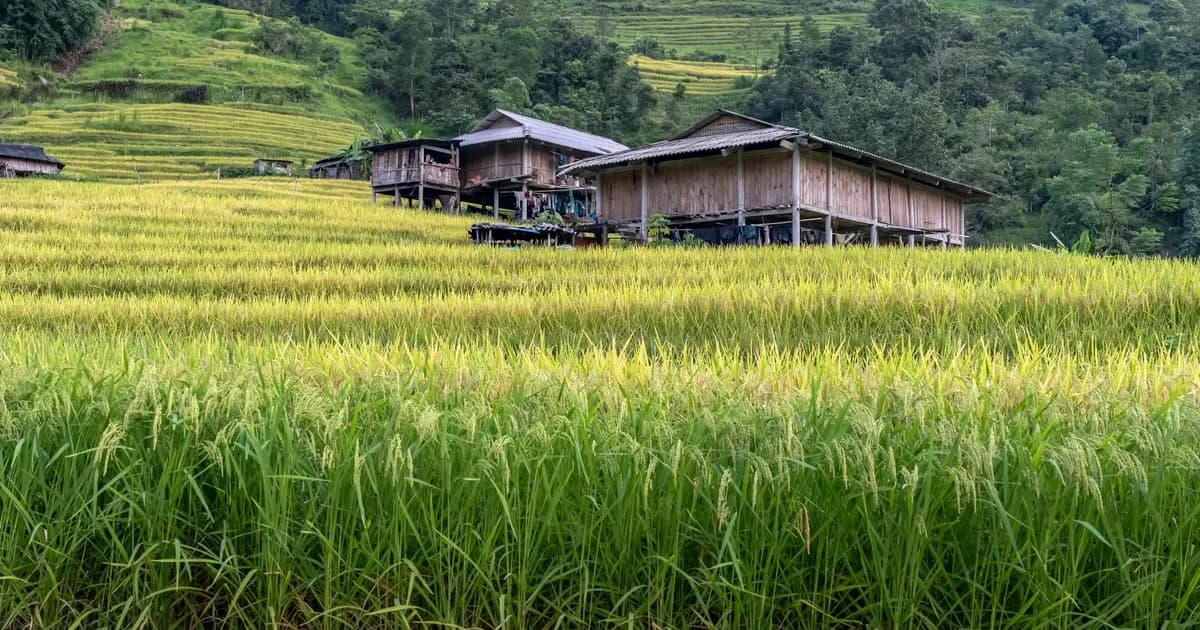
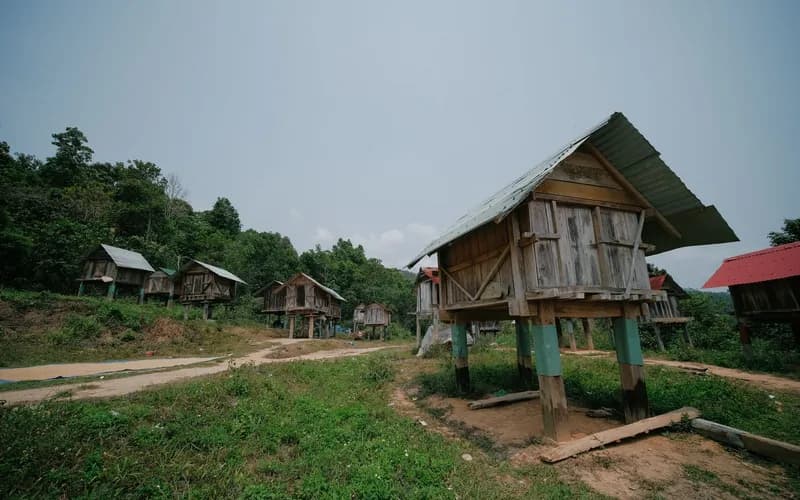
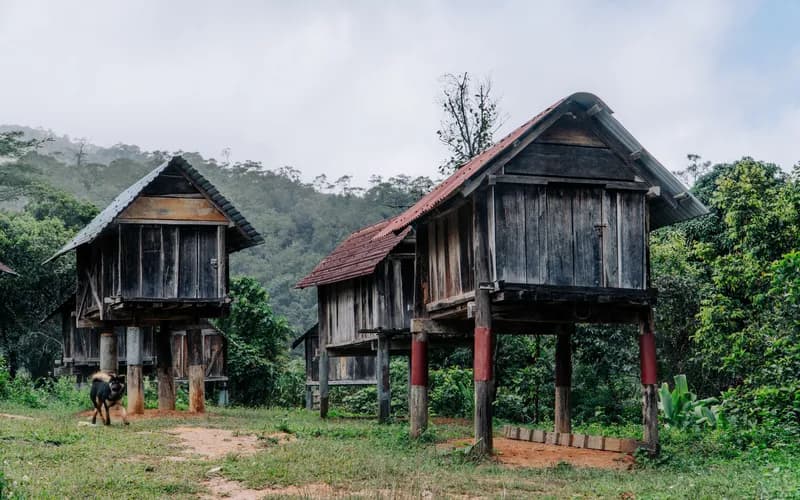
In most ethnic minority stilt houses — Tay, Thai, and many Hmong homes — shoes come off at the base of the stairs or at the threshold. This is not a posted rule; it is simply what everyone does. Watch where your host steps and mirror that pattern. It is more reliable than any general guideline.
The ambiguity tends to arise in semi-outdoor spaces: raised kitchens, covered corridors, communal meeting platforms. When in doubt, remove shoes. No host has ever been offended by a guest who took their shoes off unnecessarily.
At pagodas and village communal houses, you may be asked to remove shoes before stepping onto raised wooden platforms or entering the main hall. Some sites have clear signage; others rely on the example of other visitors. Look before you step.
Practical note: Bring easy on-off sandals and a pair of thin socks. If you prefer not to be barefoot on unfamiliar floors, socks are a clean and respectful middle ground.
Get matched with up to 5 trusted Vietnam agencies
- Free
- No obligation
- Up to 5 agencies
Photography: Consent Is the Practice, Not the Principle
The ethical case for asking before photographing people is well understood by most slow travelers. The harder question is how to do it across a language barrier without making the moment awkward for everyone.
For individual portraits: Make eye contact, smile, raise your camera slowly, and pause. A nod or returned smile is generally readable as consent. For elders, ask through your guide rather than gesturing alone — it shows the interaction is mediated by someone they trust.
For children: Many community-based tourism programs and responsible operators explicitly discourage close-up photographs of children without parental permission. The concern is not abstract — it relates to privacy, exploitation, and the way images circulate online without context or consent. Landscape shots that include children at a distance are generally less fraught than portraits.
For ceremonies and altars: Ask explicitly, through your guide, before photographing funerals, shamanic rituals, or active worship. Some communities welcome documentation from a respectful distance; others consider it a serious intrusion. There is no universal answer — which is exactly why you need to ask each time.
Drones require particular care. Flying near military installations, border areas, or pagodas without permission from local authorities is restricted under Vietnamese aviation regulations, and enforcement in northern border provinces has included confiscation of unregistered equipment. Check current Civil Aviation Authority guidance before bringing a drone into the highlands.
One practice that builds trust quickly: after a portrait session, show your subjects the images on your screen. Many people enjoy seeing themselves, and including them in that moment shifts the dynamic from extraction to exchange.
Gift-Giving, Tipping, and the Candy Problem
The instinct to bring gifts for village children is understandable. It is also, according to Vietnam's community-based tourism guidance and most responsible operators, counterproductive. Sweets distributed directly to children encourage begging, create dental problems, and establish a transactional dynamic that outlasts your visit. Cash given to individual children has similar effects.
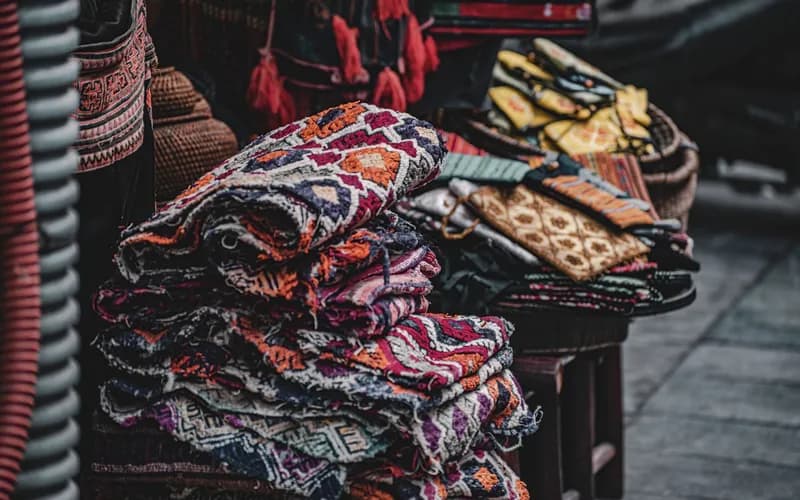
If you want to contribute to education or community welfare, ask your guide or host how to direct that support — whether through a school supply donation, a contribution to a community fund, or simply purchasing locally made products at fair prices. Weaving, honey, rice wine, and hand-dyed textiles are common in CBT villages and represent a more structurally sound form of generosity.
For hosts: Small, practical items from your home country — quality kitchen tools, printed photographs sent later — can be thoughtful. They are not expected. Paying the posted rate and buying local products is already meaningful support.
Tipping guides: On multi-day treks with local guides, a tip of roughly US$5–10 per person per day is considered appropriate when service is good. For homestay hosts, a discreet envelope with 20,000–50,000 VND per guest per night, left at the end of your stay, is a common and appreciated gesture — not a requirement, but a respectful one.
Navigating Rice Wine, Altars, and Shared Spaces
A few situations come up repeatedly in homestays and deserve direct guidance.
Rice wine (rượu): Sharing a shot is a genuine gesture of welcome. Refusing outright can read as cold. The standard approach: accept the first small cup, drink it or sip it, and then slow down gracefully. Placing your hand lightly over your cup, smiling, and saying "cảm ơn" is universally understood as a polite decline of a refill. Hosts who offer rice wine are not trying to get you drunk — they are including you. Respond in kind, then manage your own pace.
Ancestor altars: In many rural homes, the altar occupies a prominent place in the main room. It may look like a decorative shelf to an unfamiliar eye. Do not place bags, cameras, or personal items on or near it. Do not sit with your feet pointed toward it. Do not photograph it without asking. These are not obscure rules — they are the equivalent of not sitting on a church altar. The altar is the most sacred space in the home.
Shared meals and evenings: Some homestays are deeply immersive; others function more like quiet guesthouses. If you are unsure how much interaction is expected, follow your host's lead. Joining the family for the evening meal and staying for conversation is almost always welcomed. Retreating to your room immediately after eating can feel abrupt. You do not need to perform enthusiasm — genuine presence is enough.
What to Do Next
- Pack your village outfit now. One pair of light linen trousers and a breathable long-sleeve shirt covers temples, homestays, and shared meals. Decide before you pack, not at the guesthouse.
- Book through a CBT-aligned operator or co-op. Look for programs where local guides are employed at fair wages and a portion of fees goes to community funds. This is the single highest-leverage decision you make before arrival.
- Ask your guide one specific question before each village entry: what are the taboos in this particular home or community? Tay, Hmong, Dao, and Kinh households have different norms. Generic preparation only goes so far.
- Leave the drone at home or get proper clearance. If you plan to fly in northern highland provinces, research current Civil Aviation Authority requirements and get explicit permission from local authorities and your hosts.
- Redirect your giving. Decide before you arrive that sweets and cash go to community funds or local products — not directly to children. Brief yourself on this once and you will not have to make the decision in the moment.
- Show people their portraits. It takes ten seconds and changes the entire register of the interaction.
Frequently Asked Questions
Do I really need to cover my knees in the heat?
At active pagodas and temples, yes — this is a consistent expectation across Vietnam, and some sites will turn you away or offer a wrap if you arrive in shorts. In villages and homestays, the standard is slightly more relaxed during the day, but covered legs are expected for shared meals and any space with an altar. Light linen or cotton trousers breathe well enough to make this manageable.
How do I know when to remove my shoes?
Watch your host. In most stilt houses and rural homes, shoes come off at the base of the stairs or at the entrance threshold. When in doubt, remove them — no one is ever offended by that choice. Bring easy on-off sandals and thin socks so the process is quick and clean.
Is it disrespectful to decline rice wine?
Not if you do it gracefully. Accept the first cup, take a sip, and then slow down. Covering your cup lightly with your hand and smiling is understood everywhere. A flat refusal at the first offer can feel cold; a warm, gradual decline after participating is fine.
What should I bring as a gift for my homestay hosts?
Nothing is expected. If you want to give something, buy local products — weaving, honey, rice wine — at fair prices rather than bringing items from outside. Practical items from your home country can be thoughtful if chosen carefully. Avoid sweets or cash for children; if you want to support education, ask your guide how to direct that through the community rather than individually.
Can I photograph ceremonies and rituals?
Only with explicit permission, asked through your guide. Some communities welcome documentation from a respectful distance; others consider it a serious intrusion. Funerals, shamanic rituals, and active worship at altars require a direct question each time — there is no general rule that covers all cases.
How much should I tip a local guide on a multi-day trek?
US$5–10 per person per day is the range most commonly cited by responsible operators when service is good. For homestay hosts, a discreet envelope with 20,000–50,000 VND per guest per night at the end of your stay is a respectful gesture. Neither is mandatory, but both are appreciated in communities where tourism income is a meaningful part of household earnings.
What is the difference between a real CBT homestay and a tourist cultural village?
A genuine community-based tourism homestay involves a real family in their actual home, with income going directly to that household and a portion to community funds. A tourist cultural village — such as the Vietnam National Village for Ethnic Culture and Tourism near Hanoi — is a curated, semi-themed environment with reconstructed houses and scheduled performances. Both have value, but they require different expectations. In a real CBT homestay, you are a guest in someone's life. Behave accordingly.