
The turtles arrive without announcement. On certain nights between July and October, green turtles haul themselves up the dark sand of Bãi Cát Lớn, dig their nests, and return to the sea before dawn. No resort lighting guides them. No crowd waits. The beach belongs, as it has for millennia, to the animals.
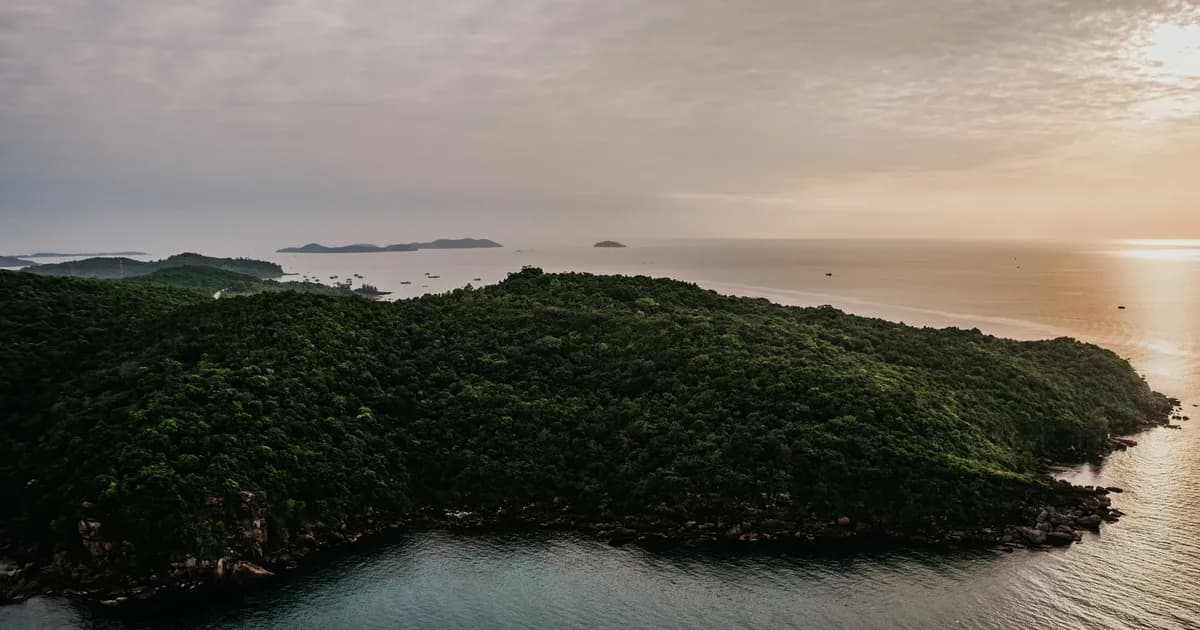
This is Con Dao at its most essential: a place where the natural world still sets the terms. The archipelago sits roughly 250 kilometres from Ho Chi Minh City, sixteen islands scattered across the South China Sea, and yet it occupies a different register entirely from Vietnam's busier coastlines. Around 83 percent of its land and sea is national park. Its small airport limits arrivals. Its history — a colonial prison complex that once held thousands of political prisoners — gives the landscape a gravity that no beach resort can manufacture. Con Dao does not compete with Phu Quoc. It operates on different logic altogether.
An Archipelago Governed by Its Own Constraints
Con Dao belongs to Bà Rịa–Vũng Tàu Province, but geography has always kept it at a remove from the mainland's pace. The main island, Con Son, is dominated by forested mountains. Flat land is scarce — a narrow strip around the airport, a modest town, a few beaches. The population sits at roughly 12,000 people. Planning documents set a deliberate ceiling: a maximum of 20,000 residents and a designed tourism capacity of around 500,000 visitors per year.
Those numbers are not aspirational targets. They are limits, derived from hard physical realities. Con Dao imports most of its fuel, food, and goods. Freshwater is finite. Waste treatment capacity is constrained. The island cannot absorb mass tourism even if its planners wanted it to — and they do not. The Con Dao Tourism Master Plan frames the archipelago explicitly as "the leading example of sustainable tourism and eco-tourism in Vietnam," with protections calibrated to ecological carrying capacity rather than investor appetite.
In 2025, the island welcomed around 612,000 visitors, including roughly 25,600 international travelers. Phu Quoc, by comparison, draws millions annually. The gap is not accidental.
One request. Up to five tailored proposals.
Skip contacting agencies one by one — share your trip once and let up to five trusted Vietnam agencies come to you. Free, with no obligation.
Get my free quotesThe Living Reef and the Nesting Beach
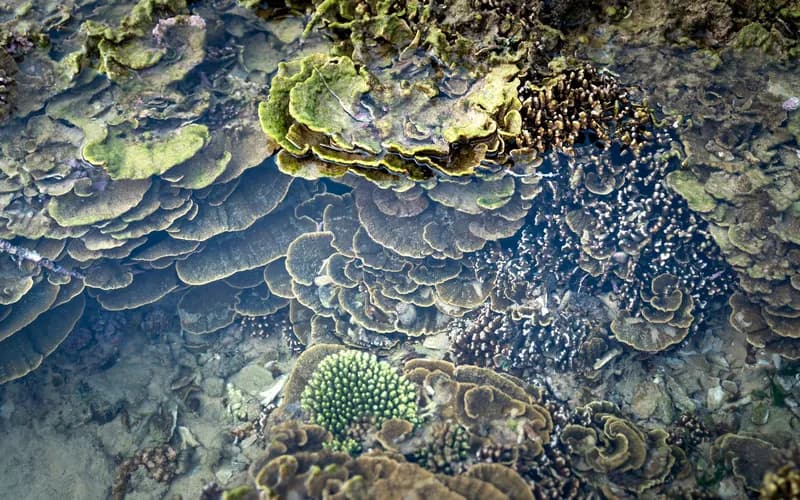
Con Dao National Park holds a rare combination of designations: forest reserve, marine protected area, turtle sanctuary, and Ramsar wetland site. Its 14,000 hectares of marine waters contain some of Vietnam's healthiest coral reefs, along with seagrass meadows that support dugongs and dolphins. The terrestrial core covers 6,000 hectares of montane forest.
The turtle nesting program has run since the 1990s. Endangered green turtles and hawksbill turtles return each season to beaches that park rangers actively protect. Access to nesting sites is controlled; guided turtle-watching trips operate under strict permits, with group sizes and lighting regulated to avoid disturbing the animals. This is not a performance staged for tourists. It is a conservation program that allows careful observation as a secondary benefit.
In 2024, Con Dao National Park joined the IUCN Green List, becoming the 101st site globally to meet the organisation's standards for effective and equitable conservation governance. The recognition matters beyond prestige. It raises the political cost of any future rollback of protections and signals to international travelers that the island's ecological claims are independently verified.
Diving and snorkeling here require licensed operators with park permits. Independent access to coral zones is restricted, which frustrates some budget travelers accustomed to unregulated reefs. The restriction is also why the reefs remain intact.
The Prison in the Landscape
No account of Con Dao is complete without its history, and no visitor should arrive expecting to set it aside.
The French established a penal colony here in the 1860s. It became the largest in Indochina — a place of forced labor, isolation, and systematic brutality. The US-backed South Vietnamese government continued its use until 1975, detaining political prisoners in conditions that drew international condemnation. The tiger cages, stone cells barely large enough to stand in, became a symbol of the era.
Today the Con Dao Prison complex is a nationally recognized heritage site, open daily from 8:00 to 18:00 for around 40,000 VND per person. Hang Duong Cemetery, where thousands of prisoners are buried, draws Vietnamese pilgrims year-round — families burning incense at dusk, the smell of smoke drifting through the trees. The Con Dao Museum, at around 15,000 VND entry, presents both the natural and historical narratives of the island in a considered format.
The emotional weight is real. Travelers who visit the prison cells and then walk to a white-sand beach twenty minutes later report a dissonance that does not fully resolve. This is not a flaw in the itinerary. It is the nature of the place. Con Dao's atmosphere of genuine remoteness is shaped partly by the memory of those who died here. That context deepens the experience; it also complicates the tourist gaze in ways worth sitting with.
Get matched with up to 5 trusted Vietnam agencies
- Free
- No obligation
- Up to 5 agencies
Designed Scarcity: Con Dao Against the Grain
The contrast with Phu Quoc is structural, not merely atmospheric. Phu Quoc has an international airport, casino resorts, waterparks, and a beach strip that operates at scale. Con Dao has a short runway, limited daily flights, and ferry crossings of two and a half to four hours from the Mekong Delta or Vũng Tàu. Tickets sell out weeks in advance during the dry season. There is no spontaneous weekend getaway culture here.
This transportation bottleneck is, in effect, a conservation mechanism. So is the investment orientation: provincial and national plans emphasize eco-resorts and heritage tourism over large-scale resort complexes. The accommodation inventory skews toward mid-range and premium properties, with fewer budget beds than comparable beach destinations. Prices for flights and tours run higher than mainland equivalents, partly because of import costs and partly because scarcity commands a premium.
Nguyen Khac Pho, Director of Con Dao National Park, has stated plainly: "More and more pressure is being brought to bear on the ecosystem by the growing number of visitors to Con Dao. We need to regulate the number of tourist arrivals to our islands." That is an unusual thing for a tourism official to say. It reflects a genuine tension between the island's rising international profile — Vogue listed it among the world's most ideal honeymoon destinations for 2026 — and the ecological limits that make it worth visiting in the first place.
For slow travelers, the trade-off is clear. Con Dao offers fewer choices and higher costs. It returns near-empty beaches, intimate dive groups, quiet roads, and a sense of place that scaled resort development tends to dissolve.
The Eco-Luxury Question
Con Dao's upscale positioning is best known through Six Senses, which sits on a private beach where green turtles nest. When a female lays on the resort's shoreline, staff move the clutch to a protected hatchery, and guests may watch under supervision. It is eco-luxury in the literal sense: high comfort, conservation messaging and genuine wildlife access, all mediated by trained staff.
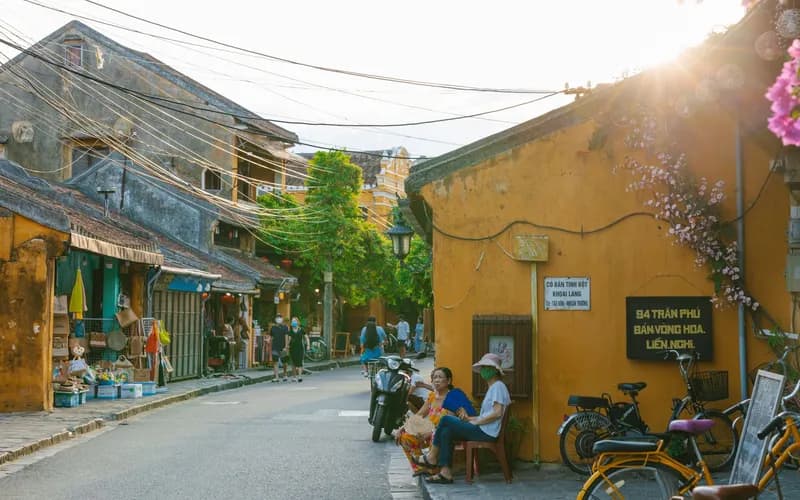
It is not the only way to stay. Guesthouses and mini-hotels in Côn Sơn town cost a fraction of the price, and neither option has produced the resort sprawl that reshaped Phu Quoc. The island's accommodation stock is too small for that, and the park boundary too close.
The honest question is whether the premium funds real conservation. On Con Dao the answer holds up better than in most comparable places: WWF Vietnam's satellite-tagging programme was launched from the island, and the national park authority documents nest management and hatchling releases. It is the same logic behind Vietnam's wider green turn, and the reason Con Dao sits in our list of quieter alternatives to the classic hubs.
Frequently Asked Questions
When is the best time to visit Con Dao?
The dry season runs from November through April, with calmer seas, reliable sunshine, and the best conditions for diving and snorkeling. February to April is generally considered peak. The turtle nesting season runs from July to October, overlapping with the wetter months; sea crossings can be rough during this period, and some travelers with motion sickness find the ferry uncomfortable. If turtle watching is a priority, plan for July or August and book well in advance — accommodation and flights fill quickly.
How do you get to Con Dao?
Most visitors fly from Ho Chi Minh City (Tân Sơn Nhất) or Cần Thơ to Con Dao Airport (VCS). Flights are short but seats are limited and prices run higher than comparable domestic routes, particularly in peak season. Book as early as possible. Ferry options include a roughly four-hour crossing from Vũng Tàu and a two-and-a-half-hour crossing from Sóc Trăng, with fares typically ranging from 300,000 to 900,000 VND depending on class and operator. Sailings are weather-dependent and can be cancelled during rough conditions.
How much does a trip to Con Dao cost compared with other Vietnamese islands?
Con Dao sits at the higher end of Vietnam's domestic island market. Flights cost more than their distance would suggest, and accommodation tilts toward mid-range and premium properties. Guided tours — diving, snorkeling, turtle watching, national park hikes — are priced above mainland equivalents due to permit costs and logistics. Budget travelers will find fewer options here than on Phu Quoc or Nha Trang. The higher cost reflects genuine scarcity and conservation overhead, not simply branding.
How many days do you need on Con Dao?
Three to four days is the range most guides recommend, and it holds up well. That allows time for the prison complex and Hang Duong Cemetery, at least one full day of diving or snorkeling, a national park hike, and unhurried beach time. Five days suits travelers who want to add a turtle-watching night or explore smaller outer islands. Con Dao rewards a slower pace; it does not reward rushing between sites.
What are the most common frustrations travelers encounter?
Limited transport capacity is the most consistent complaint — flights and ferries book out, and last-minute travel during peak season is genuinely difficult. Infrastructure in Con Son Town is functional but modest: ATMs exist, Wi-Fi is available at most guesthouses, but power and water supply can be intermittent. Nightlife is minimal. Dining options are growing but remain limited compared with larger resort islands. Travelers who arrive expecting Phu Quoc-style convenience tend to be disappointed; those who arrive expecting a quiet, ecologically intact island with serious history tend to leave satisfied.