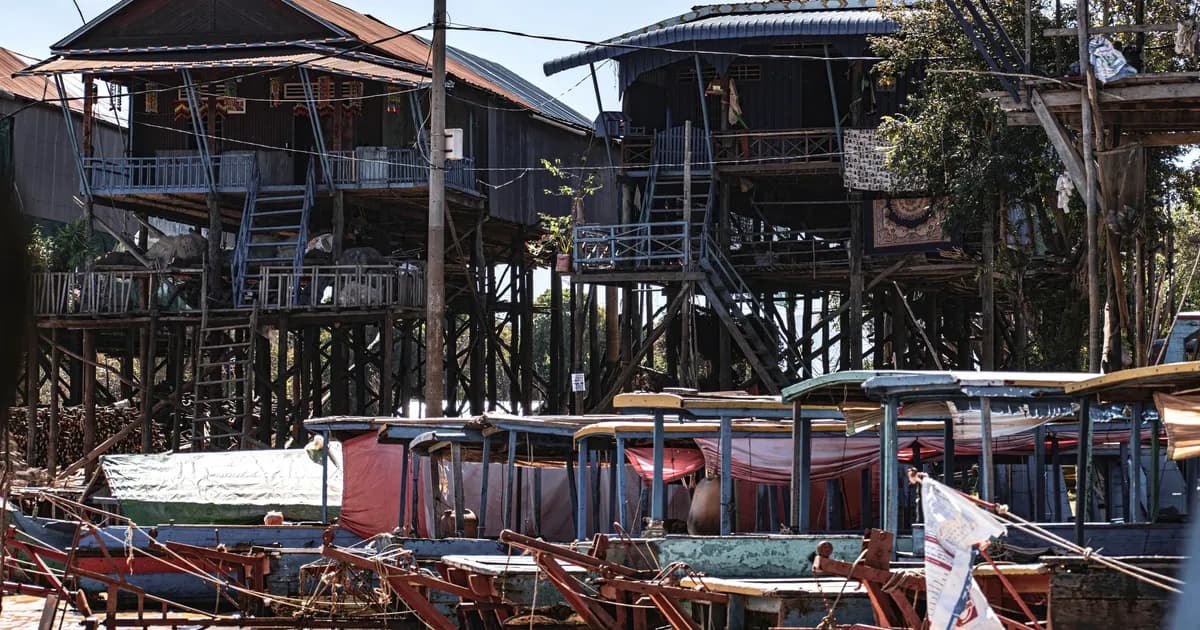

Every year, the Tonle Sap does something almost no other lake in the world does: it changes direction. When the Mekong swells in the wet season, the Tonle Sap River stops flowing south to the sea and runs north into the lake, which expands several times over and floods the forest around it. Months later the flow reverses and the lake drains. This flood pulse is the reason Cambodia has some of the richest freshwater fisheries on the planet, and the reason floating villages exist at all.
That rhythm is now less dependable. Fishers, hydrologists and monitoring groups have spent several years documenting late reversals, low wet-season levels and unpredictable dry months. For travellers, this is not an abstract environmental story. It affects when a boat can reach a village, whether a flooded forest is actually flooded, and what the people you meet are worried about. This analysis explains what is known, what is still disputed, and how to plan accordingly.
How the flood pulse is supposed to work
The Tonle Sap River is about 120 kilometres long and links the lake to the Mekong at Phnom Penh. In the dry season, roughly November to April, the lake shrinks to a few thousand square kilometres and holds only a small volume of water. In the wet season, from about May to October, the Mekong rises faster than the lake, the river reverses, and the lake grows four to six times larger. Water volume is often cited as rising by a factor of dozens.
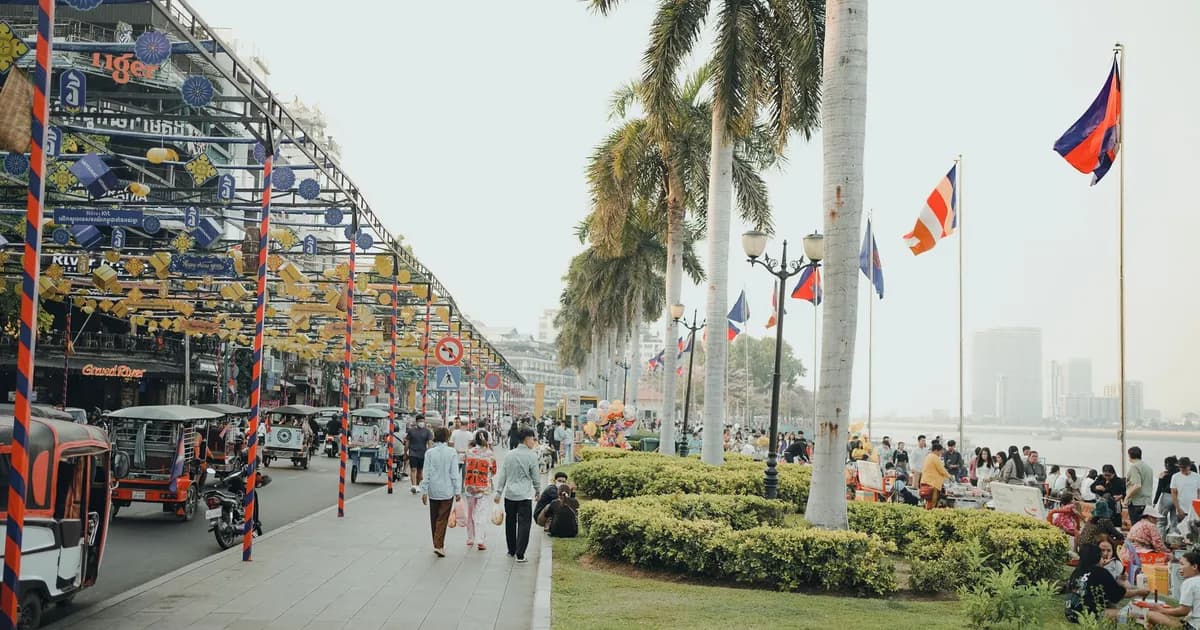
The reversal is celebrated at Bon Om Touk, the Water Festival, which marks the moment the river turns back toward the Mekong in November. That festival is not just a party. It is the cultural expression of a hydrological event that feeds much of the country.
The lake supports an extraordinary fishery. Researchers describe about 1,400 fish species in the system, with roughly a quarter found only in the region, and catches that historically reached up to 250,000 tonnes a year. Fish provide the majority of annual protein for many Cambodians. When the pulse weakens, fish stocks and the households that depend on them feel it first.
One request. Up to five tailored proposals.
Skip contacting agencies one by one — share your trip once and let up to five trusted Cambodia agencies come to you. Free, with no obligation.
Get my free quotesWhat has changed: the evidence so far
The data is uneven, but several threads point the same way. The years 2019 to 2021 are described as the driest period on record, and reversals in 2010 to 2020 began later than in the previous decade. Rainfall improved in 2022 and 2023, which brought near-normal conditions, but the improvement did not erase the concern. In August 2024, levels were reported at about two metres below the seasonal average, moving down when they should have been climbing.
Communities noticed before the models did. Fishers around Kampong Phluk near Siem Reap told a local outlet in 2022 that the water used to fill by August and stay steady through September and October, whereas now it stays low or fluctuates. One fisher described a season with few fish because the water was not high enough, and a community leader warned that families who cannot catch fish are forced to migrate for work, pulling children out of school and taking on debt. At least a quarter of one village no longer depends on fishing, according to that report.
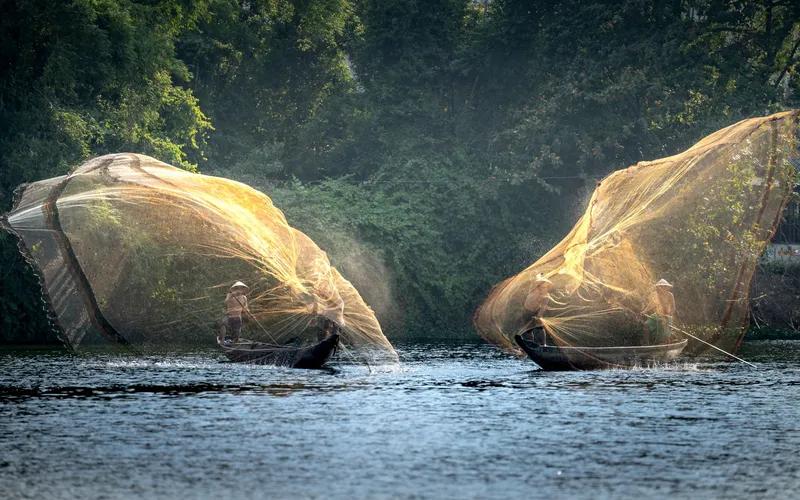
I have not found a verifiable published measurement for the 2026 wet season, so I will not claim a figure for this year. If you are planning around water levels, check recent local reporting and ask guides directly. What can be said is that variability is now part of the picture. To see how the lake fits alongside Angkor's April heat and the coast's monsoon, our month-by-month guide to where to go in Cambodia puts the seasons side by side.
The causes: dams, sand and climate
Researchers point to several overlapping pressures, and honest coverage has to admit that attribution is contested.
- Upstream dams. Reservoirs on the upper Mekong and its tributaries hold back water and change timing. A monitoring analysis estimated that in September 2023 the flow into the lower basin would have been around 12.4 percent higher without upstream withholding, mostly in Chinese reservoirs. China had promised real-time dam data by the end of 2023, and a Stimson Center researcher says it did not deliver.
- A counting problem. The Mekong River Commission has cited 61 dams, while the Stimson Center counts 745, including about 40 in Cambodia, and an academic report counts 1,055 across the basin. The gap suggests that countries are not always notifying the commission when tributary dams are built.
- Sand mining. A study led by hydrologist Quan Le and published in Nature Sustainability found that dredging deepens the Mekong riverbed, which prevents adequate water rise and reduces reverse flow into the Tonle Sap River. If mining continues to 2038, the study projects a 69 percent decline in flood pulse volume, a 40 percent reduction in wet-season lake size and a 59 percent fall in dry-season outflows to the delta.
- Climate and fishing pressure. Unpredictable rainfall, El Niño years and illegal fishing add stress. A Cambodian official has attributed declining catches mainly to population growth and illegal fishing, a view that communities and researchers dispute in part.
For a traveller, you do not need to settle the argument. You only need to know that the lake's behaviour is now less forecastable than the guidebooks suggest.
Get matched with up to 5 trusted Cambodia agencies
- Free
- No obligation
- Up to 5 agencies
What this means for visiting the lake
The practical consequences are simple and specific. In a late or weak wet season, flooded-forest boat trips may be shorter or rerouted, floating villages can sit in shallower channels, and dry-season access can become harder earlier than expected. In a strong year, the lake is spectacular from roughly September to November, with high water, green forest and busy channels.
Our guide to visiting Tonle Sap's floating villages responsibly covers the ethics of boat visits. This analysis adds one planning rule: do not lock in a trip purely because a brochure says water is high in a given month. Confirm conditions a week or two before, keep one flexible day, and accept that the experience will vary from year to year.
Planning for the rainy season
If you are travelling in the rains, the broader advice in our guide to travelling Cambodia in the green season applies. Roads, boats and light all change, usually for the better in terms of crowds and landscape, as long as your plan has slack.
The human side: what to listen for
The most useful thing a visitor can do on the lake is listen. Ask your boatman or host how this year compares with recent ones, and what the fishing has been like. Those answers will tell you more than any chart. People are generally open about it, and they appreciate the interest.
Spend your money in ways that spread income. A meal in the village, a purchase from a family selling handicrafts or a local guide rather than a distant operator all help communities that are being asked to adapt. Avoid anything that depends on animals in poor conditions or on children performing for tourists.
Several of the places that feel this change most are quiet corners rather than headline destinations. The river town of Kampong Chhnang, covered in our profile of Kampong Chhnang and its floating villages, is a gentler way to see the lake's edge than a crowded boat dock near a major town.
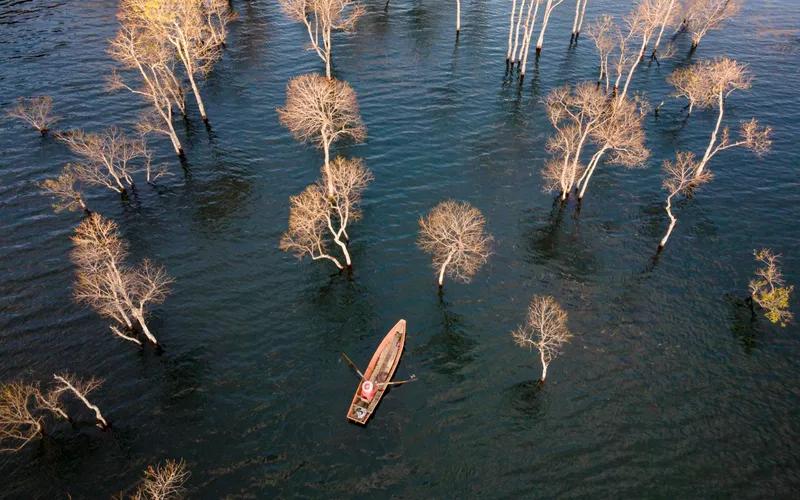
Why this matters for slow travel
Slow travel is built on the idea that you adapt to a place rather than demanding that it adapt to you. The Tonle Sap is a good test. A traveller who treats the lake as a fixed attraction will be disappointed in a bad year. A traveller who treats it as a living system, and who is willing to stay an extra night, switch a day or accept a shorter boat ride, will usually get a better and more honest experience.
It also sharpens a question that sits at the heart of the UNRUSH charter, which asks how our presence supports the people we visit. You can read the full charter for slow travel to see how that principle is applied across destinations. At the Tonle Sap, the answer is practical: go with realistic expectations, pay fairly and keep your footprint light.
A festival that keeps turning
One more cultural note. The Water Festival that celebrates the river's reversal has been scaled back in the capital for the past two years, which we cover in our practical update on the 2026 Phnom Penh Water Festival. The river still turns, whether or not the regatta takes place, and the date is a good prompt to think about what the flood pulse means.
What to Do Next
- Decide whether your trip is about water, villages or both, and choose your months accordingly.
- Check recent local reporting and ask your guide about current levels two weeks before you go.
- Build in one flexible day around any boat trip so that a late or low season does not ruin the plan.
- Book boats through local operators and spend something in the village itself.
- Keep a short list of questions for your hosts about the fishing season, and listen to the answers.
Frequently Asked Questions
What is the Tonle Sap flood pulse?
It is the annual reversal of the Tonle Sap River. In the wet season, the Mekong rises and pushes water north into the lake, which can grow four to six times larger. In the dry season the flow reverses and the lake drains back toward the Mekong. The cycle drives the fishery and the floating villages.
Is the Tonle Sap drying up?
Not in a simple sense, but the pattern has become less reliable. Researchers have recorded late reversals, low wet-season levels in some years and a very dry period from 2019 to 2021. Conditions improved in 2022 and 2023, so the picture is variable rather than a straight decline, and I have not found a verified 2026 reading.
What is causing the change?
Researchers point to upstream dams, sand mining that deepens the Mekong riverbed, shifting rainfall and illegal fishing. Their relative weight is debated, and some Cambodian officials emphasise population growth and illegal fishing rather than dams. Most observers agree that several factors combine.
When is the best time to visit the floating villages?
It depends on what you want to see. High water, roughly from September to November in a normal year, gives the most dramatic scenery and flooded forest access. The dry months are easier for road access but offer less on the water. Check conditions locally before committing.
Should I avoid visiting because of the environmental pressure?
No. Visiting responsibly can support communities that are adapting, provided you hire local boatmen, spend in the village and avoid exploitative activities. The risk comes from poorly run tours, not from respectful visitors.
How can I check current water levels?
Local news, your guide and accommodation are the most practical sources. Regional monitoring groups publish data and commentary, but they are not always timely, so ask a person on the ground a week or two before you travel.
Does this affect the Water Festival?
The Phnom Penh regatta for 2026 has been cancelled for separate, political and humanitarian reasons, not because of the river. The hydrological event the festival celebrates still happens each year, and provincial celebrations may go ahead.