Beyond the Scam-Hub Headlines: What Cambodia's Crackdown Means for Travellers in 2026
For most of 2026, the word most often attached to Cambodia in international news has not been Angkor, or Kampot pepper, or the Mekong. It has been "scam". A criminal industry of fortified online fraud compounds, staffed partly by trafficked workers, became a global story in 2025, and the country's reputation as a travel destination has paid a heavy price. Arrivals have fallen sharply, governments have issued stark warnings, and many would-be visitors now ask a simple question: is it still a good idea to go?
The honest answer is more nuanced than either the headlines or the official reassurances suggest. This piece looks at what the scam-hub label is, what the government's crackdown has and has not achieved, where the real risks sit, and what all of it means for a slow traveller planning a trip in late 2026 or 2027.
How a Criminal Industry Became a Travel Story
Online scam operations grew rapidly in Cambodia during and after the pandemic, often run by transnational syndicates out of casino complexes, converted hotels and purpose-built compounds. Workers were lured with fake job offers, many of them from other Asian countries, and then forced to run romance, investment and impersonation scams targeting people around the world. Estimates of the industry's annual earnings run into the billions of dollars.
For years this was a story told mainly by human-rights researchers and investigative reporters. It became a mainstream travel story in the second half of 2025. The death of a South Korean university student, who had travelled to Cambodia for what he believed was a job and was later found dead after being held inside a scam compound, triggered a political storm in Seoul. In October 2025, South Korea placed the Bokor Mountain area in Kampot province, and the border towns of Bavet and Poipet, under its highest travel warning, effectively a travel ban for its citizens. Other governments, including Canada and the United States, tightened their language around kidnapping, forced labour and fake job offers. Parts of the international press began using the nickname "Scambodia", to considerable anger in the country.
At the same time, the armed border clashes with Thailand in 2025 and the prolonged closure of land crossings between the two countries removed one of the most common overland routes into Cambodia. The two stories fused in the minds of many travellers into a single, vague impression that the country had become unsafe.
One request. Up to five tailored proposals.
Skip contacting agencies one by one — share your trip once and let up to five trusted Cambodia agencies come to you. Free, with no obligation.
Get my free quotesWhat the Crackdown Has Actually Done
Under intense international pressure, the Cambodian government launched a large-scale campaign against scam operations. In March 2026, Prime Minister Hun Manet vowed to shut down scam centres by the end of April, and he has repeatedly reaffirmed the commitment since.
The official figures are substantial. Cambodia's anti-scam commission reports that between July 2025 and August 2026, law-enforcement agencies investigated 793 suspected locations, carried out direct crackdowns at 624 of them, detained nearly 30,000 people of 39 nationalities, dismantled 86 large-scale compounds and froze more than USD 300 million. The minister in charge of the campaign told Reuters in mid-2026 that around 1,500 suspects had been charged, nearly 19,000 foreigners deported, and some 290,000 people had left the country voluntarily. In September 2026, Phnom Penh hosted an International Conference on Combating Online Scams, attended by delegations including the FBI, INTERPOL and Chinese authorities, which ended with a Phnom Penh Declaration of eleven commitments adopted by 28 countries and seven international organisations.
Independent observers are more cautious. In June 2026, Amnesty International reported that most of the compounds it had previously identified appeared to have been bypassed by the crackdown, and its mapping found that roughly two-thirds of the compounds it tracked were linked to casinos and tourism infrastructure. Human-rights groups also point to the humanitarian gap: thousands of released foreign victims left without shelter or support, and too few prosecutions of the powerful people who profited. Cambodian journalists have reported that scam recruitment continues despite the raids.
The fair reading is that the crackdown is real, large and ongoing, that it has visibly changed some places, and that it is not finished.
The Numbers: A Reputation Cost Measured in Arrivals
Whatever the cause, the effect on tourism is not in doubt. According to the Ministry of Tourism, international arrivals fell 44.4 percent in the first eight months of 2026, to about 2.25 million from 4.05 million in the same period of 2025. China and Vietnam remained the largest source markets, but both were sharply down. The Asian Development Bank trimmed its 2026 growth forecast for Cambodia, citing the tourism slump among the reasons.
Not all of that fall is due to the scam story. The Thai border closure, weaker Chinese outbound travel, airline network changes after the move to Techo International Airport and a softer regional market all play a part. We looked at those overlapping causes in detail in our analysis of Cambodia's quiet year and the fall in arrivals. But tourism operators, from the Cambodia Tourism Association to small guesthouse owners, are clear that the reputational hit has been one of the biggest single factors, particularly for travellers from South Korea, Japan and parts of Europe.
Get matched with up to 5 trusted Cambodia agencies
- Free
- No obligation
- Up to 5 agencies
Where the Risk Really Sits and Where It Does Not
The single most important thing to understand is who the scam industry targets. Its victims fall broadly into two groups: people deceived into working inside compounds, usually recruited through fake job adverts on social media, and people around the world defrauded online by those compounds. Ordinary leisure travellers visiting temples, markets, islands and national parks are not the target of this business model.
That does not make every place equal. The compounds cluster in specific kinds of locations: casino towns on the borders, such as Poipet near Thailand and Bavet near Vietnam, parts of Sihanoukville, and certain isolated developments. These are not places most slow travellers have reason to stay, and for now there is little to be gained by lingering there. If you need to cross overland, our guide to the Thailand-Cambodia land border and how to route around closures explains current options.
The genuine risk for a visitor is not being snatched off the street. It is being drawn in. That means:
- Never accepting a job offer, internship, modelling gig or "translator" role in Cambodia that reaches you through social media or messaging apps, however attractive.
- Being wary of anyone who proposes you travel to a border town or an unfamiliar compound for work, a party or a business opportunity.
- Treating unsolicited online investment or romance contacts with extreme suspicion, whether you are in Cambodia or at home.
In the places most travellers actually go, including Siem Reap, Phnom Penh, Battambang, Kampot, Kep, Kratie and the islands, the day-to-day safety picture looks much as it did before: petty theft and bag snatching are the most common problems, and road traffic remains the biggest physical danger.
What the Label Has Changed on the Ground
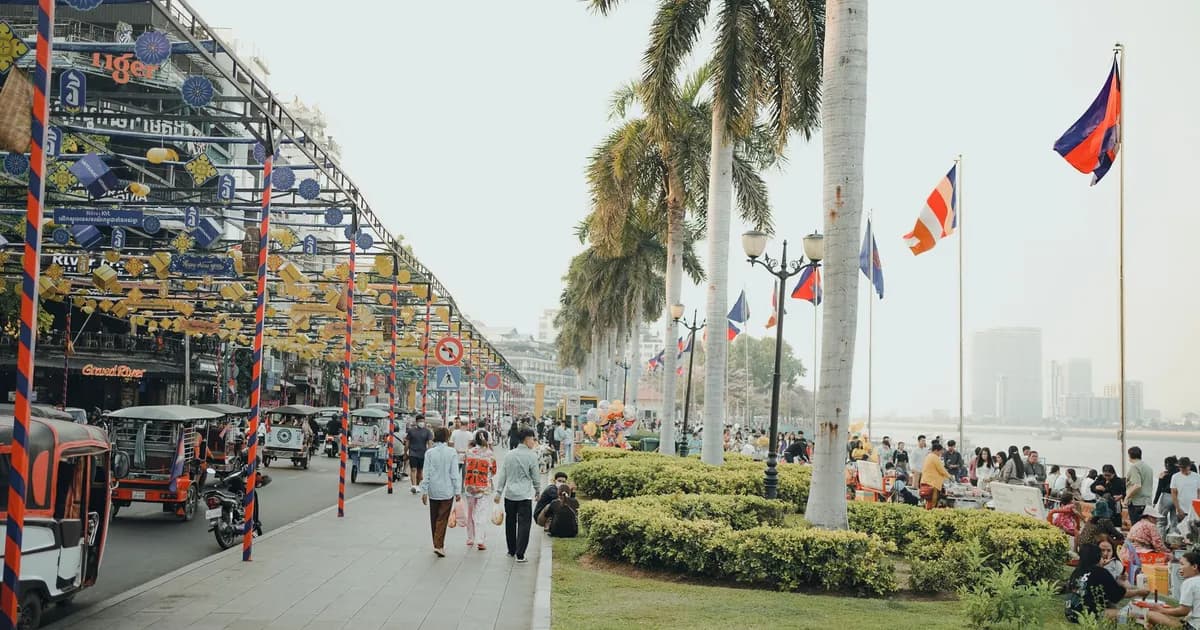
The most visible change for visitors is quiet. Angkor's temples are calmer than they have been in years outside of the pandemic. Hotel and guesthouse rates in Siem Reap and Phnom Penh are softer, and many operators are more flexible on dates and extras. For travellers who value space, this is objectively a good time to visit.
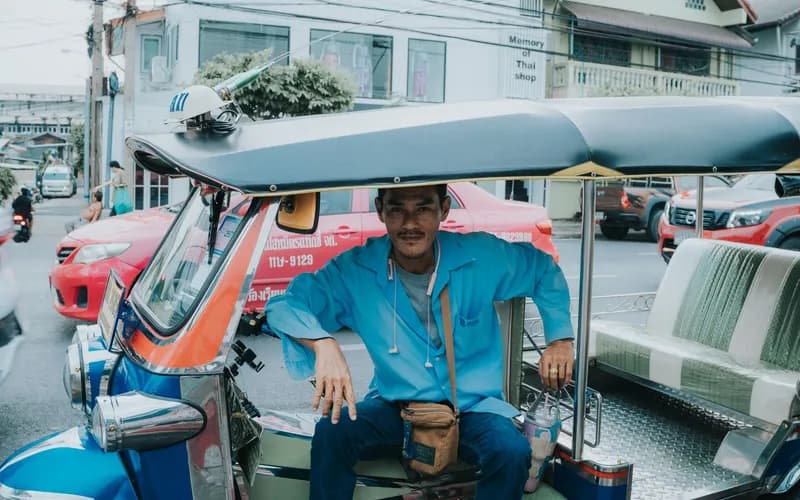
The cost of that calm falls on Cambodians. Tuk-tuk drivers, guides, homestay families, market vendors and small restaurant owners in tourist areas have lost a large share of their income, often through no connection whatsoever to the criminal economy. Human-rights groups have made the same point: when tourism drops, the first to suffer are local communities in tourist zones.
In Sihanoukville, the effect is sharper still. The city's boom was built in large part on casinos and the money that flowed around them, and the crackdown has left it with empty towers and a struggling local economy. Our look at Sihanoukville's second act explains what that means for travellers passing through on the way to the islands.
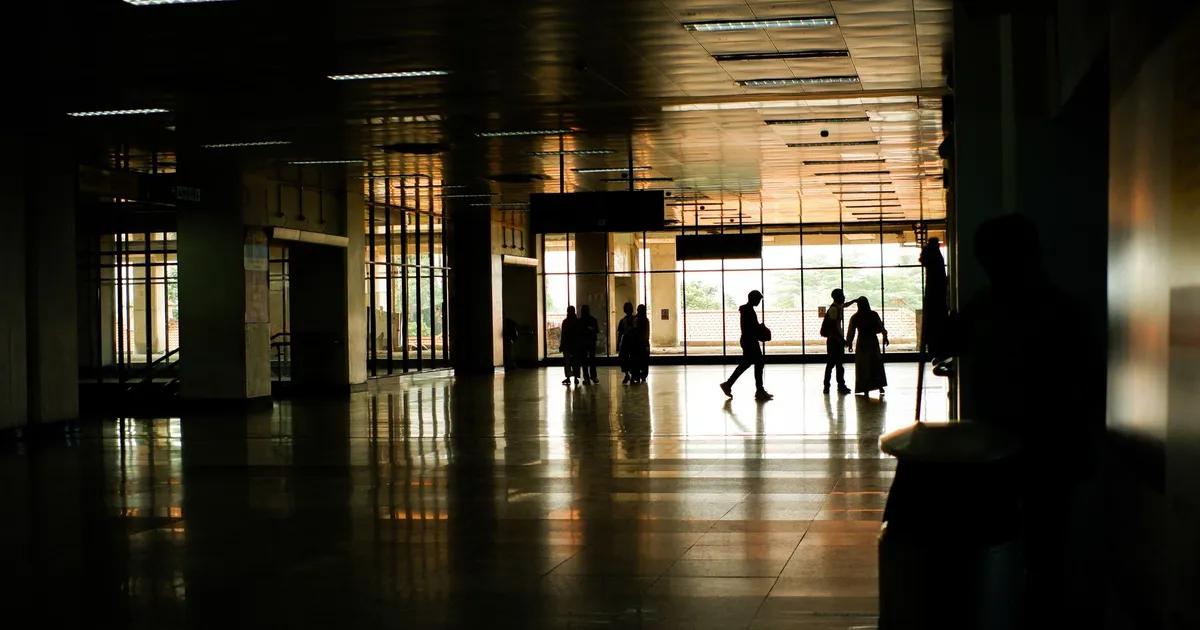
Arrival itself has also changed in ways that rarely make headlines. Travellers arriving at Techo International Airport have remarked on largely contactless immigration gates, and the e-Arrival card has streamlined formalities. The practical experience of entering Cambodia in 2026 is, for most nationalities, smoother than it was a few years ago.
The Ethical Question: Where Your Money Goes
Amnesty's finding that many compounds were linked to casinos and tourism infrastructure raises a fair question for responsible travellers: how do you avoid spending money in businesses tied to the scam economy?
There is no perfect list, but a few principles help. Favour small, locally owned guesthouses, restaurants and tour operators with a visible track record and real people behind them. Avoid large casino-hotel complexes, particularly in border towns and in parts of Sihanoukville, unless you have good reason to trust the operator. Use community-based tourism projects, social enterprises and certified guides where they exist. And ask questions: good local businesses are usually happy to tell you who owns them and where your money goes.
Spending well in Cambodia right now is not only a matter of personal ethics. It is one of the most direct ways a visitor can support the people hit hardest by the collapse in arrivals.
Reading Travel Advisories Sensibly
Government travel advice is essential reading, but it needs to be read carefully. Most advisories distinguish between country-wide levels and specific regional warnings, and the regional detail is where the useful information sits.
South Korea's case is a good example. On 10 July 2026, Seoul lowered its warning for the Bokor Mountain area, Bavet and Poipet from its highest level to the level below, lowered Sihanoukville by one level, and lifted a special advisory covering seven provinces along the Thai border, citing a sharp fall in crimes involving Korean nationals. Kampot town and its riverside, which sit well below Bokor, are a very different proposition from the development on the mountain; our guide to Kampot and Kep covers the region most slow travellers actually visit.
Check your own government's current advice before you book and again before you travel, read the regional sections rather than the headline level, and make sure your travel insurance remains valid for the areas you plan to visit.
What to Watch in the Months Ahead
Several signals will show whether Cambodia is turning the corner. Watch whether the Phnom Penh Declaration leads to prosecutions of senior figures rather than only deportations of workers; whether independent groups such as Amnesty report that compounds are genuinely closing rather than relocating; whether source markets like South Korea and Japan continue easing their advice; and whether the Thai land border reopens. Tourism authorities are also courting new markets with trade events and familiarisation trips, and are promoting eco-tourism and longer stays beyond Angkor. If those efforts land, the 2026-27 high season could mark the beginning of a slow recovery.
For travellers, the practical conclusion is simple. The scam industry is a serious crime and a genuine human-rights disaster, and it deserves the attention it receives. But it is not, for the overwhelming majority of visitors, a reason to avoid Cambodia. It is a reason to travel thoughtfully, to choose where your money goes, and to stay alert to one very specific kind of lure.
What to Do Next
- Read your government's current travel advice for Cambodia, paying attention to regional warnings rather than only the headline level.
- Plan your route around the places slow travellers actually use, and avoid overnight stays in border casino towns unless you need to cross.
- Treat any job, internship or business offer linked to Cambodia that arrives via social media as a red flag, and share that warning with younger travellers you know.
- Book locally owned accommodation and guides, and choose operators that can explain who they are and where your money goes.
- Use the quieter season to your advantage: visit Angkor at popular times, negotiate flexible dates, and stay longer in fewer places.
- If you want help finding trustworthy local partners, start with our list of vetted travel agencies in Cambodia.
Frequently Asked Questions
Is Cambodia safe to visit in 2026 despite the scam-compound news?
For the vast majority of leisure travellers, yes. The scam industry targets job seekers lured into compounds and people defrauded online, not tourists visiting temples, towns and islands. Normal precautions against petty theft and road risks remain the most relevant safety advice.
Which areas of Cambodia are linked to scam compounds?
Compounds have clustered in border casino towns such as Poipet and Bavet, in parts of Sihanoukville and in some isolated developments, including the Bokor Mountain area in Kampot province. These are not places most travellers need to stay. Check official travel advice for current regional warnings.
Has the government crackdown worked?
It has been large and visible: official figures cite 86 large compounds dismantled, nearly 30,000 people detained and over USD 300 million frozen between July 2025 and August 2026. Independent groups such as Amnesty International say many compounds escaped the raids, so the picture is improving but incomplete.
How can I avoid being drawn into a scam as a traveller?
Never accept a job, internship or business opportunity in Cambodia that reaches you through social media or messaging apps, be wary of invitations to border towns or unfamiliar compounds, and treat unsolicited online investment or romance contacts as highly suspicious.
Is South Korea's travel ban on parts of Cambodia still in place?
No. On 10 July 2026, South Korea lowered its warning for the Bokor Mountain area, Bavet and Poipet from its highest level to the next level down, lowered Sihanoukville by one level and lifted a special advisory on provinces bordering Thailand. Always check the latest version of your own government's advice.
Does visiting Cambodia now help local people?
Yes, if you spend thoughtfully. The fall in arrivals has hit guides, drivers, homestay families and small businesses hard. Choosing locally owned accommodation, restaurants and operators puts your money where it matters most.
Keep reading
More from the ground · Cambodia