Sihanoukville's Second Act: What Cambodia's Boom-and-Bust Coast Means for Travellers in 2026
Few places in Southeast Asia have risen and fallen as fast as Sihanoukville. In just a few years Cambodia's main coastal city went from backpacker beach town to a forest of Chinese-financed casino towers, then to a half-empty landscape of unfinished concrete when the money drained away. In 2026 it is trying to write a third chapter. For travellers, Sihanoukville is a fascinating and slightly uneasy place to watch: a city visibly reinventing itself, and a cautionary tale about what unchecked, single-source investment does to a destination. Understanding it explains a great deal about where Cambodia's coast is heading.
The boomtown that emptied out
For years Sihanoukville was the scruffy, likeable gateway to Cambodia's southern islands, a place travellers passed through on the way to the beaches. Then, from the late 2010s, a wave of Chinese investment turned it into something else entirely: by mid-2022 more than a hundred Chinese-run casinos were operating in the city, drawing gamblers from across Asia and throwing up high-rise hotels, apartment blocks and gaming halls at breakneck speed. The old beach town was buried under construction almost overnight, and the character that once made it a stop on the traveller trail largely vanished.
One request. Up to five tailored proposals.
Skip contacting agencies one by one — share your trip once and let up to five trusted Cambodia agencies come to you. Free, with no obligation.
Get my free quotesHow Sihanoukville got here
The boom was narrow and fragile, built overwhelmingly on gambling capital from a single source. Between 2022 and 2024 it unravelled. Beijing renewed its crackdown on outbound gambling, and Cambodia followed with its own measures, citing links to crime, trafficking and money laundering. In 2023 Phnom Penh froze new casino licences in Sihanoukville and revoked many existing ones, pushing gaming operations toward border zones and islands. When the gambling money left, it left fast, and the city was suddenly overbuilt for an economy that no longer existed. Our wider look at why the coast is rising as Angkor cools sets this within Cambodia's changing tourism map.
The ghost buildings
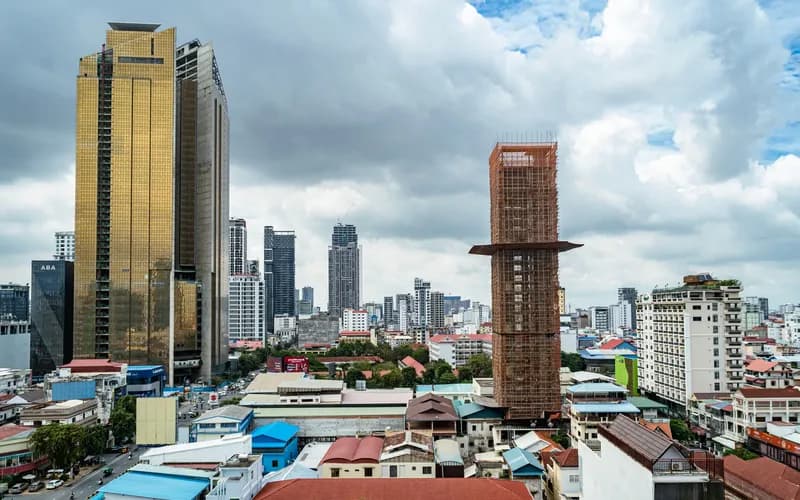
The most striking legacy is physical: hundreds of unfinished towers, abandoned mid-construction when the financing evaporated, standing as grey skeletons over the city. This is what earned Sihanoukville its "ghost town" headlines, and the sight is genuinely sobering, a whole skyline of stalled ambition. For a visitor it makes for an oddly compelling, melancholy urban landscape, though it is also a real problem the authorities are now trying to solve. Owners of the unfinished structures have been told to repurpose them, bring them into compliance, or face demolition, which is a first step toward reclaiming the city from its abandoned boom.
Get matched with up to 5 trusted Cambodia agencies
- Free
- No obligation
- Up to 5 agencies
The reset: a new master plan
What makes 2026 interesting is that Sihanoukville is not simply decaying; it is being actively re-planned. A fresh government master plan pointedly prioritises green space, livable residential neighbourhoods and small-business corridors over gambling halls. The stated ambition is to reinvent the city as a sustainable beach and leisure destination rather than a casino enclave, diversifying and decentralising tourism away from the single industry that boomed and busted. Whether the plan fully succeeds is an open question, and grand redevelopment schemes often fall short, but the direction of travel is a deliberate rejection of the model that failed.
The port and the cruise bet
Alongside tourism, Sihanoukville's deep-water port, Cambodia's most important, is being expanded to handle larger cargo and, notably, cruise ships. The logic is to diversify the city's economy and to tap cruise tourism as one route back to relevance. For the independent traveller, cruise-driven tourism is a double-edged prospect, bringing footfall and investment but also the day-tripper crowds and generic development that can flatten a place's character. It is one more signal that the city's future is being bet on, from several directions at once.
What it is actually like to visit now
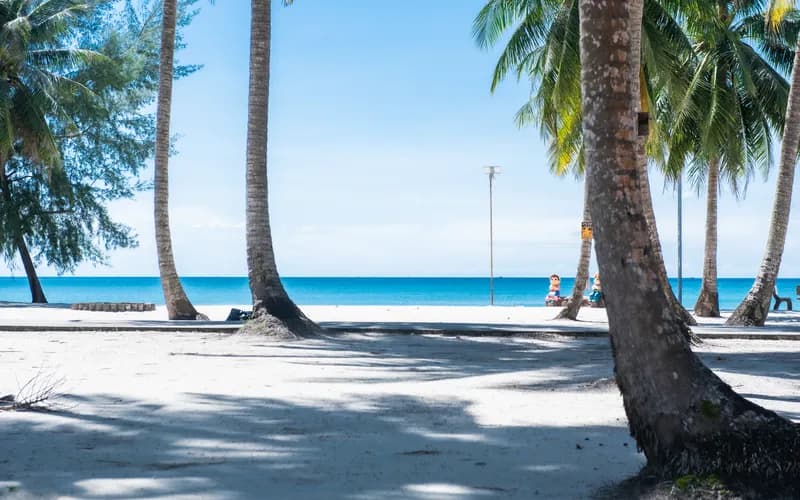
On the ground in 2026, Sihanoukville is a city in flux rather than a polished destination. Expect a jarring mix: gleaming new hotels beside abandoned shells, quiet stretches of beach near half-built blocks, and an atmosphere that is neither the old backpacker town nor the casino peak nor yet the sustainable resort of the master plan. Some travellers find this genuinely interesting, a rare chance to watch a city reinvent itself in real time. Others find it bleak and prefer to pass straight through to the islands. Both reactions are fair. What Sihanoukville is not, in 2026, is a relaxing beach holiday in its own right; it is a place in transition.
The islands were the real winners
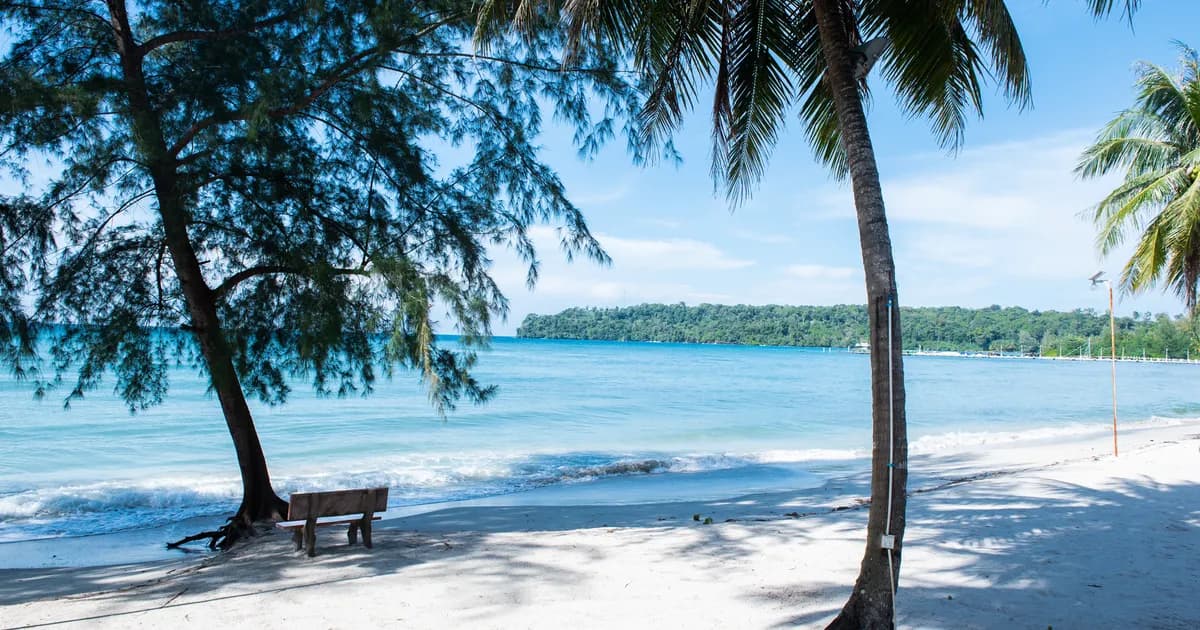
The most useful thing to understand is that Sihanoukville's turmoil barely touched the islands offshore, which is where most travellers were always headed. Koh Rong and its calmer sister remained the actual destination, with the city serving mainly as the ferry port. If your interest is beaches and quiet, the practical move is to treat Sihanoukville as a transit point and head straight for the water, as we describe in our guide to Koh Rong Samloem. The mainland's gentler coast around Kampot and Kep offers another, more characterful alternative to lingering in the city.
Should a slow traveller go?
The honest answer depends on temperament. If you are curious about cities, development and the way tourism reshapes places, Sihanoukville in 2026 is a compelling, thought-provoking stop, and a real-world lesson in the dangers of over-reliance on one kind of money. If you simply want sand and calm, there is little reason to linger, and the islands and the Kampot coast will serve you far better. Either way, it is worth understanding the story, because Sihanoukville is the clearest example in Cambodia of how fast, and how narrowly, a destination can be made and unmade.
How to visit thoughtfully
If you do stop, go with your eyes open and your expectations calibrated. Support the small local businesses trying to rebuild, rather than assuming the whole city is a write-off. Be sensitive about photographing the ghost buildings, which represent real losses and real disruption for residents, not just a striking backdrop. And keep the broader lesson in view: the version of tourism worth encouraging here is the diversified, human-scale one the master plan gestures at, which is precisely the model our charter for slow travel argues for across the region.
What the boom cost, and who paid
Behind the striking skyline is a human story that is easy to miss. The casino rush drove up rents and living costs, pushed out many of the Cambodian small businesses and residents who had made the old town what it was, and brought a wave of associated crime that damaged the city's reputation. When the money left, many of the workers drawn in by the boom lost their livelihoods, and the local economy was left to absorb the shock. For a traveller, this is worth holding in mind: the ghost buildings are not just an eerie photo opportunity but the visible edge of real disruption to ordinary lives. It is the clearest cautionary tale in the region about what happens when a place is remade around a single, footloose industry rather than a diverse local economy.
The environmental reckoning
The breakneck construction also came at an environmental cost that the city is only now beginning to confront. Rapid, poorly regulated building strained drainage, water and waste systems, and beaches that were once the town's whole appeal suffered from pollution and unchecked development. Part of the appeal of the new master plan, with its emphasis on green space and sustainability, is precisely as a corrective to that damage. Whether the cleanup keeps pace with the ambition is uncertain, but the recognition that the coast's natural assets were squandered, and are worth restoring, is itself a meaningful shift in thinking.
A wider lesson for Cambodia's coast
Sihanoukville matters beyond its own boundaries because it is a test of what Cambodia wants its coast to become. The country is actively courting tourism and investment along its southern shoreline, and the choice between another concentrated boom and a diversified, human-scale industry is playing out here first. If the reinvention succeeds, it offers a template for developing the coast without hollowing it out; if it fails, it is a warning. Travellers have a small but real part in that outcome, because the kind of tourism that spends locally, spreads out and stays longer is exactly what rewards the better path. That is why watching Sihanoukville closely is worthwhile even for those who never linger there.
What to do next
- Decide your purpose: a brief, curious look at a city in transition, or a straight transit to the islands.
- If you are beach-bound, treat Sihanoukville as a ferry port and head directly to Koh Rong Samloem or the Kampot coast.
- If you stop, support small local businesses and be thoughtful about photographing the unfinished towers.
- Keep expectations realistic; in 2026 this is a city mid-reinvention, not a finished resort.
- Plan how the coast fits your wider Cambodia route using our plan your journey page.
Frequently Asked Questions
Why is Sihanoukville called a ghost town?
Because a wave of Chinese-financed casino and property construction collapsed when gambling capital withdrew between 2022 and 2024, leaving hundreds of unfinished towers standing empty. The abandoned concrete skyline earned the "ghost town" label, and clearing or repurposing these structures is now a central challenge for the city.
Is Sihanoukville worth visiting in 2026?
It depends on what you want. For travellers interested in cities and how tourism reshapes places, it is a fascinating stop mid-reinvention. For those seeking a relaxing beach holiday, there is little reason to linger; the offshore islands and the Kampot coast are far better suited and were always the real destination.
Is Sihanoukville safe for tourists?
Sihanoukville is broadly safe for ordinary travel, though it is a city in transition with visible construction and uneven development. Use normal urban precautions, keep valuables secure, and be aware that the atmosphere is patchy rather than polished. Most travellers pass through quickly on the way to the islands without incident.
What happened to all the casinos?
Cambodia froze new casino licences in Sihanoukville in 2023 and revoked many existing ones, pushing gaming operations toward border zones and islands, in step with Beijing's crackdown on outbound gambling. The casino-driven boom ended abruptly, and the city is now being re-planned around beaches, residential areas and small business instead.
Should I stay in Sihanoukville or go to the islands?
For a beach trip, go to the islands. Sihanoukville functions mainly as the ferry port for Koh Rong and Koh Rong Samloem, which remained calm and appealing throughout the city's turmoil. Unless you are specifically curious about the city itself, head straight for the water or the Kampot coast. Sihanoukville itself rewards a look mainly if the story of its rise and fall is what draws you there in the first place.
Keep reading
More from the ground · Cambodia