
Cambodia's coastline rarely gets top billing. Most itineraries spend a night in Phnom Penh, three days chasing sunrise over Angkor Wat, then fly out having never touched salt water. That route skips the country's other register entirely: a slower, river-and-sea Cambodia built around pepper vines, crab traps, and towns where the biggest decision of the day is which stretch of riverfront to watch the light change over.
Kampot and Kep, an hour apart on Cambodia's southern coast, are where that Cambodia lives. Neither has a headline monument. Neither demands a multi-day ticket or a 4 a.m. wake-up call. What they offer instead is texture: a colonial-era river town that never quite modernized, a mountain hill station reclaimed by fog and forest, and a beach village known for a market that sells crab by the kilo, cooked in the pepper grown twenty minutes up the road. For travelers who have already done the temple circuit, or who want a Cambodia trip that isn't only temples, this is the region that rewards staying rather than rushing.
Kampot: rivers, pepper, and an unhurried French quarter
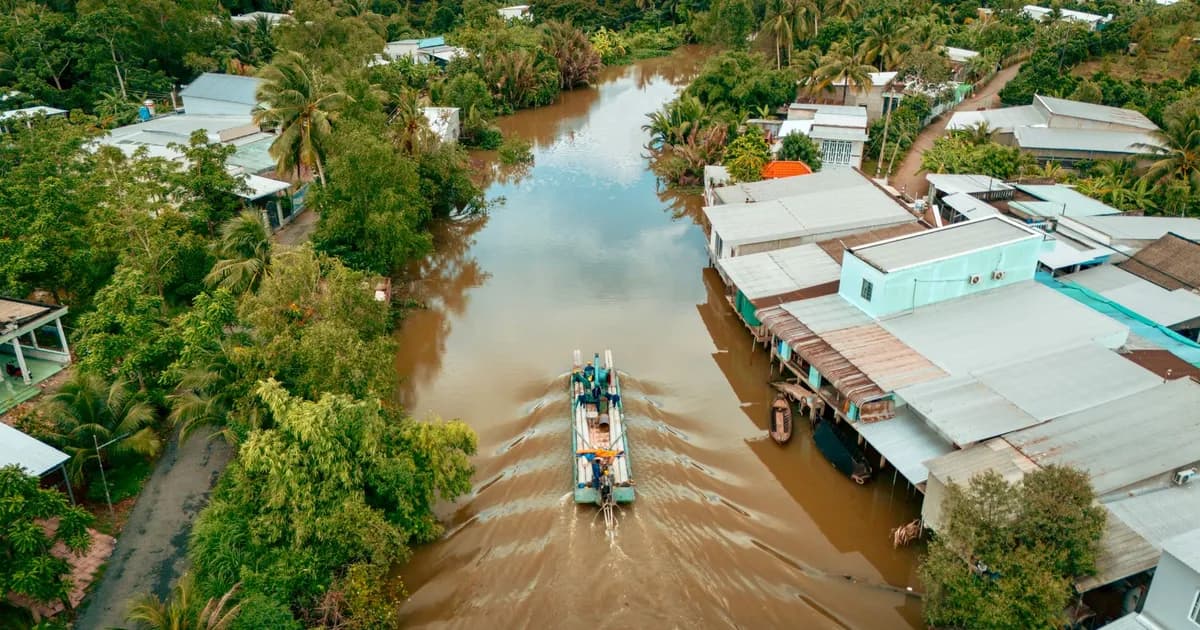
Kampot sits on the banks of the Preaek Tuek Chhu river, a scatter of shuttered French colonial shophouses, riverside cafes, and low bridges that catch the evening light in a way that has made this the town where two-night plans quietly turn into two weeks. There is no single sight that explains Kampot's pull. It is the accumulation of small rituals: a coffee on a wooden balcony watching fishing boats head out, a slow cycle past salt flats turning white in the sun, an evening beer on a floating platform as the karst hills across the river go from green to grey to black.
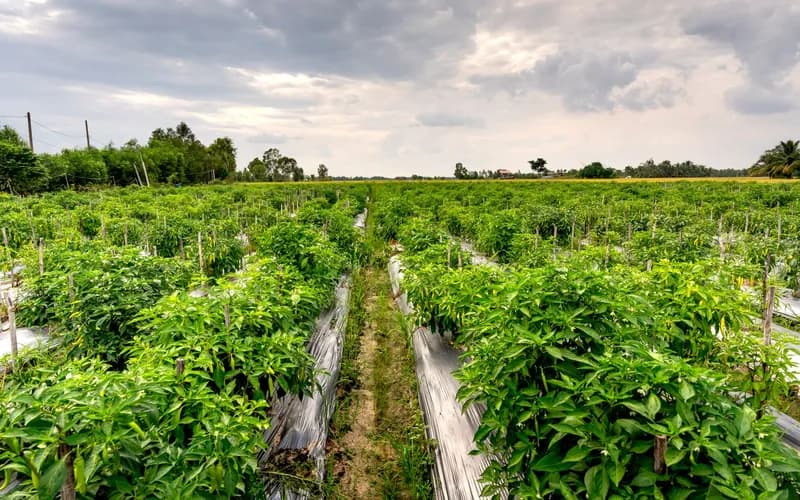
The region's real export is pepper, and it is worth taking seriously rather than treating as a souvenir. Kampot pepper has protected geographical indication status, the same legal category that protects Champagne, and the farms open to visitors — most a short tuk-tuk ride from town — explain why the growing conditions here, humid air off the Gulf of Thailand meeting well-drained red soil, produce a pepper prized by chefs across the region. A farm visit typically includes a walk through the vines, a tasting of red, black, and white peppercorns from the same plant, and an explanation of why this pepper costs more than what is sold in a supermarket tin. It is a slow-travel morning in the fullest sense: one crop, one place, one conversation with the person who grows it, rather than a checklist stop. Travelers building a longer route through the country can pair this with the complete guide to Kampot pepper, salt flats, and the towns beyond the temple trail for other stops that share the same unhurried logic.
Beyond pepper, Kampot's slow economy runs on salt. The flat, mirror-like salt pans east of town, flooded with seawater and left to evaporate under the dry-season sun, are worked much as they have been for generations, and a short detour to see them at golden hour, when the shallow water turns the sky's colors into a second horizon, is one of the region's quieter rewards. Combined with the pepper trade, these two industries explain why Kampot never fully industrialized the way larger Cambodian towns did: its economy stayed tied to land and season rather than factories, and the town's unhurried character followed from that.
One request. Up to five tailored proposals.
Skip contacting agencies one by one — share your trip once and let up to five trusted Cambodia agencies come to you. Free, with no obligation.
Get my free quotesBokor Mountain: colonial ruins above the clouds
Above Kampot, a paved road climbs roughly 1,000 meters into Bokor National Park, and the change in temperature alone — often ten degrees cooler than the coast — is reason enough to make the trip. At the top sits a genuinely strange sight: the shell of a 1920s French hill station, including a crumbling Catholic church and the Bokor Palace Hotel, abandoned first by colonists and later fought over during Cambodia's civil war, now half-swallowed by cloud forest and, on a clear day, overlooking the Gulf of Thailand from a cliff edge.
The mountain rewards a full day rather than a rushed loop: waterfalls and short forest trails near the base, wandering the old hotel and church ruins near the summit, and a slow return down through switchbacks that thread through genuinely untouched jungle, one of the larger remaining forest blocks in southern Cambodia. Guides working out of Kampot run day trips by shared van, and independent travelers with a rented motorbike can do the climb on their own, though the road's hairpin turns and fog at altitude call for caution rather than speed. Either way, Bokor is the clearest example of what this whole region does well: a genuinely dramatic place with almost no crowd at all.
Kep: crab, coastline, and the art of doing very little
Kep is smaller and quieter again than Kampot, a former French and Cambodian elite beach resort whose grand villas were abandoned during the Khmer Rouge period and now stand as overgrown, photogenic ruins scattered along the hillside above the sea. The town's present-day identity, though, is built almost entirely around one institution: the Kep Crab Market, a row of stilted stalls where fishing boats unload directly onto the dock and cooks fry or steam the catch within the hour, most famously with a heap of fresh green Kampot peppercorns.
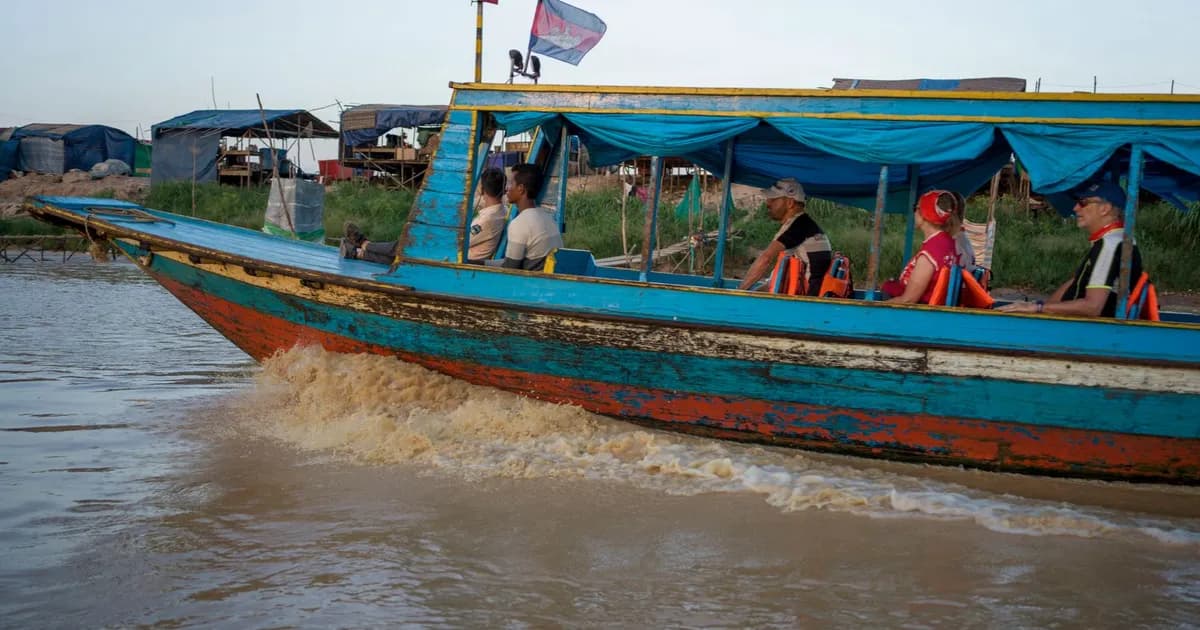
Beyond the market, Kep moves at an even slower pace than Kampot. There is a small national park with a loop trail through dry forest above the coast, quiet stretches of coastline for walking rather than swimming (the beaches here are modest by Cambodia's standards), and short boat trips out to Koh Tonsay, or Rabbit Island, a low-key island with a handful of bungalow operations and no real infrastructure beyond hammocks and grilled fish. Travelers piecing together a longer, slower Cambodia itinerary often treat Kep as the final stop before flying home, a deliberate deceleration after weeks of moving. For context on how this fits the country's wider slow-travel routing, the guide to where to go and when across Cambodia lays out how the southern coast connects to the rest of a longer trip.
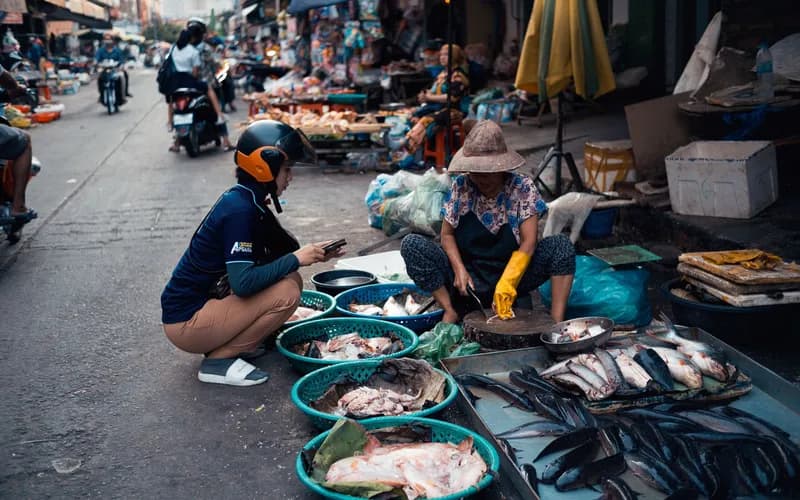
The pace of Kep is easy to underestimate from a guidebook description. There is genuinely little to do beyond eat, walk, and look at the sea, and that is precisely the point for travelers who have spent the previous two weeks moving between temples, cities, and overnight buses. Several of the abandoned villas above the market are now informally accessible for a wander, roofless concrete shells overtaken by vines, and the contrast between that decay and the working crab boats below captures the region's layered history better than any single museum could.
Get matched with up to 5 trusted Cambodia agencies
- Free
- No obligation
- Up to 5 agencies
Where to sleep and what to eat
Kampot's accommodation runs from riverside guesthouses under fifteen dollars a night to a handful of boutique hotels in restored colonial buildings, most clustered within easy walking distance of the river and the old market. Kep has fewer options and a more resort-like character, with hillside bungalows and villa-style stays looking out over the Gulf of Thailand, generally at a higher price point than Kampot for a comparable standard of room. Neither town has the density of options found in Phnom Penh or Siem Reap, which is part of the appeal: booking ahead during the November-to-February high season is worth doing, but outside that window rooms are rarely hard to find on arrival.
Food in the region follows the same unhurried logic as everything else. Kampot's night market and riverside restaurants serve Khmer staples alongside pepper-forward dishes built specifically around the local crop, most notably beef stir-fried with fresh green Kampot pepper, a dish that barely exists in this form anywhere the pepper is not grown. Kep's food scene begins and ends with the crab market, though a short walk inland turns up simpler noodle stalls and family-run kitchens serving the same Khmer home cooking found across the country, at a fraction of the market's prices. Travelers curious about how this fits the national picture can cross-reference the broader guide to Khmer cuisine and where to eat across Cambodia before mapping out meals for a longer trip.
Getting there and getting around
Kampot and Kep sit roughly 150 kilometers south of Phnom Penh, a comfortable three-to-four hour bus or private taxi ride on a paved road, and most travelers arrive this way rather than flying, since neither town has an airport. Buses run multiple times daily from Phnom Penh's main terminals, and shared or private taxis cost more but cut the journey closer to three hours. Coming from Siem Reap adds a connection through Phnom Penh, so travelers on tighter timelines sometimes fly into the capital directly and route the coast as a separate leg of the trip; the airport, entry fee, and routing side of that decision is covered in more detail in the current Cambodia airport and entry update for 2026.
Once in the region, Kampot and Kep are connected by a short 25-to-30-minute tuk-tuk or taxi ride, and both towns are compact enough to explore on foot for the center, with a rented scooter or bicycle the standard way to reach pepper farms, Bokor's base trails, or the quieter stretches of coast. There is no ride-hailing app coverage here, so tuk-tuk and moto-taxi fares should be agreed before setting off; a short hop across either town typically runs one to two dollars. Within Kampot and Kep, prices are low enough that transport is rarely the limiting factor on a slow itinerary; the limiting factor is simply deciding to stay another day rather than moving on.
What to do next
- Block at least three full days for Kampot and Kep together — two nights is the minimum to see both towns without rushing, four or five lets the pace actually slow down.
- Book a pepper farm visit for the morning, when the light is best for the walk through the vines and the heat has not yet set in.
- Set aside a full day, not a half-day, for Bokor National Park, including the waterfalls near the base and the hilltop ruins.
- Time the Kep Crab Market for lunch, when the boats have just come in and the crab is at its freshest.
- If continuing to Siem Reap, check current transport links and consider travel agencies operating across Cambodia who can arrange private transfers or combined itineraries rather than booking each leg separately.
- Pack for temperature swings: coastal humidity at sea level, noticeably cooler air on Bokor's summit.
Frequently Asked Questions
How many days should I spend in Kampot and Kep?
Three full days is a workable minimum: one for Kampot town and a pepper farm, one for Bokor National Park, and one for Kep and the crab market. Slow travelers who want to add a night on Koh Tonsay or simply sit still should plan for four to five days.
Is Kampot or Kep better for a first visit?
Kampot has more infrastructure, restaurants, and things to structure a day around, making it the better base. Kep is smaller and quieter, and works well as a shorter, more contemplative add-on rather than a standalone base, unless the traveler specifically wants beach stillness over riverside town life.
Do I need a guide for Bokor National Park?
Not strictly. The road is paved and the ruins are open to independent visitors, but a guide adds context on the site's colonial and civil-war history that is otherwise easy to miss, and a shared van trip from Kampot removes the need to navigate the mountain's switchbacks alone.
What is Kampot pepper and why is it well known?
Kampot pepper is grown in a small, protected region around Kampot under a geographical indication status, similar to the legal protection given to Champagne. The specific combination of humid coastal air and red soil produces a pepper that chefs across the region rate highly, and farm visits explain the growing and drying process behind red, black, and white peppercorns from the same plant.
Can I visit Kampot and Kep as a day trip from Phnom Penh?
Technically yes, given the three-to-four hour drive each way, but it defeats the point of the region, which rewards slowing down rather than covering ground. An overnight stay, at minimum, is strongly recommended.
Is Koh Tonsay (Rabbit Island) worth the trip from Kep?
For travelers who want a genuinely undeveloped island with basic bungalows, hammocks, and grilled fish rather than resort infrastructure, yes. It is a short boat ride from Kep and best treated as an overnight rather than a rushed day trip.
What is the best time of year to visit Kampot and Kep?
The dry season from November to February brings cooler, more comfortable weather and is the most popular window. The shoulder months of March and October also work well for travelers who prefer fewer visitors and don't mind a higher chance of rain.