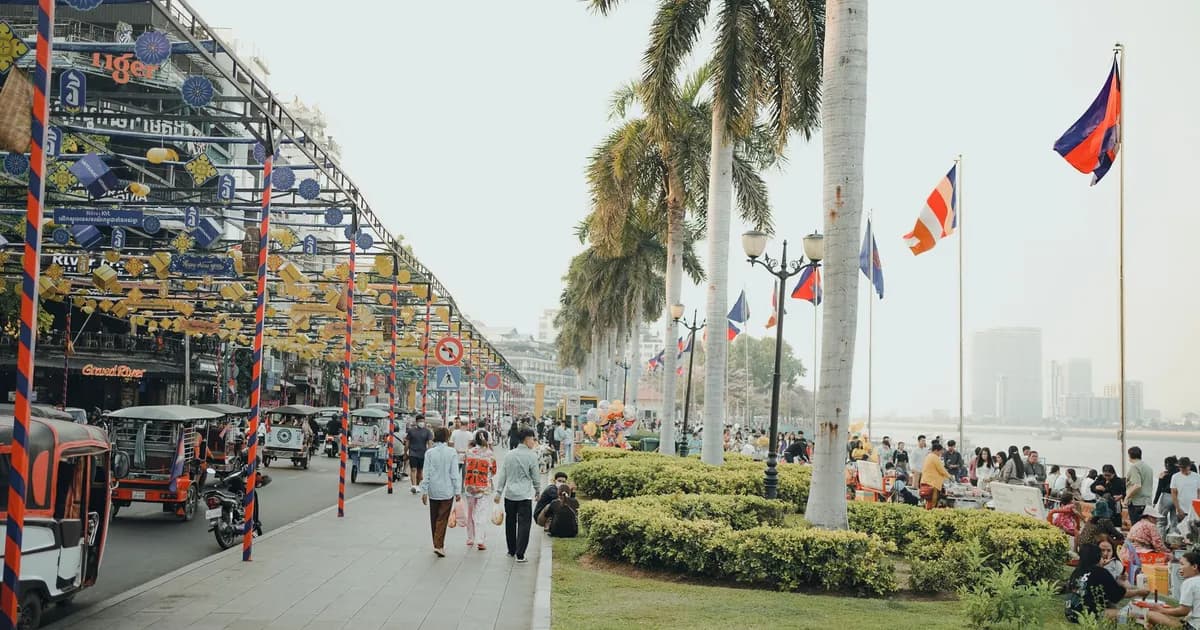

For a decade, Cambodia's tourism story had one center of gravity: Angkor. Siem Reap grew around the temples, international arrivals were counted largely by how many people passed through Angkor Archaeological Park's gates, and the rest of the country was treated, in most marketing and most itineraries, as an optional extra. In 2026, that story is visibly cracking, and the numbers behind the crack say more about where Cambodia's travel landscape is heading than any single new hotel opening or flight route.
The Angkor numbers are down, and by a lot
Cambodia's Ministry of Tourism data for the first months of 2026 shows a sharp contraction. International arrivals fell roughly 45 to 48 percent year-on-year across January through May, with Angkor Archaeological Park recording around 322,000 international visitors from January through April, down 32.1 percent against the same period in 2025, and ticket revenue down close to 30 percent alongside it. Several forces are compounding at once: disruption to Gulf transit routes tied to the Middle East crisis has cut off a meaningful share of layover-driven traffic, and China, Vietnam, and the United States, three of Cambodia's largest source markets, have all underperformed against the growth the sector had planned around.
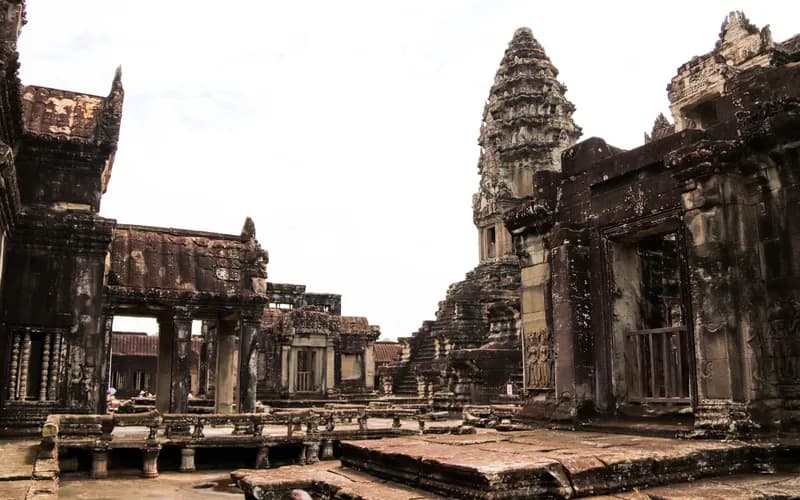
Numbers of that size are not a blip to be waited out. They are a structural signal, and Cambodia's tourism authorities have responded with what amount to urgent recovery measures for Siem Reap specifically, from marketing pushes in alternate source markets to pricing and access adjustments aimed at rebuilding the temple circuit's volume. For travelers, the practical upside is real: fewer crowds at Angkor Wat's sunrise viewpoints and Ta Prohm's root-strangled corridors than at any point in recent memory, a rare window covered in more detail in the current temple etiquette and multi-day pass guide.
This is not the first downturn Cambodia's tourism sector has weathered, but it is the first one this pronounced since the pandemic-era collapse, and it is happening under different conditions. The 2020-2021 shock was a near-total shutdown followed by a broad-based recovery once borders reopened. The 2026 contraction is narrower and more targeted: it is concentrated in the Angkor-Siem Reap corridor and in specific source markets, while other parts of the country and other traveler segments are largely unaffected or even growing. That distinction matters for anyone trying to read what comes next, because it points toward a rebalancing rather than a collapse.
One request. Up to five tailored proposals.
Skip contacting agencies one by one — share your trip once and let up to five trusted Cambodia agencies come to you. Free, with no obligation.
Get my free quotesThe coast is telling a different story
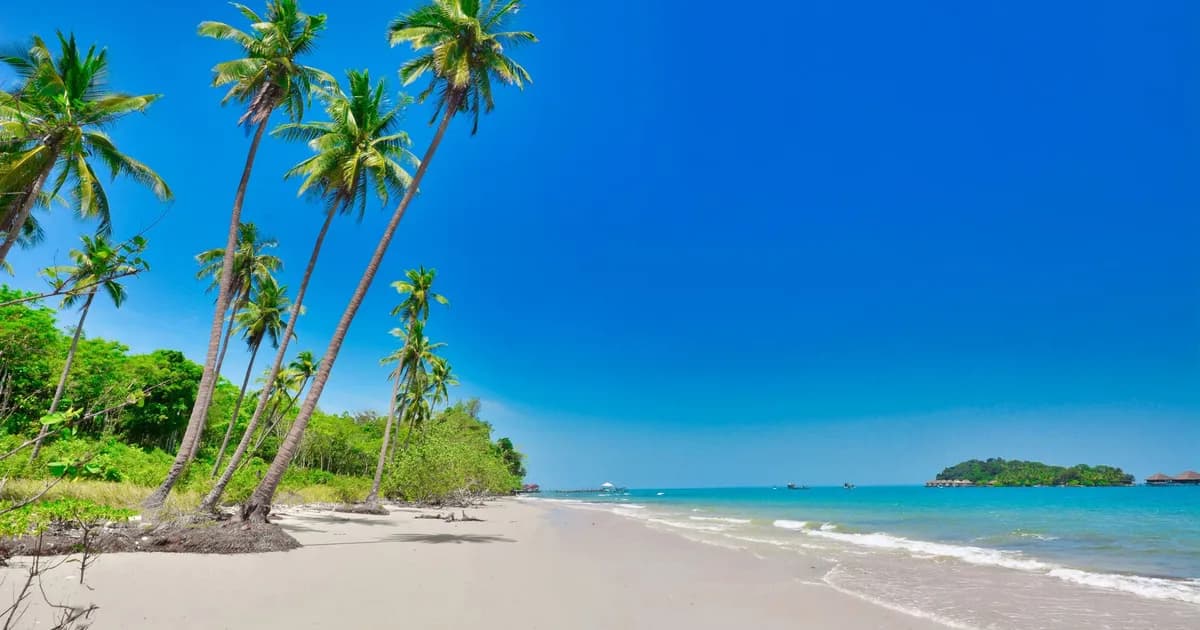
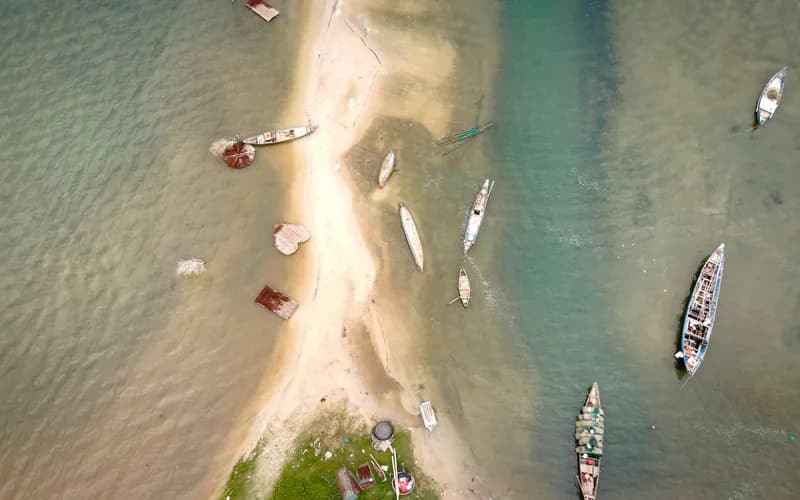
While Siem Reap absorbs the drop, Cambodia's coastal provinces are moving in the opposite direction. Foreign arrivals to the coastal region grew 1.1 percent over the same January-to-May window, a modest but real increase against Angkor's double-digit decline, and Preah Sihanouk province specifically rose 9.8 percent, with arrivals through Sihanoukville's airport more than doubling from what was admittedly a small base. That is not a rounding error against Angkor's numbers, but it is a genuine divergence, and it lines up with what independent travelers and slow-travel operators have been reporting anecdotally for the past two seasons: interest shifting toward Kampot, Kep, and the islands off Sihanoukville, places covered in the Kampot and Kep regional guide, rather than exclusively toward the temple circuit.
Part of this is infrastructure catching up with demand. New airport capacity, including a fully operational Techo International Airport outside Phnom Penh and a modernized Siem Reap-Angkor International Airport, has changed how travelers can route a Cambodia trip, making it more practical to build a multi-region itinerary than to fly in and out of a single hub. Part of it is also a broader regional pattern: overtourism pressure at flagship sites across Southeast Asia has pushed a segment of travelers toward secondary and tertiary destinations that offer a comparable cultural or natural draw without the volume, and Cambodia's coast, long overlooked next to Thailand's more developed beach resorts, is a direct beneficiary.
A quiet pivot toward community and eco tourism
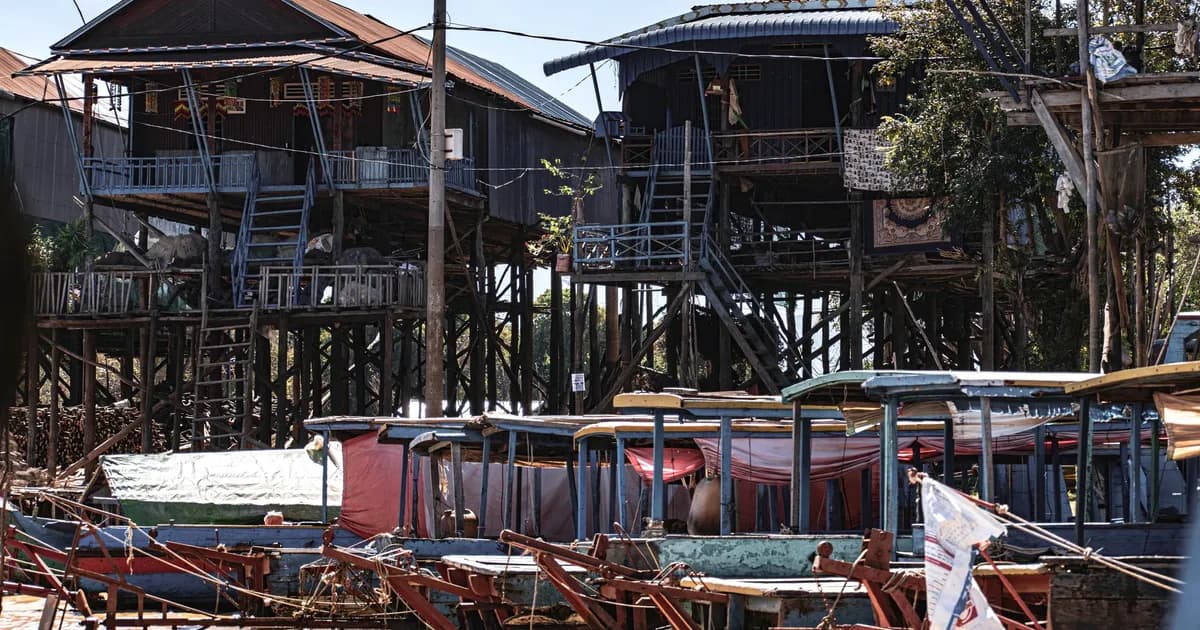
Underneath the arrival numbers, a second and arguably more durable shift is happening: a move, encouraged by both government tourism strategy and a new generation of smaller operators, away from a single-site, ticket-driven model and toward community-based and eco-tourism experiences spread across the country. Homestay networks in Mondulkiri and Ratanakiri built around indigenous-led elephant sanctuaries, community forestry projects in the Cardamom Mountains, and rural stays that put income directly into village hands rather than large concessions are no longer a niche add-on marketed to a small segment of backpackers. They are increasingly positioned as part of the national tourism strategy's answer to over-reliance on Angkor.
This matters for the shape of Cambodia tourism beyond 2026 for a specific reason: single-site dependency is fragile in exactly the way the current numbers demonstrate. A geopolitical disruption to one transit hub or a slowdown in one source market can knock a third of a country's visitor economy in a matter of months when that economy is concentrated around one park and one city. A tourism base spread across the coast, the northeast highlands, and rural community-tourism circuits, alongside Angkor rather than instead of it, is structurally more resilient, and 2026's numbers are the clearest evidence yet of why that diversification is being pursued with real urgency rather than treated as a marketing slogan.
The scale of this pivot should not be overstated. Angkor and Siem Reap still account for the largest single share of Cambodia's international tourism revenue by a wide margin, and no realistic strategy replaces that in the near term. What is changing is the marginal traveler, the one deciding for the first time between Cambodia and a competing regional destination, or the returning visitor building a second Cambodia trip after an initial temple-focused visit. Both groups are increasingly being pointed toward the coast, the northeast, and rural community circuits rather than toward a second pass through Angkor, and that marginal shift, compounded over several tourism seasons, is what reshapes a country's travel landscape over time even without a single dramatic policy announcement.
Get matched with up to 5 trusted Cambodia agencies
- Free
- No obligation
- Up to 5 agencies
How operators on the ground are already adapting
The shift shows up most clearly in how tour operators are restructuring what they sell. Itineraries that once opened with three nights in Siem Reap and closed with a Phnom Penh layover are increasingly built as loops: Phnom Penh to Kampot and Kep, up through the capital to Siem Reap, then out to a rural or highland add-on before departure, rather than a single-city focus with day-trip options bolted on. Smaller, specialist operators have moved faster on this than large-volume agencies, in part because their client base already skews toward travelers seeking a distinctive itinerary rather than a checklist of top sights.
Accommodation supply is following the same pattern with a lag, as it always does. Boutique guesthouses and small hotels have opened at a faster clip on the coast over the past two tourism seasons than in Siem Reap, and while Angkor's hotel stock remains far larger in absolute terms, the growth rate now favors the regions the arrival numbers already point toward. For travelers, this translates into more genuine choice outside the temple circuit than existed even three years ago, and a planning window where booking early is less critical on the coast than it has traditionally been around Angkor during peak season.
What this means for planning a trip in 2026
For travelers, the practical takeaway is not that Angkor should be skipped. It remains one of the most significant architectural and religious sites on earth, and the current dip in numbers is, if anything, a better time to visit than the crowded years before it. The takeaway is that a Cambodia itinerary built only around Siem Reap now looks increasingly out of step with both where the country's tourism strategy is heading and where the more interesting, less crowded experiences already are. A route that pairs Angkor with the southern coast, or with a community-tourism stay in the northeast, better reflects both the current state of the country and the direction it is moving.
Booking through operators who understand this shift, rather than agencies still selling a Siem-Reap-only package, also matters more than it did five years ago.
There is also a pricing dimension worth factoring in. Reduced demand at Angkor has not translated into lower ticket prices, which have held steady for several years regardless of visitor volume, but it has softened prices on accommodation, guides, and tuk-tuk hire in Siem Reap, where operators are competing harder for a smaller pool of visitors. Combined with generally lower costs on the coast compared with more developed Southeast Asian beach destinations, 2026 is shaping up as a comparatively favorable year for travelers on value grounds, even as it is a difficult one for the operators depending on volume. The travel agencies working across Cambodia that have adapted their itineraries to include the coast and rural community stays are generally better positioned to plan a trip that reflects 2026's actual travel landscape rather than a template built for 2016.
What to do next
- Build a Cambodia itinerary that spans at least two regions, pairing Angkor with either the southern coast or a northeastern highland stay, rather than concentrating the whole trip around Siem Reap.
- Treat 2026's lower Angkor crowds as a genuine planning advantage and book temple visits without the urgency that peak-season years required.
- Look specifically for operators and homestays that describe themselves as community-based or income-sharing, since these are the concrete form the diversification strategy takes on the ground.
- Check current airport routing before booking flights, since the practical entry points into Cambodia have changed meaningfully over the past year.
- Revisit how slow travel maps across Cambodia's regions when sequencing a longer trip, since a diversified itinerary works best when paced deliberately rather than compressed.
Frequently Asked Questions
Is Angkor Wat still worth visiting in 2026 given the drop in visitors?
Yes, and arguably more so than in recent peak years. The site itself is unchanged; what has changed is the crowd size, meaning shorter queues, quieter courtyards, and more space at sunrise viewpoints that were often packed shoulder-to-shoulder in 2023 and 2024. Guides and tuk-tuk drivers in Siem Reap also have more time per visitor, which in practice means more thorough explanations at each temple rather than a rushed handoff to the next group.
Why have Cambodia's tourist arrivals dropped so sharply in 2026?
The decline is driven by several overlapping factors: disruption to Gulf transit hubs linked to the Middle East crisis, which cut a portion of layover traffic, alongside underperformance from China, Vietnam, and United States source markets that Cambodia's tourism sector had built growth projections around.
Is the whole country seeing fewer visitors, or just Siem Reap?
It is uneven. Siem Reap and Angkor have absorbed the sharpest declines, while coastal provinces, particularly Preah Sihanouk, have actually seen arrivals grow over the same period, reflecting a broader shift in where travelers are choosing to go.
What does community-based tourism actually mean in Cambodia?
It generally refers to tourism experiences, such as homestays, guided treks, or wildlife encounters, that are owned or co-managed by local communities rather than external concessions, with a larger share of revenue staying in the village or region where the experience takes place.
Has the opening of new airports changed how people should plan a Cambodia trip?
Yes. With Techo International Airport near Phnom Penh now fully operational alongside a modernized Siem Reap-Angkor International Airport, multi-region itineraries that don't funnel everyone through a single airport are more practical than they were even two years ago.
Should I still book a multi-day Angkor Pass if crowds are lower?
Yes. A multi-day pass still spreads out the physical and logistical demands of visiting a large archaeological park, and lower crowds make the extra days even more worthwhile, since popular temples can be visited at less crowded hours without the same competition for space.
Is this tourism shift likely to continue past 2026?
The structural drivers behind it, source-market diversification and geographic diversification within Cambodia itself, are long-term strategic priorities rather than one-year responses, so the broader pattern of growth outside Siem Reap is likely to continue even if arrival numbers recover.