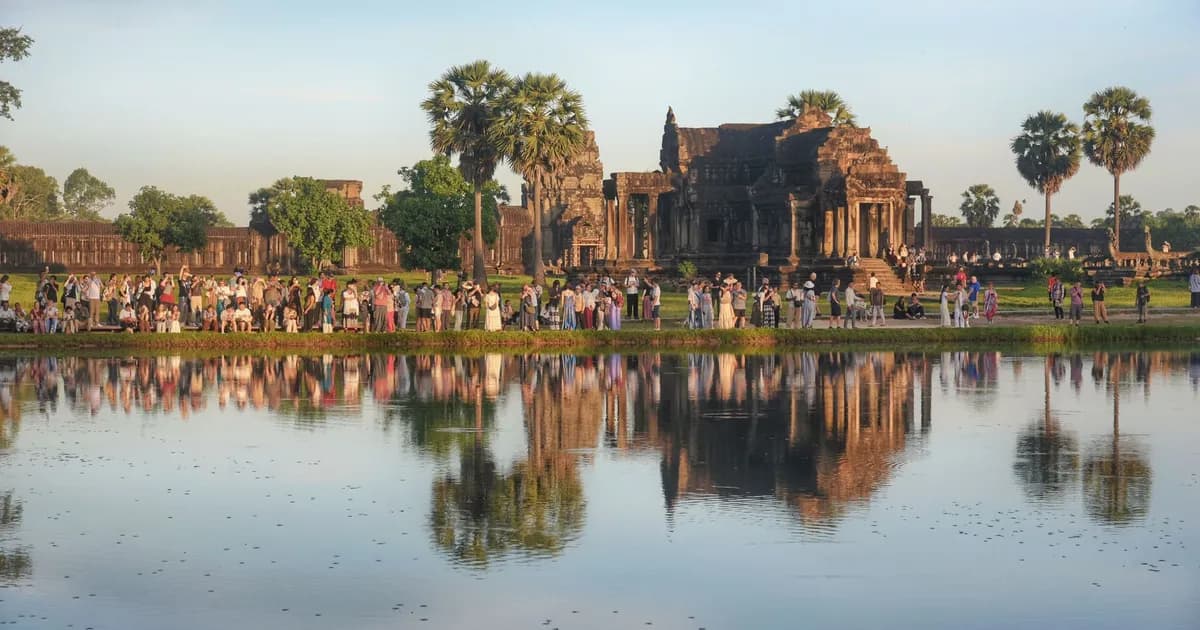

Angkor Archaeological Park is not one temple and a photo stop. It is a 400-square-kilometer site with dozens of structures spanning nearly six centuries of Khmer architecture, still an active place of worship in parts, and increasingly a place where how a visitor behaves matters as much as what they see. Getting the practical logistics right, the pass, the pacing, the etiquette, is what separates a rushed loop through three famous temples from a trip that actually understands the place.
Choosing the right pass: one day, three days, or seven
Angkor tickets, sold as the Angkor Pass, come in three tiers: a one-day pass at 37 dollars, a three-day pass at 62 dollars, valid for any three days within a ten-day window, and a seven-day pass at 72 dollars, valid for any seven days within a month. Prices have held steady for several years, and all three cover the same ground: Angkor Wat, Angkor Thom and the Bayon, Ta Prohm, and the full range of outlying temples including Banteay Srei, Beng Mealea, and Kbal Spean.
The one-day pass suits only the tightest layover-style visit and forces a compressed loop through the two or three most famous sites. The three-day pass is the realistic minimum for seeing the park properly without rushing, and the flexible ten-day window means those three days don't need to be consecutive, useful for pairing temple visits with a rest day or a side trip to Siem Reap town. The seven-day pass, at only ten dollars more than the three-day option, is the better value for slow travelers who want to see the second- and third-tier temples without pressure, since many of the most rewarding sites in the complex, Preah Khan, Banteay Samre, the more remote parts of the Roluos group, see only a fraction of Angkor Wat's visitor volume and reward unhurried exploration. A useful rule of thumb: if a temple appears on nearly every social media feed of Angkor, expect company; if it takes an extra thirty minutes of driving to reach, expect near-solitude, and the seven-day pass is what makes chasing that solitude affordable rather than a rushed afterthought squeezed into a three-day itinerary.
One request. Up to five tailored proposals.
Skip contacting agencies one by one — share your trip once and let up to five trusted Cambodia agencies come to you. Free, with no obligation.
Get my free quotesBuilding a pace instead of a checklist
The standard mistake is treating Angkor like a single attraction with satellite stops, cramming Angkor Wat, Bayon, and Ta Prohm into one exhausting day under the midday sun. A better approach spreads major sites across separate days and pairs one big-name temple with two or three quieter ones, rather than stacking three headline sites back to back. Early mornings, gates open at 5 a.m., are worth the wake-up call twice over: for the light, and because heat and crowd density both climb sharply after 9 a.m.
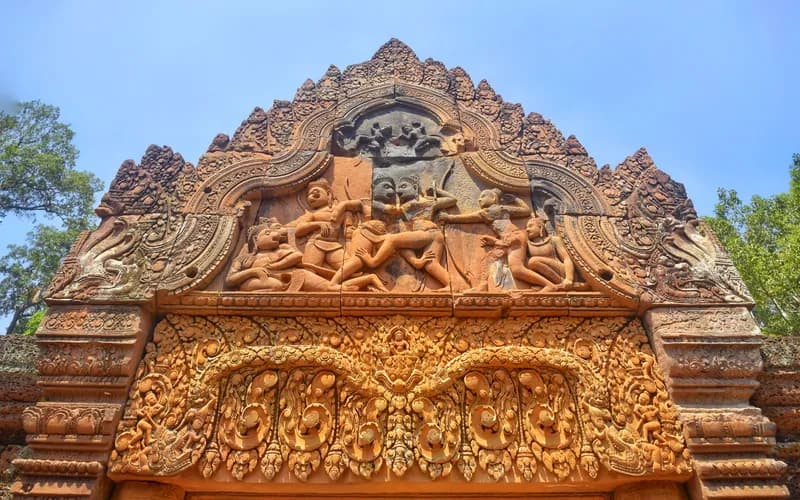
A workable three-day structure looks like this: day one at Angkor Wat for sunrise followed by a quiet mid-morning at Banteay Srei, an intricately carved pink sandstone temple a genuine hour's drive from the main complex; day two at Angkor Thom and the Bayon early, then Ta Prohm before the tour-bus crowds arrive around midday; day three at the outlying temples of the Roluos group or a full-day trip to Beng Mealea, a jungle-swallowed ruin left largely unrestored. This pacing also fits naturally with the region's wider slow-travel routing.
Temple etiquette that actually matters
Angkor is a working religious site in parts, not an open-air museum, and the etiquette expectations follow from that. Shoulders and knees should be covered at all times, not just at Angkor Wat's central sanctuary, since informal enforcement varies but the expectation is consistent across the park; a light scarf or sarong solves this without requiring long trousers in tropical heat. Shoes come off before entering any elevated inner sanctuary or active shrine, a rule enforced far more strictly than most first-time visitors expect.
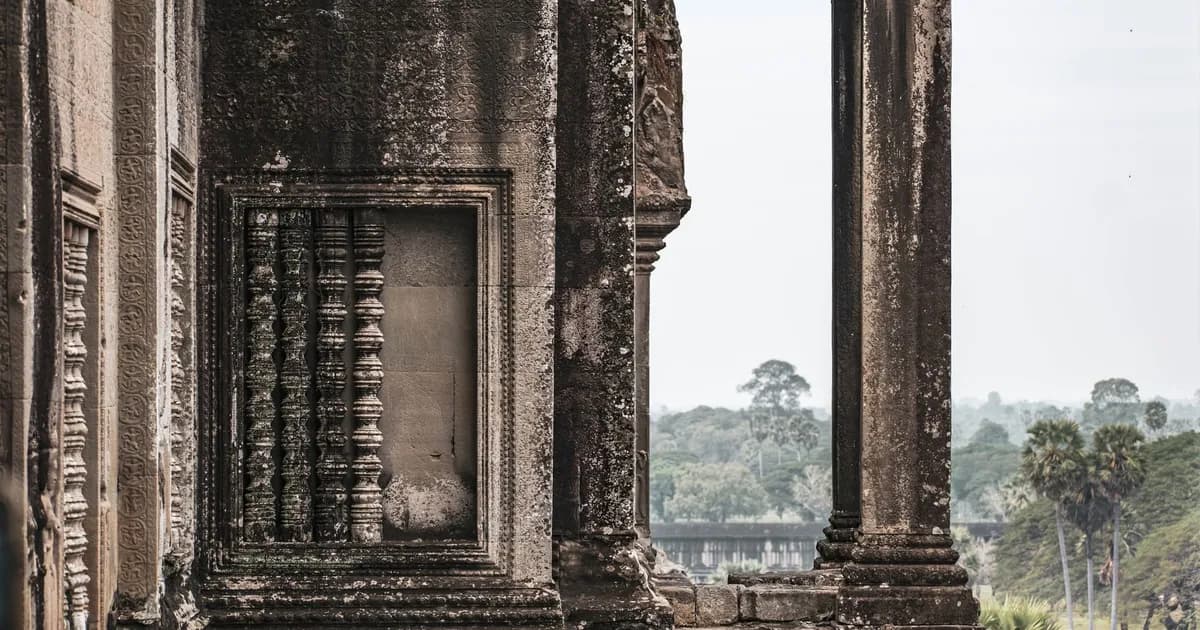
Photography etiquette deserves more attention than it typically gets. Monks and worshippers at active shrines should be asked before being photographed, not treated as scenery, and flash photography near fragile carvings and painted surfaces causes real, cumulative damage over thousands of daily exposures. Climbing on ruins outside marked paths, sitting on Buddha statues or architectural elements for photos, and touching bas-reliefs are all more consequential than they look in the moment: Angkor's sandstone is genuinely fragile, and restoration teams from multiple countries have spent decades working to stabilize structures that careless foot traffic actively undermines. None of this requires rigid formality, it simply requires treating the site as what it is: a living monument rather than a backdrop.
Get matched with up to 5 trusted Cambodia agencies
- Free
- No obligation
- Up to 5 agencies
Guides, drivers, and getting between temples
Angkor Archaeological Park is far larger than it looks on a map, and the distances between outlying temples rule out walking as a primary strategy. Most independent travelers hire a tuk-tuk driver for the day, typically 15 to 20 dollars depending on the route and distance to outlying sites, which includes waiting time at each stop and the flexibility to adjust the day's pace on the fly. A licensed guide, hired separately or through a local agency, adds historical and architectural context that is easy to miss entirely without one, particularly at less-documented sites like the Roluos group, where there is minimal signage. Costs for a full-day licensed guide typically run 25 to 40 dollars on top of a driver, a worthwhile add-on for at least one of the three days even for travelers who plan to explore independently the rest of the time.
Booking through an established local operator rather than an unlicensed freelancer, particularly for a multi-day guide arrangement, is worth the modest price difference; the travel agencies working across Cambodia generally vet drivers and guides more carefully than a same-day street arrangement allows.
Beyond the big three: where the crowds thin out
Angkor Wat, the Bayon, and Ta Prohm draw the overwhelming majority of visitors, which means the rest of the park, still dozens of significant structures, sees comparatively little foot traffic even during peak season. Preah Khan's long, atmospheric corridors, Ta Som's single tree-swallowed gate, and the laterite terraces of the Roluos group, Cambodia's oldest surviving Angkorian-era temples, offer a genuinely different, quieter register of the same architectural tradition. For travelers factoring the cost of guides, passes, and transport into an overall budget, the current Cambodia trip cost guide breaks down realistic daily spending across exactly these categories. 2026's broader dip in Angkor visitor numbers, tied to wider shifts in Cambodia's tourism landscape, has made even the headline sites noticeably calmer than in recent peak years, but the outlying temples remain the more reliable escape from any crowd, regardless of the year's overall visitor count.
What the 2026 tourism shift means for a temple visit
Angkor's visitor numbers have dropped sharply in 2026, part of a wider rebalancing across Cambodia's travel landscape that has sent more travelers toward the coast and the northeast highlands. For anyone visiting Angkor this year, the practical effect is a genuinely calmer park: shorter lines at ticket checkpoints, easier parking for tuk-tuks near popular entrances, and guides with more time to spend at each stop rather than shuttling groups through on a tight schedule. It is not a reason to rush a visit even faster through fewer temples; if anything, the lighter crowds make the case for the three- or seven-day pass even stronger, since the outlying temples that were already quiet are now close to empty on an average weekday.
What to do next
- Buy at least a three-day Angkor Pass rather than a one-day ticket, and use the ten-day validity window to pace visits rather than cramming them together.
- Arrange a tuk-tuk driver or guide the day before through a guesthouse or licensed operator rather than negotiating cold at the entrance gate.
- Pack a lightweight scarf or sarong for shoulder and knee coverage, and plan for a 5 a.m. start on at least one day to catch sunrise light before the heat and crowds build.
- Prioritize two or three outlying temples, Banteay Srei, Preah Khan, or the Roluos group, alongside the headline sites rather than skipping them for a shorter loop.
- Ask before photographing monks or worshippers, and keep flash off entirely near carvings and painted interiors.
Frequently Asked Questions
How many days do I need for Angkor Archaeological Park?
Three days is the realistic minimum to see the site without rushing, using the flexible ten-day window on the three-day pass. Slow travelers with more time benefit from the seven-day pass, which allows the outlying, less-visited temples to be explored at an unhurried pace.
What should I wear to visit the Angkor temples?
Shoulders and knees covered at all times, with shoes that are easy to remove and put back on, since footwear comes off before entering elevated inner sanctuaries. A light scarf or sarong is the most practical solution for tropical heat combined with the coverage requirement.
Can I buy an Angkor Pass online before arriving?
Yes, tickets can be purchased in advance through the official Angkor Enterprise system, and doing so ahead of an early sunrise visit avoids queuing at the ticket office in the dark. Passes include a photo taken at purchase, used for identity verification at each temple entrance.
Is it disrespectful to take photos inside the temples?
Photography is generally permitted throughout the park, but monks and worshippers at active shrines should be asked before being photographed, and flash should never be used near carvings or painted surfaces. Climbing on ruins or sitting on statues for photos is both disrespectful and physically damaging to fragile structures.
What is the best order to visit the temples in?
There is no single correct order, but pairing one headline site with two quieter ones each day, rather than stacking Angkor Wat, Bayon, and Ta Prohm into a single day, produces a far better pace. Starting with Angkor Wat at sunrise on day one is the most common and effective opening.
Do I need a guide, or can I visit independently?
Independent visits are entirely possible with a hired tuk-tuk driver for transport between sites, but a licensed guide adds historical and architectural context that is easy to miss, particularly at less-documented outlying temples with minimal on-site signage.
Are the Angkor temples less crowded in 2026?
Yes, noticeably so. Cambodia's Angkor Archaeological Park has seen international visitor numbers drop significantly in 2026 compared with the previous two years, which in practice means shorter queues and more breathing room at even the most famous sites, though the outlying temples remain the most reliable option for solitude regardless of the year. That combination, a historically significant site experiencing a temporary lull in demand, is unusual and unlikely to persist once the source-market disruptions behind the 2026 numbers ease.