Siem Reap Reinvented: How Cambodia's Temple Town Is Becoming a Destination in Its Own Right in 2026
For most of its modern life, Siem Reap has been treated as a means to an end: the town you sleep in so you can reach Angkor at dawn. Visitors flew in, saw the temples in two or three frantic days, and flew out again, barely registering the place itself. In 2026 that story is being deliberately rewritten. Facing a sharp downturn in visitor numbers and a dawning realisation that dependence on the temples alone is fragile, Siem Reap is reinventing itself as a destination worth staying in for its own sake. For the slow traveller, this is one of the most encouraging shifts in the region, because it rewards exactly the kind of lingering that the town long discouraged.
This is not marketing gloss. It is a strategic response to real pressure, and it is reshaping what a trip to Siem Reap can be. Understanding the change helps you plan a richer, slower visit, one that treats Angkor as the centrepiece of a longer stay rather than the whole reason for it.
The problem the town is confronting
Siem Reap's reinvention is being driven by necessity as much as vision. The province has seen a steep fall in visitors, with arrivals in the first four months of 2026 down sharply on the previous year, and both domestic and international numbers declining. That drop has concentrated minds. A town whose economy rests almost entirely on a single, if spectacular, attraction is dangerously exposed, and the pandemic years made that vulnerability painfully clear.
The response has been a collective push, articulated at forums and in provincial planning, to broaden what Siem Reap offers. The explicit goal is to ensure the destination's identity is defined by more than its stone monuments, so that visitors have reasons to stay longer, spend more widely and return. It is a textbook case of a mature destination trying to move from volume to value, and it is happening in real time.
One request. Up to five tailored proposals.
Skip contacting agencies one by one — share your trip once and let up to five trusted Cambodia agencies come to you. Free, with no obligation.
Get my free quotesReclaiming the river and the streets
The most visible strand of the reinvention is physical. Major works along the Siem Reap River have created green corridors, cycling paths and public spaces designed to draw people into the town itself rather than simply shuttling them to and from the temples. The idea is to make the town a place to walk, cycle and linger, turning what was once just a transit hub into an environment worth spending unhurried time in.
For the slow traveller this is very good news indeed. A walkable, greener town with riverside paths and public space is precisely the kind of setting that rewards staying put: morning cycles, evening strolls, coffee stops and the slow accumulation of a sense of place. It shifts Siem Reap from somewhere you pass through to somewhere you inhabit, if only for a few days.
Living heritage and the craft revival
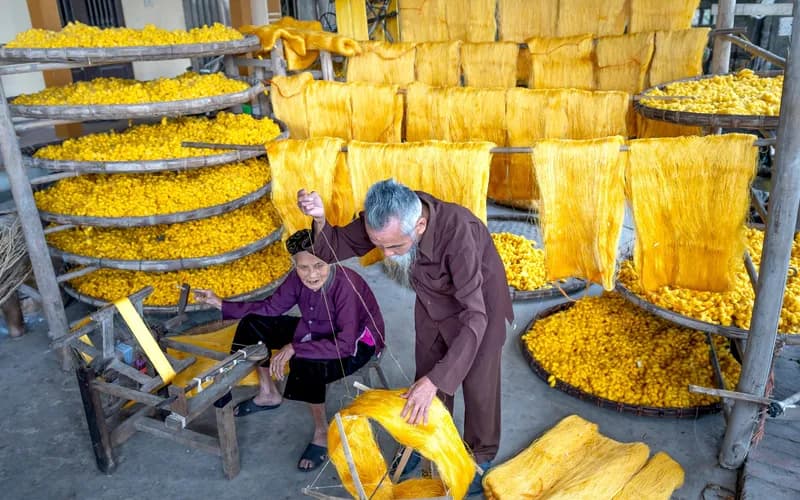
The second strand is cultural, and it plays directly to slow-travel instincts. Institutions such as Artisans Angkor, which trains hundreds of Cambodians in stone carving, silk weaving and lacquer work, have become anchors for a new kind of itinerary built around living heritage rather than ancient ruins alone. Alongside them, a growing scene of galleries, design boutiques and handicraft markets offers ways to engage with contemporary Khmer creativity and to support local artisans directly.
This matters because it gives visitors a reason to spend time and money in ways that stay in the local economy and sustain real skills. Watching a silk weaver at work, or buying a piece of lacquer straight from its maker, is a slower, more meaningful transaction than a mass-produced souvenir, and it connects you to a living culture rather than a dead one. It is the temples' human counterpart, and it deepens a visit considerably.
Get matched with up to 5 trusted Cambodia agencies
- Free
- No obligation
- Up to 5 agencies
Beyond the temples: cooking, villages and countryside
The reinvention also encourages visitors to combine Angkor with a wider set of experiences: cooking classes, cultural performances, and visits to the villages and countryside around the town. This diversification is exactly what turns a two-day temple dash into a week-long immersion. A morning at a lesser-known temple, an afternoon learning to cook Khmer food, a day cycling through rice-field villages, an evening at a shadow-puppet performance, this is a fuller, slower way to experience the region.
None of it displaces Angkor; it frames it. The temples remain the extraordinary heart of any visit, but they become one element of a richer whole. Our practical guide on how to plan your days at Angkor helps you give the temples the unhurried attention they deserve, while leaving room for everything else the town now offers.
What it means for the slow traveller
The upshot of all this is that Siem Reap in 2026 finally rewards the traveller who wants to slow down. Where the old model punished lingering, offering little to do once the temples were seen, the emerging town actively invites it, with a walkable centre, a craft and food scene, and countryside on its doorstep. The fall in visitor numbers, for all that it worries the local economy, also means the temples themselves can be quieter than in the boom years, especially away from the headline sites.
This dovetails with a broader rebalancing of Cambodian tourism, in which the coast has been rising even as Angkor's dominance eases, a shift we examine in our piece on why the coast is rising as Angkor cools. Together, these trends point to a Cambodia that is spreading out, deepening, and becoming far more interesting for travellers who value depth over speed.
How to travel Siem Reap now
The practical lesson is simple: give Siem Reap more time than the old three-day formula. Build in days that have nothing to do with temples, use the new riverside spaces, seek out the craft workshops and the village countryside, and let the town reveal itself. Treat Angkor as the magnificent core of the stay, but not the entirety of it. This is precisely the ethos of our slow-travel charter: to travel less, but deeper, and to let a place be more than its single most famous sight.
A good local operator can help you build this kind of layered, slower itinerary, weaving temples, crafts, food and countryside into a coherent whole, and our plan your journey page is a sensible place to start shaping it.
The risk, the opportunity and the honest picture
It would be misleading to present Siem Reap's reinvention as a finished success; it is a work in progress, driven by a genuine downturn, and it carries both risk and opportunity. The risk is real: a town so dependent on a single attraction, now facing falling numbers, is under economic strain, and the businesses and families who rely on tourism are feeling it. Some of the ambitious plans will take years to bear fruit, and not all of them will land. An honest traveller should hold this context in mind rather than treating the reinvention as a polished marketing story.
The opportunity, though, is equally real, and it points in a direction that suits thoughtful travellers well. A town actively trying to broaden beyond mass temple tourism, to invest in public space, living heritage and local craft, is a town becoming more rewarding to spend time in, not less. Every traveller who chooses to stay longer, to spend in local workshops and family-run businesses, and to explore beyond the headline temples, is quietly supporting exactly the kind of diversification the town needs. In that sense, slow travel is not just a nicer way to visit Siem Reap; it is aligned with the town's own best interests.
This is what makes the current moment such an interesting one to visit. You arrive at a place mid-transformation, where the old model of the two-day temple dash sits alongside an emerging vision of a richer, slower destination. The temples remain as extraordinary as ever, but around them a town is trying to become something more, and travellers who lean into that shift will find a Siem Reap that is quieter, deeper and more human than the one the guidebooks of a few years ago describe. It is, in short, a destination rediscovering itself, and there are few more satisfying places to be than somewhere on the way up rather than merely coasting on past glory.
For the traveller weighing whether to go, the answer is that there has rarely been a better moment: fewer crowds at the temples, a town investing in becoming more than a gateway, and a genuine chance to support that change simply by staying longer and spending locally in its workshops, kitchens and family-run guesthouses.
What to Do Next
- Plan a longer stay than the traditional two or three days, giving Siem Reap time to be more than an Angkor base.
- Build in temple-free days for the river corridors, craft workshops, cooking classes and village countryside.
- Visit living-heritage institutions such as Artisans Angkor and buy directly from local makers.
- Use quieter visitor numbers to explore lesser-known temples away from the crowds.
- Combine Siem Reap with Cambodia's rising coast for a broader, slower trip, using our plan your journey page.
- Read our guide on planning your days at Angkor to give the temples the slow attention they deserve.
Frequently Asked Questions
Why is Siem Reap reinventing itself in 2026?
The town has faced a sharp fall in visitor numbers and a realisation that depending on Angkor alone leaves its economy fragile. The reinvention is a deliberate push to broaden its appeal so visitors stay longer and spend more widely.
Is Siem Reap worth more than a couple of days now?
Increasingly, yes. New riverside corridors, a growing craft and food scene, and countryside experiences give travellers reasons to linger well beyond the temples, making a longer, slower stay far more rewarding than the old temple dash.
Are the Angkor temples less crowded now?
The fall in visitor numbers means the temples can feel quieter than in the boom years, especially away from the most famous sites. Planning your visits carefully lets you find real calm even at popular temples.
What is there to do in Siem Reap besides Angkor?
A growing amount: riverside walking and cycling, craft workshops such as Artisans Angkor, galleries and markets, cooking classes, cultural performances, and cycling trips through the surrounding villages and rice fields.
What is Artisans Angkor?
It is a social enterprise that trains and employs Cambodians in traditional crafts such as stone carving, silk weaving and lacquer work. It has become a centrepiece of Siem Reap's living-heritage tourism, letting visitors see artisans at work and buy directly.
Does the reinvention change how I should plan a trip?
Yes. Rather than treating Siem Reap as a quick temple stop, plan a longer stay that layers Angkor with the town's crafts, food and countryside, which is both more rewarding and more in keeping with slow travel.
Keep reading
More from the ground · Cambodia