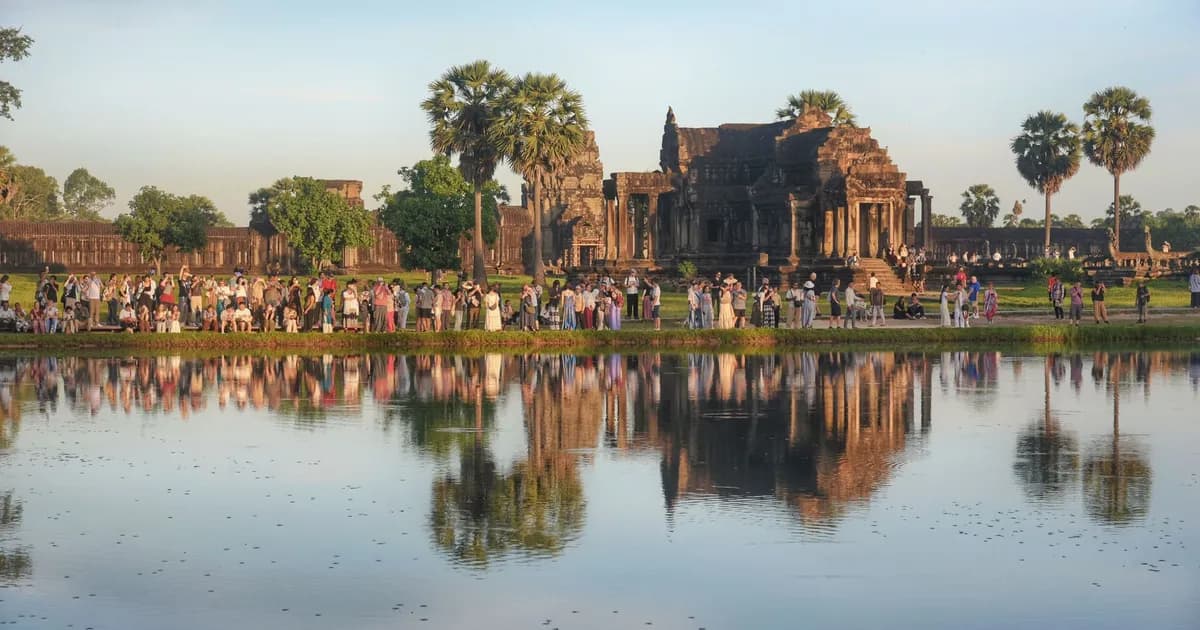
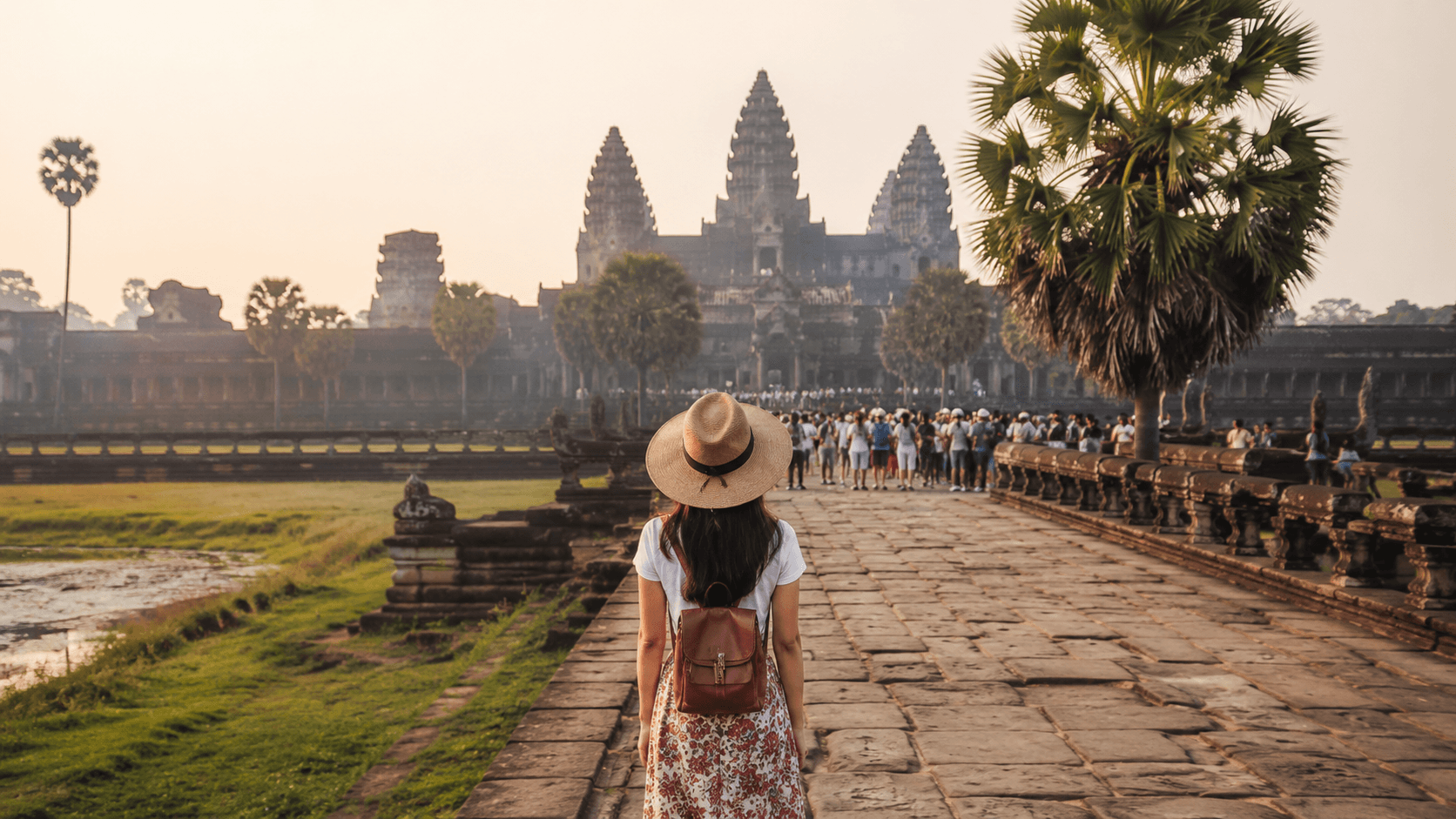

Cambodia funnels almost all of its visitors into one place — the temples of Angkor — and empties out almost everywhere else. Step beyond Siem Reap and you find a country that is quieter, wilder, cheaper, and in many ways more rewarding: colonial river towns, forested highlands, dolphin-filled stretches of the Mekong, one of Southeast Asia's great rainforests, and islands without a single paved road. This guide maps where to go to escape the crowds, and how to reach those places without losing the plot.
Why "Hidden" Cambodia Is the Better Cambodia
The crowded part of Cambodia is crowded for a reason — Angkor is one of the wonders of the world, and rightly draws millions. But its gravity is so strong that it leaves the rest of the country almost untouched. A small number of travelers ever venture past the temple circuit and Phnom Penh, which means vast, beautiful regions see only a trickle of visitors.
For a slow traveler, this is an opportunity rather than a problem. The quiet places are not consolation prizes. They are often the best of Cambodia — the same warmth, the same depth of culture, minus the tour buses and the markup, plus the thing the headline sites have partly lost: a sense that you are somewhere real, lived-in, and unhurried. They also tend to cost noticeably less, so your budget stretches further exactly where the experience is richer. The trade-off is that they take a little more effort to reach. That effort is the filter that keeps them quiet — and the reason they reward the traveler willing to make it.
One request. Up to five tailored proposals.
Skip contacting agencies one by one — share your trip once and let up to five trusted Cambodia agencies come to you. Free, with no obligation.
Get my free quotesBattambang: The Slow Heart of the West
Cambodia's second city feels nothing like a city. Battambang is a graceful, low-rise river town of crumbling French-colonial shophouses, a thriving arts scene, and an easygoing pace that invites you to stay longer than you planned. It is the most accessible of Cambodia's off-beat destinations — a few hours from Siem Reap — and the easiest introduction to the quieter country.
The pleasures here are gentle and local. Cycle or motorbike out into a countryside of rice fields, fruit farms, and small family workshops making rice paper, fish paste, and bamboo sticky rice. Ride the novelty bamboo train (norry), a single bamboo platform that skims the rails. Climb Phnom Sampeau at dusk to watch a vast river of bats pour from a cliff cave — and to confront, soberingly, its "killing caves," a memorial to the Khmer Rouge era. Above all, catch a performance by Phare Ponleu Selpak, the celebrated social-circus school whose graduates went on to found Siem Reap's famous circus. Battambang rewards days, not hours — it is a place to settle into rather than tick off.
The Northeastern Highlands: Mondulkiri and Ratanakiri
Cambodia's wild, cool, forested corner could hardly feel more different from the lowland temple plains, and it remains its least-visited region by a wide margin. The long road journey from Phnom Penh is exactly why it stays quiet.
Mondulkiri, the higher and cooler of the two provinces, is a landscape of rolling hills, pine stands, and breezy red-dirt roads around the small capital of Sen Monorom. It is the ancestral home of the indigenous Bunong people, whose culture differs markedly from the lowland Khmer, and the heart of Cambodia's ethical elephant tourism: at genuine sanctuaries here you walk alongside rescued elephants in forest rather than riding them — a model worth supporting over the riding camps found elsewhere. Add the thundering Bou Sra waterfall and forest treks with Bunong guides and you have one of the most distinctive experiences in the country.
Ratanakiri, to the north, is rawer and more remote. Its crown jewel is Yeak Laom, a near-perfect circular crater lake of clear, deep water ringed by jungle — one of the loveliest swimming spots in Cambodia. Around the capital Banlung lie waterfalls, gem-mining villages, and the forests and ethnic-minority communities of the far northeast. Both provinces ask for time and a tolerance for long, bumpy roads; both reward it with a Cambodia almost no package tour reaches.
Get matched with up to 5 trusted Cambodia agencies
- Free
- No obligation
- Up to 5 agencies
Kratie and the Mekong: Dolphins and River Towns
The stretch of the Mekong in the country's east is one of Cambodia's quiet joys, and its anchor is the laid-back river town of Kratie (kra-cheh). The draw is rare and special: just upriver at Kampi live some of the last Irrawaddy dolphins on earth, a critically threatened freshwater population of a few dozen animals. Watching them surface in the late-afternoon light from a small wooden boat — operated under conservation rules that protect them — is a genuinely moving experience, and your visit helps fund their protection.
Kratie itself is a place to slow down: faded colonial architecture, spectacular Mekong sunsets, and just across the water the island of Koh Trong, a sandbar of family homestays, fruit orchards, and bicycle paths where you can spend a night in deep rural quiet. Further north, Stung Treng and the flooded-forest channels toward the Lao border push even further off the map. This is river Cambodia at its most peaceful — and a natural, scenic link between the temple regions and the northeastern highlands.
The Cardamom Mountains: Cambodia's Wild Frontier
To the southwest, the Cardamom Mountains hold one of the largest and most important rainforests remaining in Southeast Asia — a vast, biodiverse wilderness of elephants, gibbons, sun bears, and hornbills, still partly unexplored and, encouragingly, increasingly protected. For travelers, it is Cambodia's frontier for genuine ecotourism.
The standout is Chi Phat, a former logging-and-poaching community in the Koh Kong Cardamoms that has reinvented itself around community-based ecotourism (CBET): guided jungle treks, mountain biking, river kayaking, and homestays, with income going directly to villagers who now have a reason to protect the forest rather than fell it. Nearby, the Tatai area offers a gentler taste of the same wilderness — riverside eco-lodges, a swimmable waterfall, and boat trips through mangrove and jungle, all within reach of the coast. Travelling here is not about comfort or sights in the conventional sense; it is about supporting a model of tourism that keeps a globally important forest standing, while experiencing it firsthand.
The Quiet Coast and Islands
Cambodia's coast has a reputation problem in the form of overdeveloped Sihanoukville, but look past it and the quiet south is one of the country's great rewards. The mainland towns of Kampot and Kep — covered for their food and pepper in our Cambodian food guide — make dreamy, slow bases, with Kampot's river and Kep's faded seaside charm.
Offshore, skip the party-leaning side of Koh Rong for the genuinely peaceful islands. Koh Rong Sanloem keeps a barefoot, low-rise calm, with quiet bays and bioluminescent plankton on dark nights. Even quieter are Koh Ta Kiev and Koh Thmei, rustic, near-undeveloped islands — think solar power, hammocks, and no roads — within the protected waters near Ream National Park. Off Kep, tiny Koh Tonsay (Rabbit Island) offers simple bungalows and a single slow beach. These are not luxury-resort islands; they are the place to do very little, very well, and they remain a world away from the region's busier beach scenes.
Temples Beyond Angkor
For travelers moved by Angkor, Cambodia holds a scattering of remote temples that offer the same wonder with a fraction of the crowds — and reaching them is half the adventure. Beng Mealea, an hour or so from Siem Reap, is a vast Angkor-era temple left largely unrestored and strangled by jungle, atmospheric and quiet. Koh Ker, further northeast, was briefly the capital of the Khmer Empire and is crowned by a striking seven-tiered pyramid. Sambor Prei Kuk, a UNESCO-listed group of pre-Angkorian brick towers near Kampong Thom, predates Angkor by centuries and sees few visitors.
Most remote of all are Preah Vihear, a dramatic 11th-century temple perched on a clifftop on the Thai border with views across the plains, and Banteay Chhmar, a sprawling, ruinous jungle temple in the far northwest with a pioneering community homestay programme. None of these is convenient — which is exactly why you may have them almost to yourself.
How to Travel These Places Responsibly
Going off the beaten path in Cambodia comes with a real responsibility, because so much of what makes these places special is fragile — ecologically, culturally, and economically. The way you travel determines whether they stay good.
Choose community-based and locally owned operators wherever you can — the CBET programmes in Chi Phat and Banteay Chhmar, family homestays on Koh Trong, Bunong-guided treks in Mondulkiri. Your spending then becomes a direct reason to protect a forest, a temple, or a way of life. On wildlife, the rules matter: choose genuine elephant sanctuaries that have ended riding, and visit the Kratie dolphins only with operators working under conservation guidelines. In the highlands, you are a guest in indigenous communities whose customs differ from the lowlands — a little sensitivity and a willingness to follow your host's lead go a long way. And remember that Cambodia's recent history is close to the surface; sites like Battambang's killing caves are memorials, to be visited with quiet respect. This is the heart of the slow-travel approach, and the thinking behind our slow travel charter.
How to Get There — and Why a Local Partner Helps
The single reason these places stay quiet is the same reason they take planning: they are harder to reach. The highlands and the far northeast involve long overland journeys on variable roads; the Cardamoms and Banteay Chhmar require coordinating community operators; the quiet islands depend on small boats and the season; and public transport thins out fast beyond the main towns. Distances that look short on a map can eat a day.
This is exactly where local knowledge earns its place. Knowing which elephant sanctuary is genuinely ethical, how to chain a Mekong river town to a highland province without backtracking, which Cardamom community runs the best treks, and when island boats actually run — these are the judgements that turn an ambitious off-beat route from a logistical headache into a smooth, rewarding trip. They also help you travel in a way that benefits the communities you visit. The agencies in our certified network specialise in exactly this kind of slower, deeper, well-routed travel.
For costs across every region, see our Cambodia budget guide, and to fit these places into the right season, our where-to-go-and-when guide shows how. When you are ready to build a route, start on our plan-your-journey page.
Two Off-Beat Routes to Build a Trip Around
The off-beat regions connect into a couple of natural loops, each rewarding two weeks or more at an unhurried pace.
The eastern loop: river, dolphins, and highlands. From Phnom Penh, follow the Mekong north to Kratie for the Irrawaddy dolphins and a night on quiet Koh Trong island. From there, push east into the highlands — Mondulkiri for an ethical elephant sanctuary and Bunong forest walks, or Ratanakiri for the Yeak Laom crater lake and waterfalls. This loop trades temples entirely for rivers, forests, and indigenous culture, and sees almost no other foreign travelers. It demands tolerance for long road days, but it is the most complete way to experience the wild, eastern Cambodia that most visitors never glimpse.
The western-and-southern loop: arts, rainforest, and islands. Pair Siem Reap and the temples with a few slow days in Battambang for its colonial streets, countryside, and circus. Then swing south toward the Cardamom Mountains — Chi Phat for community-run jungle treks, or Tatai for a riverside eco-lodge — before finishing on the quiet coast at Kampot and Kep and one peaceful island. This loop blends a little of the famous Cambodia with a great deal of the hidden, and works especially well in the dry season.
Either loop can be shortened or stretched, and both follow the same principle: cluster regions that connect, give the remote corners the time they need, and resist the urge to dash across the whole country.
What to Expect When You Go
Off-beat Cambodia rewards the right expectations. Roads are the main variable: improving on the main corridors but still slow, dusty, and bumpy toward the highlands and remoter temples, where a journey of a few hundred kilometres can take most of a day. Comfort is simpler out here — guesthouses and homestays rather than resorts, sometimes with cold-water showers, fans instead of air conditioning, and, on the rustic islands, solar power and no roads at all. That simplicity is part of the appeal, but pack for it.
A few practicals smooth the way. Carry cash — clean US dollars in small denominations — because ATMs are scarce beyond the main towns. Mobile data is surprisingly good in most provincial centres but patchy in the deep forest and on the islands; treat time off-grid as a feature, not a fault. A little Khmer goes a long way where English is rarely spoken, and patience is the essential travel companion: schedules are loose, boats wait for the tide, and the rhythm is slower. Come with flexibility and these regions open up; arrive on a tight, rigid timetable and they will frustrate you.
Why Going Slow Here Matters Most
Of everywhere in Cambodia, the off-beat regions are where the slow-travel approach matters most — not just for the quality of your trip, but for the places themselves. The Cardamoms are a globally important rainforest under real pressure; the Mekong dolphins number only a few dozen; the highland communities are navigating rapid change; and the community-tourism projects that protect all of these depend on visitors choosing them over the easy, extractive alternatives.
Travelling slowly and deliberately here — staying longer, spending with local and community operators, choosing the ethical sanctuary and the conservation-minded boat — turns your trip into something that helps these places endure. It is also, simply, the better experience: a forest trek with a former poacher turned guide, a homestay on a Mekong island, an elephant walked rather than ridden. The reward and the responsibility point in the same direction, which is the whole idea behind how we think about travel.
A Note on the Seasons Out Here
Season shapes the off-beat regions even more than it shapes the temple trail, so time your route with care. The dry season (November to April) is the safe all-rounder: highland roads are at their most passable, island seas calm and ferries reliable, and trekking in the Cardamoms comfortable. The cool early dry months (November to February) are the sweet spot for Mondulkiri and Ratanakiri, where the elevation makes evenings genuinely crisp.
The green season (May to October) transforms the landscape — the Cardamom waterfalls thunder, the countryside around Battambang glows, and the highlands turn a deep, misty green — but it comes with trade-offs out here that matter more than in the cities: dirt roads to the highlands and remote temples can become slow and muddy, and small boats to the rustic islands may not run in rough weather. The Mekong around Kratie is rewarding year-round, and the dolphins are present in every season. As a rule, if your route leans on the highlands, the Cardamoms, or the islands, favour the dry months; if it is river towns and Battambang, the green season is a beautiful, quiet bargain.
Adding One Hidden Region to a Classic Trip
Not every traveler has three weeks, and you do not need them to get off the beaten path. The simplest approach is to graft a single hidden region onto a classic Phnom Penh–Siem Reap trip, and let it transform the whole experience.
If you have a spare two or three days, Battambang is the easiest add — a short hop from Siem Reap that swaps temple crowds for colonial calm. With a little more time and a taste for rivers, slot Kratie and its dolphins between Phnom Penh and the rest, a natural and scenic stop. For nature over culture, trade your beach days for the Cardamoms at Tatai or Chi Phat, easily reached on the way south. And for the most complete contrast, give the highlands the better part of a week — they are too far to rush, but a single trip combining Angkor with Mondulkiri tells you more about Cambodia than a fortnight of temples alone. The lesson is the same either way: one well-chosen hidden region, given real time, does more for a trip than three famous ones glimpsed in passing.
Frequently Asked Questions
Where can I go in Cambodia to avoid the crowds?
Beyond Angkor and Phnom Penh, the quietest and most rewarding regions are Battambang in the west, the northeastern highlands of Mondulkiri and Ratanakiri, the Mekong river town of Kratie, the Cardamom Mountains (Chi Phat and Tatai), and the quiet southern islands like Koh Rong Sanloem, Koh Ta Kiev, and Koh Thmei.
Is it worth leaving the temples and Phnom Penh?
Very much so, if you have the time. The off-beat regions are cheaper, quieter, and often more memorable — dolphins on the Mekong, elephants in the highland forests, a rainforest you help protect by visiting. They reward travelers willing to accept longer journeys and simpler comforts.
Where can I see the Irrawaddy dolphins?
Near Kratie, at Kampi on the Mekong, where a small, critically threatened freshwater population survives. Visit by small boat with operators working under conservation rules; late afternoon offers the best sightings, and your visit helps fund the dolphins' protection.
Where can I ethically see elephants in Cambodia?
In Mondulkiri, in the northeastern highlands, where genuine sanctuaries let you walk alongside rescued elephants in forest rather than riding them. Choose sanctuaries that have ended riding and bathing-for-tourists practices; a good local operator can point you to the responsible ones.
Are the quiet islands hard to reach?
Harder than the headline beaches, which is why they stay calm. Koh Rong Sanloem is reachable by ferry from Sihanoukville; Koh Ta Kiev and Koh Thmei involve small boats and basic facilities (often solar power and no roads). Check the season — the November-to-April dry months bring the calmest seas.
When is the best time for off-the-beaten-path Cambodia?
The dry season, roughly November to April, is best for the highlands and their roads, and for island seas. The green season turns the Cardamoms and waterfalls spectacular and the countryside lush, with the trade-off of rougher roads and seas. The Kratie dolphins can be seen year-round.
Do I need a guide or tour for these regions?
Not always, but they help enormously — the highlands, the Cardamoms, and the remote temples involve real logistics, and community-based operators both smooth the journey and ensure your money benefits local people. Independent travel is possible with time and patience; a good local partner makes it far easier and more responsible.
Is off-the-beaten-path Cambodia safe?
Generally yes. The off-beat regions are welcoming and low-crime, and the main considerations are practical rather than security-related: variable roads, basic medical facilities far from the cities, and the usual care around water, sun, and rented motorbikes. Travel with a little caution and good local advice and these regions are very rewarding. As anywhere, never stray from marked paths in former conflict areas near some borders without a local guide.
How long should I spend off the beaten path?
At least three or four days for a single region like Battambang or Kratie, and closer to a week if you are heading into the highlands or combining several hidden areas, since the journeys are long. These places reward staying put and going deep far more than a quick pass-through — which is precisely the point of travelling them.
Which off-the-beaten-path region should I prioritise?
It depends on what moves you: Battambang for ease and arts, Kratie for the Mekong and its dolphins, Mondulkiri for ethical elephants and highland forest, the Cardamoms for genuine rainforest ecotourism, and the quiet islands for doing very little beautifully. If you can choose only one, Mondulkiri or the Cardamoms offer the sharpest contrast to the temple trail — but the easiest and most rewarding first step off the circuit is Battambang.
Will I find English spoken in these regions?
Less than in Siem Reap or Phnom Penh. In Battambang and Kratie you will manage easily, but in the highlands, the Cardamom villages, and on the rustic islands, English is limited. A few words of Khmer, a translation app, and — for the remoter areas — a local guide make everything smoother and the experience richer.
Is off-the-beaten-path Cambodia cheaper than the tourist trail?
Generally yes. Guesthouses, food, and transport in Battambang, Kratie, and the highlands cost less than around Angkor or on the developed coast, though community ecotours and long private transfers to remote areas can add up. On balance, going off the beaten path stretches a budget further while delivering a richer experience — see our Cambodia budget guide for the full breakdown.
Ready to find the quiet side of Cambodia? Explore our Cambodia travel guides, see when to go in our where-to-go-and-when guide, and start planning with our network of certified local agencies on the plan-your-journey page.