How to Travel Cambodia with Children: Pace, Health, Transport and Places That Work
Cambodia is easier with children than most parents expect, and harder than the brochures suggest. People are warm toward families, prices are gentle, and there is plenty to see. But the heat is real, the roads are long, medical care outside the cities is limited, and a child's patience for temples has a hard ceiling. The families who enjoy Cambodia most are the ones who plan fewer things, travel shorter distances and build in long afternoons of rest. This guide sets out how to do exactly that.
Start with pace, not a checklist
The single most useful decision is to cut your itinerary in half. A trip that works for adults who like to see everything can wear children down by day four. Aim for no more than one significant activity per day, and treat everything else as optional. Two or three bases are usually enough for a ten-day trip, for example Siem Reap, the Kampot coast and Phnom Penh.
Children also set the real rhythm of the day. In the hot months, mornings are the usable hours, so start early, return to the hotel by late morning, and swim or nap through the midday heat. Evenings, when the temperature drops, are good for markets, riverside walks and dinner. Planning around this rhythm, rather than against it, is what makes the difference between a good family trip and an exhausting one.
Be honest too about age. Toddlers and babies do best with a single base and short day outings. Children from about six or seven can handle a short hike or a couple of hours at a temple. Teenagers can manage a full Angkor day, with breaks, if they have a say in the plan.
One request. Up to five tailored proposals.
Skip contacting agencies one by one — share your trip once and let up to five trusted Cambodia agencies come to you. Free, with no obligation.
Get my free quotesWhen to go
The dry season from November to March or April is the most comfortable and the most popular for families. May to October is the wet season: hot, humid and rainy, though showers are often short and afternoon-based. Rainy-season travel can suit families who are flexible, with greener landscapes and fewer visitors, but jungle treks become muddy and leech-prone and are best avoided with young children.
If your school holidays force you into the hottest months, build the day around air-conditioned rest, plenty of water and shaded activities. Our guide to how to stay healthy in Cambodia covers heat management in more detail, and it is worth reading before you finalise dates.
Health and safety basics
See a travel doctor well before departure. Typhoid and hepatitis A vaccines are commonly discussed for travellers to Cambodia, and Japanese encephalitis may be relevant for longer stays or rural time. Your doctor will advise on your children's specific schedule, including malaria guidance for the areas you plan to visit and dengue precautions, since dengue is carried by daytime mosquitoes.
Practical habits matter more than any single product:
- Use bottled or filtered water for drinking, brushing teeth and washing fruit.
- Eat freshly cooked food that arrives hot, and be careful with raw salads and cut fruit that has sat out.
- Apply insect repellent and sun protection, particularly at dawn and dusk.
- Keep children in hats and light cotton clothing, and offer fluids often.
- Bring essential medication, oral rehydration salts, motion sickness remedies and anything specific to your child, because some items can be hard to find.
Medical care is good in Phnom Penh and Siem Reap and limited elsewhere, so check that your travel insurance covers evacuation. Diapers and wipes are not always widely available outside the main towns, so bring a reasonable stock.
Get matched with up to 5 trusted Cambodia agencies
- Free
- No obligation
- Up to 5 agencies
Getting around: the key to family comfort
Transport is where family trips succeed or fail. For most parents, a private car with a driver is the most comfortable and often the most sensible option, particularly on longer routes such as Siem Reap to Phnom Penh, or Phnom Penh to Kampot and Kep. Air-conditioned vans with seatbelts are common. Booster and car seats can be requested in advance, but availability is limited, so ask early and consider bringing a lightweight one.
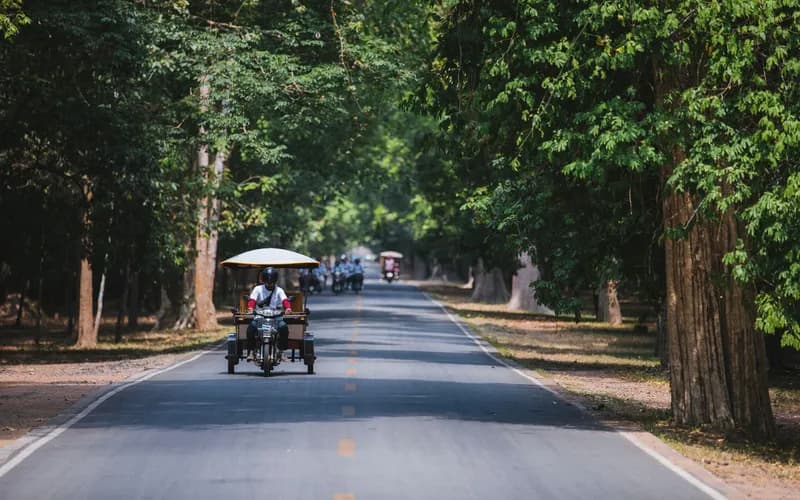
Shared minivans are cheap but cramped, and the bumpy roads are hard on younger children. Domestic flights between Phnom Penh and Siem Reap take about 40 minutes and can save a whole day. In towns, tuk-tuks are fun and practical, but ask the driver to go slowly and hold small children on your lap. Pavements are often uneven or missing, so a baby carrier is usually easier than a stroller.
For how to find and brief a driver, see our guide to hiring a driver, guide or tuk-tuk in Cambodia. Tell the driver your children's ages and your preference for frequent stops, and most will adapt happily.
Siem Reap and Angkor with children
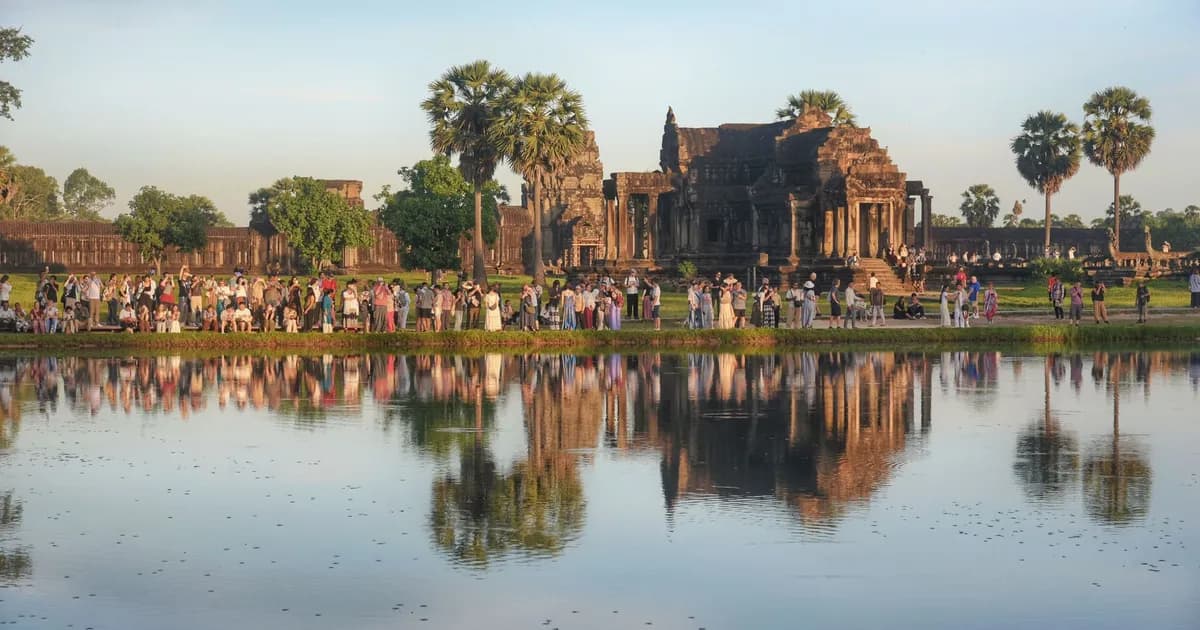
Angkor is the obvious draw, and it can work well if you manage expectations. A sunrise tuk-tuk tour is often suggested, but for younger children a later start is kinder. Pick a small number of temples, such as Bayon with its carved faces and Ta Prohm with its tree roots, and stop for drinks and rest. Do not try to see everything in a day.
Our guide to planning your days at Angkor explains how to split visits across mornings and avoid the busiest hours. Leave the afternoons for the pool.
Siem Reap also offers child-friendly alternatives to temples. Phare, the Cambodian circus, is a favourite with children and adults. Butterfly gardens and cooking classes keep younger visitors engaged, and some resorts run cultural workshops. Angkor Zipline is an option for older, adventurous children. Phnom Kulen National Park, suitable for children of about six and over, has short hikes, waterfalls with safe swimming areas and a reclining Buddha, but check conditions locally before going.
A boat trip on Tonle Sap Lake past floating villages such as Kampong Phluk, sometimes with a stop at a floating school, can be a memorable family outing. Choose operators carefully and read our advice on visiting Tonle Sap's floating villages responsibly before booking.
The coast and slower places
After the temples, children usually need space. Kampot and Kep suit families well. You can kayak, cruise the river, cycle quiet roads, ride an ox cart at a pepper farm and swim in a calm setting. Ream National Park near Sihanoukville offers mangroves, beaches and boat tours. Our guide to Kampot and Kep describes the slow coast in more detail, and it fits well after a busy Siem Reap stay.
In Phnom Penh, keep things simple. The riverside park along the Tonle Sap and the Mekong, and Wat Ounalom, are easy outings. Phnom Tamao Wildlife Rescue Center, which houses elephants, gibbons and sun bears, appeals to many children. Be thoughtful about heavy history sites: the Khmer Rouge sites in Phnom Penh are sobering, and most parents choose to visit them without younger children.
Wildlife, orphanages and ethical choices
Families are often the target of well-meaning but harmful offers. Avoid orphanage visits and any activity that treats children as an attraction, and think carefully before riding elephants. Choose sanctuaries and projects that put animals first, with limited contact. Our guide to travelling Cambodia ethically explains how to spot the difference.
Teach children simple etiquette too: dress modestly at temples, remove shoes where requested, and do not touch monks or sacred objects. A few Khmer words, such as hello and thank you, go a long way and make children feel part of the trip.
A packing list that earns its space
Less is more, but a few items genuinely pay for themselves. Pack light, breathable clothing in cotton or linen, two hats per child, and sandals that can get wet alongside closed shoes for uneven temple steps. A small first-aid kit with plasters, antiseptic, oral rehydration salts and fever medication saves stressful searches. Add a reusable water bottle for each family member, wet wipes, hand sanitiser, a compact torch for power cuts, and a lightweight rain jacket for sudden showers.
For the journeys themselves, bring entertainment that does not need a signal: books, cards, colouring pens and a tablet loaded in advance. Long drives pass more easily with snacks and a few small surprises. A scarf or sarong doubles as sun cover, a temple wrap and a nap blanket. Finally, carry copies of passports and insurance details, plus your child's blood group and allergy information written down, in case you ever need to visit a clinic.
Food, money and daily routines
Khmer food is generally mild, and children often like rice dishes, grilled meat, noodle soups and fresh fruit. Look for busy places with high turnover, and carry snacks for the road. Hotels and guesthouses can usually boil water or prepare plain meals if a child is unwell.
Cambodia is budget-friendly, but costs rise with private drivers and family rooms. For realistic numbers, see our Cambodia trip cost guide. US dollars are widely used alongside riel, so carry small notes.
Choose accommodation with a pool, air conditioning and family rooms if possible. Many mid-range hotels allow children to share a room, and some offer extra beds. A homestay can be a lovely experience for older children, though facilities are simple.
What to Do Next
- Choose two or three bases and cut your list of sights in half.
- Book a private driver for long routes and request child seats in advance.
- Visit a travel doctor six to eight weeks before departure and assemble a family medical kit.
- Build a rest period into every day, preferably in the hottest hours.
- Use our plan your journey page to sketch a realistic route, and ask a local agency about family-friendly transfers and accommodation.
Frequently Asked Questions
Is Cambodia safe for children?
Most families travel without serious problems. The main risks are heat, stomach upsets, traffic and mosquito-borne illness, all of which can be managed with sensible habits and good advice from a travel doctor.
What is the best age to visit?
Children of about six and over tend to enjoy it most, because they can handle short hikes and temple visits. Younger children are fine with a slower, single-base trip and lots of pool time.
Do I need to bring a car seat?
Car seats are not widely available and standards vary. Some private drivers can supply booster seats if you ask in advance, but many parents bring a lightweight one.
Can children drink the tap water?
No. Use bottled or filtered water for drinking, brushing teeth and washing fruit and vegetables.
Are strollers practical?
Often not. Pavements can be uneven or missing, so a baby carrier is usually easier, although a light stroller can work in some resort areas.
How many days at Angkor are right for a family?
Two short mornings usually work better than one long day. Visit a few temples each time, take regular breaks and return to the hotel before the midday heat.
Is the wet season a bad time for families?
Not necessarily. Rain is often brief, crowds are thinner and landscapes are greener. Avoid muddy jungle treks with young children and keep your plans flexible.