
For decades, taking a ferry in Indonesia meant turning up at the port, joining a queue, handing over cash and walking onto a boat. On the country's main crossings, that era has ended. Tickets for the state ferry operator's routes are now sold online only, passenger names are matched against identity documents at the gate, and the ports themselves have been closed to anyone without a booking or a reason to be there. None of this is difficult, but all of it is new enough that travellers still arrive at Ketapang or Merak expecting a ticket window, and are turned away. This is what the rules actually require in 2026 and how to comply without stress.
What changed, in short
PT ASDP Indonesia Ferry, the state-owned operator that runs the country's major roll-on roll-off crossings, has moved its entire ticketing operation onto its digital platform, Ferizy. Direct purchase at the port, long known as go-show, has been withdrawn on the main routes. The company has also pushed hard against ticket brokers, whose informal resale at port gates was both a source of illegal surcharges and a hole in the passenger manifest.
Alongside that, ASDP began a port sterilisation programme at Merak and Bakauheni, the twin gateways between Java and Sumatra. It entered a trial phase on 1 June 2026 and was scheduled for full implementation on 15 June 2026. The programme restricts port areas to people with a legitimate purpose who are identified and registered, under the Ministry of Transportation's port-zoning regulation. At Bakauheni the enforcement runs on facial recognition, RFID, CCTV, vehicle tracking and an integrated monitoring platform.
The stated driver behind all of it is manifest accuracy. ASDP has convened the national transport safety committee, the transport ministry, the traffic police and the anti-corruption commission around a single problem: knowing exactly who and what is on board each sailing. Indonesia's ferry safety record has made that a priority, and the accurate manifest is the reason the ID rules exist.
One request. Up to five tailored proposals.
Skip contacting agencies one by one — share your trip once and let up to five trusted Indonesia agencies come to you. Free, with no obligation.
Get my free quotesHow Ferizy actually works
Book through the official Ferizy website or app. Accounts are free and require an email address and a phone number.
The booking form asks for more than most travellers expect:
- The route, the date and the departure window rather than a specific sailing on many crossings.
- The service class, and whether you are travelling on foot or with a vehicle.
- The full name, identity document number and date of birth of every passenger.
- For vehicles, the category, the licence plate number and the number of occupants.
Payment is handled outside the app in most cases, through bank transfer, virtual accounts, or over the counter at the Alfamart and Indomaret convenience-store chains, post offices and other partner agents. That last option is genuinely useful for travellers without an Indonesian bank account. If you are unsure which payment rails will work for you, our guide to money and connectivity in Indonesia covers cards, QRIS and the practicalities of paying for things here.
You receive a boarding ticket with a QR code. Print it or keep it offline on your phone, because port wifi is unreliable and mobile data at Gilimanuk is patchy at the best of times.
The name-matching rule that catches people out
This is the single most common failure point for foreign travellers.
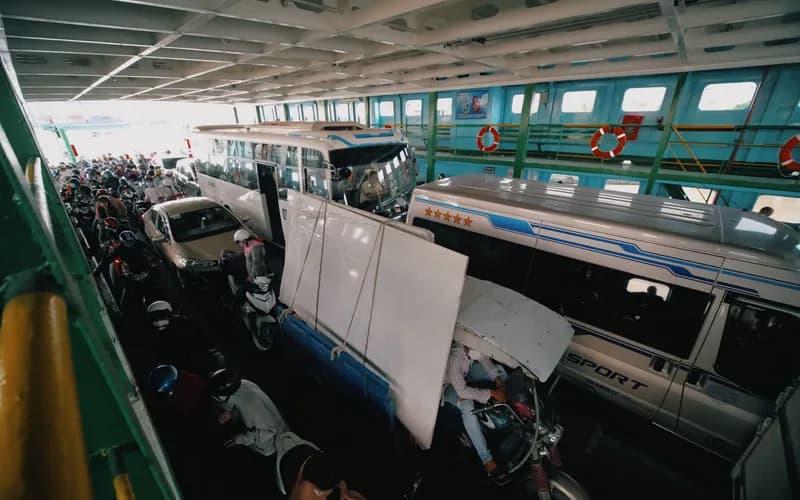
At the terminal gate, your ticket, your identity and, if applicable, your vehicle are verified against the booking data before you are allowed to proceed to loading. Indonesians use their KTP national identity number. Foreign travellers use their passport number, and the name on the booking must match the name in the passport.
Three practical consequences follow.
First, book in your own name, exactly as your passport prints it, including middle names if the field allows. Bookings made by a driver or a hotel in someone else's name have been refused.
Second, every passenger needs their own entry on the manifest, including children. A family cannot travel on one adult's ticket.
Third, tickets are not freely transferable. If your plans change, use the platform's own reschedule or refund process rather than passing the ticket to someone else.
Get matched with up to 5 trusted Indonesia agencies
- Free
- No obligation
- Up to 5 agencies
What it costs
Ferry travel in Indonesia remains conspicuously cheap, which is part of why the queues were so long. A foot passenger on the 45 to 60 minute Ketapang to Gilimanuk crossing between Java and Bali pays from roughly IDR 10,600 in regular class. A motorbike with rider, or a car, costs more in bands set by vehicle length, and ASDP periodically runs published discounts on selected routes and times.
Longer crossings cost more and are priced by class. Padangbai to Lembar, between Bali and Lombok, takes four to five hours and is priced accordingly. Merak to Bakauheni, between Java and Sumatra, runs around two hours and carries a large share of the country's freight.
These fares are a rounding error in a travel budget, which is a useful thing to know when you are deciding between an overland route and a domestic flight. Our Indonesia trip cost and budget guide puts these numbers in context against transport, accommodation and food.
Which boats this does not cover
It is important to be precise here, because the rules are frequently over-generalised.
Ferizy covers ASDP's scheduled roll-on roll-off crossings. It does not cover everything that floats.
Pelni, the national passenger shipping line whose ships link the archipelago on long multi-day routes to Maluku, Papua and Kalimantan, runs its own booking system and its own rules, though it has also moved substantially online and requires identity data.
The fast boats from Bali to the Gili Islands, Nusa Penida and Lombok are operated by private companies, booked directly or through agents, and are regulated separately. Their safety record is uneven, weather cancellations are common and the manifest discipline is far less consistent than on the state ferries.
Small local perahu and public boats to islands such as the Bandas, Togeans or Karimunjawa remain informal. You buy a ticket at the harbour, and the departure happens when it happens. For how to build an itinerary around that unpredictability, see our guide to island-hopping Indonesia slowly.
Timing, quotas and the days to avoid
Book at least one day ahead. ASDP's own advice is to purchase by H-1, the day before travel, because sailings and vehicle slots do sell out.
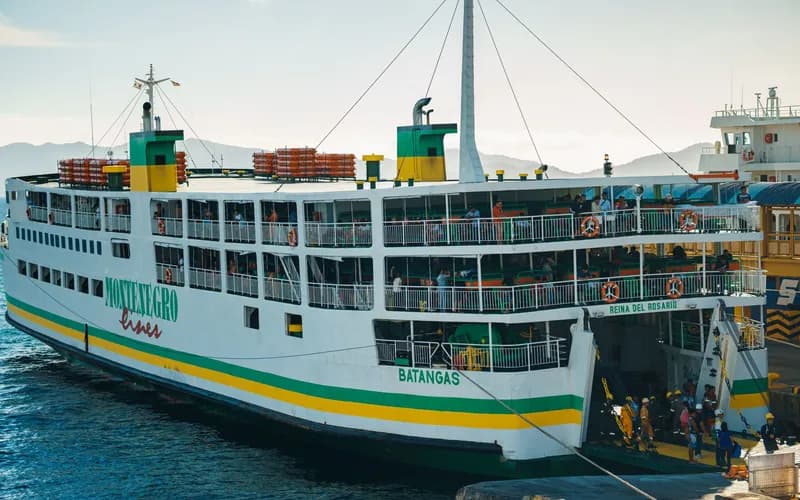
Certain periods require more foresight. The days around Idul Fitri, when tens of millions of Indonesians travel home for the mudik migration, turn Merak and Bakauheni into the busiest crossings on earth for about a fortnight, with queues measured in kilometres. The Christmas and New Year period and the school holidays in late June and July also load the system. Nyepi in Bali suspends all crossings to and from the island for 24 hours, and the ports close entirely.
If you are travelling with a vehicle during any of those windows, book several days out and arrive within your stated departure window rather than early, since the gates now manage arrivals by slot rather than by queue.
What this means for a slow itinerary
The practical effect of these changes is positive for anyone travelling deliberately. Sailings are more predictable, the informal surcharges at the gate have largely gone, and the manifest discipline is a genuine safety improvement on a network that badly needed one.
What it removes is spontaneity. You can no longer decide over breakfast to cross to Sumatra that afternoon and simply turn up. Building a day of margin around each significant crossing, rather than treating the ferry as a connection, is now the sensible default. That is a small adjustment for anyone already travelling at an unhurried pace, and it fits neatly with routes like our East Java overland itinerary, which ends at exactly this crossing.
If you would rather not manage any of it, an operator can hold the bookings for you, vehicle included. The Indonesian agencies we assess on transparency and local employment are listed on our Indonesia travel agencies page.
What to Do Next
- Create a Ferizy account before you travel, using the email and phone number you will actually have with you in Indonesia.
- Book each ASDP crossing at least a day ahead, and several days ahead if you are carrying a vehicle or travelling in a holiday period.
- Enter every passenger's full name and passport number exactly as printed, and check the spelling before paying.
- Pay through a bank transfer, virtual account or a convenience-store counter if your foreign card is declined.
- Save the QR ticket offline and carry a printed copy as a backup.
- Check whether your route is ASDP, Pelni or a private fast boat, because only the first uses Ferizy.
- Arrive within the departure window stated on the ticket and bring the passport you booked with, not a photocopy.
- Build one buffer day around any crossing that connects to a flight.
Frequently Asked Questions
Can I still buy a ferry ticket at the port in Indonesia?
Not on ASDP's main crossings. Direct on-site sales have been withdrawn and tickets must be bought in advance through Ferizy. Some smaller local routes and private boats still sell at the harbour, but you should never plan on this for a major crossing such as Ketapang to Gilimanuk or Merak to Bakauheni.
What identity document do foreign travellers use?
Your passport. Enter the passport number and your name exactly as it appears in the document. Indonesian residents use their KTP number, and holders of a KITAS or other stay permit should use the document their permit is issued against. The name on the booking is checked against the document at the gate.
How far in advance should I book?
At least the day before, which is ASDP's own guidance. During Idul Fitri, the end-of-year holidays and the July school break, book several days ahead, especially with a vehicle. Outside those peaks, same-week booking is generally fine on the short crossings.
Does Ferizy work with a foreign credit card?
Sometimes, and it should not be your only plan. Foreign cards are frequently declined by Indonesian payment gateways. The reliable alternatives are a bank transfer from an Indonesian account, a virtual account payment, or paying in cash over the counter at an Alfamart or Indomaret using the payment code the booking generates.
Can someone else book the ticket for me?
They can create the booking, but the passenger details must be yours, with your name and passport number. A ticket issued in another person's name will not get you through the gate. Guesthouses and drivers who offer to sort it out for you should be asked to book using your details in front of you.
What happens if I miss my sailing?
Use the reschedule function in the app, which is available within the platform's own time limits, or apply for a refund under the published terms. Do not attempt to sell or transfer the ticket, since the name check makes it worthless to anyone else and ASDP is actively suppressing informal resale.
Are the fast boats to the Gili Islands covered by these rules?
No. Those are private operators outside the ASDP system, booked directly or through agencies, with their own safety and manifest practices. Choose an operator on its safety record rather than on price, check the weather, and accept that cancellations in the wet season are common and are usually the right call.
Do the port restrictions affect foot passengers?
Yes, in the sense that you cannot enter the terminal area without a valid booking, and people meeting or seeing off passengers are now restricted to designated areas. In practice it makes the ports calmer and easier to navigate than they were, provided you arrive with your ticket already in hand.