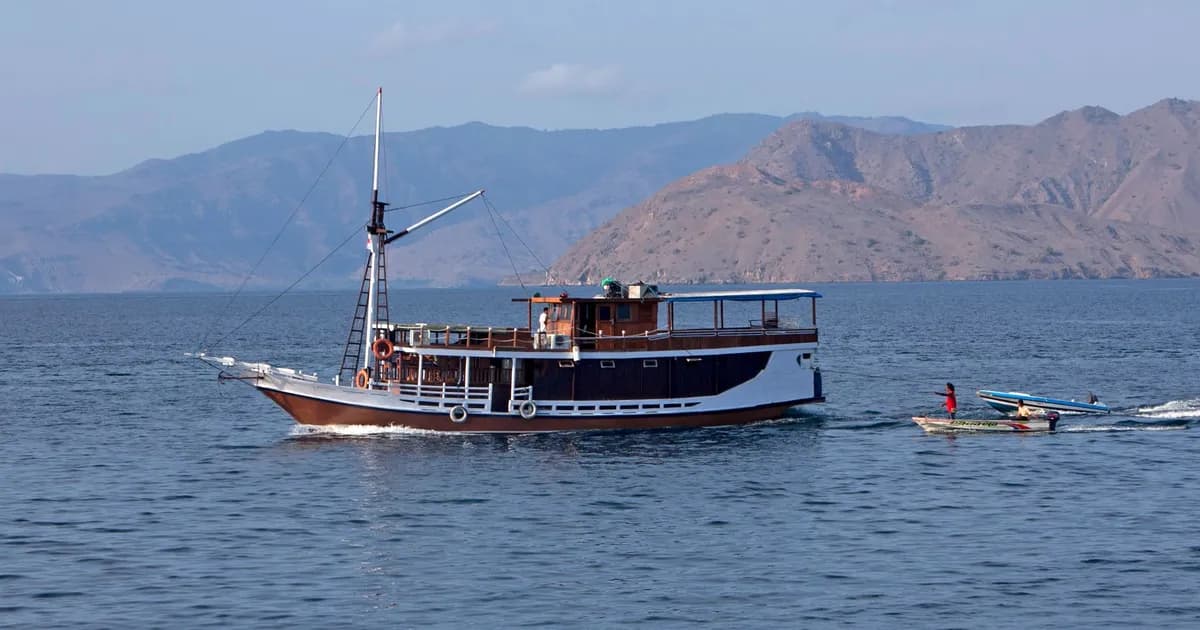


Indonesia is roughly the width of the continental United States, laid out across water. Most itineraries fail not because travellers pick the wrong islands but because they underestimate what sits between them: a two-hour flight that only runs three times a week, a ferry that leaves when it is full, a monsoon afternoon that cancels everything.
Moving slowly through the archipelago is not simply a matter of staying longer in each place. It is a set of specific, learnable decisions about transport — and the travellers who make them well spend far less time in transit than those who try to optimise every leg.
Start With the Map, Not the Calendar
The single most useful habit is to plan around geography before dates. Indonesia's transport network radiates from hubs: Jakarta and Denpasar nationally, then Makassar for Sulawesi and eastern routes, Surabaya for eastern Java, Medan for northern Sumatra, and Sorong as the gateway to Raja Ampat.
Almost nothing connects laterally. There is often no direct route between two neighbouring provincial capitals, and you will backtrack through a hub. A traveller wanting to go from Lombok to Sulawesi will very likely fly Lombok–Denpasar–Makassar, spending most of a day to cover what looks on a map like a short hop.
The practical consequence is that you should build itineraries as clusters rather than lines. Pick two or three regions, go deep in each, and accept one long hub transfer between them. Three regions in three weeks works. Six regions in three weeks means you have booked a tour of Indonesian airport lounges. Our guide to where and when to go in Indonesia breaks the country into workable clusters by season.
One request. Up to five tailored proposals.
Skip contacting agencies one by one — share your trip once and let up to five trusted Indonesia agencies come to you. Free, with no obligation.
Get my free quotesDomestic Flights: What They Actually Cost You
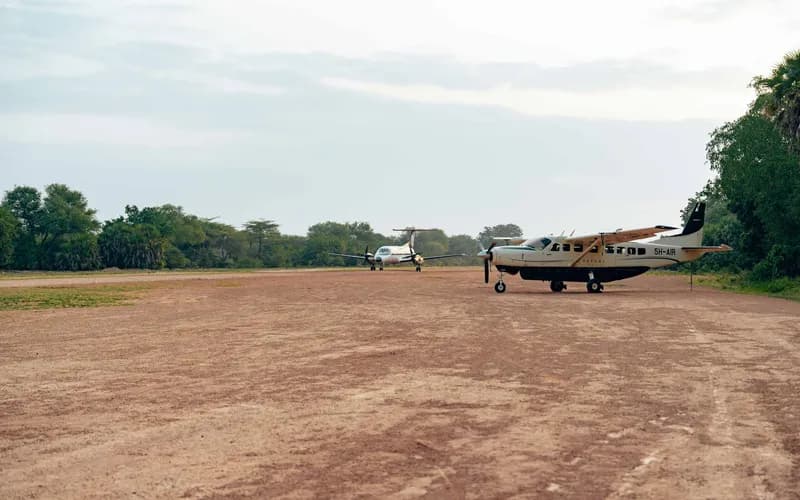
Flying is unavoidable for most itineraries, and Indonesian domestic aviation is cheap by international standards. Booked two to three weeks ahead, major routes such as Jakarta–Denpasar or Jakarta–Yogyakarta commonly fall in the USD 30–80 band. Left to the last minute, the same seat can exceed USD 150.
A few things are worth knowing before you book.
- Cabin baggage limits are real but unevenly applied. The standard allowance on low-cost carriers is 7 kg, and enforcement varies wildly between airports. Assume it will be weighed at the small ones.
- Route frequency matters more than price. Denpasar to Labuan Bajo has four to six flights a day and a one-hour block time; other eastern routes run three times a week. A cheap fare on a thin route is a trap if it cancels.
- The carrier matters. Garuda and its subsidiaries operate to different reliability standards than the budget operators serving remote strips. On routes served by Wings Air, Super Air Jet or similar, delays are routine rather than exceptional.
- Monsoon season changes the maths. From November to March, heavy weather at major hubs produces cascading delays across the network. This is when tight connections fail.
Ferries: The Slow Network That Still Runs the Country
Beneath the flight map sits a ferry system that carries far more Indonesians than aircraft do, and it splits into two very different things.
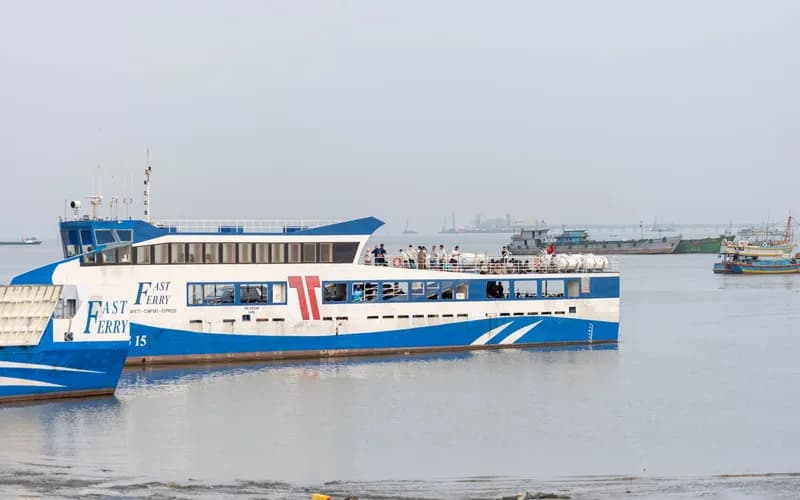
Short crossings are frequent, cheap and effectively unbookable — you turn up. Ketapang to Gilimanuk, the Java–Bali link, sails roughly every fifteen minutes and takes about forty-five minutes; foot passengers pay in the region of IDR 12,000, motorcycles around IDR 50,000, and cars IDR 200,000–400,000 depending on size. Merak to Bakauheni, the Java–Sumatra crossing, runs at similar frequency over about two hours for around IDR 14,000 on foot. At this level, ferries are simply local buses that float.
Long-haul Pelni sailings are a different proposition entirely. Pelni, the state shipping line founded in 1952, runs large passenger vessels on circuits that touch dozens of ports on weekly-to-monthly cycles. A Bali-to-Flores passage of thirty-plus hours in the open economy deck — a numbered mattress space in a large dormitory, with meals included — costs somewhere around IDR 200,000. Private two- to eight-berth cabins run roughly IDR 500,000 to 1,500,000 depending on route and class.
Pelni is not a shortcut and it is not a cruise. It is loud, crowded and occasionally chaotic, and it is also one of the few remaining ways to experience the archipelago at the speed it was historically travelled. Book two to three days ahead at a Pelni office or agent; popular routes around holidays sell out further in advance.
The essential caution: Pelni schedules are published but slip, and a missed sailing on a weekly circuit means waiting a week. Never place a Pelni leg immediately before an international flight.
Get matched with up to 5 trusted Indonesia agencies
- Free
- No obligation
- Up to 5 agencies
The Buffer Day Rule
This is the single discipline that separates a relaxed Indonesian trip from a stressful one. Build one buffer day for every island transfer, and two before any international departure.
It sounds excessive until the first time a Labuan Bajo flight cancels for weather and the next available seat is thirty-six hours later. Buffer days are not wasted days — they are spent in the place you already are, which is usually a better use of time than a rushed extra destination anyway.
In practice this looks like:
- Arriving in your international departure city the day before the flight, not the morning of.
- Never scheduling a domestic flight and an international flight on the same day unless they are on a single through ticket.
- Adding a slack day after any ferry crossing longer than four hours.
- Treating remote-region legs — Raja Ampat, the Bandas, inland Papua — as requiring two days of slack, not one.
If your itinerary cannot absorb these buffers, the itinerary is too full. Remove a destination rather than the buffers. Our Indonesia budget guide covers how much these extra nights actually add, and the answer is usually less than the rebooking fees they prevent.
Booking, Baggage and the Small Print
A handful of operational details cause most of the trouble.
Payment. Many Indonesian booking platforms reject foreign cards intermittently. Have two cards from different issuers, and be prepared to book through a local agent for Pelni and some regional airlines.
Cash. ATMs in small towns run out, particularly at weekends. Withdraw generously in Denpasar, Jakarta or Makassar before heading east, and carry the physical rupiah for ferry tickets, park fees and homestays, most of which do not take cards.
Names. Domestic tickets must match your passport exactly. Booking systems truncate long names inconsistently; check the ticket at the point of issue, not at check-in.
Luggage. Travel with one bag you can carry up a jetty ladder and onto a small boat. Wheeled cases are a liability on the routes worth taking. This is not a minimalist affectation; it determines which boats you can realistically board.
Permits. Some regions require entry registration separate from transport. Sort these before departure — the current entry and fee rules for Indonesia set out which ones apply where.
Surviving a Long Crossing
A thirty-hour ferry is a manageable experience with modest preparation and a miserable one without.
Bring a sarong — it works as a sheet, a towel, a sunshade and a curtain. Bring a power bank, because charging points are scarce and contested. Bring your own water, and more snacks than you think you need, since the included meals on Pelni are basic and served at fixed times. Earplugs and an eye mask are not optional on an economy deck.
Board early. Space on the open decks is claimed on arrival, and the difference between a spot near a window and one beside the engine housing is the difference between resting and enduring.
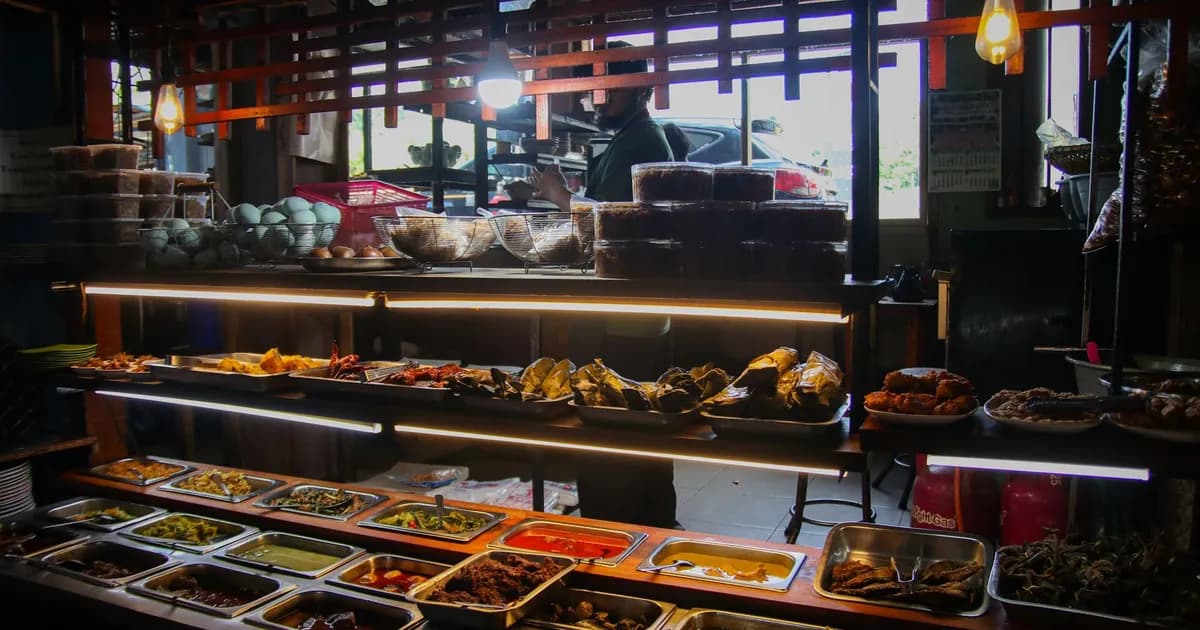
Food is one of the real pleasures of slow transit in Indonesia. Ports have their own specialities, and the twenty minutes a ferry spends alongside is often enough to buy something excellent from a dockside vendor — grilled fish in Makassar, pisang epe on the harbour front, fresh martabak almost everywhere. Our guide to Indonesian food is a useful primer for knowing what to look for.
What to Do Next
- Draw your clusters. Choose two or three regions rather than six, and identify which hub connects them.
- Check route frequency before price. For each inter-region leg, find out how many services run per week. Anything below daily needs a buffer day attached automatically.
- Book the long legs first. International flights, then inter-region domestic flights, then everything else. Local transport can be arranged on the ground almost everywhere.
- Insert the buffers explicitly. Write them into the itinerary as named days in a specific place, not as vague slack. They get eaten otherwise.
- Decide where you want a ferry. Pick one long crossing to do deliberately — Java to Bali overland, or a Pelni leg east — and plan the rest by air.
- Pressure-test with someone local. Regional schedules change seasonally and are poorly documented online; a good operator will know which November sailings actually run. See how we assess that expertise on our Indonesia planning page.
Frequently Asked Questions
How far ahead should I book domestic flights in Indonesia?
Two to three weeks is enough for most routes and keeps fares in the USD 30–80 range. For Denpasar to Labuan Bajo in July and August, book two to three months ahead, as these seats genuinely sell out. Last-minute domestic fares can exceed USD 150 on popular routes.
Are Indonesian ferries safe?
The major operators on established routes, including Pelni and the large vehicle ferries on Java–Bali and Java–Sumatra, have reasonable safety records and are subject to regulation. The risk concentrates in small, overloaded local boats, especially in poor weather or after dark. Decline any crossing where the boat is visibly overloaded or life jackets are absent, and never pressure a captain to sail in marginal conditions.
Can I plan an Indonesian trip using only ferries?
You can, and Java–Bali–Lombok–Sumbawa–Flores is a genuine overland-and-ferry corridor. Beyond that, ferry-only travel to eastern Indonesia means committing to Pelni's weekly circuits, which requires several weeks and considerable flexibility. Most slow travellers mix one or two deliberate sea legs with flights.
How many buffer days do I actually need?
One per island transfer and two before an international departure. On a three-week trip visiting three regions, that is roughly three to four buffer days. It feels wasteful when planning and never does in practice.
What is the best month for island-hopping?
May to September offers the calmest seas and the most reliable flight operations across most of the archipelago. April and October are good shoulder months. November to March brings monsoon conditions, frequent boat cancellations in the east, and cascading flight delays through the main hubs.
Do I need to book Pelni in advance?
Two to three days ahead at a Pelni office or authorised agent is generally sufficient, but book further out around Indonesian public holidays and Ramadan-end travel, when routes fill completely. Online booking exists but is inconsistent for foreign cards.
Is it cheaper to fly or take the ferry?
Ferries are dramatically cheaper — a thirty-hour Pelni economy passage costs roughly the price of a taxi ride in Jakarta. But once you account for the extra nights, meals and buffer days a long sailing consumes, the total cost difference narrows considerably. Take the ferry because you want the crossing, not because you are saving money.
How do I get to Flores from Bali?
Fly Denpasar to Labuan Bajo, one hour, four to six services daily. The overland-and-ferry alternative via Lombok and Sumbawa takes three to four days and is a genuine journey in itself. Either way, our Flores overland guide covers what happens after you land.