
East Java Overland: Malang, Bromo and Ijen Without the Rush
Java's eastern end is where the island stops being a corridor and starts being a destination. Most itineraries treat it as a two-night sprint: a night transfer to a volcano rim, a photograph at sunrise, a dash to the Bali ferry. Most travellers come away with sore legs and a thin memory. Slow it down and East Java becomes one of the most rewarding stretches of ground in Indonesia, with a highland town that still feels like a working city, waterfalls that drop through jungle into a bowl of light, two of the most photographed volcanoes on earth, and a rail line that threads between them for the price of a coffee. It also has rules in 2026 that it did not have three years ago, and those rules reward people who plan ahead.
Why East Java asks for time
The distances here are short on a map and long in practice. Malang to Cemoro Lawang, the village on the Bromo caldera rim, is roughly 90 kilometres and takes three to four hours. Bromo to Ijen is another five to six. Nothing is far; everything is slow, because the roads climb, switch back, and share space with trucks, motorbikes and the occasional herd of goats.
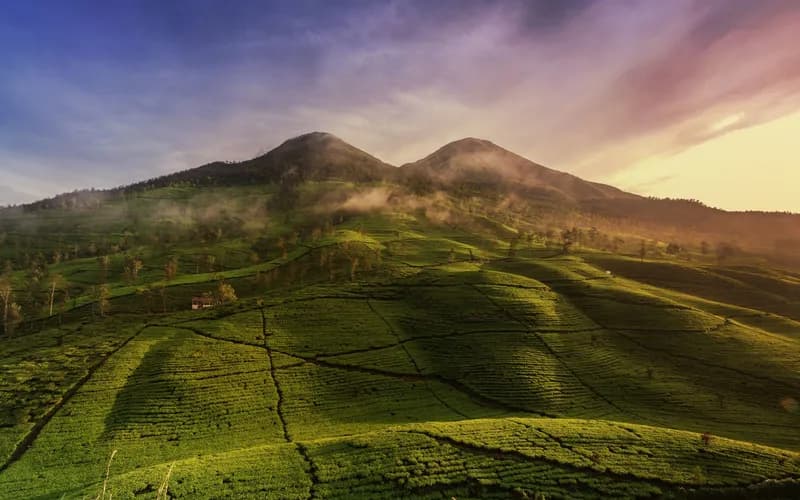
That friction is the point. East Java is one of the few places in Indonesia where the transitions are as interesting as the destinations: tea and apple terraces above Batu, sugar-cane flats around Probolinggo, the sudden cool of the Tengger highlands where a Hindu minority has farmed volcanic ash for centuries. If you compress the region into 48 hours, you see none of it through a van window at 2am.
A useful rule for planning: give East Java one full day per major sight, plus one buffer day. That means roughly seven to ten days for a loop that includes Malang, the southern waterfalls, Bromo, Ijen and the crossing to Bali. Our slow travel guide to where to go and when in Indonesia sets out how this region fits into a longer national route.
One request. Up to five tailored proposals.
Skip contacting agencies one by one — share your trip once and let up to five trusted Indonesia agencies come to you. Free, with no obligation.
Get my free quotesMalang: the base most people skip
Surabaya is the region's air gateway, but Malang is the better base. It sits at around 450 metres, which takes the edge off the heat, and it has the one thing a slow traveller actually needs: a walkable centre with enough daily life to fill an unstructured afternoon.
Spend a morning at Pasar Besar and the surrounding streets, where the produce trade still runs on conversation rather than price tags. Walk the Dutch-era grid around Ijen Boulevard, a broad avenue of 1930s villas that shares its name with the volcano but has nothing to do with it. Ride out to Singosari and Tumpang for the small thirteenth and fourteenth century temples that predate Borobudur's more famous neighbours in Central Java by several hundred years and receive a fraction of the visitors.
Malang also puts you within reach of Batu, the hill town above it, where the apple orchards and the cool night air explain why Javanese families have holidayed here for a century. It is unashamedly domestic tourism, and it is a useful corrective if you have spent time in places built around foreign visitors.
Tumpak Sewu and the southern waterfalls
Two hours south of Malang, the Glidik river drops off a basalt shelf into a green amphitheatre. Tumpak Sewu, the thousand waterfalls, is the most photographed natural site in East Java after Bromo, and the photographs undersell the scale and oversell the ease of access.
There are two experiences here and they are not the same. The viewpoint on the northern rim takes twenty minutes from the car park and delivers the postcard. The descent into the canyon takes about an hour each way on bamboo ladders, wet rock and rope handrails, and delivers the noise, the spray and the sense of standing inside weather. Local guides at the entrance are not optional in the wet season, and the canyon route is closed after heavy rain for good reason: flash flooding here has killed people.
Combine it with Goa Tetes, the calcified cave system on the same descent, and give the whole thing a full day rather than squeezing it into a Bromo transfer. Entry is modest, a few tens of thousands of rupiah, and fees are collected at village-run gates that change their rates more often than any website reflects.
Get matched with up to 5 trusted Indonesia agencies
- Free
- No obligation
- Up to 5 agencies
Bromo in 2026: quotas, online permits and the honest sunrise question
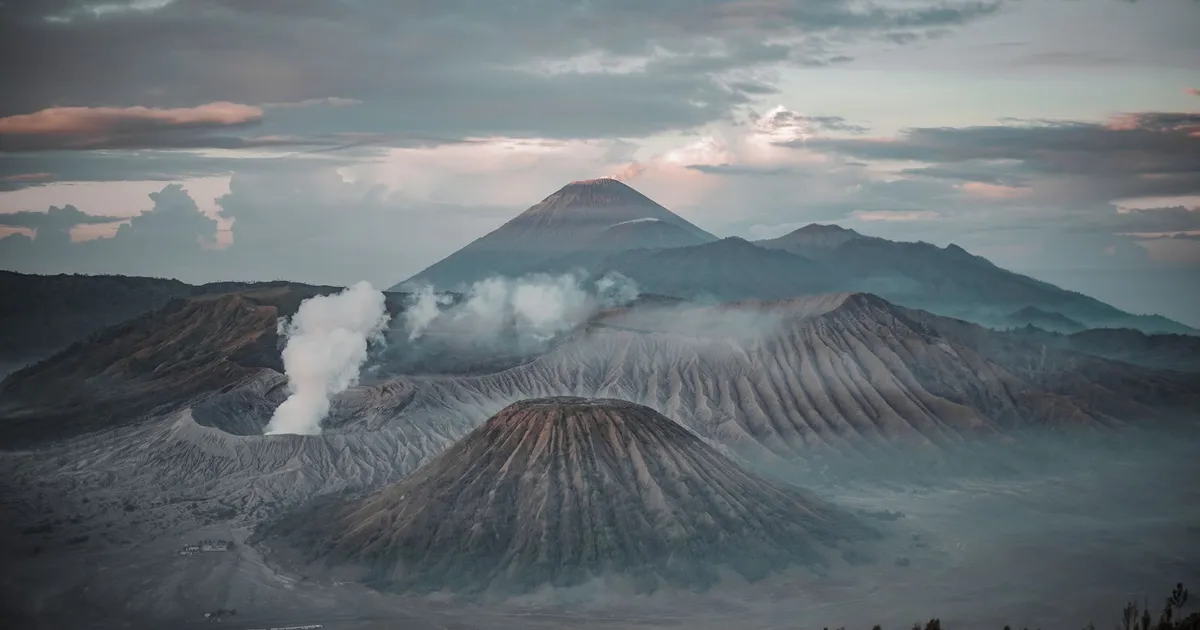
Bromo Tengger Semeru National Park now runs on a mandatory online booking system. The park no longer takes cash at the gate, a daily visitor quota applies, and weekend and July to August slots routinely sell out well in advance. Foreign visitors pay around IDR 220,000 on weekdays and IDR 320,000 on weekends and public holidays. The Semeru side is priced separately, at roughly IDR 210,000 on weekdays and IDR 310,000 on holidays, with small additional charges for the hiking permit, camping and compulsory insurance. Rates move, so confirm on the official park portal before you commit to dates.
The honest question is whether you want the sunrise at all. The classic experience is a 3am jeep convoy to the Penanjakan viewpoint, where several hundred people stand in the cold waiting for the light. It is genuinely spectacular and genuinely crowded, and it is not the only way to see the caldera.
The alternative is to sleep in Cemoro Lawang for two nights and walk. From the village you can descend into the sea of sand on foot in the late afternoon, when the jeeps have gone and the ash plain is empty, and climb the 250 steps to the Bromo crater rim in soft light rather than in a queue. You will hear the volcano before you see it, a continuous low roar that no photograph carries. If you still want the sunrise, book the jeep for the second morning and treat it as a bonus rather than the reason you came.
Activity levels change. Bromo is an active volcano and access to the crater rim is suspended when alert levels rise, sometimes at a few hours' notice. Our practical piece on how to trek Indonesia's volcanoes responsibly covers how to read those alerts and what to do when a mountain closes.
Ijen: blue flame, sulphur miners and the new daily cap
Ijen is the harder, stranger and more affecting of the two volcanoes. The turquoise crater lake is the most acidic body of water of its size on the planet. At night, escaping sulphurous gas ignites in blue flames along the crater wall, which is why the trailhead fills at midnight.
Since January 2026 the mountain operates under a strict daily quota: roughly 600 places for the overnight window between midnight and 6am, and about 400 for daytime visits. Without a pre-booked slot you will be turned away at the gate. Entry for foreign visitors is around IDR 150,000, against IDR 20,000 for Indonesians, and since early 2025 all payments are cashless via QRIS. Carry a working Indonesian payment method or an international card linked to a QRIS-capable wallet.
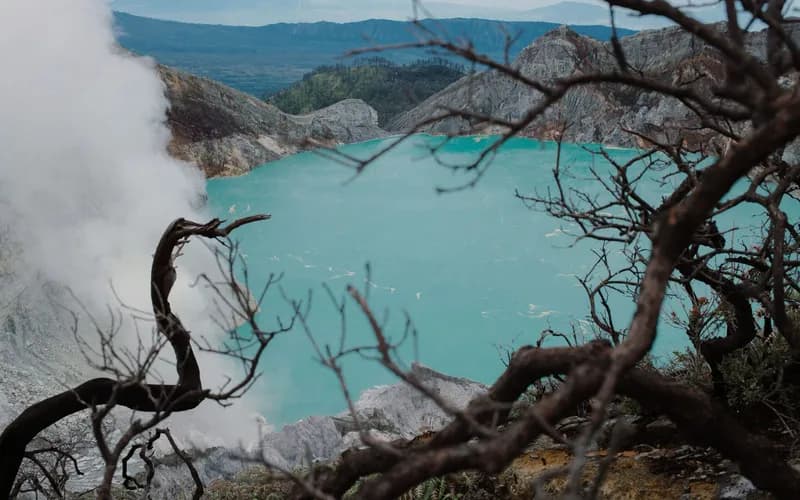
Two caveats worth taking seriously. First, the gas is not scenery. A proper half-face respirator with sulphur cartridges is worth more than any photograph; the thin surgical masks handed out by some operators are close to useless when the wind turns. Second, the miners who carry 70 to 90 kilogram baskets of sulphur up the crater wall are working, not performing. Buy the carved sulphur trinkets if you want to contribute directly, step aside on the path, and ask before photographing anyone's face.
Moving between it all: trains, drivers and the Probolinggo thread
East Java has the best rail network in Indonesia and travellers consistently underuse it. Trains run frequently from Surabaya and Malang to Probolinggo, the gateway station for Bromo, and continue east to Banyuwangi for Ijen and the Bali ferry. Executive class on these routes is clean, air-conditioned, punctual and cheap, and the coastal stretch east of Probolinggo is one of the better train windows in the country. Book through the national operator's app a few days ahead in high season.
The gaps rail does not cover are the mountain roads, and for those a hired car with a driver is the sane option, typically IDR 700,000 to 900,000 per day including fuel. Jeeps in the Bromo caldera are a closed local cooperative with fixed rates; you cannot drive yourself on the sand sea. For the wider picture on Indonesian road travel, including when self-driving a scooter makes sense and when it does not, see our guide to getting around Indonesia by road.
Crossing to Bali from Ketapang to Gilimanuk takes under an hour on the water, but tickets are now sold online only, with names matched to identity documents at the gate. The rules changed in ways that catch people out, which we cover in Indonesia's 2026 ferry rules.
Where to stay, and what it costs
Malang has the widest range: family-run guesthouses from IDR 250,000, boutique conversions of colonial houses from IDR 700,000. Cemoro Lawang is a small village with limited, cold and generally overpriced rooms, from around IDR 350,000 for something basic; book ahead in season and bring a warm layer, because nights on the rim fall to single digits Celsius.
Around Ijen, Banyuwangi town has the better value, while the Licin and Sempol villages nearer the trailhead offer simple homestays that cut an hour off the pre-midnight drive. Sleeping close to the mountain is the single biggest comfort upgrade available on this route.
Budget roughly IDR 600,000 to 1,200,000 per person per day for a mid-range independent trip including transport, entry fees, food and a shared room. If you would rather have the permits, jeeps and drivers arranged for you, the Indonesian operators we assess for depth and local employment are listed among our vetted Indonesia travel agencies.
A realistic ten-day shape
Three nights in Malang, using the third for temples or Batu. One night near Tumpak Sewu or back in Malang after a full day at the falls. Two nights in Cemoro Lawang, with an afternoon walk into the caldera and a sunrise on the second morning. One buffer night in Probolinggo or on the train east. Two nights near Ijen, one of them the climb. One night in Banyuwangi before the ferry.
Compress that to five days and it still works, but you will be moving every day and the weather gets one veto rather than two. Ten days gives the region room to be itself.
What to Do Next
- Fix your Bromo and Ijen dates first and book both permits online before anything else, since quotas, not accommodation, are the binding constraint in high season.
- Check the national geological agency's current alert level for both volcanoes and build one spare day into the itinerary for a closure or a washout.
- Book trains between Surabaya, Malang, Probolinggo and Banyuwangi a few days ahead, choosing executive class for the longer legs.
- Buy or rent a proper sulphur respirator before Ijen rather than accepting a paper mask at the trailhead.
- Set up a QRIS-capable payment method, because cash is no longer accepted at either park gate.
- If you are continuing to Bali, buy the Ketapang to Gilimanuk ferry ticket online with passenger names matching your passports.
- Decide honestly whether you want the 3am jeep convoy or two quiet nights on the rim, and plan the rest of the loop around that answer.
Frequently Asked Questions
When is the best time to visit East Java?
May to September is the dry season and the most reliable window for clear crater views, with June to August the busiest and coldest on the rim. April and October are good compromises: fewer people, generally workable weather, lower prices. January and February bring heavy rain that closes the Tumpak Sewu canyon route regularly and often hides the volcanoes entirely.
Can I visit Bromo and Ijen without an organised tour?
Yes, and it is straightforward if you plan ahead. Book the park permits yourself online, take trains to Probolinggo and Banyuwangi, and arrange local transport at each end. The one element you cannot do independently is drive in the Bromo sand sea, where the jeep cooperative holds a monopoly. Independent travel here costs less and moves at your pace, but it requires booking the quota slots several days out.
How difficult is the Ijen hike?
The ascent is about three kilometres with roughly 500 metres of elevation gain, on a wide but steadily steep track, taking most people ninety minutes to two hours. The physical difficulty is moderate. The descent into the crater to see the blue flames is short but steep, loose underfoot and genuinely unpleasant in the gas. Many people who are fit enough for the climb sensibly stop at the rim.
Is the Bromo sunrise worth the 3am start?
For many people, once. The light on Bromo, Batok and Semeru together is exceptional and there is no equivalent view elsewhere in Java. The cost is cold, crowds of several hundred at the main viewpoint, and a broken night. If you are staying two nights, the walk into the caldera in the late afternoon offers the same landscape in near solitude, and several travellers we have spoken to preferred it.
Do I need a guide for Tumpak Sewu?
For the rim viewpoint, no. For the canyon descent, yes in practice, and during the wet season the village guides are effectively mandatory. The route uses bamboo ladders and wet rock where a local reading of the river level is worth far more than a map. Expect to pay a modest fee per group, agreed at the entrance gate.
How do I get from East Java to Bali?
Train or car to Banyuwangi, then the Ketapang to Gilimanuk ferry, which runs around the clock and crosses in 45 to 60 minutes. Tickets must be bought online in advance with passenger names matching identity documents. From Gilimanuk, allow three to four hours by road to the south of Bali, more in the afternoon.
Is East Java safe for solo travellers?
Broadly yes. Petty crime is low by regional standards, and both Malang and Banyuwangi are comfortable for solo travel, including for women. The real risks are environmental rather than criminal: volcanic gas, flash flooding in the canyons, and mountain roads at night. Travel the long transfers in daylight where you can, and take the closure notices at face value.