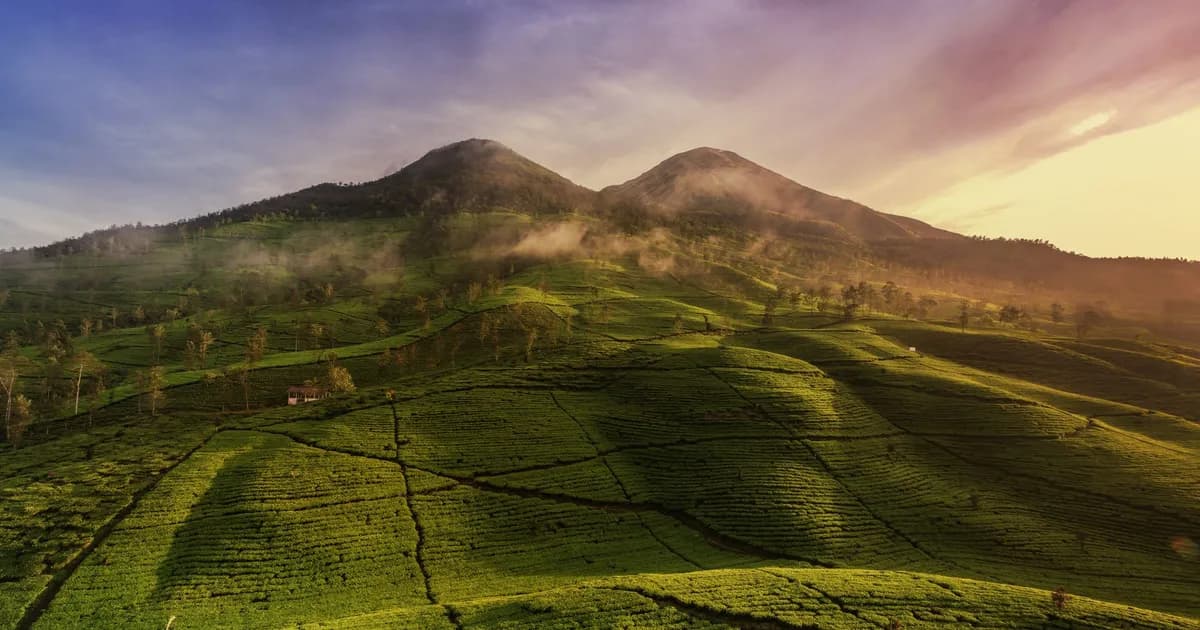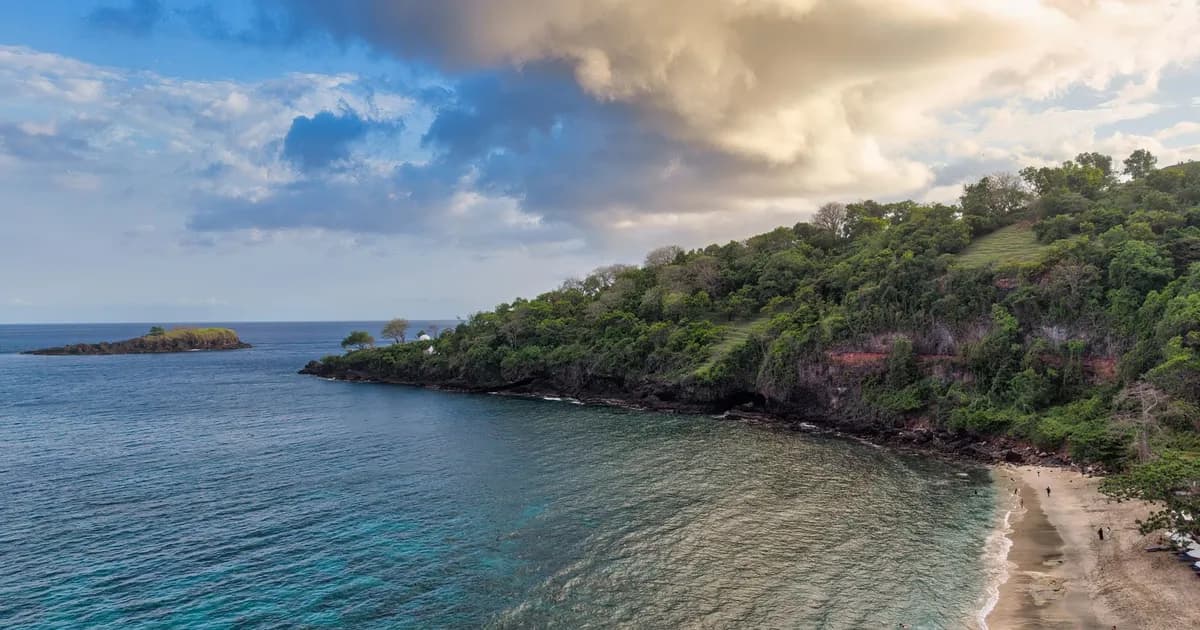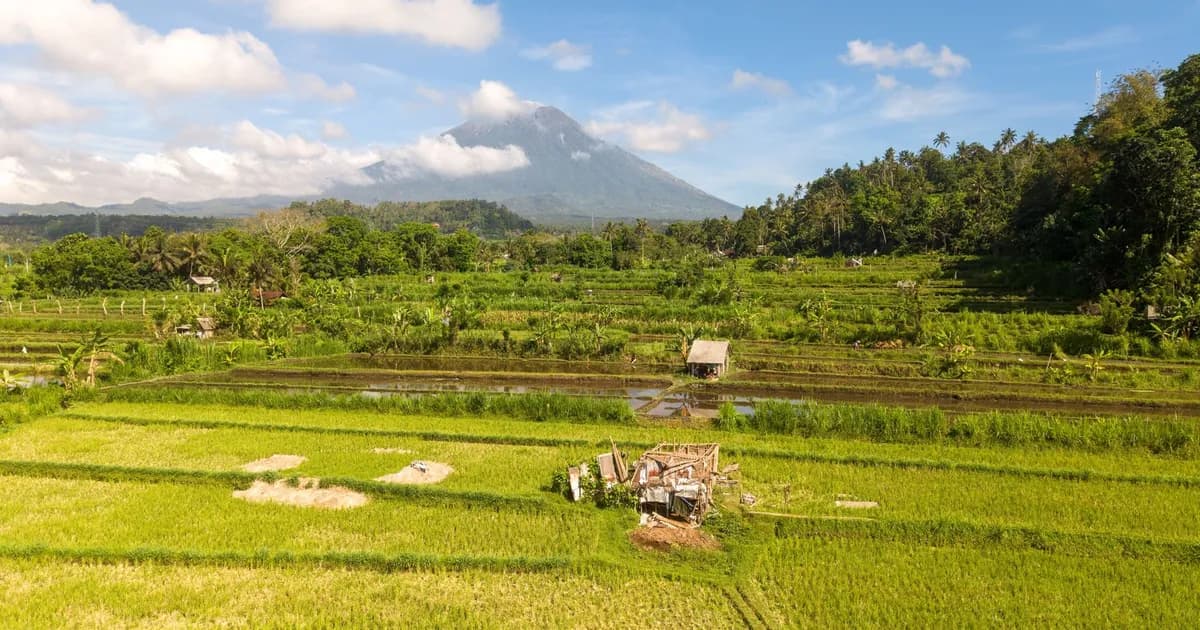


In the highlands of North Sumatra lies a lake so vast it looks like an inland sea, ringed by cliffs and cradling an island the size of a small country. Lake Toba is the largest volcanic lake on earth, the flooded crater of a supervolcano that erupted some seventy-four thousand years ago, and today it is one of the most serene places to slow down in all of Indonesia. Cool, quiet and steeped in the distinctive culture of the Batak people, Toba rewards travellers who come not to tick off sights but to breathe, rest and let the lake set the pace.
The Lake That a Supervolcano Made
The scale of Lake Toba is hard to grasp until you are beside it. Around a hundred kilometres long and up to five hundred metres deep, it fills the caldera of one of the largest volcanic eruptions in the history of the planet. The result is a landscape of extraordinary calm: blue water stretching to distant hills, terraced fields climbing the slopes, and a cool, fresh climate that comes as a relief after the heat of the lowlands. For travellers seeking the parts of Indonesia the crowds overlook, Toba is a prime example, and our guide to Indonesia off the beaten path places it among the country's other quiet treasures.
One request. Up to five tailored proposals.
Skip contacting agencies one by one — share your trip once and let up to five trusted Indonesia agencies come to you. Free, with no obligation.
Get my free quotesSamosir: An Island the Size of Singapore
At the heart of the lake sits Samosir, an island so large it is almost a lake of its own, with its own smaller lakes upon it. Samosir is where most travellers stay, and it is the cultural and emotional centre of the Toba region. Roughly the size of Singapore, it is a place of rice terraces, traditional villages, quiet roads and lake views at every turn.
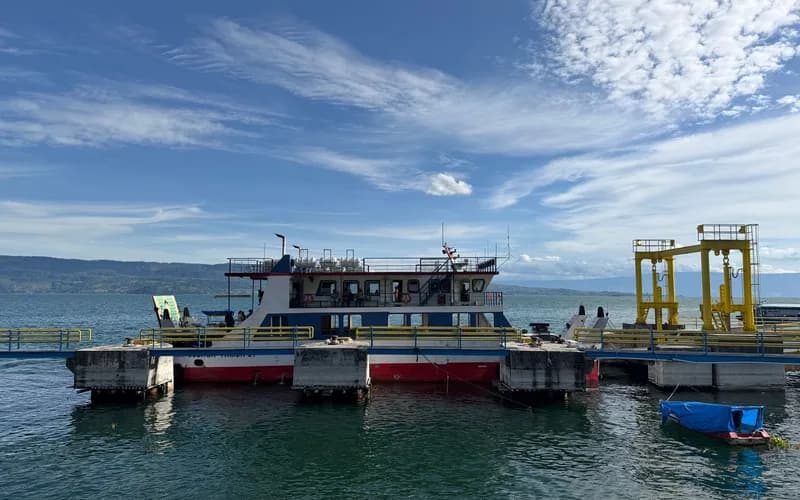
You reach it by a short ferry from the lakeside town of Parapat, and the moment the boat pulls away from the mainland the pace drops. Samosir runs on lake time, and a few days here is the classic Toba experience.
The Batak and Their Living Culture
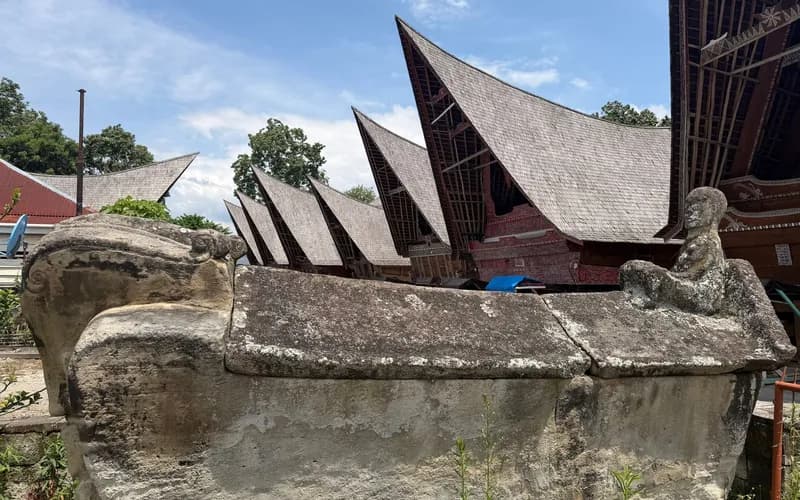
What sets Toba apart from Indonesia's beach and volcano destinations is culture. This is the homeland of the Toba Batak, a people with a strong and visible identity: distinctive boat-shaped houses with soaring roofs, a rich tradition of music, weaving and woodcarving, and a Christian faith unusual in largely Muslim Indonesia. The Batak are famously warm and direct, and their culture is not a museum piece but a living presence, in the villages, the churches, the family tombs that dot the fields and the ulos cloths woven by hand. Engaging with it respectfully, rather than treating it as a backdrop, is central to a rewarding visit.
Get matched with up to 5 trusted Indonesia agencies
- Free
- No obligation
- Up to 5 agencies
Tuk Tuk: The Traveller's Base
Most visitors base themselves on the Tuk Tuk peninsula, a small hook of land on Samosir's eastern shore that has grown into the region's traveller hub. Here you will find guesthouses and small hotels strung along the water, many with lawns running down to the lake, plus cafés, bicycle and scooter rental and a gentle, sociable atmosphere. Tuk Tuk is developed enough to be comfortable but small and quiet enough to remain deeply relaxing. A lakeside room with a view of the water and the hills beyond is one of the great simple pleasures of travel in Sumatra.
Villages, Stone Chairs and Kings' Tombs
Samosir rewards gentle exploration by bicycle or scooter. The village of Tomok holds ancient Batak tombs and souvenir stalls; Ambarita is famous for its circle of stone chairs, where village councils once met and, according to local history, justice was dispensed. Simanindo has a museum of Batak culture and traditional dance performances. These sites are modest in scale but rich in meaning, and visiting them with a local guide or a curious mind turns a pleasant ride into a genuine encounter with Batak history and belief.
The Simple Pleasures of Samosir
Beyond the named sights, Samosir's real gift is the license to do very little. Swim in the warm, clean lake water; cycle the quiet lanes past churches and rice fields; find a hot spring on the island's slopes; or simply sit on a lakeside lawn as the light changes over the water.
The island encourages a slowing of the pulse that is increasingly rare and increasingly valuable. Travellers who arrive planning two nights often extend, seduced by the ease of days that ask nothing of them. This is a place to read, walk, swim and rest rather than to rush.
Beyond Samosir: The Lakeshore and Highlands
For those with time, the wider Toba region rewards exploration. The road around the lake passes waterfalls, viewpoints and small towns; the highlands of North Sumatra offer coffee country, Batak villages and cool mountain air; and the dramatic viewpoints above the lake, such as those near Tele, reveal the sheer scale of the caldera. Toba can be the centrepiece of a longer, slower Sumatra trip rather than a standalone stop, and the further you venture from Tuk Tuk, the fewer other travellers you will meet.
Eating Around the Lake
Batak food is a distinctive and under-explored corner of Indonesian cuisine, often spicier and more herb-driven than the food of Java or Bali, and, unusually for Indonesia, frequently featuring pork given the region's Christian majority. Look for local lake fish, the herb-rich flavours of andaliman, the Batak "Sichuan pepper", and strong North Sumatran coffee. Our guide to what to eat in Indonesia sets Batak cooking in the wider context of the country's astonishing culinary variety.
Getting There and When to Go
Toba is reached via North Sumatra's capital, Medan, or more directly through the small Silangit airport near the lake, followed by road to Parapat and the ferry to Samosir. The journey is part of the slowing-down process. The dry season from roughly May to September brings the most reliable weather, though Toba's highland climate is pleasant year-round and rarely oppressively hot. Whenever you visit, allow enough time to let the lake work its calming effect rather than racing in and out.
Toba's Moment as a Super-Priority Destination
Lake Toba has been named one of Indonesia's handful of "super-priority" destinations, part of a national drive to spread tourism beyond Bali and develop world-class alternatives. This means growing investment in access and infrastructure, and a rising profile that will, over time, bring more visitors. It is part of the same rebalancing our analysis of how Indonesia is redrawing its tourism map beyond Bali examines. For now, Toba remains gloriously uncrowded by Bali's standards, which is all the more reason to experience its calm before the wider world fully arrives.
A Lake With a Story of Loss and Return
Lake Toba's story is not only geological but human, and it is a poignant one. For decades, the Batak heartland saw its young people leave for the cities and beyond, and tourism to Toba, once a fixture of the old overland trail through Sumatra, faded through the late twentieth century. In recent years the tide has begun to turn, as improved access, the super-priority designation and a wider hunger for quieter destinations have drawn travellers back and given young Batak reasons to stay or return. Visiting now means arriving at a hopeful moment, when the region is rediscovering its confidence and its guesthouses, guides and craftspeople are once again finding a livelihood in welcoming visitors. Spending your money with local families directly supports that revival.
How Toba Compares to Bali and Beyond
Travellers who know Indonesia mainly through Bali often find Toba a revelation. Where Bali's famous spots can feel crowded and commercialised, Toba offers space, calm and a culture entirely its own, at a fraction of the cost and the crowds. It is cooler, greener and slower, and it asks more of you in terms of travel time, which is precisely why it stays quiet. This is not a beach destination in the Bali mould; it is a lake and a culture, a place for stillness rather than nightlife. For travellers seeking the Indonesia that lies beyond the island everyone knows, Toba is one of the most rewarding answers, and one of the easiest to fall for.
What to Do Next
- Base yourself on the Tuk Tuk peninsula of Samosir island, ideally in a lakeside room, for at least three nights.
- Explore Samosir slowly by bicycle or scooter, visiting Tomok, Ambarita and Simanindo to understand Batak culture.
- Build in unstructured time to swim, cycle and rest, and let the lake's calm set your pace.
- Consider a wider North Sumatra loop, taking in the highlands and lakeshore beyond Samosir.
- Plan your route and timing with our Indonesia plan-your-journey resources.
Frequently Asked Questions
What is Lake Toba?
Lake Toba is the largest volcanic lake in the world, filling the caldera of a supervolcano that erupted around seventy-four thousand years ago in North Sumatra, Indonesia. Roughly a hundred kilometres long, it is prized for its calm scenery, cool highland climate and the distinctive culture of the Batak people who live around and on it.
Where should I stay at Lake Toba?
Most travellers stay on the Tuk Tuk peninsula on Samosir island, the large island in the middle of the lake, reached by ferry from the town of Parapat. Tuk Tuk has a relaxed cluster of lakeside guesthouses and small hotels, and a room facing the water is one of the great simple pleasures of a Sumatra trip.
How do I get to Lake Toba and Samosir?
Reach the region via Medan, the capital of North Sumatra, or more directly through the small Silangit airport near the lake, then travel by road to Parapat and take the ferry across to Samosir. The journey itself is part of the experience, easing you into the slower rhythm of the lake.
What is there to do at Lake Toba?
Explore Samosir island by bicycle or scooter, visit Batak villages such as Tomok, Ambarita and Simanindo, swim in the warm lake, find a hot spring, and simply relax by the water. The wider region offers waterfalls, viewpoints and highland scenery. Toba rewards slow, unhurried days rather than a packed sightseeing schedule.
Who are the Batak people?
The Batak are the indigenous people of the Lake Toba highlands, known for distinctive boat-shaped houses, rich traditions of weaving, music and woodcarving, and a Christian faith unusual in largely Muslim Indonesia. Their living culture, visible in villages, churches and family tombs, is central to what makes a visit to Toba so rewarding.
When is the best time to visit Lake Toba?
The dry season from roughly May to September offers the most reliable weather, though Toba's cool highland climate is pleasant throughout the year and rarely uncomfortably hot. Whenever you go, allow enough time for the lake to work its calming effect, rather than treating it as a quick stop on a wider Sumatra trip.