Pulau Weh and Sabang: Slow Travel at Indonesia's Western Tip
Most visitors to Indonesia never get anywhere near Sumatra's northern tip. That is precisely the point. Pulau Weh, a small volcanic island a short ferry ride off the coast of Aceh, is where the archipelago's western edge dissolves into the Andaman Sea, and where the pace of travel is set by a boat timetable, a tide and the next snorkelling session. There are no beach clubs, no sunset-bar queues and, for the most part, no hurry. There is also real coral, a handful of good dive operators, a quiet town called Sabang and a conservative Acehnese context that rewards careful, respectful travellers.
This article is a practical introduction to Pulau Weh for people who want depth over distance. It covers how to reach the island, where to base yourself, how to enjoy the water without damaging it, and how to behave in Aceh, the only Indonesian province that applies Islamic-inspired local bylaws. Prices quoted come from recent traveller sources and local reporting; they move, so treat them as orientation rather than a quote.
Why Pulau Weh deserves a slow week
Pulau Weh is small enough to circle by scooter in a day, which is exactly why it rewards staying put. The island is volcanic, ringed by reefs, and shaped by a long history as a trading and coaling port at the entrance to the Malacca Strait. Sabang, the main town, once served as a free port, and some of its old colonial-era buildings still stand. Today the island feels like a quiet outpost rather than a destination under pressure.
The appeal is in the repetition. A morning swim at Iboih, a lunch of grilled fish at a roadside warung, an afternoon reading on a bamboo platform, an evening watching the light drop behind the headland. If you give Weh three nights you will see the highlights; give it six and you begin to understand the rhythm of the place, from the fishermen leaving before dawn to the way the whole island seems to go quiet during the midday heat.
A word on expectations. Weh is not a luxury island and it is not a nightlife island. Infrastructure is improving, but power cuts, patchy mobile signal and simple rooms are part of the deal. If that sounds like a feature, you are the right audience.
One request. Up to five tailored proposals.
Skip contacting agencies one by one — share your trip once and let up to five trusted Indonesia agencies come to you. Free, with no obligation.
Get my free quotesGetting there: the ferry from Banda Aceh
Almost everyone arrives via Banda Aceh, the provincial capital at the northern tip of Sumatra. From the city centre you travel to the Ulee Lheue port and cross to Balohan harbour on Pulau Weh. Two kinds of ferry run the route.
- The fast ferry takes roughly one hour. A recent traveller guide lists economy, business and VIP seats in a range of about IDR 60,000 to 80,000, with departures in the morning and late afternoon. Cars and motorbikes do not travel on it.
- The slow ferry takes around two and a half hours, costs a fraction of the fast boat (the same source gives roughly IDR 18,000 to 32,000) and can carry vehicles. It is the more atmospheric option, and the one to choose if you plan to bring a rented scooter across.
Timetables change with weather and season, and ferry operations across Indonesia have been tightening their ticketing and identity checks, so confirm departure times the day before and carry your passport. We cover the wider logic of boat travel in our guide to island-hopping Indonesia slowly, including why a buffer day on either side of any boat connection is worth its cost.
There is also a small airport at Sabang with limited scheduled service, reported at a few flights per week from Medan. For most travellers the Banda Aceh route is simpler and more reliable.
From Balohan, the beach areas of Iboih and Gapang are about 40 to 50 minutes away by road. Shared transport and taxis meet the ferries, and many guesthouses will arrange pickup if you message them in advance.
Iboih, Gapang and Rubiah: where to base yourself
Pulau Weh has several coasts, but most visitors settle in one of three places.
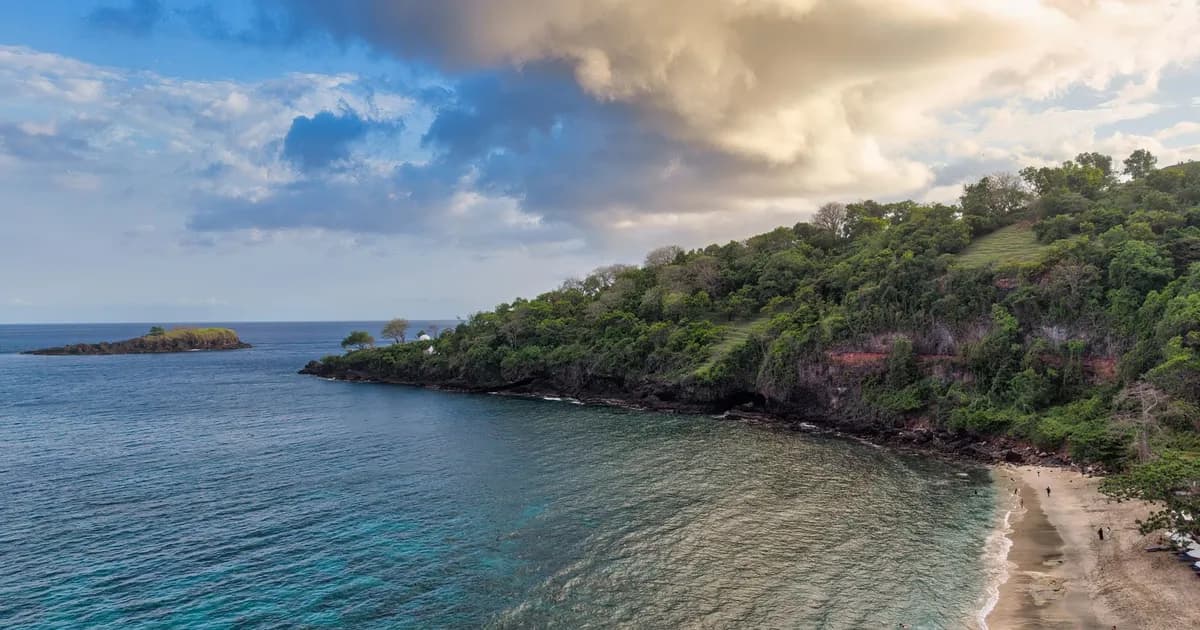
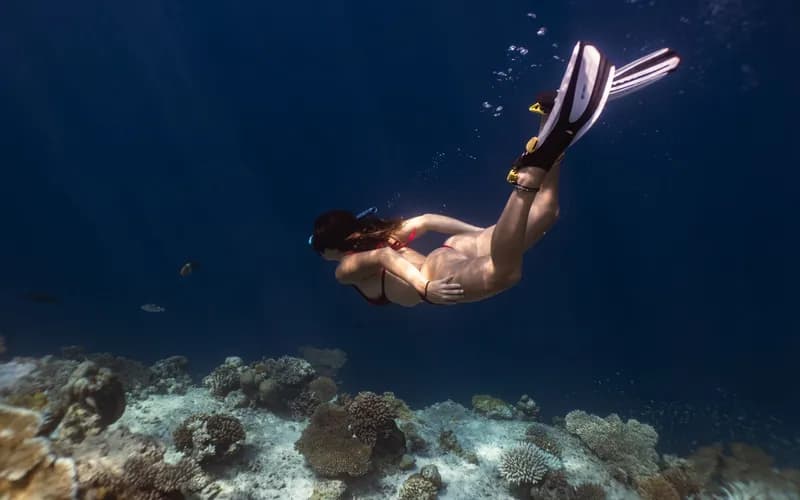
Iboih is the classic choice. A string of bamboo and timber bungalows sits along a sheltered bay, with a short boat hop to Rubiah Island, a small marine area with some of the easiest snorkelling on the island. Water on the Iboih side is clear, the house reef starts a few metres from many guesthouses, and the atmosphere is relaxed rather than polished.
Gapang, a short distance along the coast, is a little more open and popular with divers because several operators work from the beach. It has simple restaurants and a calm sandy bay.
Sumur Tiga and Long Beach on the east side are quieter again. They suit travellers who want fewer people and are comfortable with a scooter or a driver for dinner runs.
[ ]
]
Local reporting describes Iboih and Rubiah as increasingly popular at weekends and holidays, with glass-bottom boats, paddle boards and transparent canoes now offered for viewing the reef from the surface. Boat fares to Rubiah are reported to range from IDR 200,000 to 750,000 depending on vessel type and group size, so negotiate per boat rather than per person and share with other guests if you can. Weekdays are noticeably calmer than weekends.
Get matched with up to 5 trusted Indonesia agencies
- Free
- No obligation
- Up to 5 agencies
Diving and snorkelling responsibly
Weh's reefs are the island's real asset and its main vulnerability. Dive operators on the island include long-established centres at Iboih and Gapang, and travellers often describe the diving as less crowded than better-known Indonesian sites. That quiet is easily lost if visitors behave carelessly.
A few habits make a genuine difference. Do not stand on coral, even in shallow water at low tide. Use a rash vest or reef-safe protection instead of heavy sunscreen. Never feed fish, which changes behaviour and attracts species that do not belong near swimmers. Keep a clear distance from turtles and from the dolphins that local operators say are regularly seen in the area. Choose operators who brief on buoyancy, who limit group sizes and who do not anchor on live reef.
Our dedicated guide to snorkelling and diving responsibly in Indonesia goes through the full checklist, including what to ask a dive shop before you book and why a calm day of house-reef snorkelling often beats a rushed boat trip.
If you are new to the sea, spend your first day on the house reef at Iboih. The shallow zones allow you to learn the water at your own pace, and a guesthouse owner will usually tell you honestly which stretch is safest that day.
Beyond the reef: Sabang, Kilometer Zero and the hills
Even a water-focused trip benefits from a day on land. The island road loops around hills of secondary forest, with viewpoints over the bay and glimpses of macaques at the roadside. The geothermal activity that built the island is visible in fumaroles and hot-spring spots on the northern coast, which locals visit for a soak and a simple meal.
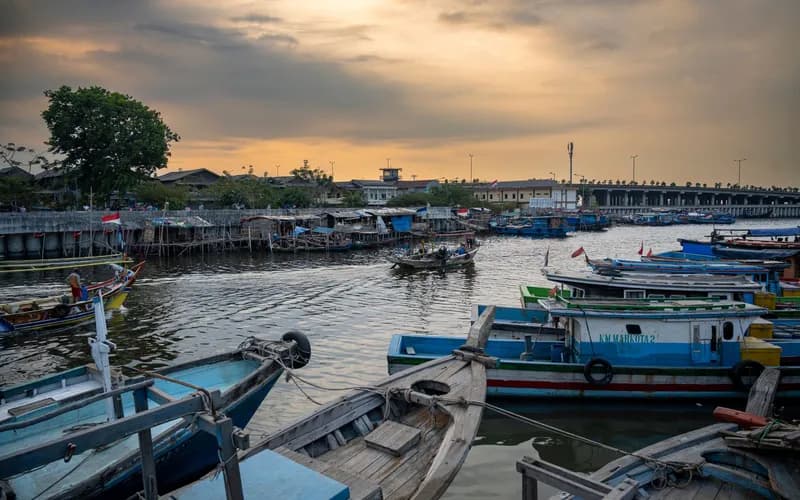
Sabang town is worth a slow afternoon. The harbour, the old market, the coffee houses and the grilled-fish stalls give a sense of daily life that the beach areas lack. Acehnese coffee culture is serious, and a table at a small kopi shop is one of the most direct ways to meet people.
The island's best-known landmark is Kilometer Zero, a monument at the northern end that marks the symbolic starting point of Indonesia's west. It is a short ride from Sabang, busy at golden hour and quiet at other times. Treat it as an excuse for a coastal drive rather than a destination in itself.
[ ]
]
Aceh: what to know before you go
Aceh is governed with Islamic-inspired local bylaws, and although tourists are not held to every rule that applies to residents, the context shapes daily life. Alcohol is generally not sold openly in the province, and while a few places may discreetly offer a beer, you should not count on it. Dress modestly away from the beach: covered shoulders and knees are the safe default for everyone, and women may want a light scarf for mosques and formal settings. Public displays of affection draw disapproval. On the beach, swimwear is fine at the established snorkelling spots, but a T-shirt and shorts or a light cover-up for walking through villages shows respect.
Weh's population is welcoming, and visitors who greet people, ask before photographing and avoid loud behaviour usually find the island easy. For a broader view of how to behave in mosques, villages and shared spaces, see our note on cultural etiquette in Indonesia. Remember also that Indonesia's revised criminal code, which took effect in January 2026, adds legal weight to questions of public conduct nationwide.
Prayer times shape the day. Expect shops to pause briefly, and note that Friday midday is quiet across the island.
Where to stay and what it costs
Accommodation on Weh is overwhelmingly small and owner-run. A recent traveller guide lists basic beach huts from around IDR 50,000 to 150,000 per night, mid-range rooms from about IDR 150,000 to 300,000 and the first resort-style options from roughly IDR 400,000. Treat those as historical markers; recent demand has pushed prices up in peak weeks, and a comfortable private room with a fan or air-conditioning near Iboih can now cost noticeably more.
Practical points that matter more than price:
- Book the first and last nights ahead, then stay flexible. Walk-ins are usually fine outside holidays.
- Carry enough cash. ATMs exist in Sabang but are not guaranteed to work; card acceptance in beach areas is limited, and QR payments are patchy.
- Ask about water, electricity hours and mosquito protection when you book.
- Bring a reusable bottle and ask where refills are available, since plastic waste is a real strain on a small island.
Staying in locally owned guesthouses is the simplest way to keep spending on the island. If you want a comparison with other quiet places in the country, our guide to off-the-beaten-path Indonesia places Weh alongside other low-key destinations.
When to go and how long to stay
Sea conditions on the Andaman side differ from those in southern Indonesia, and local operators generally describe calmer water and better visibility in the drier months, roughly late in the year through the first months of the calendar year. Ask your guesthouse or dive centre for current conditions, as ferry crossings can be cancelled in rough weather.
Plan at least four nights on Weh itself, plus a night or two in Banda Aceh, which has its own history and a major tsunami museum worth a respectful visit. Six to seven nights on the island is an easy slow-travel rhythm. If you are connecting the island into a longer Sumatra route, pair it with Lake Toba and West Sumatra. Our regional piece on Lake Toba and Samosir can anchor the rest of a northern Sumatra journey.
What to Do Next
- Decide whether Weh fits your trip: it suits snorkellers, divers and people who like quiet, simple places.
- Map the crossing: Banda Aceh, Ulee Lheue port, Balohan, then road transfer to Iboih or Gapang. Add a buffer night in Banda Aceh.
- Message two or three guesthouses directly and ask about boat transfers, power and water.
- Book your first and last nights only, and leave the middle open.
- Pack modest clothing, a rash vest, a reusable bottle and enough cash for the stay.
- Use our plan your journey page to place Weh within a wider Sumatra route, or ask a local specialist to arrange the transfers.
Frequently Asked Questions
How do I get to Pulau Weh?
Travel to Banda Aceh, then take a taxi or shared transport to Ulee Lheue port and board a ferry to Balohan on Pulau Weh. The fast ferry takes about an hour; the slow ferry about two and a half hours and carries vehicles. Check timetables the day before.
Is Pulau Weh good for beginners in the water?
Yes. The house reefs near Iboih are shallow and easy to enter, and Rubiah Island offers accessible snorkelling. Beginners should start on calm days, wear a rash vest and ask a guesthouse owner or dive centre where conditions are best.
Can tourists drink alcohol on Pulau Weh?
Alcohol is generally not sold openly in Aceh. A few places may offer it discreetly, but you should plan on not drinking, and avoid asking in an insistent way. Respect local norms and you will be fine.
What should I wear in Aceh?
Modest, loose clothing is the safe choice away from the beach: covered shoulders and knees. Swimwear is acceptable at snorkelling beaches, but cover up when walking through villages or visiting mosques.
How many days do I need?
Four nights is a minimum; six or seven is better for a slow pace. Add a night in Banda Aceh on the way in or out so that a delayed ferry does not break your onward plans.
Is it safe to ride a scooter on the island?
Roads are quiet compared with Bali, but they are narrow and hilly, and animals appear without warning. Wear a helmet, avoid night riding and carry a valid licence and international permit. Our guide to getting around Indonesia by road covers the rules.