Sumba: Indonesia's Island of Peaked Roofs, Ikat and Empty Beaches
East of Bali, past Lombok and Flores, lies an island that feels like nowhere else in Indonesia. Sumba is a land of tall, thatched houses with soaring peaked roofs, of stone tombs standing in the grass, of horses on empty white beaches and a living animist faith older than the mosques and temples that dominate elsewhere. It is one of the country's poorest and least-visited islands, and for the slow traveller that is precisely its gift: a place where an ancient culture still shapes daily life, and where the pace is set by ritual and season rather than by tourism.
Sumba is not an easy island to tick off. Its sights are scattered across long distances, its infrastructure is modest, and it rewards patience over efficiency. But for those willing to slow right down, it offers something increasingly rare: an encounter with a way of life that most of the modern world has left behind.
Where Sumba is, and why it feels different
Sumba lies in the province of East Nusa Tenggara, part of the long chain of islands stretching east from Bali towards Timor. Geographically it is dry and rolling, a landscape of grasslands and low hills more reminiscent of savannah than of tropical jungle, quite unlike the lush volcanic islands to the west. But the deepest difference is cultural. While much of Indonesia is Muslim and Bali is Hindu, Sumba retains a strong hold of Marapu, the island's indigenous animist religion, centred on ancestor veneration and a spirit world woven into every aspect of life.
This is what gives Sumba its singular atmosphere. The great tombs, the ceremonies, the ritual calendar and the social structure of the villages all flow from this ancestral faith, and it is very much alive rather than a heritage relic. Travelling here, you are not visiting a museum of the past but a present that has kept its own shape. For a sense of how Sumba fits among Indonesia's lesser-known islands, our guide to off-the-beaten-path Indonesia sets the scene.
One request. Up to five tailored proposals.
Skip contacting agencies one by one — share your trip once and let up to five trusted Indonesia agencies come to you. Free, with no obligation.
Get my free quotesThe villages: peaked roofs and megalithic tombs
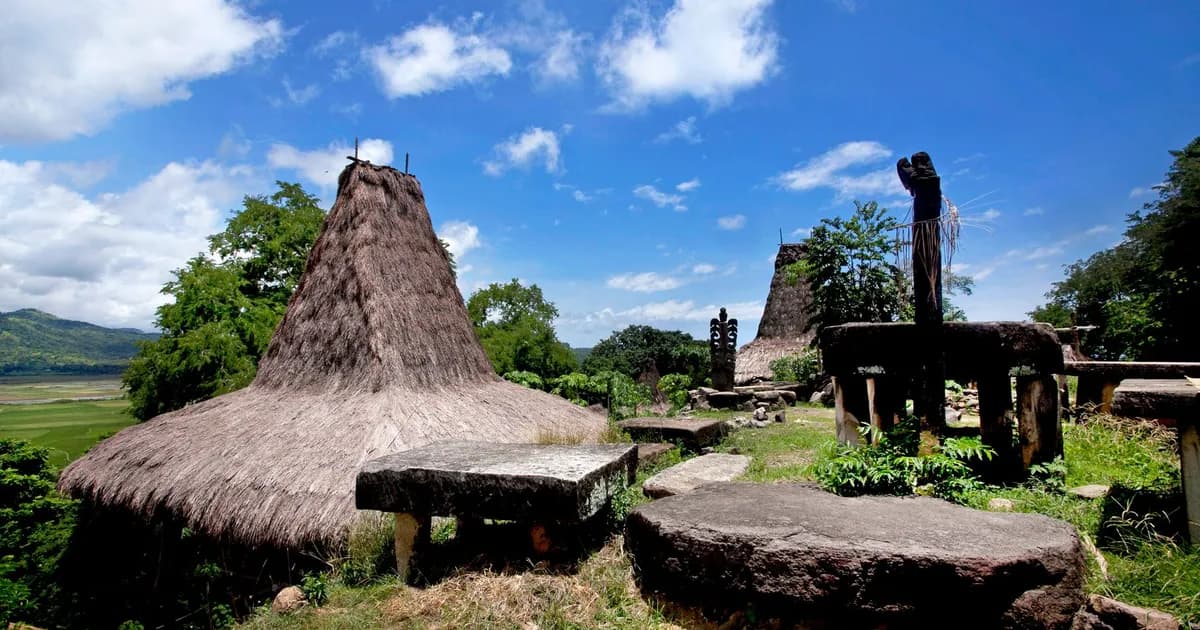
The most striking sight in Sumba is its traditional villages, clusters of houses whose steep, towering thatched roofs rise to sharp peaks, built around a central space dominated by megalithic stone tombs. These are not reconstructions; they are living settlements, and the tombs hold the ancestors whose presence orders village life. Standing among them, with ancestral poles carved and the great roofs rising overhead, is one of the most atmospheric experiences in Indonesia.
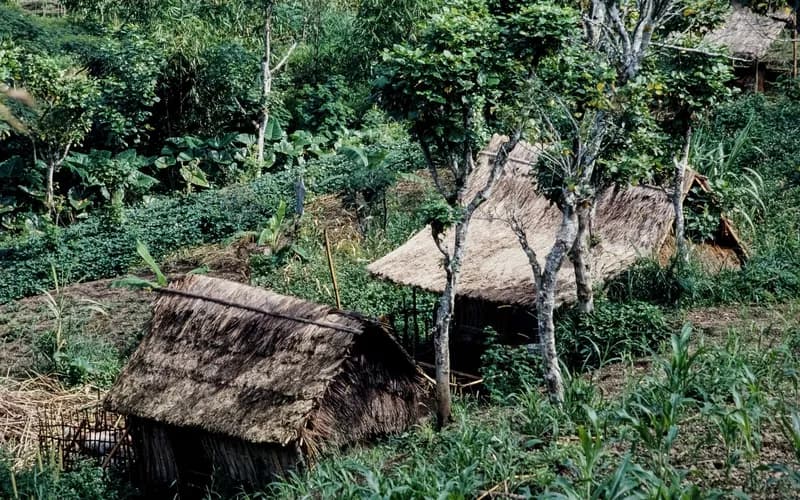
Villages such as Ratenggaro, near the coast in the southwest, with its towering houses and megalithic graves, and Praijing, with its preserved traditional architecture set among fields and palms, are among the most accessible, though many others dot the island. The quieter, less-visited villages offer the most atmospheric encounters, away from any crowds. In all of them, the same courtesies apply: these are people's homes and sacred spaces, and visiting respectfully, ideally with a local guide who can introduce you properly, is essential.
Ikat: the cloth that takes months
Sumba is famous, among those who know Indonesian textiles, for its ikat, a hand-woven cloth of extraordinary complexity. The technique involves tying and dyeing the threads before weaving, so that the pattern emerges as the cloth is made, and Sumbanese ikat is renowned for its bold geometric designs and its motifs of horses, birds, turtles and other animals drawn from the island's cosmology.
A single fine piece can take months to complete, from the tying and natural dyeing to the weaving itself, and the finest cloths were historically reserved for ceremony and status. Watching the process in a weaving village, and buying a piece directly from the woman who made it, is one of the most rewarding things a visitor can do here, both for the encounter and because it channels money straight to the artisans. It is craft at its slowest and most meaningful, the kind of living tradition our writing on Indonesia's islands returns to again and again.
Get matched with up to 5 trusted Indonesia agencies
- Free
- No obligation
- Up to 5 agencies
Empty beaches and wild grasslands
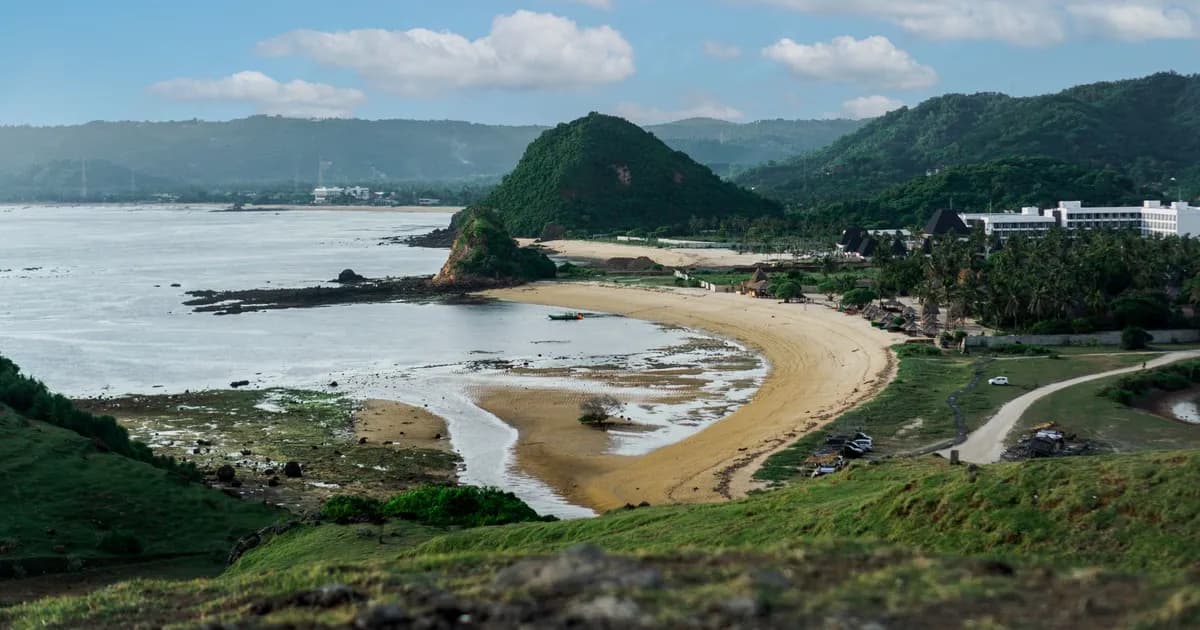
Sumba is not only culture; it is also one of the most beautiful and least developed coastlines in Indonesia. The island is ringed with white-sand beaches that, unlike Bali's, are largely empty, long stretches of pristine coast backed by dunes and low cliffs, with hidden coves of turquoise water and barely a resort in sight. Beaches such as Puru Kambera, with its sweeping sand and famous horses, capture the island's wild, unhurried spirit.
Inland, the rolling grasslands and hills are dotted with waterfalls, among them the terraced pools of Tanggedu, sometimes called Sumba's little Grand Canyon, reached by a rough track and rewarding the effort with near-solitude. The horses that roam the grasslands are central to Sumbanese identity and ritual, and seeing them against the empty landscape is one of the island's defining images. This is nature at a scale and quiet that the busier islands lost long ago.
The Pasola and the ritual calendar
Sumba's most famous ceremony is the Pasola, a ritual battle in which teams of horsemen hurl blunted spears at one another, held in a few western villages around February and March in connection with the agricultural and lunar calendar. It is spectacular, fierce and deeply sacred, tied to fertility and the wellbeing of the harvest, and witnessing it is an unforgettable, if intense, experience.
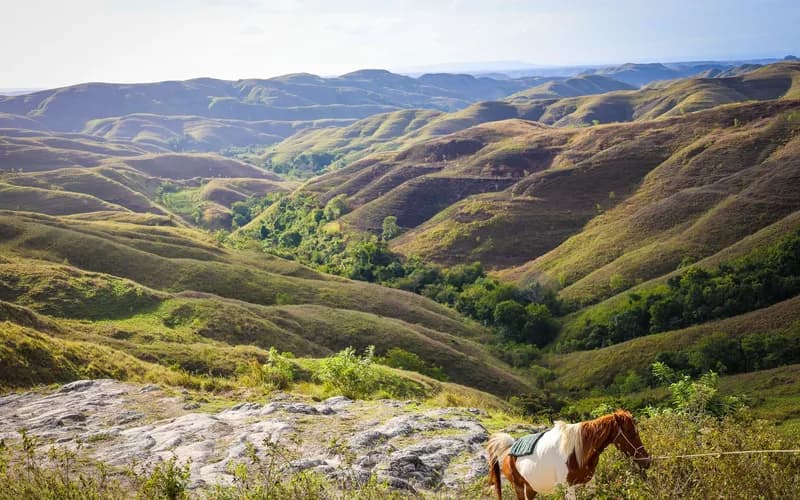
The Pasola is only the most visible expression of a calendar full of ceremony, funerals in particular being major, sometimes lengthy events of great cultural weight. If your visit coincides with a ritual you may be privileged to witness something extraordinary, but it must be approached with real respect and, ideally, local guidance, as these are sacred occasions, not performances. Timing a trip around the Pasola takes planning, since its exact dates shift with the calendar; our guide to where to go and when in Indonesia can help you think about seasons.
Getting there and getting around
Sumba is reached by air, with airports at Tambolaka in the southwest and Waingapu in the east, both served by flights from Bali and other hubs. There is no simple way to arrive slowly, though the island pairs naturally with a wider journey through Nusa Tenggara, and travellers exploring nearby Flores often add it; our guide to Flores overland covers the neighbouring island that makes a natural companion.
Once on Sumba, distances are the defining challenge. The sights are spread far apart across an island with modest roads, and journeys take longer than the map suggests. Hiring a car with a local driver, or a guide, is by far the most practical approach, and it also opens doors to the villages and encounters that independent travel would miss. Plan for fewer things done well rather than a long checklist, and build in plenty of time; the getting there, across the grasslands and past villages where children wave from the roadside, is part of the experience. A day spent driving between two sights, with unhurried stops along the way, often turns up the encounters you remember most, so resist the urge to rush and let the road itself be part of the journey.
Travelling Sumba slowly and respectfully
Sumba rewards, and requires, a particularly thoughtful kind of travel. This is a poor island with a fragile, living culture, and the way you visit matters. Go with local guides, who can introduce you properly to villages and explain the customs you are witnessing. Ask before photographing people, tombs or ceremonies, and follow local guidance on where it is appropriate to go. Buy ikat and crafts directly from the makers, and be prepared for the modest small contributions that villages may ask of visitors.
Above all, come with humility and time. Sumba is not a destination to be consumed; it is a place to be met on its own terms, slowly and with respect. Approached that way, it offers one of the most profound cultural encounters available anywhere in Indonesia. To arrange a trip that reaches the island responsibly and connects you with the right local guides, a specialist on our Indonesia travel agencies page can help.
What to Do Next
- Fly into Tambolaka or Waingapu, and consider pairing Sumba with Flores or a wider Nusa Tenggara journey.
- Hire a car with a local driver or guide to reach the scattered villages, beaches and waterfalls.
- Visit traditional villages such as Ratenggaro and Praijing respectfully, ideally with a guide.
- Watch ikat being woven and buy directly from the artisans.
- If your dates allow, plan around the Pasola in February or March, approaching it as a sacred ritual, not a show.
Frequently Asked Questions
Where is Sumba and how do I get there?
Sumba is an island in East Nusa Tenggara, east of Bali beyond Lombok and Flores. It is reached by air, with airports at Tambolaka in the southwest and Waingapu in the east, served by flights from Bali and other hubs. There is no quick overland route, so most visitors fly in.
What makes Sumba different from Bali?
Sumba is dry, rolling and sparsely developed, quite unlike lush, busy Bali. Culturally it retains a strong hold of Marapu, its indigenous animist religion of ancestor veneration, expressed in megalithic villages, ikat weaving and rituals like the Pasola. It is far less touristed and far more traditional.
What is Sumba ikat?
Sumba ikat is a hand-woven cloth in which the threads are tied and dyed before weaving, so the pattern emerges as the cloth is made. Sumbanese ikat is famous for bold geometric designs and animal motifs, and a single fine piece can take months to complete. Buying directly from weavers supports the artisans.
What is the Pasola?
The Pasola is a sacred ritual battle in which horsemen throw blunted spears at each other, held in western Sumba around February and March in tune with the ritual calendar. It is spectacular and deeply sacred, tied to fertility and the harvest, and should be witnessed with respect and local guidance.
How many days should I spend in Sumba?
Because the island is large and its sights are spread out over slow roads, allow at least four or five days to see it without rushing, more if you want to reach remoter villages or time a ceremony. Hiring a car and driver makes the distances manageable.
Is Sumba suitable for slow travel?
Very much so. Sumba has little tourist infrastructure, long distances and a living traditional culture, all of which reward an unhurried, respectful approach. It is not a place for a quick stop but for travellers who want to settle in, take their time and engage deeply with a singular island.