
Most visitors fly into Labuan Bajo, spend three nights on a boat among the dragons, and fly out again. They see perhaps a tenth of Flores. The island is 360 kilometres long, spined with volcanoes, and threaded by a single serpentine highway that takes days to drive properly and repays every one of them. If you want a place in Indonesia that punishes hurry, this is it.
Flores — "flowers", a name left behind by sixteenth-century Portuguese traders — is the rare Indonesian island where the journey genuinely is the destination. There is no fast alternative. The Trans-Flores Highway bends around every ridge it cannot climb, and the villages, crater lakes, ikat weaving cooperatives and hot springs strung along it only make sense at the speed of a car in second gear.
Why Flores Is Built for Slow Travel
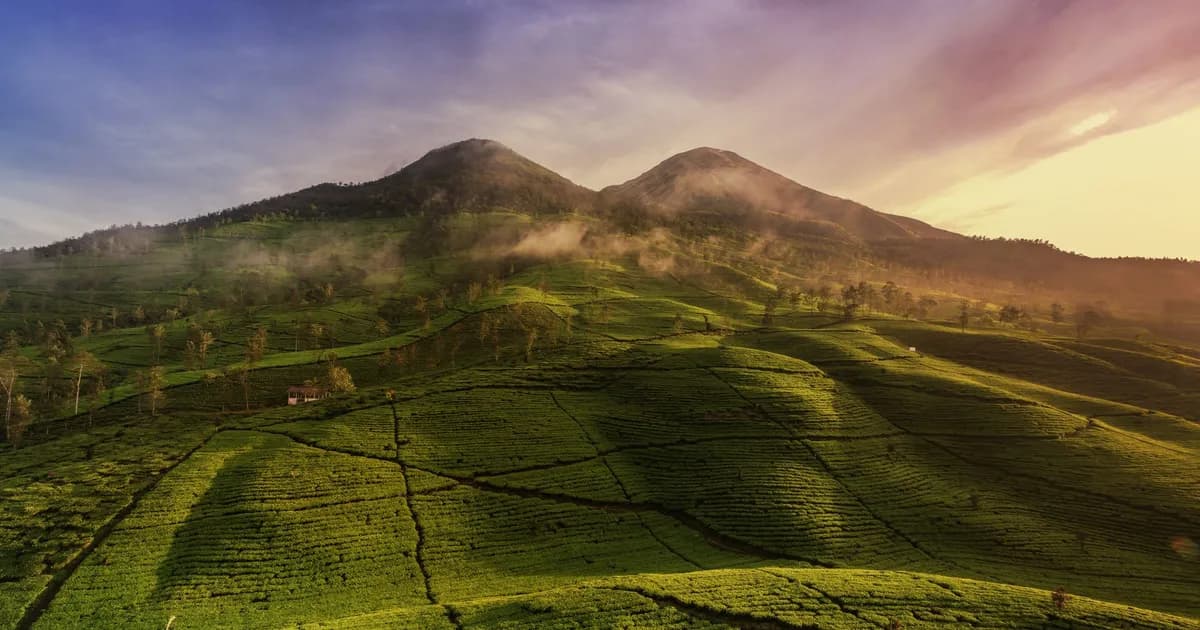
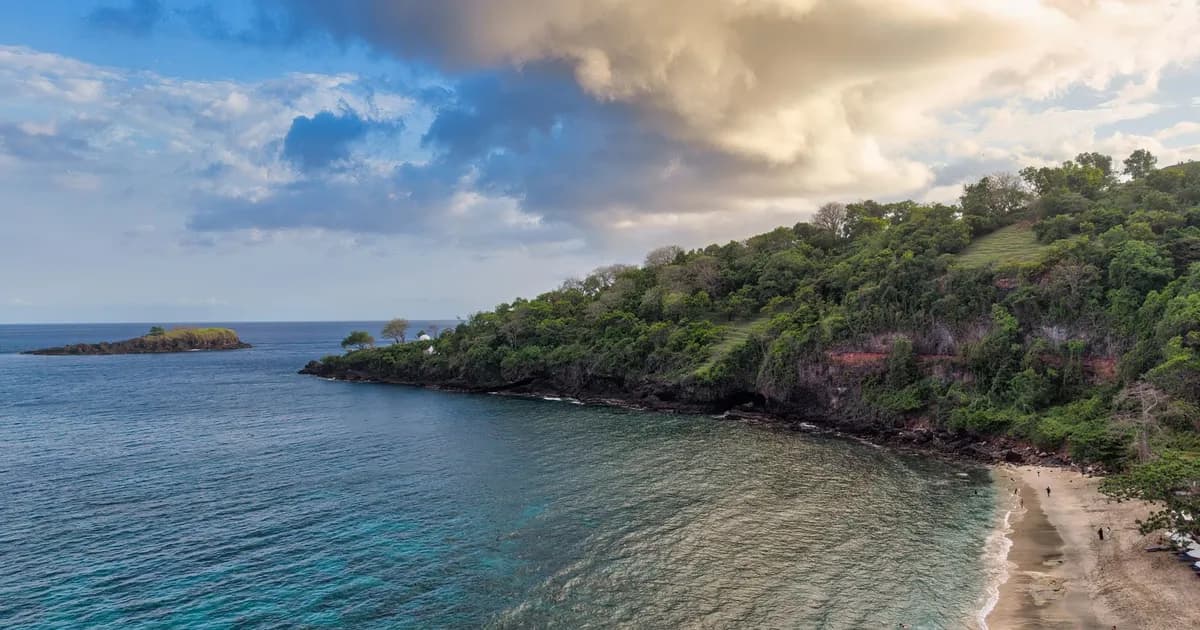
Flores does not have a single anchor sight that justifies a flying visit. Komodo National Park comes close, but the park is offshore and, in practice, a separate trip. What the island has instead is density: a Catholic-animist culture that produces both village funerals and Sunday mass, four distinct language groups within 300 kilometres, and a landscape that changes every ninety minutes of driving from mangrove coast to cloud forest to volcanic caldera.
That density is invisible at speed. Drivers who attempt Labuan Bajo to Maumere in two days will remember only the switchbacks and the nausea. Travellers who give it twelve to fourteen days find that the road becomes a kind of narrative, each district handing them to the next.
There is also a practical argument. Flores has very little tourism infrastructure between the two ends. Guesthouses are family-run, roadside warungs open when someone is hungry, and buses run to a logic no timetable captures. Slowness is not an aesthetic preference here; it is the only way the island can be travelled without frustration. If you are still choosing between Indonesian islands, our slow traveller's guide to Indonesia sets out where Flores fits against Java, Sumatra and Sulawesi.
One request. Up to five tailored proposals.
Skip contacting agencies one by one — share your trip once and let up to five trusted Indonesia agencies come to you. Free, with no obligation.
Get my free quotesThe Route: Labuan Bajo to Maumere in Fourteen Days
The classic overland run goes west to east, because most people arrive by air from Bali into Labuan Bajo and leave from Maumere. Reversing it works equally well and is often cheaper on flights.
A realistic fourteen-day shape:
- Days 1–3, Labuan Bajo. Arrive, sort cash and permits, and take a two-night boat into Komodo National Park.
- Days 4–5, Denge and Wae Rebo. Drive south-east, sleep at Denge, trek up to Wae Rebo and stay the night in a traditional house.
- Days 6–7, Ruteng. Spider-web rice fields at Cancar, the Liang Bua cave where Homo floresiensis was found, and cool highland air at 1,200 metres.
- Days 8–9, Bajawa. Ngada villages, Wawomudha crater, and the Soa hot springs after dark.
- Days 10–11, Riung or Ende. Either the seventeen-island marine reserve at Riung or the black-sand coast road to Ende.
- Days 12–13, Moni and Kelimutu. Pre-dawn ascent to the three coloured crater lakes, then a slow day in the village.
- Day 14, Maumere. Coastal drive east, ikat weaving at Sikka or Watublapi, flight out.
Compress this into seven days and you will spend roughly sixty percent of your waking hours in a vehicle. Ten days is the honest minimum. Fourteen is comfortable. Eighteen lets you stop when a village is holding a penti harvest ceremony, which is the entire point.
Wae Rebo: The Village That Sets the Pace
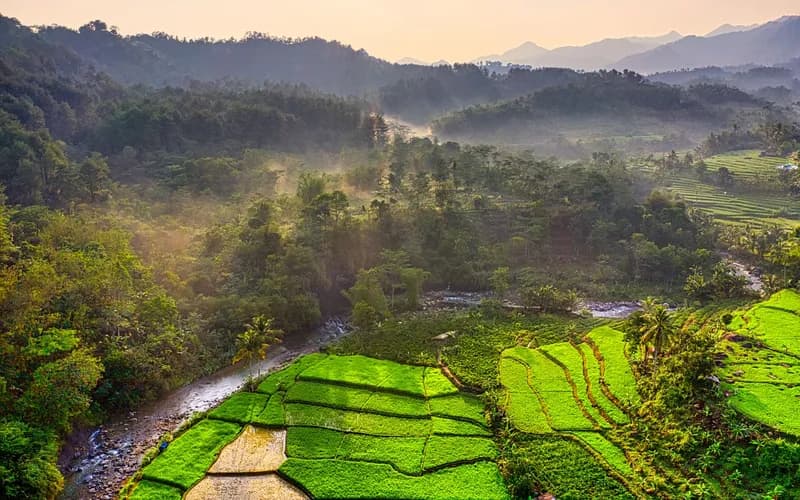
Wae Rebo is the reason many travellers commit to the overland route at all, and it is a useful test of whether you actually want this trip. The village sits at around 1,100 metres in a bowl of cloud forest, reachable only on foot: a drive of two to three hours from Ruteng or Bajawa to the trailhead village of Denge, then a climb of two to three hours on a clear forest path.
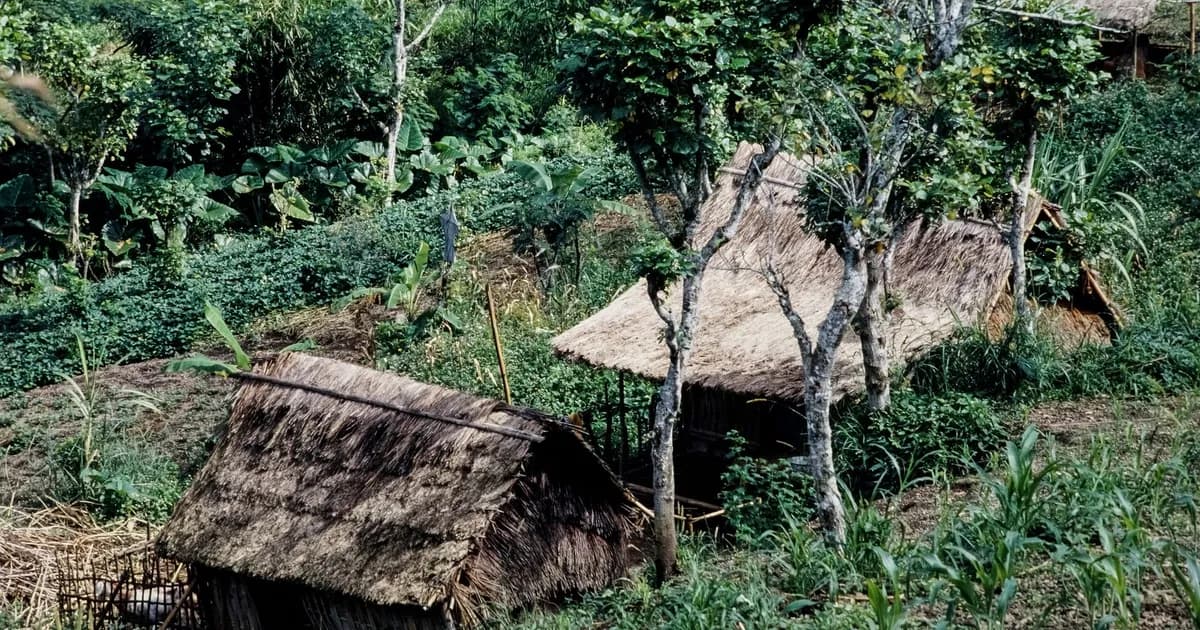
Seven conical Mbaru Niang houses stand in a circle around a ceremonial platform. They are not reconstructions. Around forty families live there, farming coffee and vanilla on the surrounding slopes. Visitors are received through a formal welcome ceremony in the main house, pay a community contribution that funds the village directly, and sleep on mats in the communal upper floors.
Two things are worth stating plainly. First, this is somebody's home, not a heritage site with opening hours; photography of ceremonies should be asked about, not assumed. Second, the overnight stay is basic — shared sleeping space, cold water, no electricity beyond a few hours of generator. Travellers who arrive expecting a boutique experience are the ones who leave disappointed, and they are also the ones who make the village weary of visitors.
Wae Rebo works best as a two-night commitment: sleep at Denge, walk up in the morning, stay one night, walk down the next day. Day-tripping it is possible and almost always regretted.
Get matched with up to 5 trusted Indonesia agencies
- Free
- No obligation
- Up to 5 agencies
Bajawa, Bena and the Ngada Highlands
Bajawa is a cool, unremarkable market town at 1,100 metres that happens to be surrounded by some of the most striking traditional architecture in eastern Indonesia. The Ngada villages — Bena, Tololela, Gurusina, Luba — are laid out as parallel rows of thatched houses facing a central avenue of ngadhu and bhaga ancestral shrines, with megalithic stone platforms between them.
Bena is the most visited and the easiest to reach. Tololela, a further half hour and a short walk, is quieter and permits overnight stays. Both charge a modest entry donation and expect visitors to sign a book at the village head's house first — do it, it matters more than the money.
Around Bajawa, Mount Inerie rises in an almost perfect cone above the plain. The pre-dawn climb takes three to four hours and is genuinely steep scree near the summit; it is not a casual walk, and local guides are essential. If you are weighing Indonesian volcano climbs generally, our field notes on trekking Indonesia's volcanoes responsibly cover fitness, guides and the ethics of summit tourism.
End the day at the Soa hot springs, twenty-five kilometres north, where a warm river runs over smooth stone and the crowd is entirely local after about six in the evening.
Kelimutu: Three Lakes, One Very Early Morning
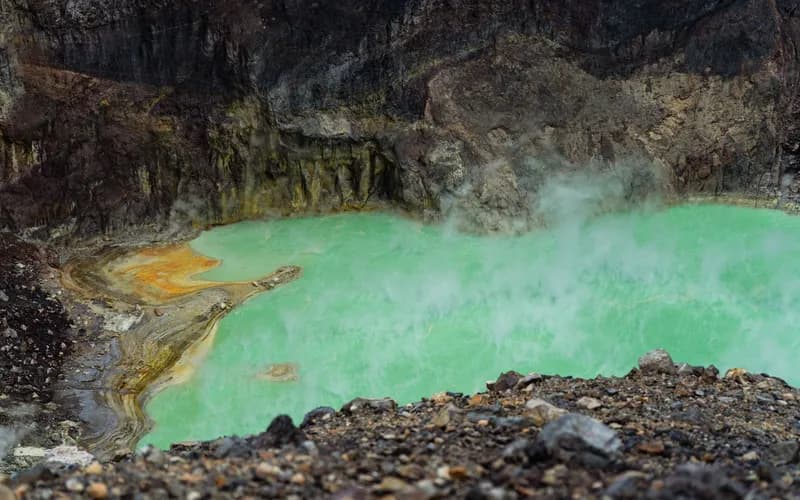
Kelimutu is the single image most people carry of Flores: three crater lakes on one mountain, each a different colour, each capable of changing colour independently over months as mineral chemistry shifts. Turquoise becomes olive; black becomes red-brown. Nobody can predict it.
The practical shape of a Kelimutu morning is unglamorous. You stay in Moni, a strip of guesthouses fifty kilometres east of Ende. You wake at 3:30, drive fifteen minutes to the car park, and walk ten to fifteen minutes up steps to the viewing platform in the dark, with a fleece, because it is genuinely cold at 1,600 metres before sunrise.
For the Lio people who live around the mountain, the lakes are where souls go: Tiwu Ata Bupu for elders, Tiwu Nuwa Muri Koo Fai for the young, Tiwu Ata Polo for those who lived badly. The annual Pati Ka ceremony feeds the ancestors at the crater rim each August. Knowing this changes the experience from a photo stop to something closer to a visit.
Give Moni a full second day. The village sits under waterfalls and rice terraces, and the walk down from the crater through Pemo village — three hours, mostly downhill, through coffee gardens — is one of the better half-days on the island and requires no vehicle at all.
Getting Around: Drivers, Buses and the Honest Maths
There are three ways to cross Flores, and they are not equivalent.
A private car with driver is what most visitors end up using. Expect roughly IDR 800,000 to 1,200,000 per day including fuel and the driver's own costs, split between however many of you travel. It buys flexibility, roadside stops, and a driver who usually doubles as an interpreter across language groups. Over fourteen days this is the single largest line in the budget.
Public buses and travel minivans connect every major town for a fraction of that — Labuan Bajo to Ruteng for well under IDR 150,000 — but they depart when full, stop constantly, and do not detour. They are entirely viable if you have time and no fixed flight, and they are how you meet people.
Motorbike is the cheapest and by some distance the riskiest. The road surface is good in stretches and broken in others, rain arrives without warning, and medical evacuation from central Flores is slow and expensive. Experienced riders love it; it is not a place to learn.
Cash is the other constraint. ATMs exist in Labuan Bajo, Ruteng, Bajawa, Ende and Maumere, and they run dry. Draw more than you think you need at each one. For a wider view of what an Indonesian trip costs end to end, see our Indonesia budget guide for 2026.
When to Go, and What the Rain Actually Does
The dry season runs roughly May to October, and July and August are the reliable months for both Komodo boat trips and clear Kelimutu sunrises. They are also when Labuan Bajo is busiest and flights from Bali sell out two to three months ahead.
April and November are the shoulder months worth arguing for. The landscape is green rather than dust-brown, the road is empty, and prices soften noticeably. The trade-off is real: afternoon rain, occasional landslips on the mountain sections, and a meaningful chance of a clouded-out crater rim.
December to March is genuine wet season. Boat trips to Komodo are frequently cancelled by sea conditions, and some inland roads become difficult. Overlanding is still possible for flexible travellers, but do not plan tight connections. Whichever window you pick, build in two buffer days before any international flight — the moving parts on this island are many, and our notes on island-hopping Indonesia slowly explain how to structure that slack.
What to Do Next
- Fix your two flights first. Denpasar to Labuan Bajo and Maumere to Denpasar, booked two to three months ahead for July and August. These anchor everything else.
- Decide the Komodo question early. Boat trips now require advance registration through the park's booking system or a licensed operator, and consolidated ticket prices sit in the IDR 650,000–900,000 range per person depending on route. Do not leave it to arrival day.
- Book Wae Rebo through a local contact. Arrange the Denge overnight and a porter or guide in advance; capacity in the village is limited and walk-ups in high season can be turned away.
- Choose your transport model. Private driver for fourteen days, or buses with an open-ended schedule. Mixing them — driver for the Bajawa–Ende stretch, buses elsewhere — is a sensible compromise.
- Draw cash in Bali. Arrive in Labuan Bajo with rupiah in hand rather than trusting the ATM queue.
- Talk to an operator who actually works Flores. The island rewards local knowledge more than almost anywhere in Indonesia; our vetted Indonesia travel agencies are assessed on exactly that kind of on-the-ground depth.
Frequently Asked Questions
How many days do I really need for Flores?
Ten days is the honest minimum for the Labuan Bajo to Maumere overland route including Komodo, and you will still feel rushed. Fourteen days is comfortable and allows a rest day. If you have only a week, skip the overland run entirely and treat Labuan Bajo and Komodo as a standalone trip rather than compressing the island.
Is Flores suitable for first-time visitors to Indonesia?
Yes, with caveats. The people are welcoming, the roads are safe enough with a competent driver, and the tourist trail is well established. But infrastructure is basic, English is limited outside Labuan Bajo, and there is no equivalent of Bali's convenience. Travellers who have done one previous trip in Southeast Asia tend to enjoy it more.
Do I need a guide for the whole island?
No. A driver is close to essential; a full-time guide is not. Hire local guides at the specific places that need them — Wae Rebo, Mount Inerie, the Ngada villages — and let your driver handle the rest. This keeps money in the districts you are actually visiting.
What does the Komodo park entry cost in 2026?
Consolidated tickets covering park entry, ranger fees and conservation contributions run approximately IDR 650,000 for the Komodo Island route and IDR 900,000 for Rinca, per person. Advance registration through the official booking system or a licensed operator is required rather than optional. Confirm current figures with your operator before travelling, as the structure has changed more than once.
Is Wae Rebo worth the trek?
For most travellers, yes — but only if you stay the night and arrive without expectations of comfort. The village is a functioning community rather than an attraction, and the value of the visit is in the evening and early morning, after the day visitors have gone.
Can I combine Flores with other Indonesian islands?
Naturally. Flores pairs well with Sulawesi's highlands, which share a comparable culture of ancestral architecture and ceremony — our piece on the Toraja highlands covers that route. It also works as a second leg after Bali, since almost all flights connect through Denpasar anyway.
Is it safe to drive Flores in the rainy season?
Generally yes on the main highway, but with real caveats. Landslips close mountain sections for hours at a time, and river crossings on secondary roads can become impassable. Travel with a driver who knows the current road conditions, avoid night driving entirely, and never plan a same-day connection to an international flight.