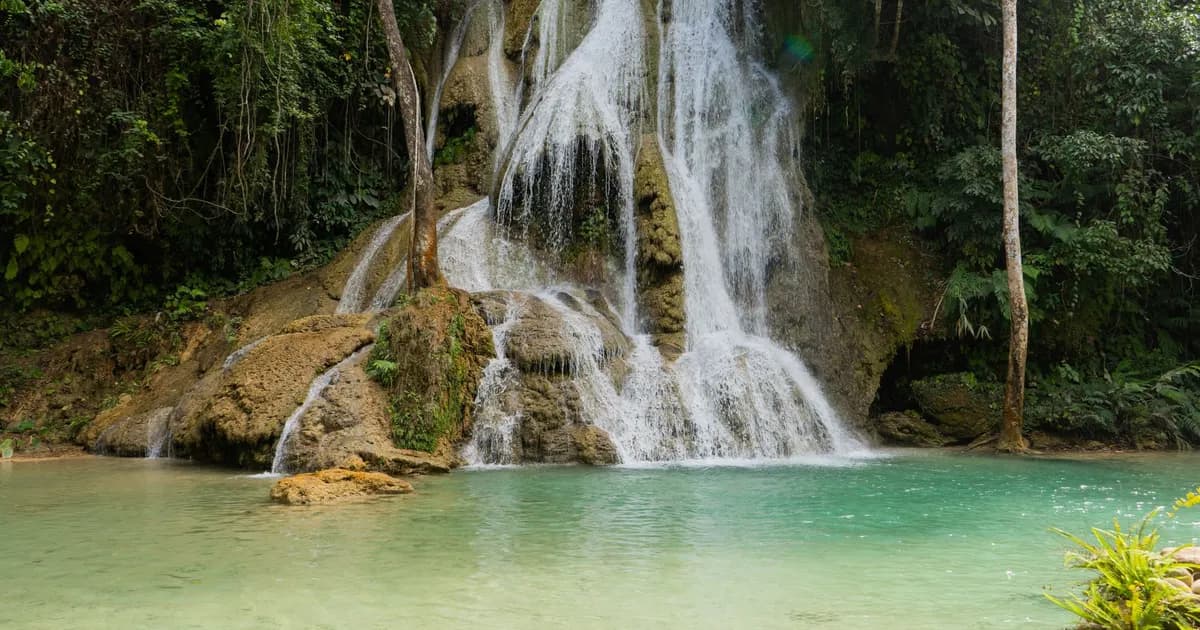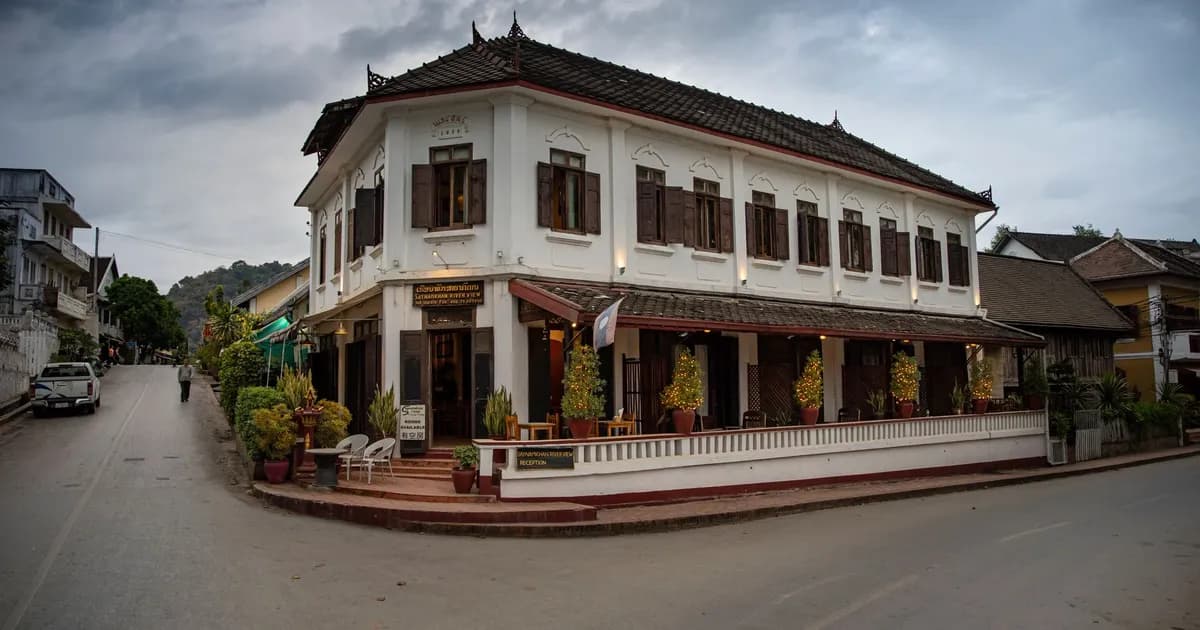
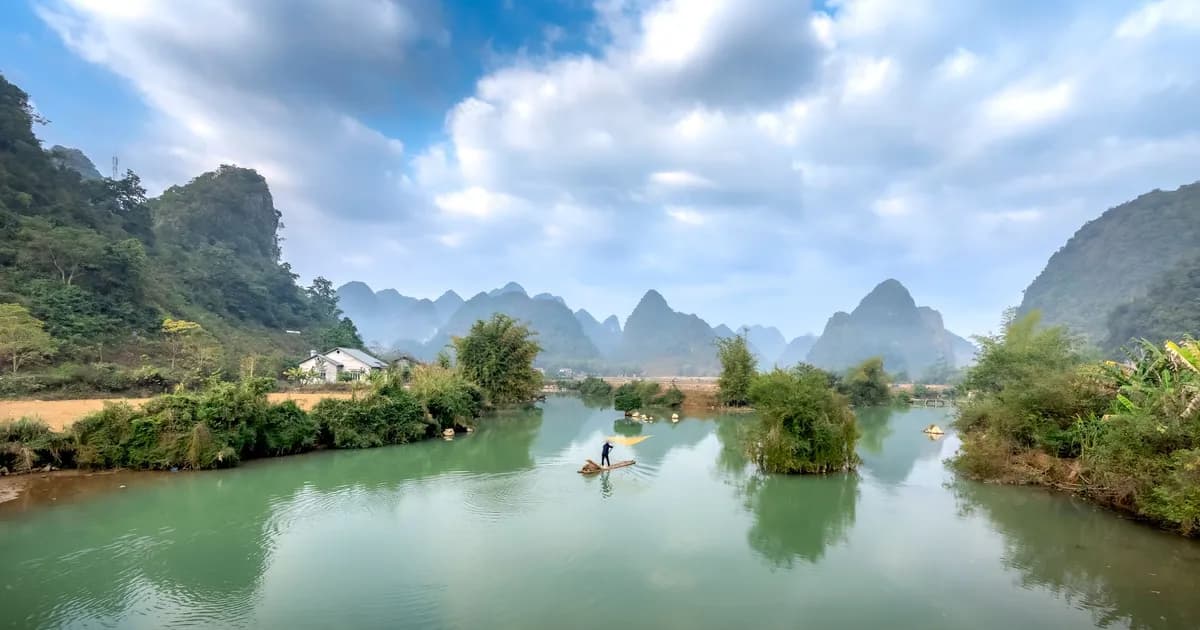

The road from Luang Prabang to Nong Khiaw takes about three hours and delivers you into an entirely different Laos. Limestone karsts rise straight out of the Nam Ou River like broken teeth, a single bridge splits the town in two, and the pace of life slows to the rhythm of longtail boats puttering upstream. This is not a place people rush through. It is a place they stay a day longer than planned, then wonder why they didn't budget a week.
Why Nong Khiaw Rewards Slow Travel
Nong Khiaw is often described as a stopover between Luang Prabang and the far north, and plenty of travelers still treat it that way, arriving in the afternoon and leaving the next morning. That is a mistake. The town's real value is not in a single viewpoint or a single boat ride but in the accumulation of small, unhurried days: a slow breakfast watching fishermen work the river, an afternoon with nothing scheduled, a walk to the edge of town where rice paddies meet the karst wall. For a broader sense of how this fits into a longer trip, UNRUSH's guide to where to go and when in Laos places Nong Khiaw firmly in the north-central loop alongside Luang Prabang, and for good reason: the two towns are close enough to link easily, yet feel like different countries.
What makes Nong Khiaw distinct is scale. Unlike Vang Vieng, which has been reshaped by mass tourism infrastructure, Nong Khiaw remains a working town first and a destination second. Rice farming, fishing, and small-scale trade continue alongside the guesthouses and riverside cafés. Tourism is present but has not swallowed the place, which is precisely what makes it worth a slow itinerary rather than a rushed one.
One request. Up to five tailored proposals.
Skip contacting agencies one by one — share your trip once and let up to five trusted Laos agencies come to you. Free, with no obligation.
Get my free quotesGetting There and Getting Around
Minivans run daily from Luang Prabang to Nong Khiaw, taking roughly three to four hours along a winding but well-maintained road, with tickets typically costing between USD 15 and 25. Songthaews and local buses cover the same route more cheaply but more slowly. Coming from the far north, boats and buses connect Nong Khiaw to Muang Khua and onward toward the Vietnamese border, making it a natural link in a longer northern Laos itinerary rather than an isolated detour.
Once in town, everything worth reaching on foot is within twenty minutes of the bridge. For destinations further along the river, longtail boats can be chartered from the pier, and a handful of local operators rent bicycles and motorbikes for exploring the surrounding rice paddies and villages. If you are still shaping the wider arc of your trip, UNRUSH's plan your journey page for Laos is a useful starting point for sequencing Nong Khiaw against Luang Prabang, the Bolaven Plateau, and the south.
There is a BCEL ATM in town that usually works, but experienced travelers still carry enough cash from Luang Prabang as backup, since machines occasionally run dry during busier weeks.
The Viewpoint Hike and the Town Itself
The signature experience in Nong Khiaw is the viewpoint hike that begins just east of the bridge. The trail climbs steeply through jungle for roughly an hour to ninety minutes before opening onto a rocky outcrop with a panoramic view over the river bend and the karst formations that ring the valley. It is a genuinely strenuous climb in the heat, with sections of rope-assisted scrambling near the top, but the reward is one of the more striking vistas in northern Laos.
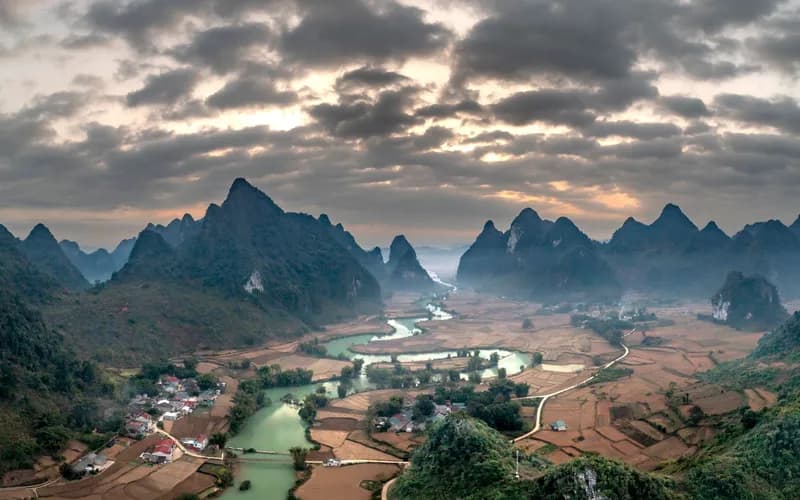
Back at river level, the town itself rewards unhurried wandering. The two halves of Nong Khiaw, split by the bridge, have slightly different characters: the eastern side is quieter and more residential, while the western side holds most of the guesthouses, restaurants, and the market. Early mornings are the best time to see the town at work, before the day's heat sets in and before most visitors have left their guesthouses.
Get matched with up to 5 trusted Laos agencies
- Free
- No obligation
- Up to 5 agencies
Villages Along the Nam Ou: Muang Ngoi and Beyond
One of the defining experiences of the Nam Ou valley is the boat trip upstream to Muang Ngoi, a small village reachable only by river, about an hour from Nong Khiaw by longtail boat. Muang Ngoi has no road access, which has kept it smaller and quieter than Nong Khiaw, with a single main street, simple guesthouses, and karst scenery that many travelers find even more dramatic than Nong Khiaw itself. It makes for an easy overnight addition, and travelers looking for villages further off the standard circuit will find useful pointers in UNRUSH's guide to hidden gems and off-the-beaten-path Laos.
Beyond Muang Ngoi, the Nam Ou continues north through a string of smaller Hmong and Khmu villages that see only a fraction of the visitors who pass through Nong Khiaw itself. Reaching them generally requires a local guide, a chartered boat, or a multi-day trek, but for travelers with time to spare, this is where the valley's slower, more remote character becomes most apparent. Expect basic homestay conditions, genuine curiosity from villagers who see few foreign visitors, and a landscape that has changed only gradually over recent decades.
Pha Tok Caves and the Secret War
About two kilometers east of Nong Khiaw, the Pha Tok caves offer a sobering counterpoint to the valley's scenery. During the Secret War of the 1960s and 1970s, these limestone caves were used as a hospital and a military command center, sheltering villagers and fighters from bombing along what was then one of the most heavily bombed corridors in the country. Wooden platforms, sleeping areas, and other structural remnants from that period are still visible inside, alongside the caves' natural rock formations.
Visiting requires a short walk from the road followed by a climb up wooden ladders into the cave system, and a local guide is recommended both for context and for navigating the site safely. It is a quieter, more reflective stop than the viewpoint hike, and it adds historical depth to a region that is more commonly visited for its landscapes than its twentieth-century history.
Kayaking, Trekking, and Days by the River
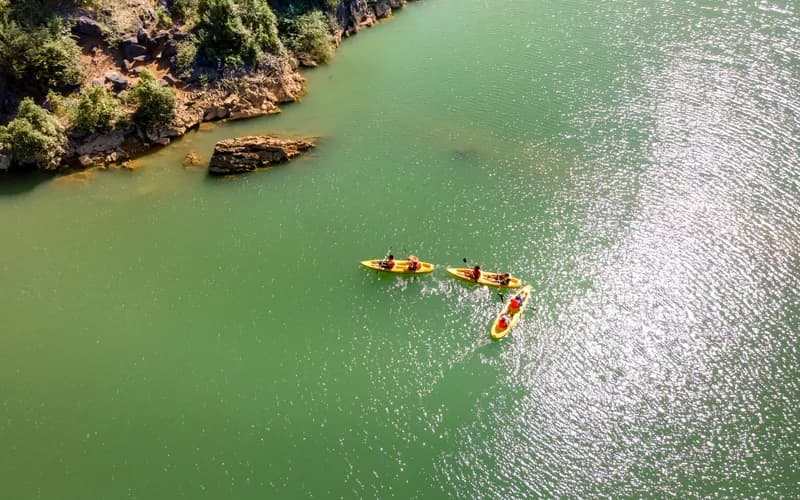
The Nam Ou itself is the valley's main draw, and a half-day or full-day kayak trip downstream through the karst corridor is one of the more memorable ways to experience it. Rapids are generally mild outside the rainy season, making the trip accessible to travelers with limited paddling experience, while the surrounding scenery, sheer cliffs, fishing villages, and the occasional water buffalo crossing the river, does most of the work.
For travelers who prefer to stay on land, one- to three-day treks into the hills around Nong Khiaw connect a string of Hmong and Khmu villages, typically with a homestay built into the itinerary. These treks are physically demanding in the wet season and considerably easier from October through February, when trails are dry and temperatures are cooler. Either way, the valley rewards travelers who build in unstructured time between activities rather than stacking one excursion after another.
Where to Stay and Eat
Nong Khiaw's accommodation ranges from simple riverside guesthouses to a handful of higher-end bungalow properties on the hillsides overlooking the bridge, most offering direct karst views from the room or terrace. Restaurants cluster near the western side of the bridge, serving a mix of Lao staples, river fish, and simplified Western comfort food aimed at the backpacker crowd, though several kitchens have begun leaning further into regional Lao cooking as the town's food scene matures.
Multiple small tour agencies in town can arrange kayaking, trekking, and boat transport, and for travelers who prefer to organize the visit through an established operator before arriving, UNRUSH's directory of Laos travel agencies is a good place to compare options built around this kind of itinerary.
When to Go
The best window for visiting Nong Khiaw and the Nam Ou valley runs from October to February, when humidity drops, daytime hiking is more comfortable, and the region gets a chilly morning mist that often burns off by mid-morning. The shoulder months of March through May bring hotter, hazier conditions due to regional agricultural burning, which can dull the views from the viewpoint hike. The rainy season, roughly June through September, brings lush green scenery and a faster-flowing river, but also slippery trails and a higher chance of the road from Luang Prabang being temporarily affected by landslides after heavy rain.
What to Do Next
- Block at least two to three full days for Nong Khiaw, not counting travel time from Luang Prabang, to leave room for a slow pace rather than a checklist.
- Book the Luang Prabang to Nong Khiaw minivan a day or two ahead during the October to February high season, when seats fill quickly.
- Add an overnight in Muang Ngoi if your schedule allows; it is a short boat ride and a meaningfully different experience from Nong Khiaw itself.
- Arrange the viewpoint hike for early morning, both to avoid the worst heat and to catch better light over the valley.
- Consider working with a slow-travel specialist through UNRUSH's charter approach to travel planning if you want the Nam Ou valley built into a longer, unhurried northern Laos route rather than a rushed add-on.
Frequently Asked Questions
How many days do I need in Nong Khiaw?
Two to three full days is a reasonable minimum: one for the viewpoint hike and town, one for a boat trip or kayaking, and a spare day to either rest or add Muang Ngoi as a short overnight.
Is Nong Khiaw suitable for travelers without hiking experience?
The town itself and the boat trips require no particular fitness, but the signature viewpoint hike is steep and involves some rope-assisted scrambling near the top. Less strenuous river-based activities are a good alternative for travelers who prefer to skip it.
How do I get from Nong Khiaw to Muang Ngoi?
Longtail boats run from the Nong Khiaw pier to Muang Ngoi, a trip of roughly an hour upstream. Tickets can be bought at the pier on the day, though confirming departure times the evening before is sensible during quieter periods.
Is the Nam Ou valley affected by the Laos-China Railway?
Not directly. The railway runs further west through Luang Prabang, Vang Vieng, and Vientiane, and Nong Khiaw is reached by road rather than rail. Most travelers still combine a rail leg elsewhere in Laos with a road trip north to the Nam Ou valley.
What should I pack for the Pha Tok caves and jungle treks?
Sturdy closed shoes, a headlamp or torch for the caves, insect repellent, and a light rain layer even in the dry season, since mornings can be humid and unpredictable in the hills.
Is it safe to drink tap water in Nong Khiaw?
No. Bottled or treated water is standard practice throughout the region, including in Nong Khiaw and Muang Ngoi, where filtered refill stations are increasingly available at guesthouses as an alternative to single-use plastic bottles.
When is the worst time to visit for views?
Late February through April, during the regional burning season, when smoke haze can significantly reduce visibility from the viewpoint hike and dull the karst scenery that makes the valley distinctive.