Sainyabuli and the Elephant Conservation Center: Laos's Elephant Country, Slowly
Laos once called itself Lane Xang, the Land of a Million Elephants. Today the honest estimate is somewhere between 500 and 1,000 animals left in the whole country, wild and captive combined, and a large share of them live in one quiet, mountainous province west of the Mekong that most travellers never enter. Sainyabuli, also written Xayaboury, Sayaboury or Xayabouly, is where the old relationship between Lao people and elephants is still visible, and where one of Asia's most serious elephant conservation projects has chosen to work. It is also a province that makes almost no concessions to tourism, which is exactly why it suits a slow traveller.
Where Sainyabuli Is, and Why So Few People Go
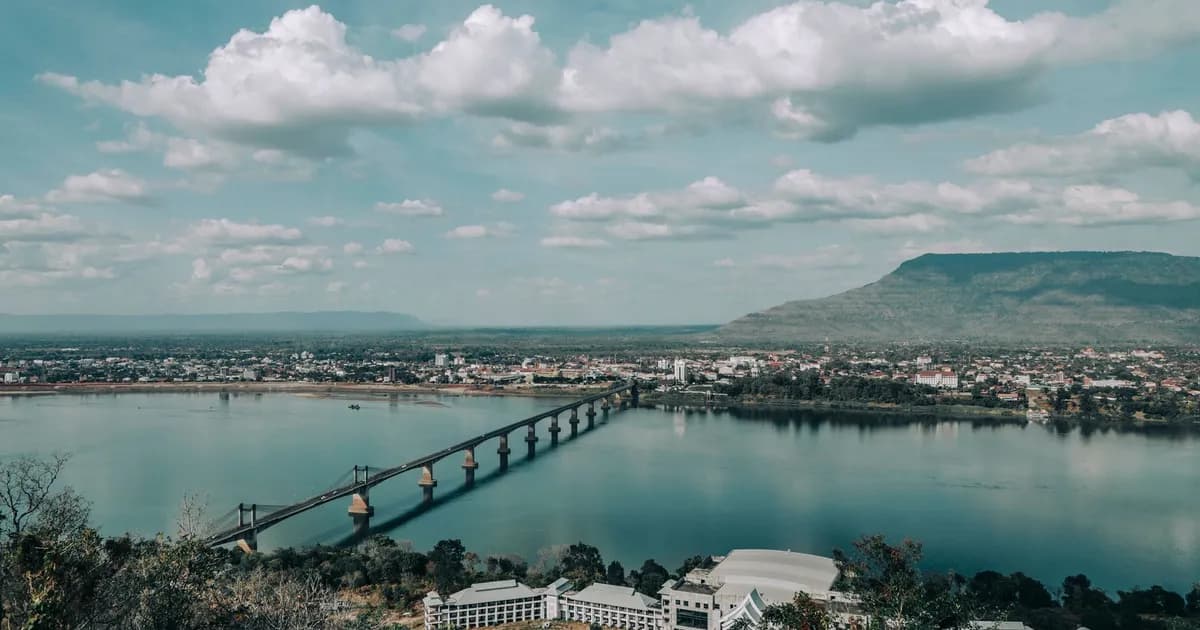
Sainyabuli is the long province that sits on the western bank of the Mekong, wedged between Luang Prabang province to the east and Thailand to the west. It is large, around 16,000 square kilometres, and thinly populated, with fewer than half a million people spread across eleven districts. Its provincial capital, also called Sainyabuli, lies roughly three hours by road south-west of Luang Prabang.
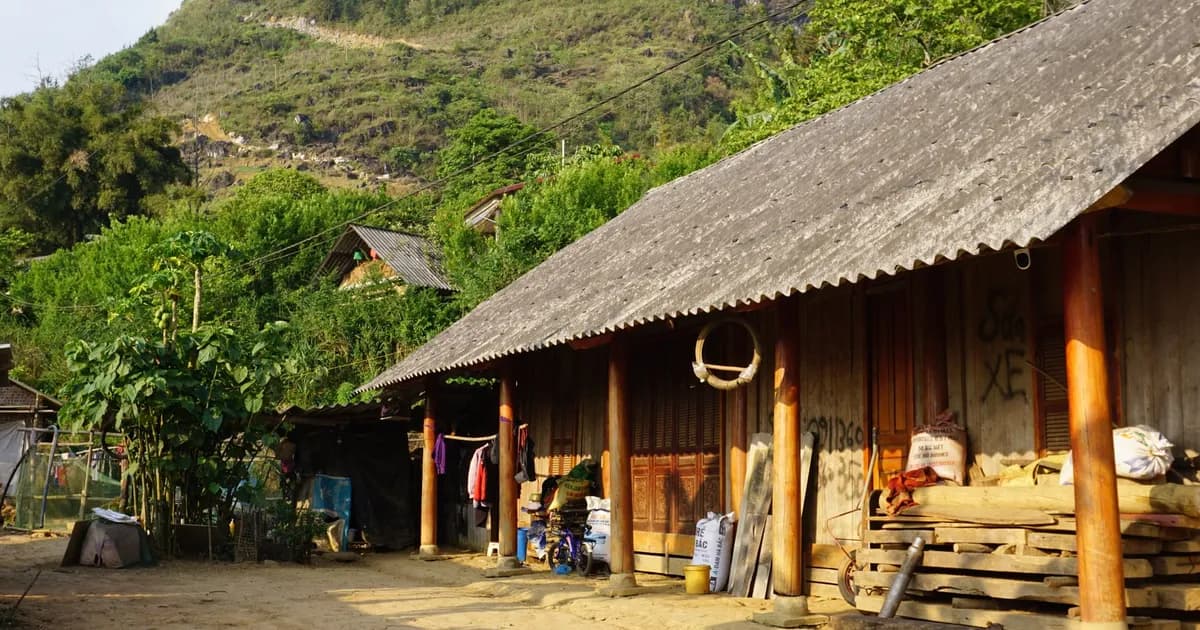
The reason so few travellers come is simple geography. The classic north-south route through Laos runs down the eastern side of the Mekong, from Luang Prabang to Vang Vieng and Vientiane, and since December 2021 the Laos-China Railway has made that corridor even faster. Sainyabuli is on the other side of the river, reached by winding mountain roads, and there is no single headline sight that drags people across. What it offers instead is texture: Tai Lue and Lao villages, small hill temples, a scattering of Iu Mien and Phrai communities, teak and rice valleys, and the Pha Xang or Elephant Mountain range that runs down the province and still shelters wild herds.
If you have already read our notes on the hidden corners of Laos for slow travellers, Sainyabuli belongs firmly in that category. It is not difficult to reach, simply overlooked.
One request. Up to five tailored proposals.
Skip contacting agencies one by one — share your trip once and let up to five trusted Laos agencies come to you. Free, with no obligation.
Get my free quotesThe Elephant Conservation Center at Nam Tien Lake
The reason most visitors cross into Sainyabuli is the Elephant Conservation Center, usually shortened to ECC. It sits on the shore of Nam Tien Lake, a reservoir about nine kilometres south-west of the provincial town, and is reached by a short boat ride from a lakeside pier. The team behind it has worked with Lao elephants since 2001, and the Nam Tien site opened in 2011.
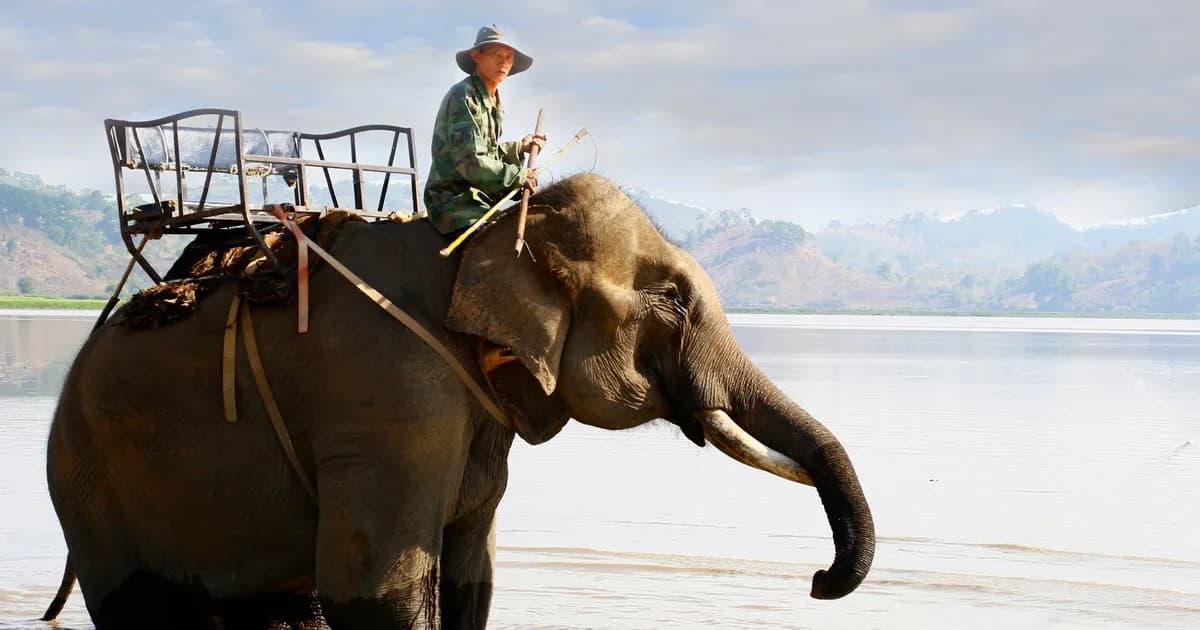
The centre takes in elephants retired from logging, animals removed from mass-tourism camps and animals confiscated from trafficking, and it also breeds calves as part of a long-term plan to rebuild populations. Its herd is roughly thirty animals, living across about 540 hectares of protected forest. Crucially for anyone who cares about animal welfare, visitors do not ride the elephants, do not bathe them and do not feed them by hand. The programme is observation-led: you follow the herd at a respectful distance in the forest, watch bathing from the shore, and learn from mahouts, vets and biologists.
The ECC runs the country's only dedicated elephant hospital and nursery, and it has been awarded the Conservation Gold rating by the independent Asian Captive Elephant Standards audit. It also supports ranger teams and wild-elephant monitoring in the Nam Pouy National Protected Area, a forest of roughly 190,000 hectares along the Thai border that holds what is believed to be the second-largest wild elephant population in Laos.
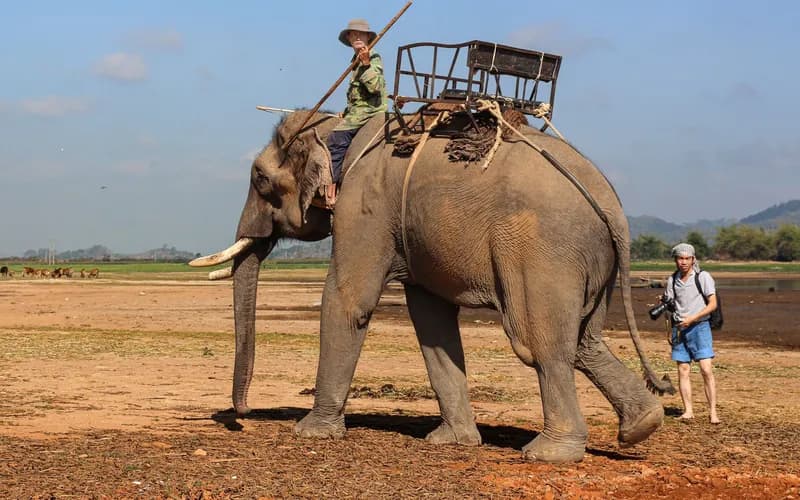
One detail surprises some visitors and is worth knowing in advance. At night, the elephants are usually secured on long chains of around fifty metres in rotating forest locations. The centre explains this openly: it stops the animals raiding farmers' crops, which in rural Laos can lead to retaliation, while still letting them forage and rest on soft ground. They are not chained during the day. It is an imperfect compromise in a landscape shared with farming villages, and the ECC is candid about it, which is more than can be said for many camps elsewhere in the region.
Choosing a Programme: What It Costs in 2026-2027
There are no day visits at the ECC. The centre deliberately limits guests to overnight stays so that elephant routines are not bent around day-trippers. For the 2026-2027 season, its published public rates are as follows, per person, including return minivan transfer from Luang Prabang, the boat, meals and activities.
- Discovery, 2 days and 1 night: from US$220 in a classic lakeside bungalow with shared bathroom, US$230 in the Forest House, US$240 in a premium bungalow and US$390 in a deluxe lodge.
- Exploration, 3 days and 2 nights: from US$310 in a classic bungalow, US$320 in the Forest House, US$330 in a premium bungalow and US$560 in a deluxe lodge.
- Longer programmes: a seven-day conservation volunteering programme and an eight-day Back to the Wild expedition into Nam Pouy exist for small groups aged sixteen and over, at considerably higher prices and on set departure dates.
Children aged one to four stay free when sharing with parents, and children aged five to ten pay half. If your budget allows, the three-day Exploration is the better choice. The first day is largely travel and orientation; the second is when the forest walks, the socialisation area and the rhythm of the place come together; and the third adds a guided walk to observe the bull elephants, something very few facilities in Asia attempt, because male elephants are harder to manage and are rarely shown to visitors.
The walking is light to moderate, with frequent stops. Paths can be muddy, particularly between May and October, and the centre asks guests to bring long trousers, a light long-sleeved shirt, proper shoes, a rain jacket and mosquito repellent. Accommodation is simple but comfortable, with private balconies over the water. Wi-Fi exists but is not the point; if you need reliable data, buy a local SIM before you leave Luang Prabang.
Get matched with up to 5 trusted Laos agencies
- Free
- No obligation
- Up to 5 agencies
Getting There Without Rushing
The easiest way in is the ECC's own daily minivan, which leaves from the post office on Luang Prabang's main street at 7:30am. The drive takes roughly three hours on mountain roads, followed by the boat across Nam Tien. The same van returns you to Luang Prabang in the late afternoon of your final day. This is why most visitors base themselves in Luang Prabang for a night before and after, and why the ECC fits naturally into a northern itinerary. If you have been following the debate about how Luang Prabang is coping with its tourism surge, a few days in Sainyabuli are also a small, practical way of spreading your time and spending beyond the UNESCO peninsula.
There are other routes if you prefer independence. Minivans run between Vientiane and Sainyabuli town, a long day of around seven hours, and there are occasional connections from Vang Vieng. Domestic carrier Lao Skyway has operated a handful of weekly flights between Vientiane and Sainyabuli, but schedules change, so check before building a plan around them. From the south of the province, buses run to Pak Lai on the Mekong and on to the Thai border crossing at Kaen Thao, which makes an unusual overland exit into Loei province in Thailand.
For a broader picture of how these connections fit together, our guide to getting around Laos by train, boat, bus and slow road explains the trade-offs between speed and experience.
Sainyabuli Town: Temples, River and Market
Most people pass straight through the provincial capital on their way to Nam Tien, which is a shame. Sainyabuli town is a low, unhurried place on the Nam Houng river, with a morning market that sells more mountain produce than souvenirs and a handful of temples that locals clearly use rather than display.
The most important is Wat Si Boun Heuang, on a small hill above the river. It is said to date to 1456, making it the oldest temple in the province, and it houses a seven-metre reclining golden Buddha, the largest in Sainyabuli. People come here to ask for blessings before a journey and to make merit when they return. Mid-March brings a local ghost festival procession that ends at the river.
In the village of Natonoy, a short ride out of town, the temple is known for a century-old bodhi tree and a wooden stairway locals call the Stairs to Heaven. At Lao New Year in April, people climb the stairs to pour scented water down a wooden channel onto a Buddha image, then bow beneath it to receive the drips as a blessing. If you happen to be in the province for Pi Mai, this is a far gentler way to experience the festival than the water fights of the larger towns.
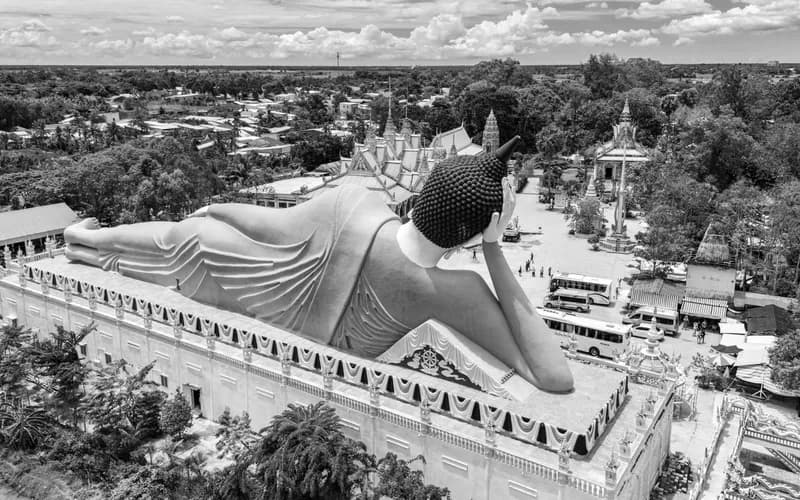
Beyond the town, the provincial tourism office points visitors to Tad Jao, a waterfall considered sacred and associated with local royalty, and to cave and hot spring sites around Pak Lai in the south. None of these are polished attractions. Go with a local driver or guide, dress modestly, and treat the sacred sites with the same respect you would a temple.
The Elephant Festival: Heritage and Hard Questions
Every February, the province hosts Boun Xang, the Elephant Festival, which has rotated between districts over the years. The 2026 edition, the nineteenth, was held in Sainyabuli district from 9 to 16 February, with fifty elephants taking part to mark the fiftieth anniversary of the Lao People's Democratic Republic. The programme included elephant parades, a trade fair, ethnic cultural performances, merit-making ceremonies for the elephants and a pageant.
It is a genuinely important event for the province, a celebration of Lao identity and of the centuries-old bond between mahout families and their animals. It also includes elephant rides and performances such as painting and ball games, which run directly against the observation-only standards that the ECC and most welfare organisations now promote. Local reporting in 2026 openly acknowledged this tension.
A slow traveller does not need to pretend the contradiction away. If you attend, watch the parade and the ceremonies, spend your money at the market stalls and with local guesthouses, and simply decline the rides and shows. If the welfare side troubles you, the ECC's forest programme is the better way to see elephants in Sainyabuli, at any time of year.
Beyond the Elephants: Hongsa, Pak Lai and the Mekong
Sainyabuli rewards anyone willing to go further. In the north, Hongsa sits in a broad valley surrounded by hills and has long been associated with working elephants and Tai Lue culture. Be aware that it is also home to a large lignite-fired power station that exports most of its electricity to Thailand, so the valley is less pristine than older guidebooks suggest.
To the south, Pak Lai is a Mekong river town with French-era shophouses, a slow waterfront and very few visitors. Between them, the Mekong itself has changed: the Xayaburi hydropower dam, in commercial operation since 2019, sits on the river within the province, and it has reshaped river traffic and fisheries. Travellers interested in how these projects affect the whole river will find useful context in our reporting on dams, low water and slow river travel on the Mekong.
The province's roads, known locally as the North-South Mountain Trail, link Hongsa, Sainyabuli, Pak Lai and the southern districts through the ridges of the Pha Xang range. They are paved in most places but slow and winding, and they are best done with a driver rather than on a rental scooter unless you are an experienced rider.
When to Go
The dry, cool months from November to February are the most comfortable, and that is when the ECC recommends booking well ahead. March and April are hot and, in much of northern Laos, hazy from agricultural burning. The rainy season from May to October turns the province deeply green and empties it of visitors, but forest paths become slippery and the ECC adapts its activities. Note that the centre closes for four days over Lao New Year in April.
For a month-by-month view across the whole country, see our guide on where to go in Laos and when.
How to Build Sainyabuli into a Slow Itinerary
A sensible shape is simple. Spend two or three nights in Luang Prabang, take the ECC minivan for a three-day Exploration programme, and then either return to Luang Prabang or ask the centre about being dropped in Sainyabuli town for a night or two on your own. From there you can continue south to Pak Lai and the Thai border, or loop back towards the railway.
This kind of detour costs you perhaps four days. In return, you trade a busy riverside town for a lake, a forest and a province where a foreign face is still unusual. It also puts your money into one of the few conservation projects in Laos that depends almost entirely on visitor income, and into a province that sees very little of the tourism economy.
What to Do Next
- Decide between the two-day Discovery and the three-day Exploration, and book directly with the ECC, especially for travel between November and May.
- Plan at least one night in Luang Prabang before and after, since the minivan leaves at 7:30am and returns in the late afternoon.
- Pack long trousers, a long-sleeved shirt, sturdy shoes, a rain jacket and repellent, whatever the season.
- If you have time, add a night in Sainyabuli town and visit Wat Si Boun Heuang at dusk.
- Use our plan-your-journey tools for Laos to fit the detour into your wider route without cramming.
Frequently Asked Questions
Can you ride or bathe elephants at the Elephant Conservation Center?
No. The ECC runs a hands-off, observation-led programme. Visitors do not ride, bathe or hand-feed the elephants. Mahouts may occasionally ride bulls for safety when moving through the forest, but this is part of management, not a tourist activity.
Is there a day trip to the ECC from Luang Prabang?
No. The centre only offers overnight programmes, starting with the two-day, one-night Discovery. Day visits are not accepted, so that elephant routines are not shaped around visitor schedules.
How much does the ECC cost in 2026?
The published 2026-2027 public rates start at US$220 per person for two days and one night, and US$310 for three days and two nights, including transport from Luang Prabang, meals and activities. Deluxe lodges cost more.
How long is the drive from Luang Prabang to Sainyabuli?
Plan on roughly three hours by road to Nam Tien Lake, then a short boat ride to the centre. The road is paved but mountainous and winding.
Is the Elephant Festival ethical to attend?
It is an important cultural event, but it includes rides and performances that do not meet current welfare standards. Many travellers attend the parades and market while declining rides and shows, and see elephants at the ECC instead.
What is the best time of year to visit Sainyabuli?
November to February is the most comfortable and the busiest at the ECC. The rainy season is quieter and very green, but paths can be muddy. The centre closes for four days at Lao New Year in April.