

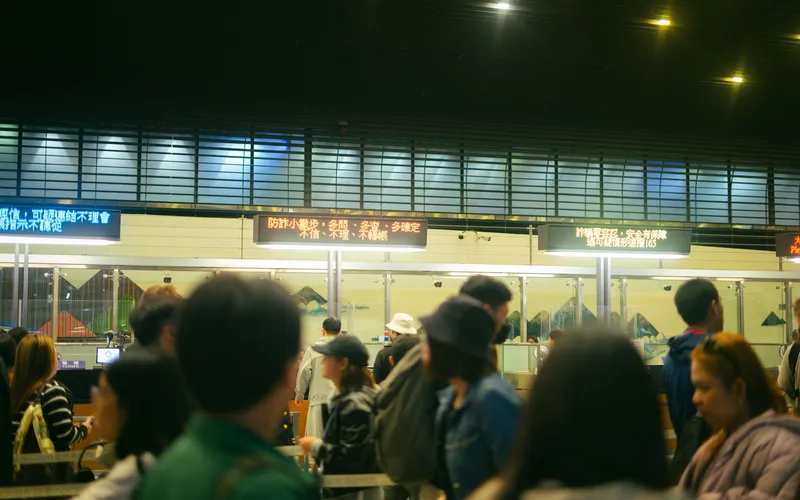
For a great many travellers, Malaysia begins in a queue. The Johor-Singapore Causeway is one of the busiest land border crossings on earth, carrying hundreds of thousands of people a day across a kilometre of embankment, and on a bad Friday evening it can absorb four hours of your life. That is about to change, at least partly. A cross-border metro is due to open, Singapore has already abolished the passport for most land travellers, and Malaysia has just connected Johor Bahru to Kuala Lumpur by electric train for the first time. If you are entering Malaysia overland in the next twelve months, the calculus is different from what your guidebook says.
The Border That Everything Runs Through
Causeway (bus/train)
The original kilometre-long embankment links Woodlands in northern Singapore to central Johor Bahru, within walking distance of JB Sentral. It carries buses, the Shuttle Tebrau and road traffic, and is the busiest of the crossings. Available now.
RTS Link (rail)
A four-kilometre cross-border metro from Woodlands North to a new station at Bukit Chagar in central Johor Bahru, about a five-minute ride with immigration cleared once at the departure station. Passenger service is targeted for early 2027, with system testing through late 2026.
Second Link (Tuas)
A longer, quieter road bridge from Tuas in western Singapore to Gelang Patah, best for drivers heading up the west coast rather than into Johor Bahru itself. Available now.
There are two road crossings between Singapore and Malaysia. The Causeway links Woodlands in northern Singapore to the centre of Johor Bahru, dropping you within walking distance of JB Sentral station, the City Square mall and the old town. The Second Link, further west, joins Tuas to Gelang Patah, and is quieter, longer and only sensible if you are driving and heading up the west coast rather than into JB itself.
There is also a rail crossing, currently served by the KTM Shuttle Tebrau, and from late 2026 there should be a second rail crossing in the form of the RTS Link. Everything else, buses, taxis, private cars and ride-hailing, uses the two road bridges and is therefore subject to the same congestion.
The practical consequence is that your choice of crossing matters more than your choice of departure time, and considerably more than the distance involved. The Causeway is four kilometres end to end. People routinely spend longer on it than on the flight that brought them to Singapore.
One request. Up to five tailored proposals.
Skip contacting agencies one by one — share your trip once and let up to five trusted Malaysia agencies come to you. Free, with no obligation.
Get my free quotesWhat Actually Changes in Late 2026: The RTS Link
The Johor Bahru-Singapore Rapid Transit System Link is a four-kilometre cross-border metro line connecting Woodlands North station in Singapore to a new station at Bukit Chagar in central Johor Bahru. The journey time is about five minutes. Peak capacity is designed at up to 10,000 passengers per hour in each direction, which is roughly the scale of the problem it is meant to solve.
The design detail that matters most is not the speed but the immigration arrangement. Clearance is co-located at the departure station: you clear both Singaporean and Malaysian formalities before you board, then walk straight out at the other end with no second queue. Bukit Chagar's immigration complex is being fitted with around 100 automated gates, each intended to process a traveller in about seven seconds.
Now the caveats, because this is a construction project on an international border. Passenger service is targeted to begin in December 2026, with full system testing starting in September 2026 and civil works reported at around 90 percent complete during 2026. Some official commentary points to early 2027 instead. Fares are expected in the range of SGD 5 to 7, or roughly RM 15.50 to RM 21.70, but the final structure is only due to be published in the second half of 2026. Treat December 2026 as a target rather than something to build an itinerary around, and check before you plan a crossing on it.
One rule will not change: this is an international border, so a valid passport is required for every RTS Link journey. National identity cards are not accepted.
The Shuttle Tebrau: Cheap, Fast, and Nearly Impossible to Book
Until the RTS Link opens, the best crossing by a wide margin is the KTM Shuttle Tebrau, a short train between Woodlands Train Checkpoint in Singapore and JB Sentral. The rail crossing itself takes five minutes; allow around thirty minutes door to door including immigration. Fares are almost comically low: SGD 5 from Singapore to Johor Bahru, and RM 5 in the other direction.
There are roughly thirteen departures a day from Singapore to Johor Bahru and eighteen in the reverse direction, which is nowhere near enough. Tickets are sold through KTMB's online shuttle system and are released in advance batches; the useful slots on weekends and holidays disappear within minutes of going on sale. If you are flexible, aim for mid-morning or early afternoon on a weekday and book the instant your dates open. If you are not flexible, assume you will not get a seat and plan a bus instead.
Note also that the Shuttle Tebrau is expected to be withdrawn once the RTS Link is running, currently indicated for 2027. It is a service on a countdown.
Get matched with up to 5 trusted Malaysia agencies
- Free
- No obligation
- Up to 5 agencies
Buses and Cars: The Default, and How to Survive It
Most people cross by bus, and it works. From Singapore, Causeway Link and public bus services run from Queen Street terminal, Kranji MRT and Newton to JB Sentral, with fares of a few Singapore dollars. The mechanics catch first-timers out: you get off the bus at Singapore immigration with all your luggage, clear it, board any bus of the same operator on the far side, get off again at Malaysian immigration, clear that, and board again. Keep your ticket. Do not leave anything on the bus.
Private cars and taxis are the least predictable option, because they sit in the vehicle queues rather than the pedestrian ones. Cross-border ride-hailing is restricted and generally requires licensed cross-border taxis, which operate from designated terminals on each side. If you are hiring a car in Malaysia, do not plan to take it into Singapore without checking the insurance, the Vehicle Entry Permit and the fuel rule that requires a three-quarter tank when leaving Singapore.
Passport-Free QR Clearance on the Singapore Side
Since January 2025, Singapore has fully implemented QR code clearance at Woodlands and Tuas checkpoints. Travellers arriving or departing by car, motorcycle, lorry or bus can present a QR code generated in the free MyICA mobile app instead of a passport. Groups travelling by car can clear with a single group code covering up to ten people, and family groups of up to four can do the same in the bus halls.
Two exclusions matter to visitors: first-time foreign arrivals in Singapore cannot use it, and neither can anyone re-entering on a different passport from their previous visit. In both cases you use the passport lane once and become eligible afterwards. Note too that this is a Singaporean system covering the Singapore checkpoint only; you still present your passport at the Malaysian side. Malaysia's own automated clearance for foreign visitors is a separate arrangement, explained in our piece on Malaysia's immigration autogates.
Carry the physical passport regardless. Every authority involved says the same thing, and there is no scenario in which arriving at an international border without it improves your day.
Malaysian Formalities at Johor Bahru
Entering Malaysia by land requires the same paperwork as entering by air. Most foreign nationals must complete the Malaysia Digital Arrival Card online within three days before arrival, and this applies to land crossings just as it does at KLIA. Doing it on your phone in the queue is possible but unwise; the connection at the checkpoint is unreliable.
Beyond that, expect a standard social visit pass stamp, with the duration set by the officer according to nationality, commonly up to 90 days for visa-exempt passport holders. Keep proof of onward travel accessible. If you are crossing repeatedly in a short period, be aware that Johor's counters see more visa-run traffic than anywhere else in the country and questions are more likely. Our full explainer on entering Malaysia, the MDAC and the visa-free rules covers the detail.
Onward from Johor Bahru: The New ETS to Kuala Lumpur
This is the genuinely good news, and it is recent. On 12 December 2025 KTMB launched electric train services between JB Sentral and KL Sentral, completing the 192-kilometre Gemas to Johor Bahru double-tracking project and creating an unbroken electrified corridor from the Thai border at Padang Besar all the way to Johor Bahru.
The journey takes roughly four and a half to five hours, fares start around RM 82 one way in standard class, and services have been increasing steadily: from four daily departures at launch to seven by early 2026, with a stated plan to reach eight. Book ahead through the KTMB site, because the trains fill.
For a traveller arriving from Singapore, this changes the shape of the trip. It is now entirely reasonable to cross the Causeway in the morning, walk five minutes from the checkpoint to JB Sentral, and be in Kuala Lumpur by evening without touching a plane or a highway coach. Our guide to travelling Peninsular Malaysia by train explains how the ETS network fits together and where the slow jungle railway comes in.
Timing: The Hours and Days to Avoid
At a glance
- Causeway
- Woodlands to JB, bus/shuttle/road, busiest crossing
- RTS Link
- ~5 min to Woodlands North, service targeted early 2027
- Second Link
- Tuas to Gelang Patah, longer and quieter
- Shuttle Tebrau
- ~5 min on the rails, from SGD 5, hard to book
- Peak waits
- can run to several hours at the Causeway
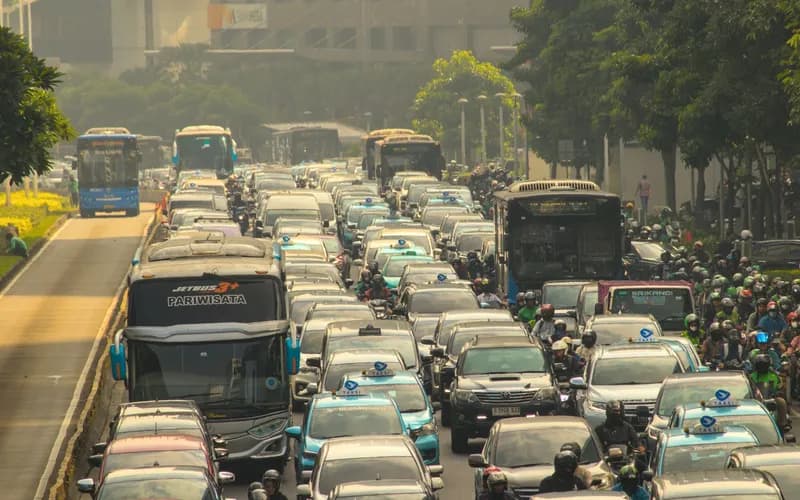
Congestion at the Causeway is highly predictable, which is the one thing in your favour.
- Worst: Friday evening and Saturday morning northbound into Malaysia, Sunday afternoon and evening southbound into Singapore, and the eve of any public holiday in either country.
- Bad: weekday commuter peaks, roughly 6am to 9am southbound and 5pm to 9pm northbound, driven by tens of thousands of daily Malaysian commuters.
- Best: mid-morning to mid-afternoon on a Tuesday, Wednesday or Thursday.
- Also difficult: Malaysian and Singaporean school holidays, the Hari Raya exodus, and Chinese New Year, when queues can extend for many hours.
Both governments publish live checkpoint traffic information, and Singapore's is genuinely useful. Check it before you leave rather than after you commit to a bus.
What to Do Next
- Decide your crossing before you book anything else: rail if you can get a Shuttle Tebrau seat, bus if you cannot, car only if you are driving on into Malaysia.
- Try to book the Shuttle Tebrau the moment your travel dates open for sale on KTMB's shuttle site, and have a bus fallback ready.
- Complete your Malaysia Digital Arrival Card within the three-day window before crossing, at your accommodation rather than in the queue.
- Download MyICA and register in advance if you have visited Singapore before, so you can use QR clearance on the Singapore side.
- Book your onward ETS ticket from JB Sentral to Kuala Lumpur ahead of time, and leave at least ninety minutes between crossing and departure.
- If you are heading up the west coast rather than straight to the capital, our profile of Melaka as a first stop makes the case for breaking the journey, and plan your journey will help you shape the rest.
Frequently Asked Questions
When does the RTS Link actually open?
Passenger service is targeted for December 2026, with full system testing from September 2026, though some official statements have pointed to early 2027. Fares are expected to be finalised in the second half of 2026. Until an opening date is formally confirmed, do not build travel plans around it.
What is the fastest way to cross from Singapore to Johor Bahru right now?
The KTM Shuttle Tebrau, if you can get a ticket: about five minutes on the rails and roughly thirty minutes in total including immigration. Failing that, a bus at an off-peak hour on a weekday. Private cars and taxis are usually the slowest because they queue with vehicle traffic.
Do I need a passport if Singapore has QR code clearance?
Yes. QR clearance replaces the act of presenting your passport at Singapore's land checkpoints for eligible travellers, but you still need the physical passport for Malaysian immigration, for the first visit, and any time something goes wrong. Carry it every time.
Do I need the MDAC to enter Malaysia by land from Singapore?
In most cases yes. The Malaysia Digital Arrival Card applies to land crossings as well as airports, and should be submitted online within three days before arrival. A small number of nationalities are exempt, so check your own status rather than assuming.
Can I get from Singapore to Kuala Lumpur by train in one day?
Yes, since December 2025. Cross to JB Sentral, then take the ETS to KL Sentral in around four and a half to five hours, with fares from about RM 82. There is no single through train, so you buy the two legs separately and clear immigration on foot in between.
When is the Causeway busiest?
Friday evenings and Saturday mornings northbound, Sunday afternoons and evenings southbound, weekday commuter peaks, and the days around public holidays in either country. Mid-week, mid-morning is consistently the calmest window.
Is the Second Link a better option?
Sometimes, if you are driving and heading north-west towards Melaka or Kuala Lumpur, since it avoids central Johor Bahru entirely and is generally less congested. It is a poor choice for anyone on public transport or going into JB, because it lands you well outside the city with limited onward connections.