

Almost every traveller who flies from Kuala Lumpur to Kota Kinabalu or Kuching for the first time has the same moment of confusion. The flight is domestic. The boarding pass says domestic. And then, at the far end, there is an immigration counter, an officer asking for a passport, and a new stamp in the book. Nothing has gone wrong. Malaysian Borneo controls its own immigration, and has done since the federation was formed. This article explains what that means in practice in 2026, what documents you need, how long the resulting pass lasts, and the handful of ways it can quietly disrupt an itinerary if you are not paying attention.
Why Malaysia has internal immigration
When Sabah and Sarawak joined the federation in 1963, both retained a set of special powers, and control over immigration is the most visible of them. The result is that Malaysia has a single visa policy but three immigration jurisdictions: Peninsular Malaysia, Sabah and Sarawak.
For a visitor this is not a bureaucratic curiosity. It means a permission to be in Kuala Lumpur is not automatically a permission to be in Kuching. Each state issues its own entry permit at its own checkpoints, with its own duration, recorded separately in your passport. The federal visa framework still governs whether you need a visa at all; the state controls the pass you receive on arrival.
The rules are stable and well established. What changes is the technology around them, which is where recent years have brought most of the movement.
One request. Up to five tailored proposals.
Skip contacting agencies one by one — share your trip once and let up to five trusted Malaysia agencies come to you. Free, with no obligation.
Get my free quotesWhat actually happens when you fly to Borneo
Take the standard case: a foreign visitor flying Kuala Lumpur to Kuching or Kota Kinabalu.
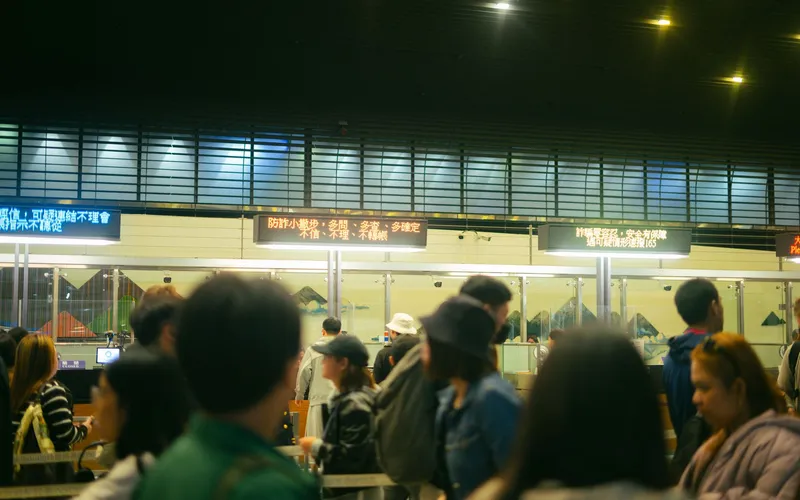
You depart from the domestic terminal and there is no exit formality on the peninsular side. On arrival in Borneo you are directed to an immigration hall before baggage reclaim. You present your passport. An officer, or an automated gate, records the entry and you receive a Sabah or Sarawak entry permit, typically as a stamp showing the date and permitted length of stay.
The whole process usually takes a few minutes. The important part is what it produces: a new, separate permission with its own expiry date, which may or may not match the one you were given when you first entered Malaysia.
Returning the other way, from Borneo back to the peninsula, is treated as a domestic arrival and there is normally no comparable counter. Carry your passport anyway. It is your identity document on every Malaysian flight, and airline check-in staff will ask for it.
The MDAC and where it applies
The Malaysia Digital Arrival Card is the online form most foreign travellers must submit before arriving in the country. It is federal, free, and completed on the official Immigration Department portal, and it applies to arrivals into Malaysia from abroad.
Two points matter for Borneo specifically.
If you fly into Kuching, Kota Kinabalu, Miri or Tawau directly from another country, you are arriving in Malaysia from abroad, and the MDAC requirement applies exactly as it would at KLIA.
If you fly into Sarawak or Sabah from elsewhere in Malaysia, you are not making an international arrival, and a fresh MDAC is not required for the internal leg. You will still clear state immigration and receive a state pass.
Certain nationalities and categories are exempt from the MDAC, and the exemption list has been amended more than once. Our detailed guide to entering Malaysia and the MDAC covers the current position and who does not need to file.
Get matched with up to 5 trusted Malaysia agencies
- Free
- No obligation
- Up to 5 agencies
Autogates, stamps and the paper trail
Malaysia has extended automated immigration gates to eligible foreign travellers at major entry points, and the process at Borneo airports increasingly mirrors the peninsula. Where you are eligible and your record is linked to your passport, you may pass through a gate rather than a staffed counter.
This creates a small practical problem worth knowing about. Automated processing does not always leave the same clear ink stamp that a counter does. If you go through a gate, check whether you have a physical stamp or a digital record only, and if there is no stamp, note your entry date yourself. When you later need to prove how long you have been in Sabah or Sarawak, the burden is on you.
Our explainer on Malaysia's immigration autogates for foreign visitors sets out eligibility and how the enrolment works.
How long you can stay
Under the federal framework, a short-term social visit pass is issued at the point of entry, with the permitted length of stay determined by the immigration officer and shown in the stamp or entry record. In Sabah and Sarawak, a social or business visit pass for an eligible visitor does not exceed three months.
Three practical implications follow.
First, the number you are given is not guaranteed to be ninety days. Officers may issue less, particularly for onward tickets that show a shorter stay or for travellers with unclear plans. Read the stamp before you leave the hall.
Second, your Sabah or Sarawak pass is independent of your peninsular pass. A traveller with sixty days remaining on a Malaysian entry may receive a shorter or a differently dated pass on arrival in Borneo. Track both.
Third, the pass is for visiting. It does not permit work, including remote work for a foreign employer in any formal sense. Malaysia has separate long-stay and digital nomad programmes for that purpose, and using a visit pass as a substitute is a genuine risk rather than a technicality.
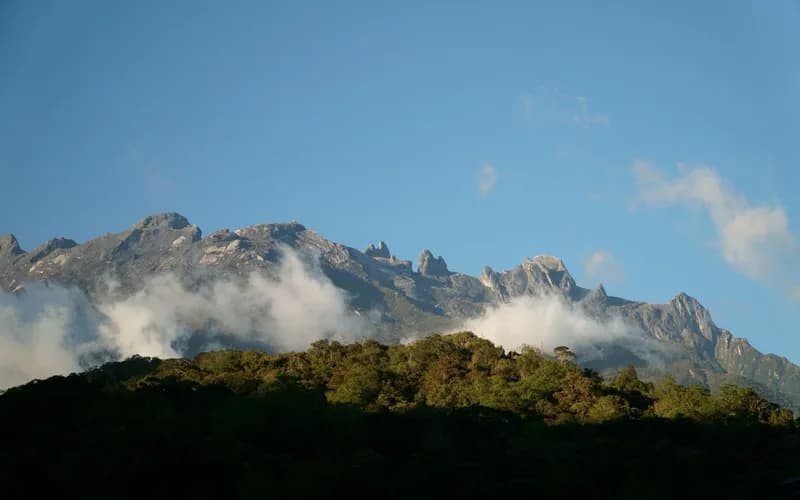
Sarawak's own rules
Sarawak operates the more distinct of the two systems and is administered by its own immigration authority. Entry points for visitors are the airports at Kuching, Miri, Sibu and Bintulu, plus land crossings with Brunei and with Indonesian Kalimantan, and river and sea checkpoints.
A foreign visitor arriving in Sarawak from Peninsular Malaysia clears Sarawak immigration and receives a Sarawak pass. Moving on from Sarawak to Sabah is another internal border, and you clear again on arrival in Sabah. Moving from Sarawak into Brunei and back, a common routing for travellers heading up the coast, means leaving and re-entering, with fresh formalities each time.
If Sarawak is your focus, our piece on slow days in Kuching is a good starting point for what to do with the time your pass allows.
Sabah's own rules, and Labuan
Sabah likewise issues its own entry permits, independent of the peninsular stamp, at Kota Kinabalu International Airport, at Tawau and Sandakan, and at sea checkpoints including the Labuan ferry terminal.
Labuan itself is a federal territory rather than part of Sabah, and it functions as a duty-free island with ferry links to Kota Kinabalu, Menumbok and Brunei. Travellers using the Brunei to Labuan to Kota Kinabalu route pass through several checkpoints in quick succession, and it is easy to lose track of which stamp is which. Keep your boarding passes and ferry tickets until you leave the country.
Sabah and Sarawak also apply their own quarantine and biosecurity rules on plants, seeds, meat and animal products, separate from federal customs. In practice this affects very few visitors, but it is another reason arrival is not a formality.
Crossing overland and by sea
The land border between Sarawak and Kalimantan at Tebedu and Entikong is open to foreign travellers and is used by buses between Kuching and Pontianak. The Sarawak to Brunei crossings at Sungai Tujoh and elsewhere are straightforward but slow, with multiple stops. Sabah connects to Brunei by road via Sarawak's Lawas and Limbang corridor, which involves several border posts in a single day.
These are real slow-travel routes rather than curiosities, and they reward planning. Bring more cash than you think you need, since border towns are not places to discover your card does not work. Our guide to paying in Malaysia covers where cash is still essential.
Practical consequences for your itinerary
The internal border rarely stops anyone, but it changes how you should plan.
Build in time. Immigration on arrival at Kuching and Kota Kinabalu can add twenty to forty minutes at busy hours, which matters if you have booked a tight onward connection to Mulu, Sandakan or an island transfer.
Keep your passport with you on every domestic flight within Malaysia, not in checked luggage.
Watch the dates. If you plan a long, looping trip across the peninsula and both Borneo states, sketch out which pass covers which segment before you go, and do not assume a single ninety-day figure applies throughout.
Finally, treat Borneo as a destination rather than an add-on. The distances are large, the transport is slower than on the peninsula, and the reason to go is what takes time: rivers, forest, longhouses, coastlines. That is also the argument for arriving with a pass that comfortably exceeds your plans, and for the approach we set out in the UNRUSH slow travel charter.
What to Do Next
- Confirm your nationality's visa position for Malaysia on the official Immigration Department site, and check separately whether any Sabah or Sarawak conditions apply to you.
- File the MDAC before an international arrival, including a direct international arrival into Kuching or Kota Kinabalu, unless you are exempt.
- If your Borneo flight is domestic from the peninsula, skip a second MDAC but pack your passport in your cabin bag.
- On arrival in Sabah or Sarawak, read the stamp before leaving the hall and photograph it. If you used an autogate and there is no stamp, record the date yourself.
- Allow at least ninety minutes between a Borneo arrival and any onward domestic connection, and longer at peak times.
- Sketch your pass dates across the whole trip before booking, and if you are combining Sarawak, Sabah and Brunei, list the crossings in order so nothing is a surprise.
Frequently Asked Questions
Do I need my passport to fly from Kuala Lumpur to Kota Kinabalu?
Yes, if you are a foreign visitor. The flight is domestic but Sabah operates its own immigration control, and you will clear a counter or gate on arrival. Malaysian citizens can use their national identity card; everyone else needs a passport, carried in hand luggage.
Is Sabah or Sarawak a separate country for visa purposes?
No. Malaysia has one visa policy, so whether you need a visa is decided federally. What is separate is the entry permit issued on arrival, which each state grants under its own immigration powers, with its own duration recorded in your passport.
Do I need to complete a new MDAC to fly from the peninsula to Borneo?
No. The Malaysia Digital Arrival Card applies to arrivals into Malaysia from abroad. An internal flight from Kuala Lumpur or Penang to Kuching or Kota Kinabalu is not an international arrival, so no new submission is required, though you will still clear state immigration.
How long can I stay in Sabah or Sarawak?
A social or business visit pass for an eligible visitor does not exceed three months, and the exact duration is decided by the officer at the point of entry and shown in your stamp. Do not assume the maximum. Check what you were actually given before you leave the airport.
What happens if I fly from Sarawak to Sabah?
You cross another internal border and clear immigration again on arrival in Sabah, receiving a Sabah pass. The Sarawak pass does not carry over. The same applies in reverse, and any detour through Brunei counts as leaving and re-entering Malaysia.
Will I get a stamp if I use an autogate?
Not always. Automated processing may record your entry digitally without a clear ink stamp. Check your passport as you leave the hall, and if there is no stamp, note the date and keep your boarding pass, since you may need to demonstrate your entry date later.
Can I work remotely on a Sabah or Sarawak visit pass?
No. A social visit pass permits tourism and visiting, not employment. Malaysia operates separate long-stay and remote-work programmes for people who want to base themselves in the country, and those are the correct route if you intend to work while you are there.